Do all satellites move in the sky?
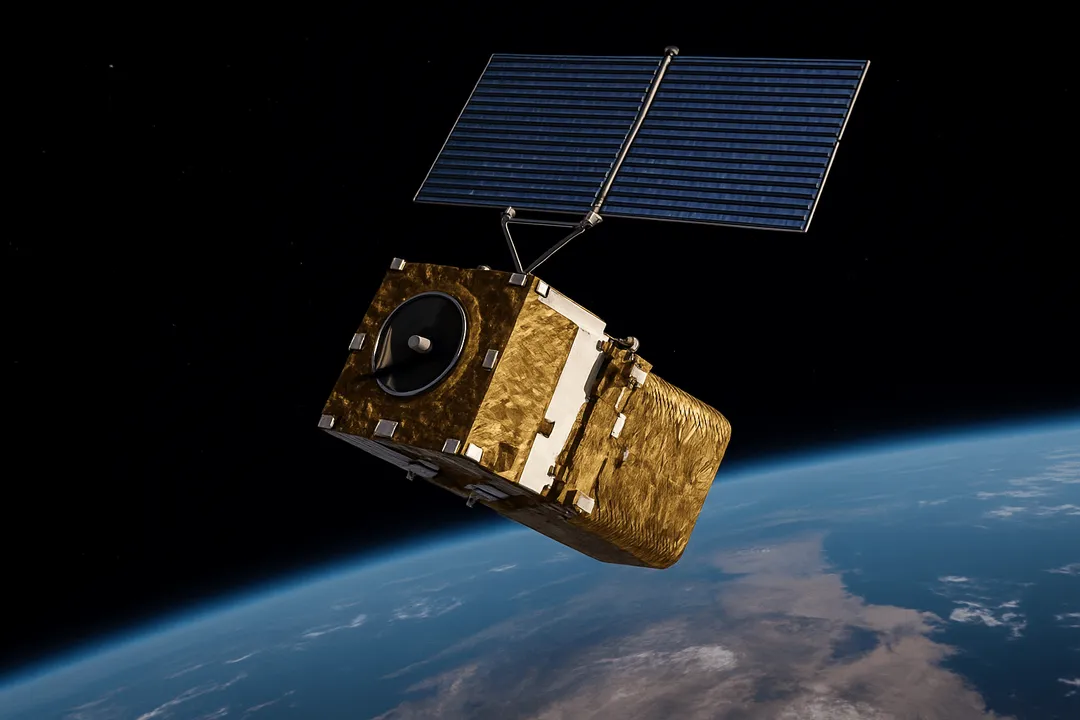
When you look up at the night sky, especially in areas away from city lights, you might occasionally spot a distinct, steady point of light silently tracing a path overhead. This prompts the natural question: are all these artificial stars moving, and if they are, why don't they just fall down? The simple answer is that yes, virtually all satellites are moving, and they are moving incredibly fast. Their apparent stillness, experienced by some observers, is only true for a specific, high-altitude class of spacecraft. [3][6]
# Orbital Mechanics
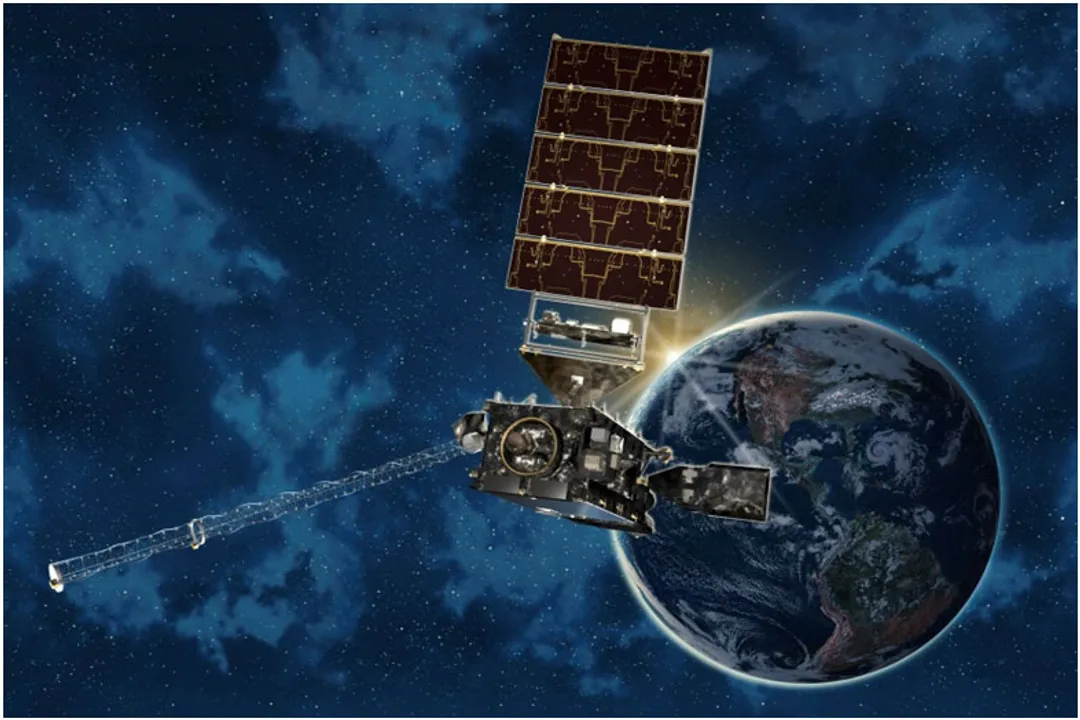
To understand why a satellite remains aloft, one must first understand what an orbit fundamentally is. An orbit is not a fixed path where the satellite defies gravity; rather, it is a continuous state of falling around the Earth. [1][2][10] If you threw a baseball hard enough, it would travel farther before hitting the ground. If you could throw it at an incredible horizontal speed, it would always be "falling" toward the Earth but constantly missing the surface because of its forward momentum. [1][10]
This precise balance between the pull of Earth’s gravity and the satellite’s immense forward velocity—its tangential speed—is what maintains the orbit. [2][10] If the satellite slows down too much, gravity will win the tug-of-war, causing the object to dip into denser atmosphere and eventually fall back to Earth. [2] Conversely, if it moves too fast for its altitude, it will fly off into a different orbit or escape Earth’s gravitational influence entirely. [10]
The primary reason satellites don't need constant thrust to stay up, unlike an airplane that needs air over its wings, is the near-vacuum environment of space. [2] In the upper reaches of the atmosphere where most operational satellites reside, there is practically no air resistance or friction to slow them down, allowing them to maintain that critical orbital speed indefinitely, or at least for many years. [2]
# Fixed Points
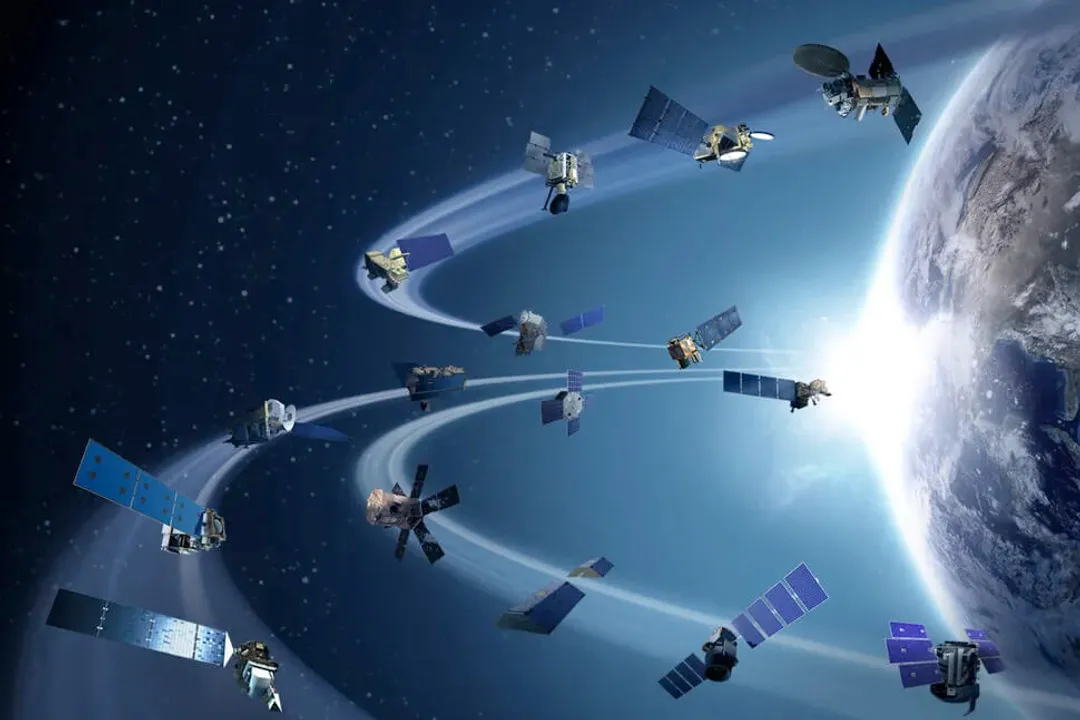
There is one specific class of satellite that does appear to hover over the same spot on the globe, leading to the confusion about universal movement. These are the geostationary satellites, which occupy the Geostationary Earth Orbit (GEO). [3][6][8]
For a satellite to remain fixed relative to an observer on the ground, it must meet three very specific conditions: [3][8]
- It must orbit directly above the Earth’s equator.
- It must travel in the same direction as the Earth’s rotation (prograde). [4]
- Its orbital period must exactly match the Earth’s rotation period, which is about (a sidereal day). [8]
To achieve this precise timing, the satellite must be placed at a specific altitude of approximately (about ) above the equator. [8] At this height, the speed required to match Earth’s rotation makes the satellite appear stationary in the sky relative to a ground antenna, making it perfect for continuous communication or broadcasting. [3] These orbits are highly sought after and managed carefully by international bodies. [6]
# Swift Crossings
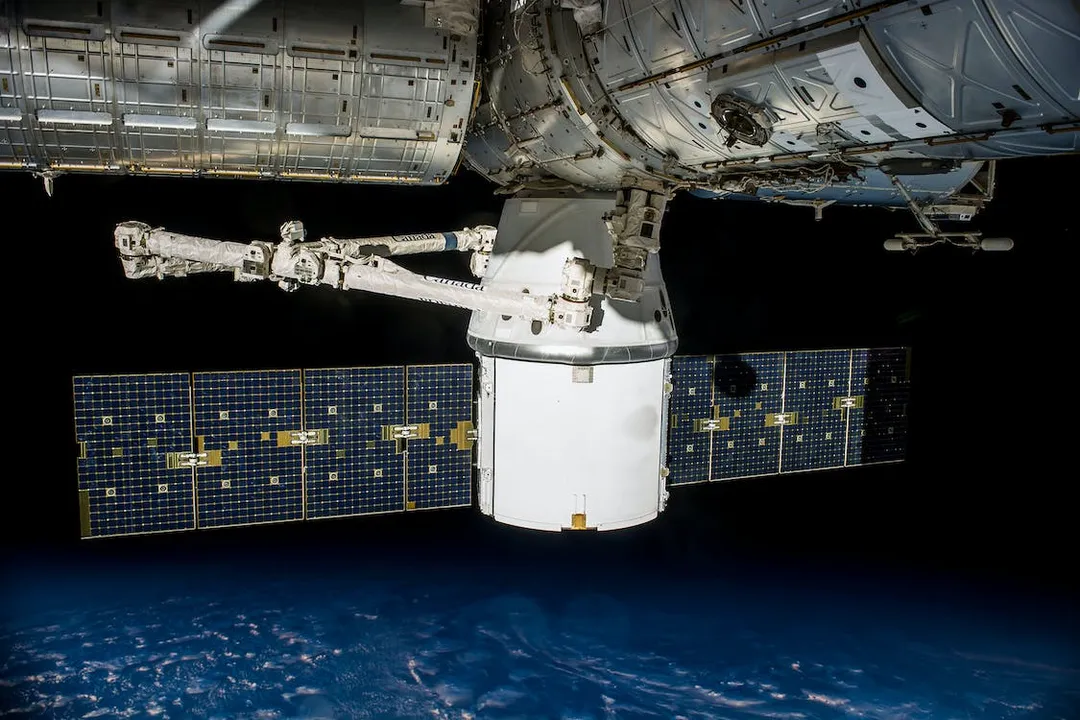
While GEO satellites are fixed, the vast majority of operational satellites are not. These primarily populate Low Earth Orbit (LEO) and Medium Earth Orbit (MEO). [5] LEO satellites are much closer to Earth, typically ranging from a few hundred kilometers up to about . [5]
Because they are closer to the planet, they must move much faster to counteract gravity and avoid crashing down. A typical LEO satellite travels at speeds around (). [1] This incredible velocity dictates their visibility. An object moving that quickly doesn't linger; it shoots across the visible sky in just a few minutes. [1] For an observer, a LEO satellite might pop into view above the horizon, blaze across the overhead sky, and disappear below the opposite horizon in perhaps five to ten minutes, depending on its track and the observer's latitude. [1] They are perpetually moving, appearing as fast-moving points of light that frequently cross paths with others.
It is interesting to consider how this speed translates to ground observation. If you track a typical LEO imaging satellite, its motion is so rapid that it can photograph significant swathes of the planet in a single pass, but the pass itself is brief. For example, a satellite orbiting at altitude might complete an entire circuit of the Earth in about . [1] This means that if you see one pass overhead now, you might see it again in , but its position in the sky will be completely different, tracing a new path relative to your location. [1]
# Directional Flow
Another key characteristic of satellite movement is the direction of their travel relative to the Earth’s spin. Most satellites orbit in what is known as a prograde direction, meaning they circle the Earth in the same direction that the Earth rotates—from west to east. [4] This is the most energy-efficient path for reaching orbit and is how most communication and observation satellites are launched. [4] This consistency means that if you watch many different LEO satellites over time, you will generally see them moving eastward across the sky when viewed from the Northern Hemisphere.
However, there are exceptions. Satellites intentionally placed in a retrograde orbit travel in the opposite direction, moving from east to west. [4] These orbits are less common because they require significantly more energy to achieve, but they offer unique advantages for certain types of observation or surveillance, allowing the satellite to view regions of the Earth that are not easily accessible by prograde paths. [4]
# Viewing Contrasts
The key to answering whether a satellite moves lies entirely in distinguishing between the different orbital classes. A simple comparison can clarify the expected observation:
| Orbit Type | Approximate Altitude | Apparent Movement | Primary Function Examples |
|---|---|---|---|
| LEO | Low () | Very fast transit across the sky (minutes) | Imaging, crewed missions (ISS), many communication constellations |
| MEO | Medium () | Moderately fast transit (hours) | Navigation (GPS) |
| GEO | High () | Appears fixed over one point on Earth | Weather monitoring, fixed broadcast television |
When you spot something bright moving steadily across the sky, the odds are very high that you are seeing a LEO or MEO satellite. [5] If you were to look at the ground station tracking that fast-moving object, you would see the ground station rotating underneath the satellite, which itself is maintaining a relatively fixed distance from the planet’s center. [7]
The fact that we rely on this continuous, high-speed motion for so much of modern life—from accurate navigation via GPS satellites in MEO to global communication—underscores how fundamental orbital mechanics are to our interconnected world. [5] It is a subtle but constant motion, usually only noticed when one happens to pass directly over one’s location or when observing a dense constellation where multiple points of light cross paths in quick succession.
#Videos
How Do Satellites Stay in Place? | In Orbit | BBC Earth Science
Related Questions
#Citations
do satellites orbit the earth or are they held stationary by gravity as ...
Why Don't Satellites Fall Out of the Sky? | NESDIS - NOAA
How are satellites always in the same place in the sky? - Quora
Ask an Explainer - | How Things Fly
ESA - Types of orbits - European Space Agency
What Is a Satellite? | NASA Space Place – NASA Science for Kids
Do satellites travel in the same direction? - Facebook
Geostationary orbit - Wikipedia
How Do Satellites Stay in Place? | In Orbit | BBC Earth Science
Do Satellites Move? and Why Don't Satellites Fall Out of the Orbit?