What must the orbital period of a geostationary satellite exactly match?
The Earth’s rotation period, $ ext{23 hours, 56 minutes, and 4 seconds}$
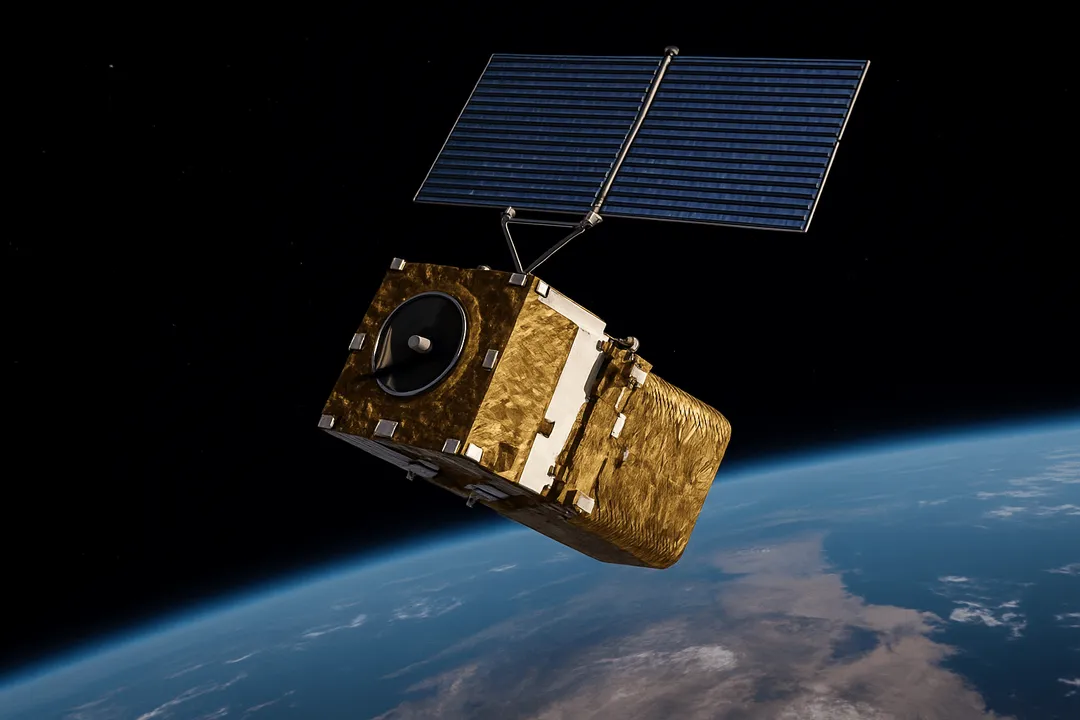
The defining characteristic that makes a Geostationary Earth Orbit (GEO) satellite appear stationary relative to an observer on the ground is the perfect synchronization of its orbital period with the Earth's rotation. The Earth does not complete a full rotation relative to the distant stars in exactly 24 hours (a solar day); instead, the sidereal day—the time it takes for the Earth to rotate 360 degrees relative to the fixed stars—is precisely 23 hours, 56 minutes, and 4 seconds. For the satellite to hover over one spot, its period must match this exact figure, which necessitates placing it at the specific GEO altitude of roughly 35,786 kilometers.
#Videos
How Do Satellites Stay in Place? | In Orbit | BBC Earth Science