How many satellites do you need to cover the earth?
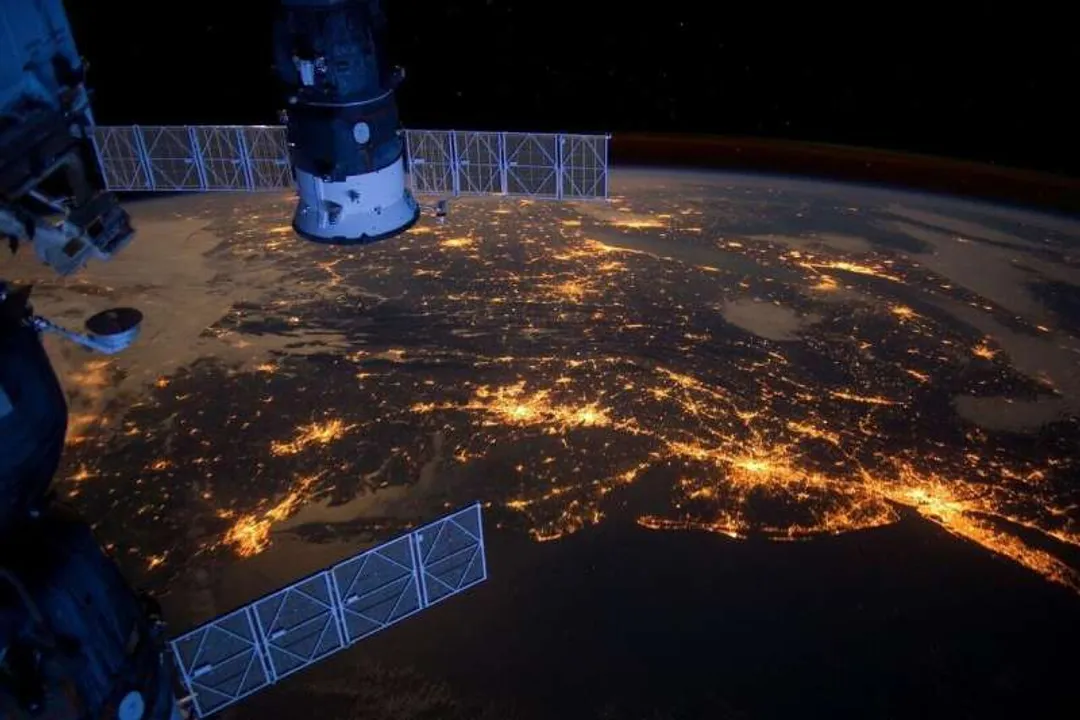
Figuring out the precise number of satellites needed for continuous, worldwide coverage isn't as simple as dividing the Earth's surface by the area one satellite can see. That simple division overlooks the fundamental geometry of spheres and the reality of orbital mechanics. The answer is entirely dependent on the altitude at which those satellites are placed and the level of signal redundancy you require. [3][5] Satellites in different orbital regimes—Low Earth Orbit (LEO), Medium Earth Orbit (MEO), or Geostationary Orbit (GEO)—each demand vastly different constellation sizes to blanket the globe. [9]
# Orbit Matters

The height of the orbit is the single most important factor determining the required quantity. A satellite positioned very high up in Geostationary Orbit (GEO), where it appears fixed above the equator, can observe a massive slice of the Earth's surface. Conversely, a satellite orbiting much closer, in LEO, has a significantly smaller field of view relative to the ground. [1][3][9]
In GEO, a single satellite can view roughly 42% of the Earth at any given moment, assuming ideal conditions. [3] However, this coverage doesn't account for the curvature of the Earth near the horizon or the need to avoid signal blockage from terrain, meaning a single satellite cannot provide continuous coverage to the entire planet, especially for areas far from the equator. [3]
This geometric constraint is why even if one satellite can theoretically see half the Earth, we need multiple units working together to ensure no area is left in darkness or outside the communication footprint. Simply lining up satellites isn't enough; the gaps that form between the edges of their coverage footprints must be managed, a task that becomes exponentially harder the lower the orbit gets. [3][5]
# Geostationary Counts
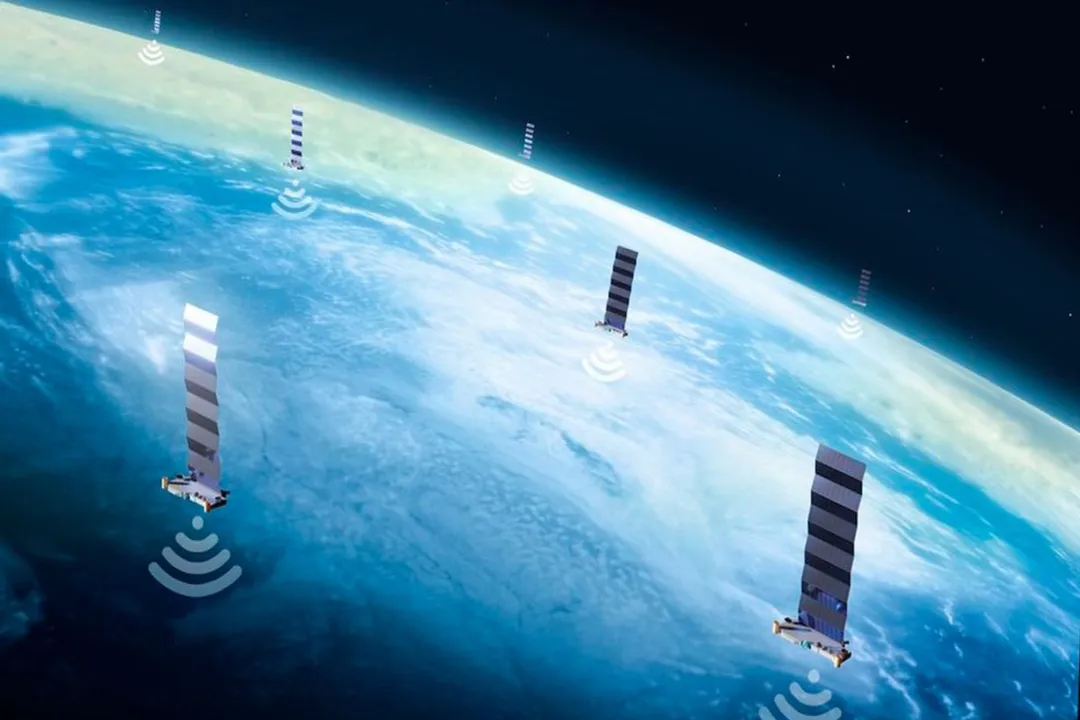
When discussing the absolute theoretical minimum for global coverage, the conversation often centers on the GEO ring. Because these satellites move at the same rate as the Earth's rotation, they maintain a fixed position relative to the ground below them. [9]
The widely cited minimum to achieve complete, continuous Earth coverage using geostationary satellites is three. [2][6] These three would ideally be spaced evenly around the equator. [1] Even this minimum requires careful positioning to ensure the coverage areas overlap sufficiently to avoid any terrestrial gaps. [1][6] For practical purposes, such as avoiding obstructions or ensuring a connection is never lost between handoffs, systems often propose using four or five satellites in GEO to cover the majority of the Earth's surface, even if three hit the absolute mathematical minimum. [1]
This GEO approach yields the smallest number of individual units because each satellite covers such a vast geographical area. However, this low count comes with a significant trade-off: the high altitude means signals take a noticeable amount of time to travel—what engineers call latency. [3]

# Low Altitude Need
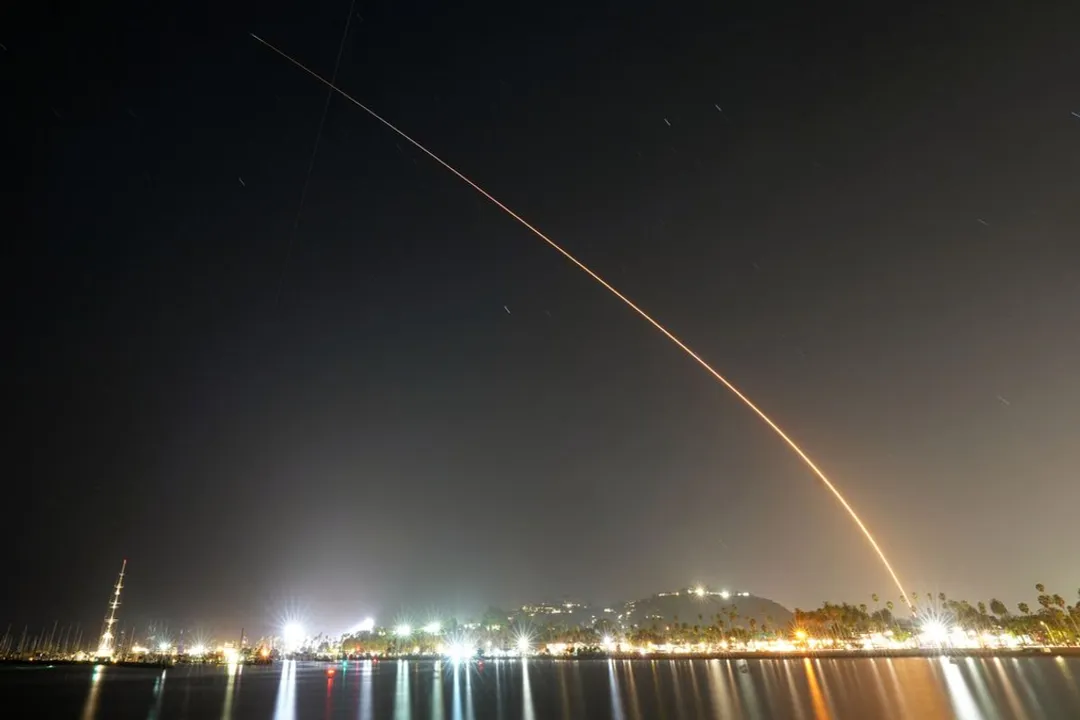
When communication demands high speed and low latency, which is characteristic of modern internet services, operators turn to LEO constellations. [9] Satellites in LEO orbit hundreds or perhaps a couple of thousand kilometers above the surface. [2][9] While they move incredibly fast across the sky from a ground observer's perspective, their proximity grants them excellent signal strength and minimal delay.
The drawback is that their visible footprint on the Earth is much smaller. [1] To compensate for this narrow view and to ensure that any point on the globe is always visible to at least one satellite, a very large number of spacecraft is necessary.
For instance, mathematical models used to determine the requirements for continuous, minimal coverage in LEO at an altitude of around 1,000 kilometers suggest figures like 48 satellites might be the bare minimum needed for a specific configuration. [2] However, if the goal is to ensure wider coverage or provide a layer of redundancy, that number can easily jump to 114 or more for that same altitude band. [2] This is why modern LEO mega-constellations, like Starlink, often propose deploying thousands of satellites—to blanket the entire planet with multiple layers of overlapping coverage for high-throughput services. [7] It starkly contrasts the three-satellite solution for GEO. [2][6]
If you are designing a system, the choice is stark: minimum quantity for maximum delay (GEO) or massive quantity for minimum delay (LEO). For example, if you calculate the number of satellites required for four-fold coverage—meaning four distinct satellites can see a specific location simultaneously—the numbers scale up significantly even for higher orbits than LEO, demonstrating that redundancy demands more hardware regardless of altitude. [5]
# Practical Scaling
To put the scale difference into perspective, consider what happens when we try to apply the GEO logic to LEO. If a GEO system needs 3 satellites, a LEO system might require orders of magnitude more simply because of the Earth's rotation carrying the user out from under the limited view of any single low-orbiting craft. [1][9]
Think about it this way: For a basic communications link where you only need one satellite at some point to connect, the required number is one figure. If you need the signal to be present all the time without any interruption—which means a second satellite must already be visible before the first one sets below the horizon—the constellation must be tightly interleaved, increasing the count significantly. [3] For a truly global communication network designed for continuous, high-speed service, the sheer number of orbital planes and the required spacing mean thousands are inevitable in LEO, whereas GEO remains the domain of the few, slow-moving giants. [7]
It's worth noting that research continues into making these systems more efficient. Recent methods aim to decrease the total satellite count required for global coverage by optimizing orbital designs, suggesting that the historical figures may represent solutions based on older, less sophisticated geometric planning. [4]
# Coverage Quality
The final tally always circles back to the definition of "coverage." If "coverage" means that a signal can reach a spot on Earth sometime during a 24-hour period, the number is relatively small, especially in higher orbits. [1][6] If "coverage" means uninterrupted, high-speed, low-latency access guaranteed at any second—which is the modern expectation for internet access—then the number of satellites swells dramatically due to the need for spatial overlap and orbital dynamism. [2][7] The engineering challenge, then, is balancing the engineering complexity of a few high-power, high-latency craft versus the logistical complexity of launching and maintaining thousands of low-power, low-latency units. [9]
Related Questions
#Citations
How many satellites would it take to cover the earth 100% all the time?
[Request] How many satellites are needed to cover fully ... - Reddit
Since one satellite can see half of the earth, why do we need more ...
New method could decrease number of satellites needed for global ...
Number of satellites needed for global 4-fold coverage as a function ...
[Solved] The minimum number of satellites required for worldwide
How many satellites could fit in Earth orbit? And how ... - Live Science
How can 30-40 GPS satellites cover all of the world's GPS needs?
ESA - Types of orbits - European Space Agency