Are there satellites in low Earth orbit?

The region we call Low Earth Orbit, or LEO, is currently the busiest highway in space, densely populated with functioning spacecraft, defunct hardware, and countless pieces of debris. It is a dynamic zone critical to modern communication, observation, and scientific endeavor, far more active than its higher-orbit counterparts.[7]
# Defining Altitude
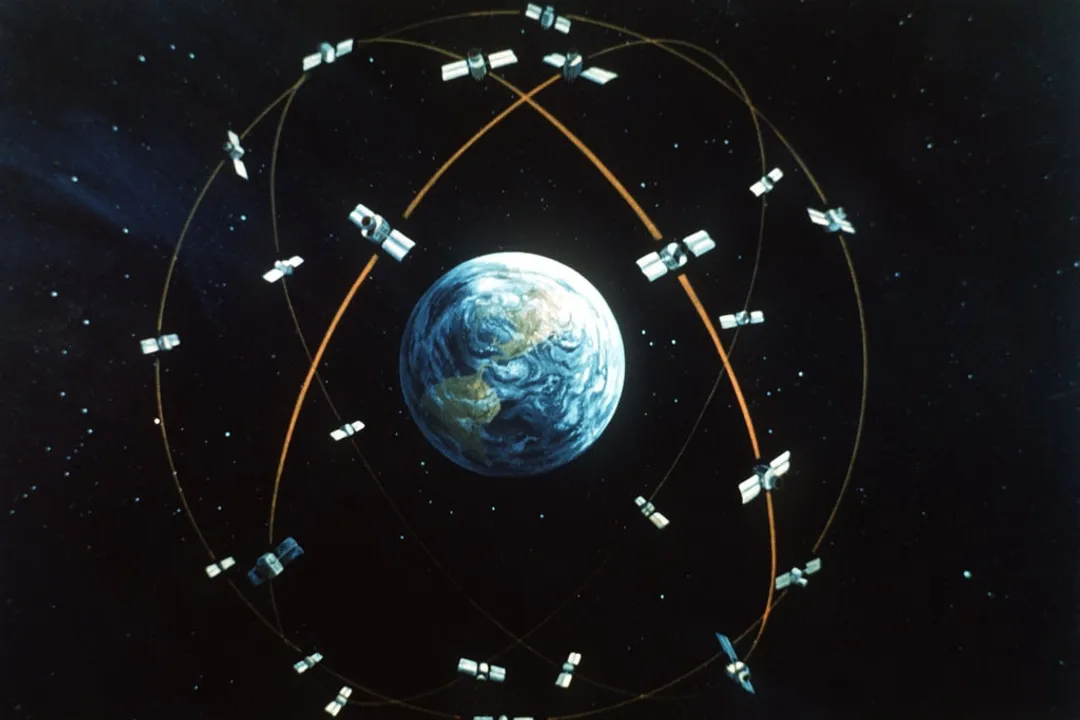
Low Earth Orbit is defined, generally speaking, as the band of space extending from roughly 160 kilometers (about 100 miles) above the Earth’s surface up to 2,000 kilometers (about 1,240 miles) above our planet. [7] This range places LEO closer to the Earth than Medium Earth Orbit (MEO) or Geostationary Orbit (GEO). The presence of atmospheric drag, even at these heights, means that satellites in LEO require propulsion systems to maintain their orbits or risk eventually falling back to Earth. [7] For context, the International Space Station (ISS) circles the planet within this very band, currently orbiting at an altitude around 400 kilometers. [7]
# Population Count

Quantifying the exact number of satellites in LEO is challenging because the population changes almost daily due to new launches and the re-entry of older objects. However, the trend shows a massive and accelerating increase. While there have been thousands of objects launched over the history of spaceflight, the sheer volume of operational satellites has skyrocketed in recent years. [3] We are moving beyond the era where space activity was dominated by a few government agencies or large telecommunication companies; the current landscape is defined by expansive constellations designed to blanket the globe with services. [3] This rapid proliferation means that keeping track of active payloads, let alone non-functional debris, requires constant international monitoring efforts. [3]
# Primary Functions

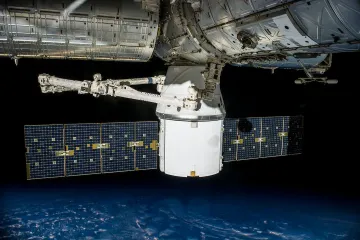
Satellites residing in LEO fulfill an incredibly diverse set of roles, largely due to their proximity to Earth, which allows for high-resolution sensing and low signal latency. [2]
One of the most widespread applications involves Earth observation and remote sensing. [2][8] Satellites operated by companies like BlackSky provide high-resolution imagery, crucial for tasks ranging from environmental monitoring to disaster response and intelligence gathering. [8] Because LEO platforms orbit the Earth much faster than those in higher orbits, they can achieve rapid revisit times, meaning the same location on Earth can be imaged multiple times in a single day. [8] This rapid refresh rate is invaluable for monitoring fast-changing events. [2][8]
Another vital application is communications. [2] These systems often form large constellations designed to provide broadband internet access across the globe. [4] By positioning thousands of smaller satellites in a distributed network, providers can ensure that signals travel a much shorter distance to reach ground terminals compared to signals traveling to distant GEO satellites. [4] This proximity directly translates to lower signal delays, or latency, which is essential for real-time applications like video conferencing or online gaming. [4]
Beyond commercial uses, LEO satellites support scientific research, weather monitoring, and navigation systems. [2] Furthermore, the data collected by these platforms is increasingly being integrated with artificial intelligence and machine learning technologies to extract deeper insights from imagery and sensor readings automatically. [6]
# Latency Advantage

The primary technical reason for LEO’s current popularity, particularly for telecommunications, is its low altitude, which fundamentally shrinks the round-trip time for radio signals. A signal traveling from a user terminal to a geostationary satellite (GEO) and back down to a ground station must cover a distance of nearly 72,000 kilometers. [4] In contrast, a satellite orbiting at, say, 550 kilometers in LEO covers a fraction of that distance on the first leg of its journey. [4] While the exact timing difference varies based on the ground station's location relative to the satellite's sub-satellite point, the reduction in transmission path length is massive. Considering that light speed introduces inherent delays, minimizing physical distance is the most direct way to achieve the sub-50 millisecond latency figures that modern internet users expect, something traditional GEO systems struggle to match. [4]
# Evolving Orbits
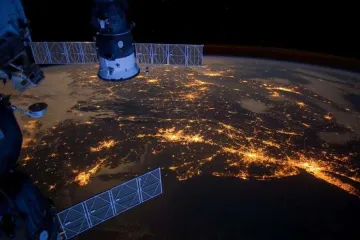
The boundaries of LEO are not static, and engineers are now pushing the envelope into what is being termed Very Low Earth Orbit (VLEO). [5] VLEO satellites operate at altitudes significantly lower than traditional LEO systems, sometimes as low as 300 kilometers or even less. [5] Operating this close to the planet introduces substantial challenges, primarily due to increased atmospheric drag, which necessitates more frequent orbital corrections or the use of technologies that actively use the remaining atmosphere for propulsion. [5] However, this extremely close proximity offers even greater resolution for Earth observation instruments and potentially even lower latency for communications, representing the next frontier in orbital engineering. [5] It requires a new class of spacecraft designed specifically to manage the higher drag environment. [5]
# Commercial Ecosystem
The low cost and faster development cycles associated with smaller satellite technology have spurred a vibrant commercial ecosystem in LEO. [7] This economy involves not just the building and launching of satellites but also ground station networks, data processing centers, and the development of specialized services built atop the collected data. [7] The accessibility of this orbital band has democratized access to space in many ways, leading to greater innovation and competition across various sectors, from climate modeling to high-speed logistics tracking. [7] When analyzing the economics, one must weigh the shorter operational life span—due to atmospheric drag causing faster orbital decay—against the reduced cost of manufacturing and deployment for a given capability. [7]
This trade-off in lifespan versus cost is a defining feature of the modern LEO business model. A traditional GEO satellite might be designed to operate for fifteen years or more because it sits above the measurable atmosphere; conversely, a satellite at 400 km may only have a functional life of five to seven years before its orbit naturally decays sufficiently for re-entry. [7] The industry has adapted by creating high-volume, lower-cost units designed to be replaced frequently, treating the satellite hardware almost as a disposable component within a larger, persistent network service. This design philosophy contrasts sharply with the historical approach of building singular, very expensive, long-life assets.
# Debris Management
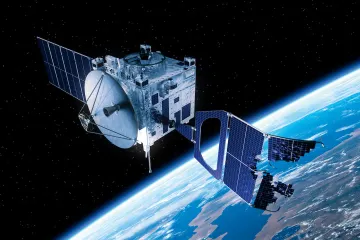
The increased density in LEO brings unavoidable risks, specifically regarding space debris. While atmospheric drag naturally assists in the de-orbiting of lower satellites—a positive aspect that eventually clears the space for new missions—the immediate concern is collision risk among active spacecraft. [7] A single collision at orbital speeds generates thousands of new, untrackable fragments, each capable of causing catastrophic damage to a passing satellite. [7] Managing this environment requires sophisticated tracking and maneuvering capabilities built into every operational satellite, turning collision avoidance into a constant, automated task for mission control teams managing large constellations. The viability of the LEO economy hinges directly on the industry’s ability to mitigate this shared orbital risk responsibly.[7]
Related Questions
#Citations
ESA - Low Earth orbit - European Space Agency
Applications of a LEO Satellite - Dragonfly Aerospace
How Many Satellites are in Space? - NanoAvionics
THE BASICS OF LEO SATELLITE SYSTEMS - Base Camp Connect
the world of very low Earth orbit satellites - The Conversation
Low Earth Orbit Satellites & AI - Untether AI
Commercial Space Frequently Asked Questions - NASA
Low earth orbit (LEO) satellites - BlackSky