What makes satellites orbit the Earth?
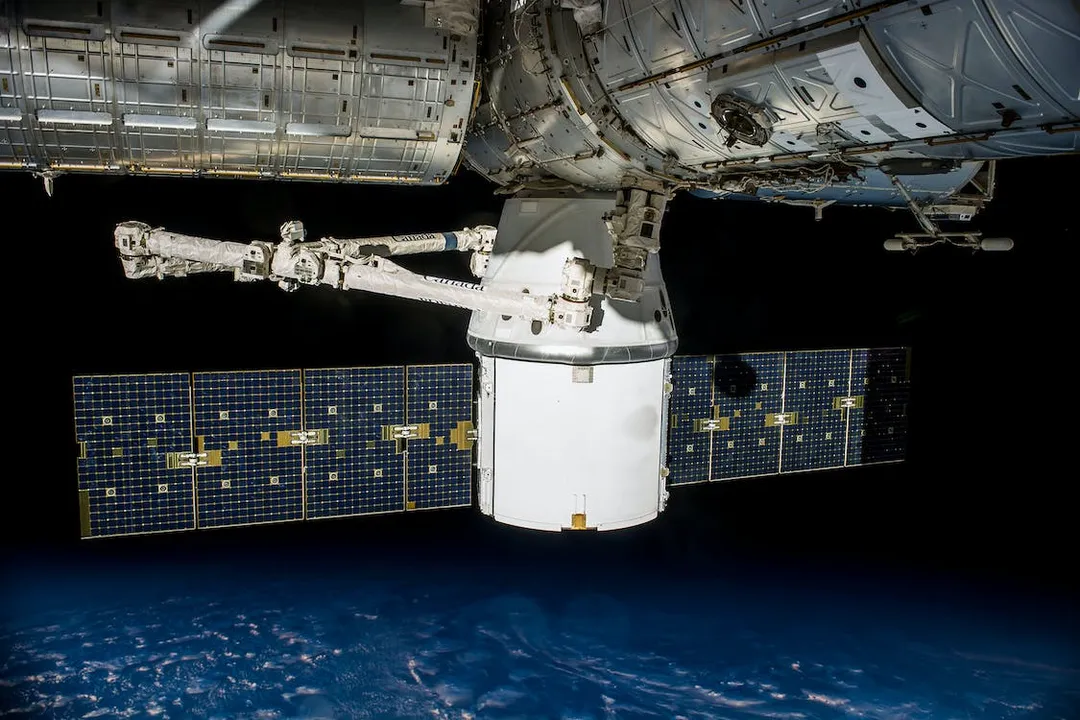
The simple visual of a machine circling our world often conjures the question of how it manages to hang suspended in the void, defying the very gravity that keeps our feet on the ground. The secret to satellite persistence isn't a hidden anti-gravity mechanism or a constant forward thrust; it is a perfectly executed, perpetual state of falling around the planet. [3][4] This balancing act between two fundamental concepts—forward momentum and the relentless pull of the Earth—is the foundation of orbital mechanics. [1][3]
# Falling Around Earth
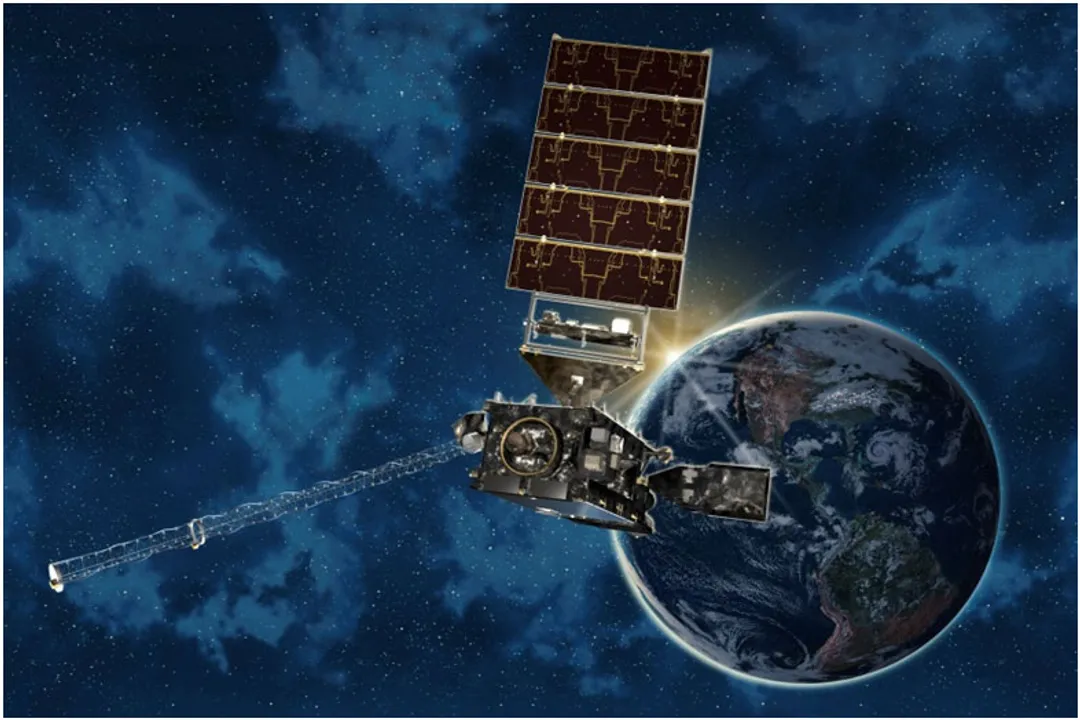
To understand an orbit, forget the idea of something floating aimlessly. An orbiting object, whether it is the Moon or a communication satellite, is being pulled toward the Earth by gravity at every moment. [4][2] If a satellite were simply placed into space without any sideways motion, it would immediately accelerate toward the surface and crash. [3] Conversely, if it were given incredible speed but no gravitational influence, it would fly off in a straight line into the cosmos. [3]
The stable orbit is the result of a precise marriage of these two factors: gravity pulling inward, and the satellite's velocity pushing it tangent to its path. [1][3] Imagine firing a hypothetical cannon from an extremely tall tower. If you throw a ball, gravity pulls it down, and it lands relatively close to the base. [3][4] If you throw it much harder, it travels farther before hitting the ground. [3] If you could launch that cannonball sideways with just the right tremendous velocity, as it begins to fall toward the Earth, the planet’s surface curves away beneath it at the exact same rate. [1][3][4] The object is constantly accelerating towards the Earth’s center, but because it has covered so much horizontal distance while falling, it always misses the surface, resulting in a continuous, closed loop—an orbit. [3][1] In essence, a satellite is in a continuous state of free-fall around the planet. [3]
# The Altitude Velocity Tradeoff
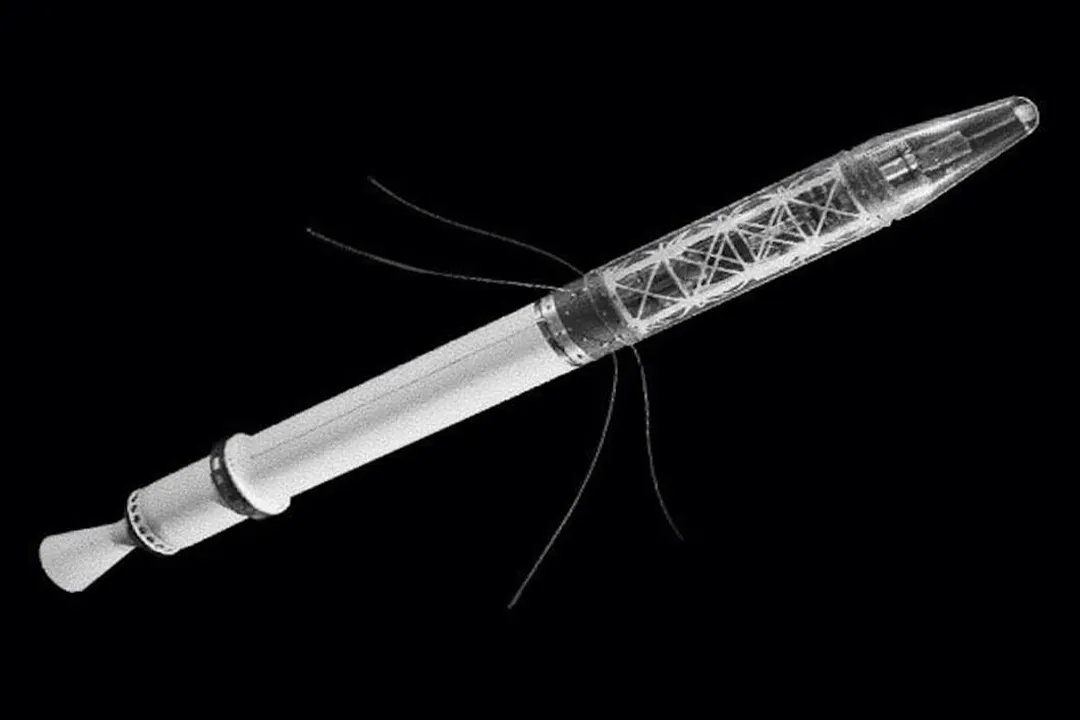
A common misconception is that all satellites move at the same speed to stay up. In reality, the speed required to maintain a stable circular orbit changes dramatically based on how close the satellite is to the Earth. [3][1] The closer an object is to the massive body it is orbiting, the stronger the gravitational pull it must counteract, which demands a higher tangential speed. [3][4]
This creates an inverse relationship between altitude and orbital period: the lower the satellite, the faster it must travel to avoid falling in. [3][1]
| Orbit Type | Approximate Altitude Range | Orbital Speed (Approximate) | Orbital Period | Key Characteristic |
|---|---|---|---|---|
| Low Earth Orbit (LEO) | to | () | Very fast, high-resolution imaging | |
| Medium Earth Orbit (MEO) | to | Varies | Navigation systems (e.g., GPS) | |
| Geostationary Orbit (GEO) | (above equator) | Appears stationary over one point |
Notice how the Lower Earth Orbit (LEO) satellites, like the International Space Station, are the speed demons of space, completing a trip around the globe roughly every 90 minutes. [4][3] They are operating in a gravitational field that is significantly stronger than that felt by their distant counterparts. [3] To put this into perspective, a launch vehicle must impart enough initial energy—sometimes needing speeds nearing just to escape the densest atmosphere and achieve the correct trajectory—to put the satellite into this delicate, high-speed fall. [3]
# Navigating Atmospheric Friction
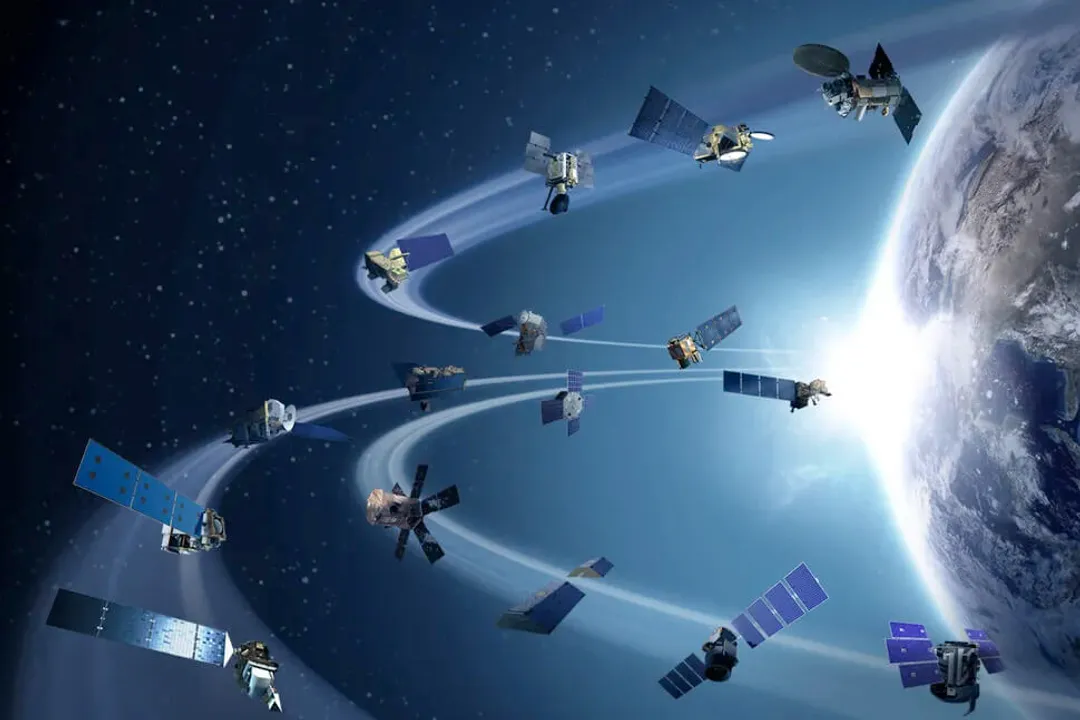
The vacuum of space is what makes orbiting so efficient, but it isn't entirely empty, especially for the lower-flying craft. [4] Satellites generally orbit above because below this point, the atmosphere is dense enough to cause significant issues. [1]
For satellites in LEO, the thin, residual atmosphere creates drag, which is a form of resistance that slightly slows the spacecraft down. [1] Since orbital speed is what keeps the satellite up, a slight loss of speed translates directly into a slight drop in altitude. [1] This continuous process of drag decaying the orbit means LEO satellites have a finite lifespan and require active management. [3] To combat this, they must carry a supply of fuel to perform small corrective burns, known as station-keeping maneuvers, which restore lost speed and raise the orbital altitude just enough to keep them on track. [1][3] In contrast, satellites in higher orbits, like GEO, experience negligible drag, allowing them to maintain their paths for decades with minimal fuel expenditure beyond course correction for slight gravitational nudges from the Sun or Moon. [3]
# Orbital Paths and Purpose
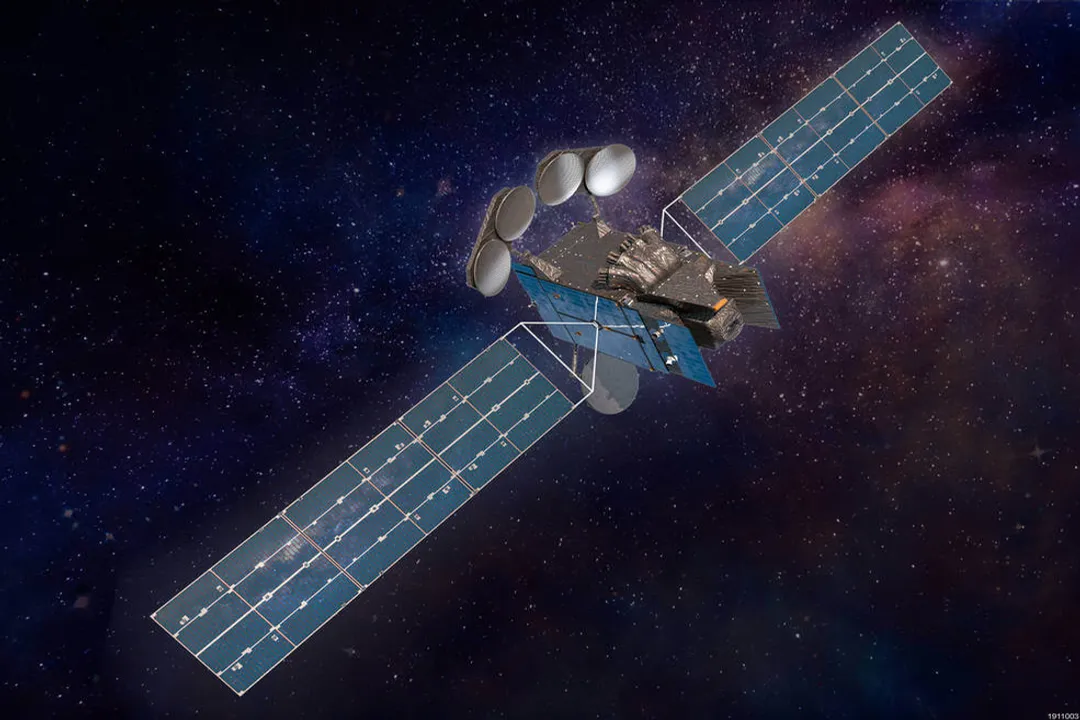
The specific force required to establish the orbit—the initial speed and direction imparted by the rocket—dictates the path the satellite will follow, which is optimized for its mission goals. [4]
# Low Orbit Traffic
Low Earth Orbit (LEO) is popular because the proximity allows for extremely high-resolution imaging of the surface and very low signal latency for communications, like modern internet constellations. [4][1] Because LEO satellites move so quickly relative to the ground, they pass over any single location rapidly. To maintain continuous service, LEO systems rely on a constellation—a network of many satellites constantly handing off coverage as one passes out of range and another moves into view. [4]
# Stationary Views
The concept of a fixed point in the sky is achieved through a specific, carefully calculated path called Geostationary Orbit (GEO). [3][4] This orbit exists only at an altitude of about directly above the Earth’s equator. [4] At this specific distance, the time it takes for the satellite to complete one orbit is exactly the duration of one sidereal day (), which is also the time the Earth takes to rotate once on its axis. [4][3] As the satellite moves west-to-east in the sky at the same rate the Earth spins underneath it, it appears to hover over the same spot. [2][4] This is invaluable for systems like television broadcasting or regional weather monitoring, as ground antennas only need to be aimed once and never moved to track the satellite. [4]
# Global Scans
Another common path is the Polar Orbit, where satellites travel north-to-south, from one pole to the other. [2][4] As the Earth spins beneath the satellite's north-south path, the satellite maps out the entire globe, one strip at a time, providing complete coverage over days or weeks. [2] A specialized variation of this is the Sun-Synchronous Orbit (SSO). [4] This path is engineered so that the satellite passes over any given location on Earth at the same local time every day—for instance, always crossing the prime meridian at exactly 10:30 AM local time. [4] This consistency is critical for environmental monitoring, as it ensures that data gathered across weeks or years is comparable because the sunlight angle (and thus shadows) remains nearly identical for every image taken of a specific location. [4]
One fascinating outcome of this orbital specialization is how we interact with them from the ground. When aiming a dish at a GEO satellite for television, the pointing angle is fixed because the satellite is stationary relative to your location. [3] However, trying to find a LEO satellite for a momentary data burst requires knowledge of its rapidly changing orbital position, necessitating complex ground tracking systems or a quick handoff to the next satellite in the constellation. [3] This highlights that the type of orbit fundamentally dictates the application of the satellite, turning a single physics concept—balanced falling—into many distinct technological solutions. [1]
The forces at play are governed by the inverse-square law of gravity, meaning distance is the dominant variable in calculating the necessary speed. [3] While we often discuss speed in miles per hour or kilometers per second, it is the distance from the Earth's center of mass () that ultimately determines the required orbital velocity () through the relationship . [3] This mathematical truth is why an object in the Moon’s orbit moves much slower than the ISS, despite the Moon being much farther away—the Moon’s vast distance means the gravitational pull is significantly weaker, requiring a proportionally reduced tangential speed to maintain its monthly revolution. [3]
# Beyond Earth's Sphere
It is also worth noting that not all functional satellites orbit Earth. [4] Many missions are launched with enough velocity, called escape velocity, to break free from Earth's gravitational influence entirely. [4] These spacecraft enter a heliocentric orbit, meaning they now orbit the Sun along with the planets. [4] Missions designed to study the Sun up close, like Solar Orbiter, or those sent on grand tours to distant planets, must follow this path. [4] Even in deep space, the same principles apply: their path is a balance between their forward inertia and the Sun's powerful gravitational tug. [4] For deep-space observation, some specialized craft go even farther, orbiting specific points in space called Lagrange points, where the gravitational influences of the Earth and Sun nearly cancel each other out, offering stable, distant vantage points away from Earth’s glare. [4]
#Videos
How Do Satellites Get & Stay in Orbit? - YouTube
Related Questions
#Citations
Why Don't Satellites Fall Out of the Sky? | NESDIS - NOAA
do satellites orbit the earth or are they held stationary by gravity as ...
How Do Satellites Get & Stay in Orbit? - YouTube
What Is a Satellite? | NASA Space Place – NASA Science for Kids
ESA - Types of orbits - European Space Agency
How Do Satellites Orbit the Earth? - XrTech Group