How often do Starlink satellites fall to Earth?
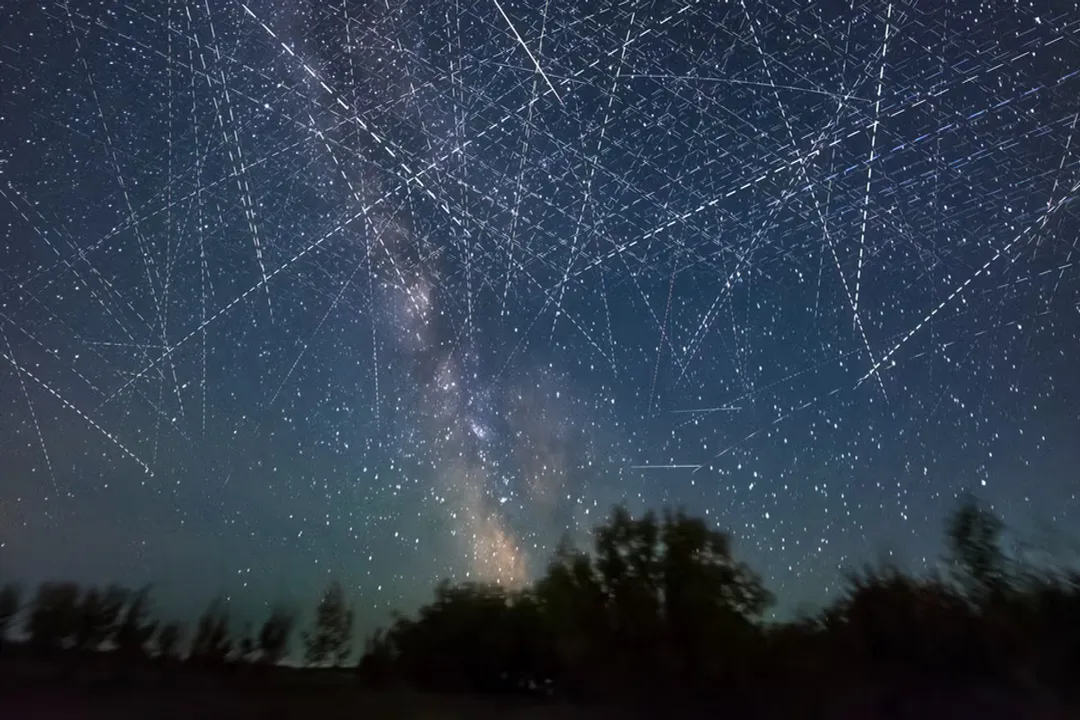
The frequency with which SpaceX's Starlink satellites descend from orbit and burn up in the Earth's atmosphere is a topic of considerable interest, especially as the constellation grows. Current observations suggest that, on average, between one and two Starlink satellites are reentering the atmosphere and disintegrating daily. This ongoing process is an expected part of operating large satellite constellations, which require constant replacement and maintenance of their orbital slots.
# Orbital Mechanics

Starlink satellites are designed with a lifespan, after which they are intentionally deorbited or they eventually succumb to orbital drag. Unlike older satellites that might remain in orbit for decades or centuries if they are too high for atmospheric drag to significantly affect them, Starlink satellites operate in much lower orbits, often around 550 kilometers above Earth. This lower altitude is beneficial for reducing signal latency, which is key for providing high-speed internet, but it comes at the cost of a shorter orbital lifespan due to increased atmospheric friction.
The atmosphere, though seemingly empty at those altitudes, still contains enough rarefied gas molecules to exert a drag force on the spacecraft. Over time, this drag constantly bleeds energy from the satellite, causing its orbit to decay until it enters the denser lower atmosphere where it burns up entirely. The rate at which this decay occurs depends heavily on the satellite's altitude and its ballistic coefficient—essentially how much "draggy" surface area it presents relative to its mass. Some reports indicate that Starlink satellites are being moved to lower orbits, which could accelerate their end-of-life process.
# End of Life Scenarios
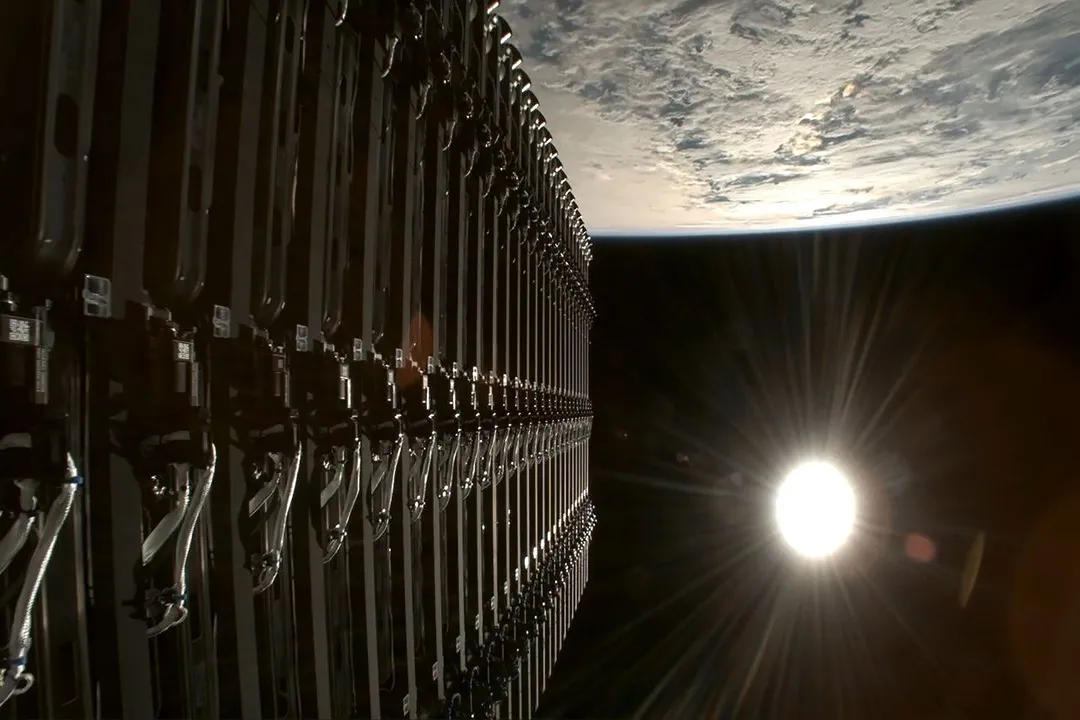
A satellite's final descent can happen in a few ways. Ideally, a satellite that is nearing the end of its planned service life or has experienced a minor, manageable technical issue will execute a controlled deorbit maneuver. This involves firing thrusters to lower its altitude sufficiently so that atmospheric friction ensures a complete burn-up upon reentry, minimizing any risk to people or property on the ground.
However, not all deorbits are planned or tidy. Occasionally, satellites suffer more severe malfunctions that force an unplanned exit from orbit. One documented scenario involves a satellite tumbling uncontrollably after a partial breakup in orbit. Such events, where communication is lost or the satellite enters an unrecoverable state, mean the satellite's fate is left entirely to the forces of atmospheric drag. In these instances, the satellite begins an uncontrolled descent, eventually disintegrating high above the planet. Even when a satellite breaks up, the materials are generally expected to burn up completely due to the intense heat generated upon reentry into the thicker layers of the atmosphere.
For context on the scale of this operation, when considering that one to two satellites are falling per day, and knowing the constellation is intended to eventually number in the tens of thousands, this rate is intrinsically linked to the pace of deployment and retirement. If a constellation aims for 42,000 satellites, a daily loss of two means roughly 730 satellites per year are being retired or lost, emphasizing the continuous maintenance cycle SpaceX must manage. This persistent churn of replacement launches is a fundamental difference compared to older, more static satellite constellations that aimed for multi-decade operational lives in higher orbits.
# Deorbit Timelines
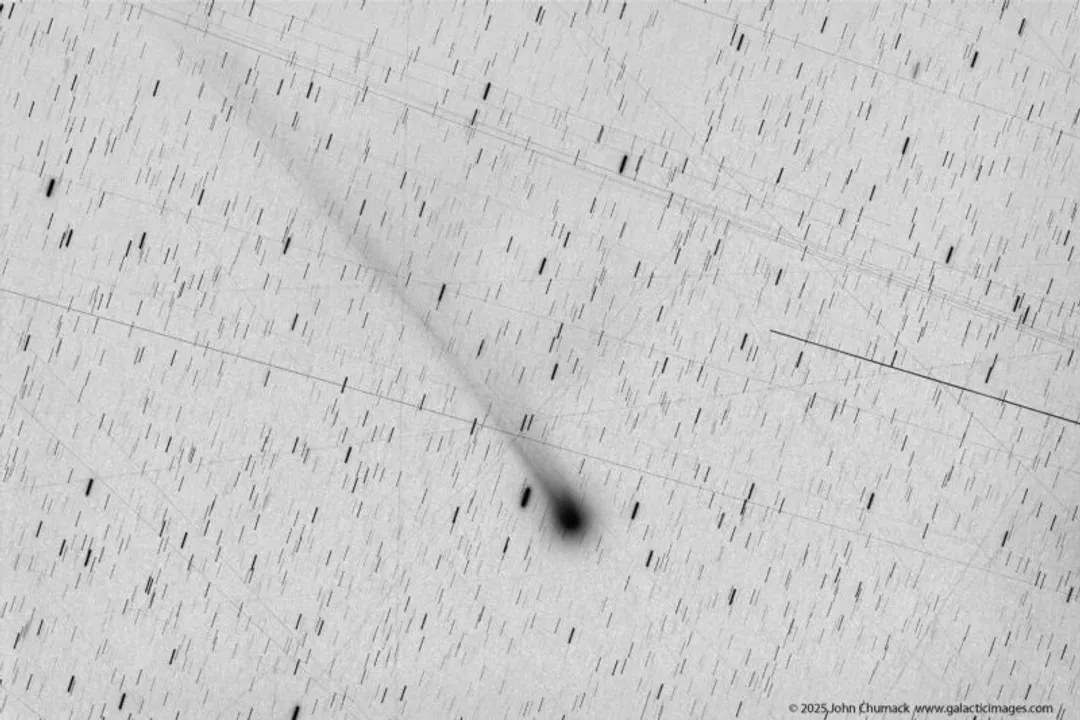
The time a Starlink satellite can survive before deorbiting, assuming a failure or intentional command, is relatively short compared to many other space assets. The lower altitude dictates a much quicker atmospheric interaction. For the first-generation satellites operating around , the decay time, even without deliberate maneuvers, is measured in months rather than years, unless the orbit happens to be particularly favorable. Newer batches of satellites are sometimes placed into even lower orbits, which would decrease this survival time even further.
A satellite's final trajectory is a complex interplay of its remaining velocity, orientation, and the density of the atmosphere at its specific reentry point. While the general goal is a clean burn-up, any debris that survives the plasma phase of reentry is a point of public concern. SpaceX designs the satellites to be very small, which supports the high probability of total disintegration.
If one considers the orbital period for a satellite at a typical operational altitude, it circles the globe roughly every 90 minutes. This means that over the course of a few months, the satellite passes through every potential reentry zone, increasing the likelihood of an encounter with denser air that initiates the final plunge. The difference between a planned deorbit path, where the satellite targets a remote ocean area during a controlled burn, and an uncontrolled demise is significant from a ground safety perspective, even if the probability of impact remains low in both cases.
# Analyzing Reentry Risk
The public conversation around falling satellites often centers on the risk of debris hitting the ground. It is important to contextualize the physics involved. The friction heating experienced by a satellite as it slams into the atmosphere is extreme, capable of vaporizing materials like steel and aluminum. The speed of entry—tens of thousands of miles per hour—converts kinetic energy into intense thermal energy.
For general readers interested in the immediate risk, it is helpful to consider the trajectory and materials. SpaceX designs its hardware to ensure that any surviving material is minimal and lands in unpopulated ocean areas if a controlled burn is executed. When a satellite fails mid-orbit, the resulting breakup spreads the remnants over a large area, which statistically dilutes the impact risk across a vast surface area of the Earth, most of which is water.
Consider the geometry of orbital decay. A satellite doesn't just drop straight down; it follows a path determined by its orbital path when the drag finally becomes overwhelming. A satellite orbiting over North America one day might be over the Pacific the next. This wide dispersal pattern is a natural feature of orbital mechanics that actually aids in safety when managing small, dispersed debris loads. If, hypothetically, the debris cloud from a single, larger object were to survive intact, the danger would be much higher, but the small size and high-burn nature of Starlink components mitigate this.
Here is a rough comparison of the predicted fate of two types of objects in low Earth orbit (LEO), illustrating why the Starlink design prioritizes lower altitude and smaller size:
| Object Type | Typical Altitude (km) | Estimated Deorbit Time (Uncontrolled) | Primary Risk Factor |
|---|---|---|---|
| Large Rocket Body/Upper Stage | 800 – 1000 | Years to Decades | Larger surviving debris risk [9] |
| Standard Starlink V2 Mini | ~550 | Months | High burn-up probability [3][10] |
The design choice to use lower orbits, even if it shortens the satellite's effective lifespan by years, demonstrates a confidence in the atmospheric disposal mechanism over long-term orbital management for tens of thousands of spacecraft. The expectation is that the atmosphere itself acts as the final trash compactor.
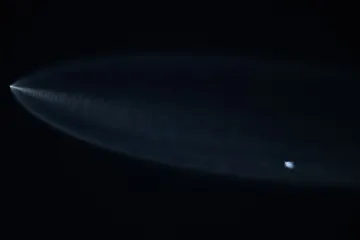
# Communication Loss and Failures
Beyond planned deorbits, the actual process of losing a satellite can sometimes be sudden. Reports indicate that SpaceX periodically announces the loss of communication with one of its units, which is a precursor to its eventual reentry. When this happens, the satellite is usually considered non-operational, and ground control ceases active maneuvering or attempts at recovery.
One specific incident detailed the process where a satellite began tumbling after an apparent in-orbit event, leading to its eventual uncontrolled descent and breakup. Such incidents highlight the reliability challenges inherent in deploying hardware in such massive numbers. Even with high component reliability, the sheer quantity means that a few failures every month are statistically unavoidable. These failures shift the satellite from a controlled disposal timeline to an uncontrolled one, though the physics of final atmospheric destruction remain largely the same given their low starting altitude.
The process of tumbling, where the satellite rotates unpredictably, actually increases its effective drag profile, potentially accelerating its demise compared to a satellite maintaining its optimal, low-drag orientation. This unintended acceleration through the atmosphere means that the time from tumbling detection to atmospheric entry might be shorter than if the satellite had simply entered a passive, stable coasting phase.
# Public Observation and Awareness
While the loss of one or two satellites daily might sound frequent in absolute terms, the reality is that these events occur thousands of miles above most populated areas, and the satellites burn up high enough that they are rarely seen as fireballs by the general public unless conditions are perfect. Most people who do notice these events are often those keenly tracking space activity or those observing during twilight hours when the remnants catch the sunlight after sunset or before sunrise.
The high visibility of launch events often leads to misconceptions about the deorbit events. Launches are deliberate, spectacular actions, whereas deorbits are often passive, quiet affairs deep in the atmosphere. For an observer on the ground to witness a Starlink reentry, the timing, location, and the satellite's specific breakup altitude must align perfectly, making actual sightings a relatively rare event for any single individual. The fact that we know the rate is one or two per day comes from telemetry data and tracking, not mass public reports, underscoring the difference between the orbital reality and ground-level perception.
#Videos
Starlink Satellites Are Falling From the Sky — But Why? - YouTube
Related Questions
#Citations
1 to 2 Starlink satellites are falling back to Earth each day - EarthSky
Starlink is burning up one or two satellites a day in Earth's atmosphere
SpaceX's Satellites Are Falling From the Sky Every Single Day
Spacex starlink satellite tumbling out of orbit - Facebook
A SpaceX Starlink satellite is tumbling and falling out of space after ...
Starlink Satellites Are Falling From the Sky — But Why? - YouTube
SpaceX loses contact with Starlink satellite after mishap - Reuters
Elon Musk's Starlink fleet is burning up in orbit, scientists say
How long can the SpaceX Starlink satellites survive before they ...
Starlink satellites fall to Earth faster during increased solar activity ...