What happens when Starlink satellites fall?

The sight of a satellite fragmenting high above the Earth often captures public attention, raising immediate questions about what is happening to these objects operating in low Earth orbit. On average, the reality is that one to two Starlink satellites complete their operational lives or experience failures that cause them to fall back to Earth every single day. This constant, albeit often unobserved, process involves objects either being intentionally commanded to descend or suffering anomalies that lead to an uncontrolled atmospheric return.
# Frequency Rate

The sheer scale of the Starlink constellation means that failures, whether minor or catastrophic to the individual unit, are statistically inevitable over time. While the majority of these descents occur without fanfare, sometimes a satellite failure results in a spectacular visual display. A notable incident in mid-December 2025 involved SpaceX confirming the loss of communication with a specific satellite, which subsequently began an uncontrolled descent. This particular event became public because the satellite was tumbling and appeared to break apart in orbit, creating debris that was visible from the ground. Reports from that time indicated that the satellite had experienced a "strange anomaly" leading to the breakup.
# Failure Modes

The return of a satellite to the atmosphere generally falls into two categories: planned de-orbiting or unplanned failure. SpaceX includes de-orbiting capabilities in its satellites, allowing them to initiate a controlled burn-up sequence when they reach the end of their service life or if a serious malfunction occurs that cannot be resolved remotely. This is the desired outcome for responsible space operations, ensuring the hardware is disposed of safely.
However, the events that make headlines are usually the unplanned returns. When a satellite suffers an internal malfunction or is struck by debris, it can lose communication and control, as was the case in the reported December 17th incident. Once the object tumbles and loses the ability to orient itself for controlled re-entry, gravity and atmospheric drag take over, beginning its inevitable fall. If the object is still structurally intact, it might simply begin a slow spiral down; if the failure involves a rapid depressurization or collision, it can appear as an explosion or rapid breakup while still in orbit.
# Visual Signatures
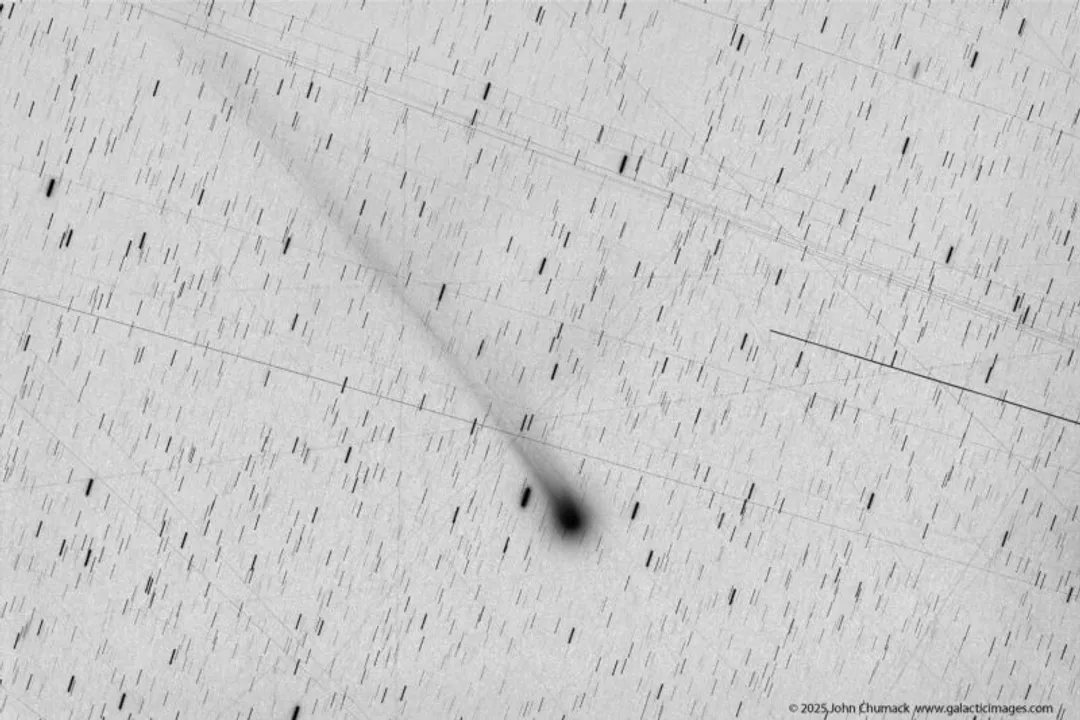
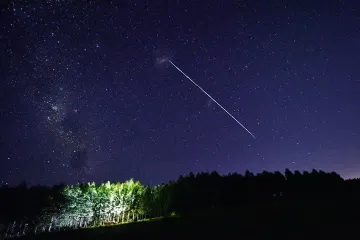
When a satellite breaks apart prematurely in the upper reaches of space, the resulting visual spectacle can be quite distinct from a typical meteor. Instead of a single bright streak, observers have reported seeing a "string of pearls" effect, where pieces trail behind the main body as they all begin to enter denser layers of the atmosphere. This is essentially a cascade failure where structural integrity is lost, and the individual components begin to heat up and ablate at slightly different rates due to variations in their mass, shape, and angle of attack. Videos capturing these events often feature what looks like a slow-motion, fiery disintegration, sometimes characterized as an explosion. The visibility of this event depends heavily on the altitude at which the breakup begins and the local time of day; objects reflecting sunlight from above the horizon while the ground observer is in darkness often create the most striking displays.
# Atmospheric Fate
Regardless of whether the descent is planned or accidental, the end result for nearly all Starlink satellites is complete destruction within the Earth's atmosphere. These satellites are intentionally designed to de-orbit and burn up, a critical safety feature for the crowded orbital environment. A satellite re-entering at orbital speeds generates tremendous heat due to atmospheric friction, causing the spacecraft and its components to vaporize long before they reach altitudes where ground impact is a realistic concern.
This total burn-up is contingent on the satellite breaking into pieces small enough to fully ablate. While the design aims for complete disintegration, the appearance of debris is a risk associated with any large object breakup. When a satellite fragments unexpectedly, like the one seen breaking into pieces trailing the main body, it means some components might survive longer than intended. SpaceX has engineered its satellites using materials intended to promote this full ablation, minimizing the risk of survivable pieces reaching the ground.
# Orbital Reliability
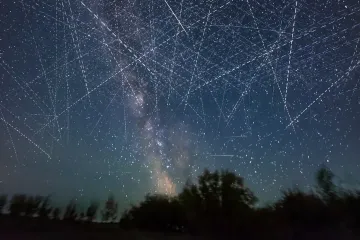
Considering the thousands of satellites SpaceX deploys, having one or two fall daily suggests a baseline failure rate of perhaps less than one percent per satellite over its intended lifespan, though exact public figures for overall fleet health are proprietary. The key technical consideration is the altitude. Satellites are launched into a relatively low orbit, which ensures that, even if propulsion systems fail, atmospheric drag will eventually pull them down.
When we consider the physics of de-orbiting, the difference between a safe, controlled descent and a spectacular, uncontrolled break-up often boils down to timing and altitude. A planned de-orbit maneuvers the craft down to altitudes where the atmosphere is thick enough to ensure rapid burn-up, perhaps starting the visible process high up but ensuring only dust remains by the time it passes over populated areas. An anomaly, conversely, might cause the satellite to tumble violently while still in a much higher, thinner atmosphere, leading to the "string of pearls" effect because the pieces have more distance to travel and heat up sequentially. Observing these incidents provides engineers with valuable data points on material stress and component failure under orbital conditions, even if the loss of the individual unit is a setback for service continuity.
# Observer Protocol
For those lucky or unlucky enough to witness one of these events, understanding what you are seeing can be important. If you observe something breaking up high overhead, especially if it appears structured or in a line rather than a random flash, it is highly likely to be a piece of space hardware, such as a Starlink satellite, rather than a natural meteoroid. If you see what looks like a controlled burn-up, it is likely a planned de-orbit, but if you see rapid, asymmetric fragmentation or flashing lights indicating electrical failure, it is an anomaly. When reporting such an event, noting the exact time, direction of travel, and the visual characteristics—specifically if it looked like a single point, a trail of lights, or an explosion—can provide useful, real-world validation for tracking agencies, even if the specific satellite is already lost to communication control. Being able to estimate the apparent speed, compared to known aircraft or satellites, can also help analysts confirm the trajectory and altitude when you see something breaking apart in the night sky.
#Videos
What Happens If SpaceX Starlink Satellites Start Colliding - YouTube
Related Questions
#Citations
A SpaceX Starlink satellite is tumbling and falling out of space after ...
On Dec 17, Starlink experienced an anomaly on sat 35956, resulting ...
SpaceX loses contact with Starlink satellite after mishap - Reuters
A Starlink Satellite Is Tumbling Toward Earth After a Strange ...
What Happens If SpaceX Starlink Satellites Start Colliding - YouTube
SpaceX's Satellites Are Falling From the Sky Every Single Day
A Starlink satellite seems to have exploded - The Verge
1 to 2 Starlink satellites are falling back to Earth each day - EarthSky
Starley announced it, lost a satellite due to a malfunction ... - Facebook