What happens if the universe expands too fast?
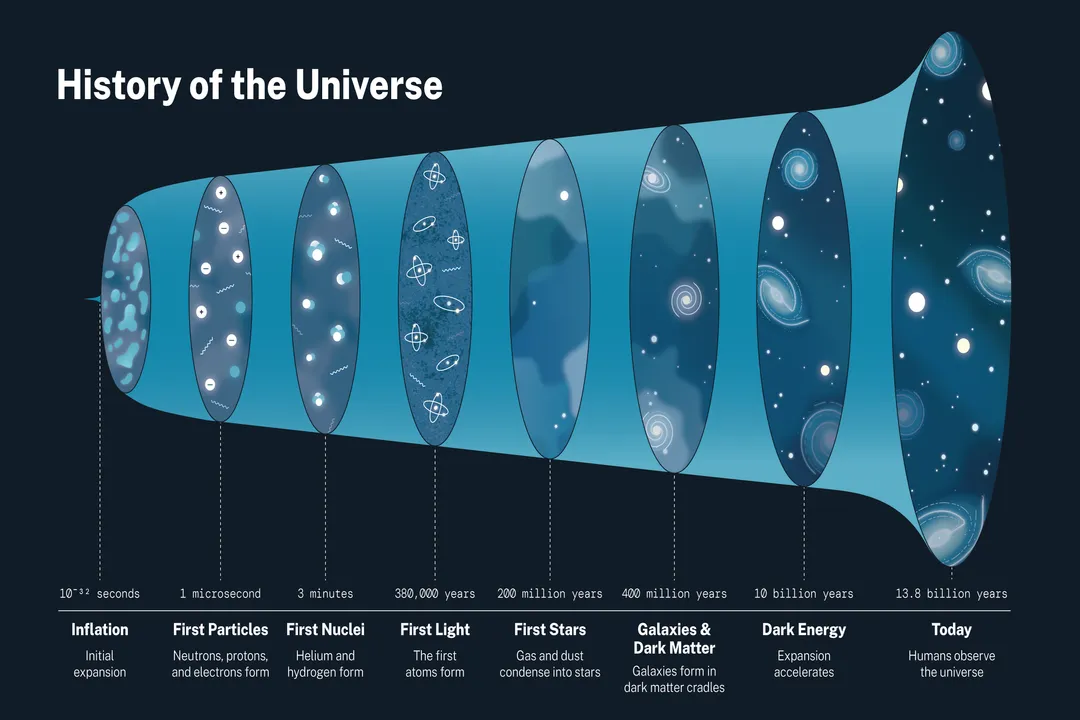
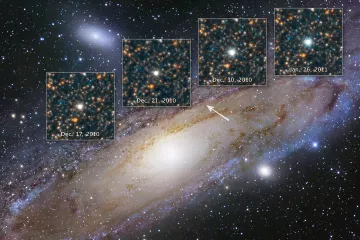
The universe isn't just getting bigger; it’s stretching at an ever-increasing rate, a phenomenon that has left cosmologists simultaneously thrilled and perplexed. For decades, the prevailing expectation, based on the dominant force of gravity, was that the expansion initiated by the Big Bang should be gradually slowing down. However, observations beginning in 1998, particularly involving Type Ia supernovae—which act as dependable "standard candles" for measuring vast cosmic distances—revealed the opposite: the expansion is accelerating. This acceleration is attributed to a mysterious, pervasive repulsive force scientists have named dark energy.
What happens if this expansion proceeds too fast, or perhaps, much faster than the leading theoretical models predict? The answer depends heavily on the scale—whether we are talking about the fabric of space between galaxies or the local environment bound by gravity, and whether the acceleration continues indefinitely or reaches catastrophic speeds.
# Cosmic Speed Limit
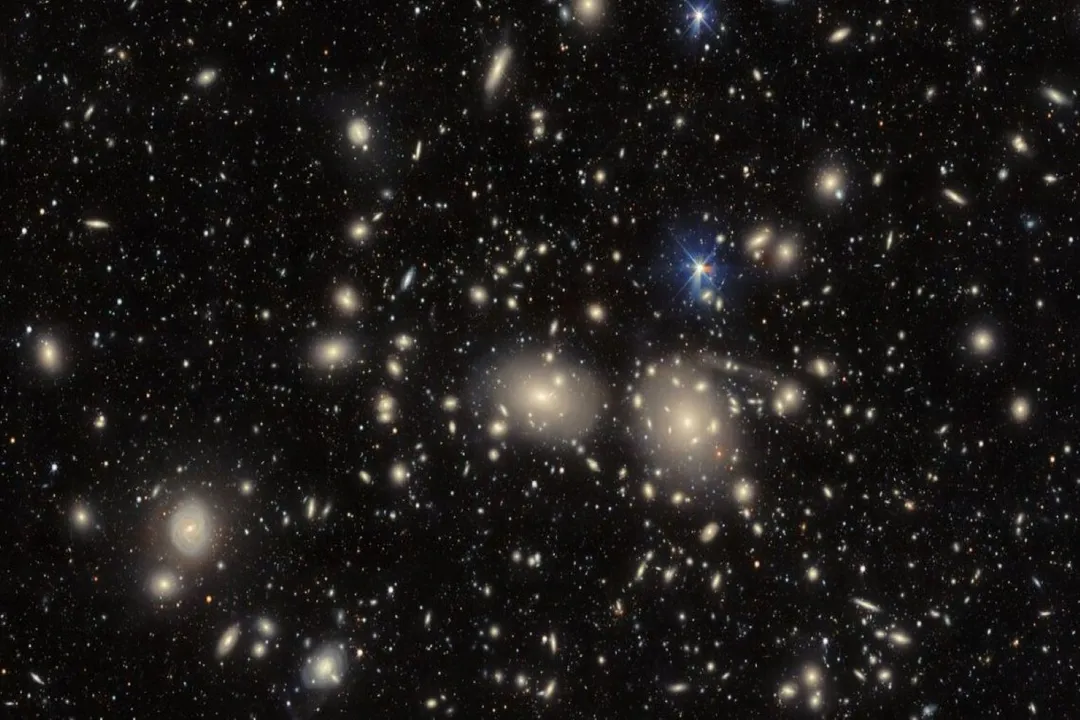
A common conceptual hurdle when discussing rapid cosmic expansion involves the speed of light, denoted as . It is a fundamental rule that no mass, energy, or information can travel through space faster than . Yet, observations show that galaxies far enough away from us are receding at speeds that exceed the speed of light. This apparent paradox is resolved by understanding what is moving.
The expansion isn't the local motion of galaxies through space; it is the stretching of space itself between those galaxies. Imagine dots drawn on the surface of a balloon being inflated: the dots themselves aren't running across the rubber surface, but the separation between them increases because the rubber fabric expands. The balloon fabric—spacetime—has no speed limit on how fast it can inflate, even if the dots (galaxies) moving across it are restricted. If the universe expands faster than light can traverse the distance between two points, those points are, effectively, moving away from each other faster than light speed because new space is continuously being generated between them.
This rapid separation has direct, observable consequences for what we can ever hope to see.
# Fading Horizons
The finite speed of light dictates that when we look at a distant galaxy, we are seeing it as it was in the past—the farther away, the deeper into the past. As the expansion accelerates due to dark energy, the speed at which distant galaxies recede increases. If the recession velocity of a galaxy, driven by this expansion, exceeds the speed of light, the light it emits now will never reach us, no matter how long we wait [cite: 2, contextual analysis from 3].
This leads to the inevitable shrinking of our observable universe. If the universe expands "too fast"—meaning dark energy remains constant or strengthens, causing sustained acceleration—more and more galaxies will cross this superluminal boundary. Their light, already redshifted (stretched to longer wavelengths) by the expansion, will eventually cease to reach us entirely. These galaxies become permanently isolated, fading into an unseeable future, their existence only known to us through the ancient light that reached us before they crossed the threshold. This leads to an increasingly lonely future for any surviving observers in our own galaxy.
# The Hubble Tension: A Measure of "Too Fast"
The concept of expanding "too fast" is currently quantified in modern cosmology through the Hubble tension. This is the significant disagreement between two primary ways of measuring the current expansion rate, quantified by the Hubble constant ().
The CDM model, the standard framework incorporating dark energy () and cold dark matter (CDM), allows physicists to predict the Hubble constant based on observations of the very early universe, specifically the cosmic microwave background (CMB)—the relic radiation from about 380,000 years after the Big Bang. This early-universe prediction sets one value for .
Conversely, when cosmologists measure the distances and recession speeds of relatively nearby galaxies today (the "late universe" expansion), they derive a different, consistently higher value for . This discrepancy suggests the local expansion rate is faster than the early-universe model accounts for. One recent recalibration using a refined "cosmic distance ladder" suggested a value around (km/s/Mpc), which is notably higher than the CMB-derived prediction.
| Measurement Source | Era Observed | Implied Expansion Rate | Implication for "Too Fast" |
|---|---|---|---|
| Cosmic Microwave Background (CDM) | Early Universe ( yrs post-BB) | Lower Predicted | The standard model predicts a slower late-time expansion. |
| Supernovae/Distance Ladder | Late Universe (Local Measurements) | Higher Measured | The universe is currently expanding faster than the early model predicted. |
This divergence hints that the CDM model might be incomplete, possibly requiring new physics related to dark energy evolving over time, interactions between dark energy and dark matter, or even modifications to general relativity. The failure of many recent theoretical tweaks to resolve this tension underscores the depth of the problem posed by a universe that seems to be speeding up beyond expectations.
# Time Dilation Observed
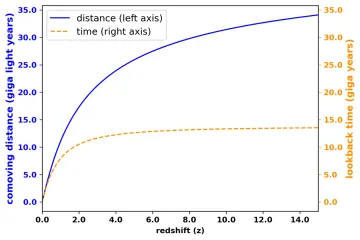
When we look at extremely distant objects, we observe a peculiar effect on their timelines. A galaxy at a high redshift ()—meaning it is moving away from us very quickly due to the expansion stretching the space between us since the light was emitted—will appear to have its events running slower. For instance, if a supernova in that galaxy should take a certain time to brighten and fade, we observe that process taking times longer.
This time dilation is a genuine consequence of the cosmological expansion connecting the observer to the source. The inhabitants of that distant galaxy, however, would perceive time in their local restframe normally; they would see our clocks running slow, as from their perspective, we are the ones receding rapidly. The key takeaway here is that the overall expansion of space does not affect the passage of time within a local, gravitationally bound system, such as our own solar system or the Milky Way galaxy. Time itself does not universally speed up or slow down across the cosmos in a uniform way; local time remains consistent.
# Catastrophic Endings
What happens if the expansion continues to be "too fast," implying the dark energy driving it is strong or its nature is more aggressive than the simple cosmological constant suggests? This leads to speculation about the universe’s ultimate fate.
If dark energy continues to dominate and push space apart, the universe faces a long, cold death known as the Big Freeze or Heat Death, where galaxies become isolated, stars burn out, and the universe cools to near absolute zero.
However, if the acceleration becomes so powerful that it overwhelms all other forces—a scenario sometimes associated with certain models leading to a Big Rip—the consequences become far more dramatic. In a Big Rip scenario, the rate of expansion becomes infinite in a finite time, leading to a sequence where the cohesive forces holding structures together are overcome:
- Galaxies are pulled apart.
- Gravity binding galaxy clusters fails.
- Stars and solar systems are unbound.
- Finally, the expansion tears apart planets, molecules, and eventually, even the fundamental particles themselves.
While the Big Rip represents the most severe consequence of an over-accelerating universe, it is a possibility billions of years in the future. Current projections suggest that the imminent threat to life on Earth is the Sun exhausting its fuel and expanding into a red giant in about 5 billion years—a timescale vastly shorter than the hypothetical Big Rip.
# Local Immunity
For us, living on Earth, the fact that the universe's expansion rate is faster than predicted, or even that distant galaxies are receding faster than , is effectively irrelevant for any practical timescale. The expansion is a function of distance; the larger the separation, the more space there is to expand between two points.
Within our solar system, the Earth is held to the Sun by gravity. Within our galaxy, stars are held by gravity. These forces are vastly stronger than the stretching influence of dark energy over such small scales. It takes an incredibly long time—trillions of years—for the expansion to cause even minuscule changes in the distances between gravitationally bound structures.
Therefore, if the universe is expanding too fast, the immediate effect is not on our daily lives, our planet, or even our local stellar neighborhood. The primary impact is purely cosmological: it changes the predicted history of the universe, causes the Hubble tension, and shrinks the visible cosmic horizon for future astronomers. The "too fast" expansion mainly translates into a more fundamental revision of physics necessary to explain why space is being pushed apart with such urgency.
Related Questions
#Citations
Eli5: The universe is expanding faster than expected. What happens ...
Does time slow down because the universe is expanding at an ...
What is Dark Energy? Inside Our Accelerating, Expanding Universe
The Universe seems to be expanding fast. Too fast, even
Why is the universe expanding faster than predicted? A cosmologist ...