What happens when cosmic objects collide?
The universe is a dynamic arena where objects of all sizes—from rogue planets to colossal galaxy clusters—are constantly in motion, and occasionally, these trajectories intersect in spectacular, violent fashion. When cosmic bodies meet, the results range from near-silent gravitational sculpting over eons to explosive events that ripple across billions of light-years, releasing energies far beyond human comprehension. Understanding what occurs requires looking at the scale of the participants, as the outcome of two stars colliding is vastly different from that of two sprawling island universes smashing together.
# Scale of Impact
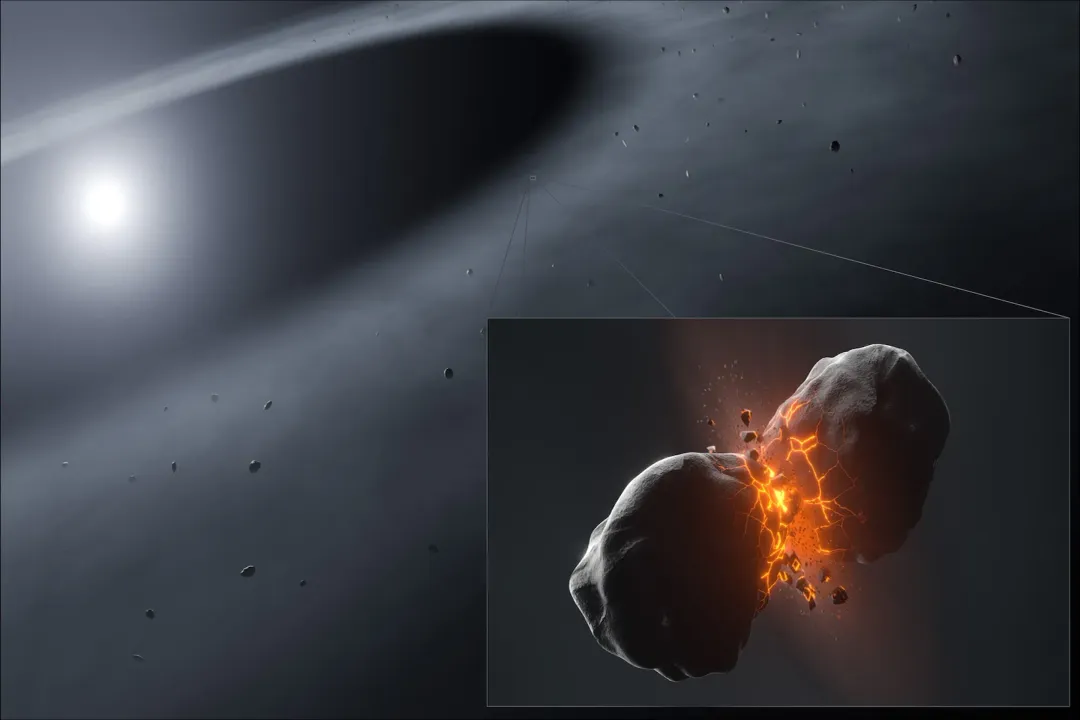
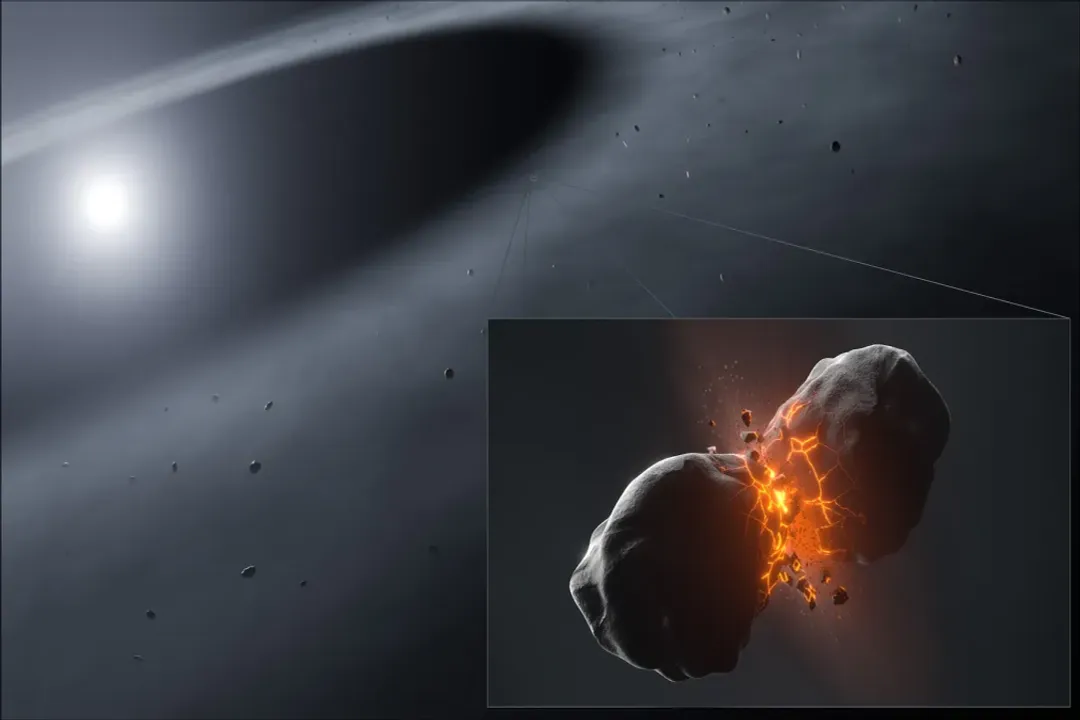
A cosmic collision is fundamentally an interaction driven by gravity and momentum, but the consequences depend heavily on the mass and composition of the objects involved. On the smallest scales relevant to astronomy, two asteroids striking each other can create a new, larger object, or shatter into dust, depending on the kinetic energy involved. Moving up the scale, the fate of planets varies. If two planetary bodies collide, the energy involved dictates whether one is simply scarred, whether they merge into a larger world, or if they vaporize entirely, adding their constituent materials to the resulting debris field.
It is a common misconception, perhaps fueled by science fiction depictions, that space is densely packed, making stellar collisions frequent and catastrophic. In reality, even within a galaxy, the distances between stars are enormous, meaning that while collisions happen, they are infrequent events relative to the lifespan of the universe. When stars do approach each other closely enough, the interaction depends on their stages of life and their proximity. If two stars graze each other, their outer atmospheres might mix, transferring mass and altering their evolutionary paths. In rarer, more direct hits, the stars could merge, or the combined mass could trigger a supernova explosion, creating an intense burst of light and energy.
# Galaxy Encounters
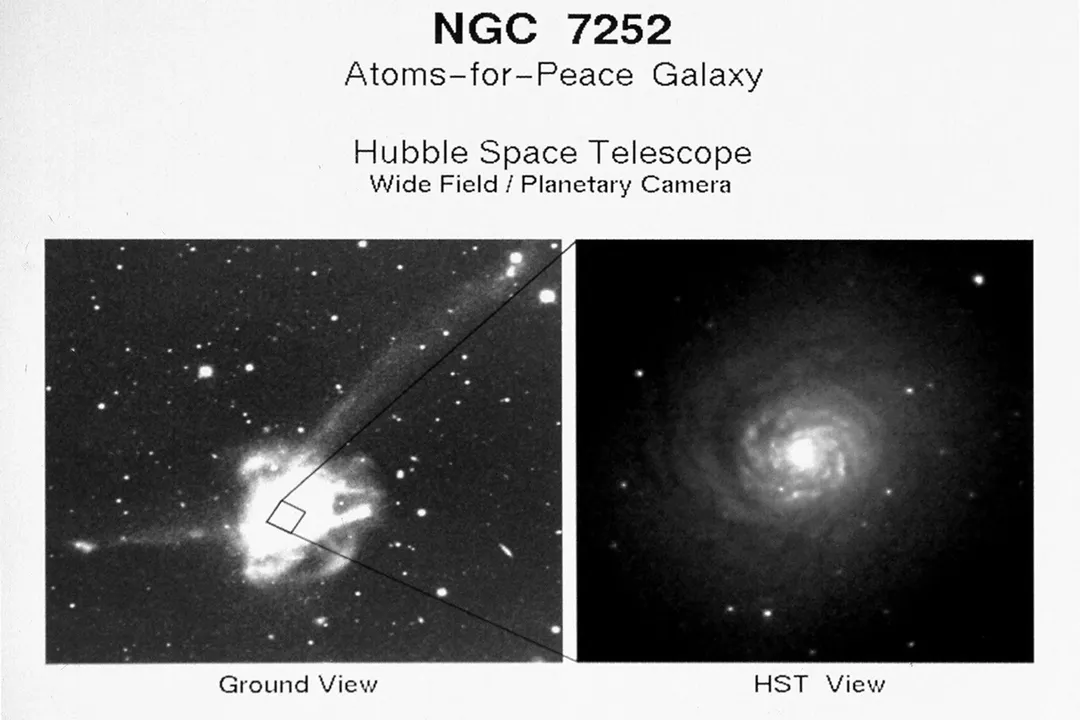
When we examine collisions on the grandest observable scale—the collision of galaxies—the immediate picture of destruction changes entirely. Galaxies are predominantly composed of empty space between their constituent stars, meaning that when two spiral galaxies merge, direct star-on-star impacts are statistically rare. The primary visible effects of a galaxy merger are not the stars themselves crashing, but rather the dramatic interactions between their vast clouds of interstellar gas and dust.
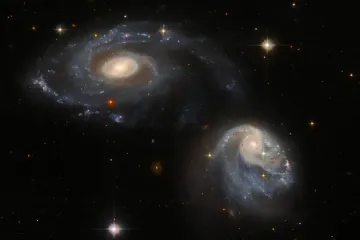
As two galaxies approach, their gravitational fields begin to distort one another, pulling long tidal tails of stars and gas out into space—a process sometimes visible through powerful telescopes like the Hubble Space Telescope. The gas clouds, however, interact directly. These immense clouds slam into each other, which rapidly compresses the gas. This compression acts as a trigger for star formation, often leading to a massive, bright burst of new stars, sometimes called a "starburst" galaxy phase, as the fuel for stellar nurseries is suddenly made available. The Hubble Space Telescope has provided detailed views showing that galaxy collisions are less like a head-on car crash and more like a prolonged, messy gravitational dance that can last for hundreds of millions of years. Over time, the two distinct galactic structures blend into a single, larger entity, often resulting in a smoother, elliptical galaxy rather than the original spiral shapes. Observing these interactions gives astronomers critical insight into how structures in the universe evolve and grow over cosmic time.
# Warping Reality
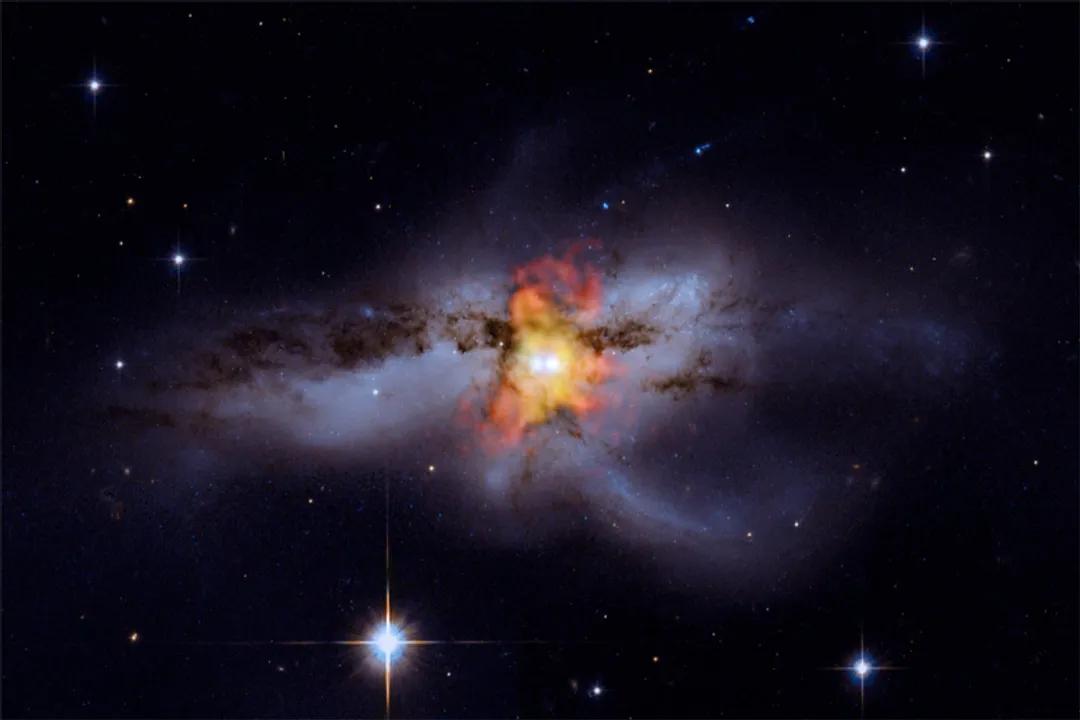
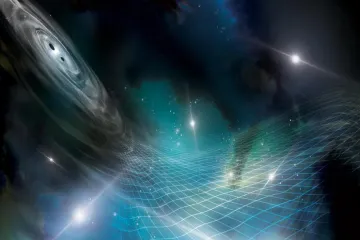
Where the true, dramatic reshaping of the cosmos occurs is when the most massive objects collide: black holes. A black hole is an object with such immense gravity that nothing, not even light, can escape its event horizon. When two black holes, perhaps orbiting each other in a binary system, finally spiral inward to merge, they cause a profound effect on the fabric of spacetime itself.
According to Einstein’s theory of General Relativity, mass warps the surrounding spacetime, much like a bowling ball placed on a stretched rubber sheet. A collision between two such massive, dense objects generates powerful gravitational waves—ripples in spacetime that travel outward at the speed of light. These waves carry away enormous amounts of energy, signifying the final, violent merger. While the actual merging of the singularities is an instantaneous event, the process that leads up to it—the inspiral—can take an immense amount of time, depending on the initial separation and masses of the black holes. The direct observation of these gravitational waves by instruments like LIGO allows scientists to "hear" the universe's most extreme collisions, providing data unavailable through light-based telescopes alone. The merger of two supermassive black holes, for example, can release an amount of energy equivalent to several suns converting their entire mass into pure energy in a fraction of a second.
# Observational Evidence
For general readers, the most accessible way to grasp the sheer violence of these events comes from observing the electromagnetic spectrum, often using tools like the Hubble Space Telescope. Hubble images capture the aftermath and the processes during galactic mergers, showcasing dramatic arcs, plumes, and streams of glowing gas and young stars. The light we receive from these events often carries the signature of extreme energy release, sometimes appearing as a quasar or an active galactic nucleus if the merger triggers intense feeding activity by a central supermassive black hole.
It is useful to contrast the timescale of observation with the event itself. A galaxy merger can take hundreds of millions of years to complete, while the final, most energetic stage of a binary black hole inspiral may last mere seconds. This disparity in duration means that when we see the result of a merger, we are looking at an ancient snapshot of a process that likely concluded long ago, or we are observing the light from the initial shockwaves that have taken billions of years to reach us.
# Comparative Scale of Cosmic Collisions
To better appreciate the variety, one can conceptualize the energy release across different scales. While a direct star collision releases the energy equivalent of a supernova, and a black hole merger releases vast gravitational energy, a galaxy collision is more about structural rearrangement.
| Collision Type | Primary Effect | Energy Signature | Typical Timescale |
|---|---|---|---|
| Asteroid/Planet | Fragmentation or Accretion | Kinetic/Thermal | Seconds to Years |
| Star-Star | Mass transfer, Supernova | Light, Heat, Neutrinos | Instantaneous (Explosion) |
| Galaxy-Galaxy | Gas compression, Starburst | Intense Visible Light | Millions to Billions of Years |
| Black Hole-Black Hole | Spacetime distortion | Gravitational Waves | Final seconds of inspiral |
This table highlights that the most visually apparent events (galaxy mergers) are also the most temporally drawn-out, while the most energetically intense events (black hole mergers) are often silent in light, speaking only through the distortion of spacetime itself.
# Final Thoughts on Interaction
The fate of the objects in a collision is not always destruction or merger. Sometimes, an object merely receives a "slingshot" effect from the gravitational interaction, being flung out of its original system entirely. This ejecta can become a rogue star or planet, wandering the void, a silent remnant of a near-miss. In fact, the physics governing these interactions shows that in many close stellar encounters, the stars exchange material or perturb each other's orbits rather than annihilating one another, suggesting that the universe is more adept at rearranging its inventory than entirely destroying it.
Understanding these collisions helps validate fundamental physics. The detection of gravitational waves confirms Einstein’s century-old predictions about how mass warps the cosmos, proving that spacetime behaves exactly as predicted under the most extreme conditions imaginable. Whether through the sudden, deafening roar of gravitational waves or the slow, majestic reshaping of spiral arms seen by Hubble, cosmic collisions are the primary engines driving the large-scale evolution and structure of the observable universe. They are not merely accidents, but a necessary part of cosmic growth and change.
#Videos
What If The Largest Objects In The Universe Collided? - YouTube
Related Questions
#Citations
What happens to space-time when cosmic objects collide?
What If The Largest Objects In The Universe Collided? - YouTube
First-of-its-kind cosmic collision spotted 25 light-years from Earth
What happens when the atmospheres of two stars or planets begin ...
What Happens When Galaxies Collide? | Astronomy.com
What Happens When Planets, Stars And Black Holes Collide?
What Happens When Galaxies Collide? Hubble Space Telescope ...
What happens when two black holes collide in space? - Facebook
How Space Collisions Work - Science | HowStuffWorks