Can we see objects in the Oort Cloud?
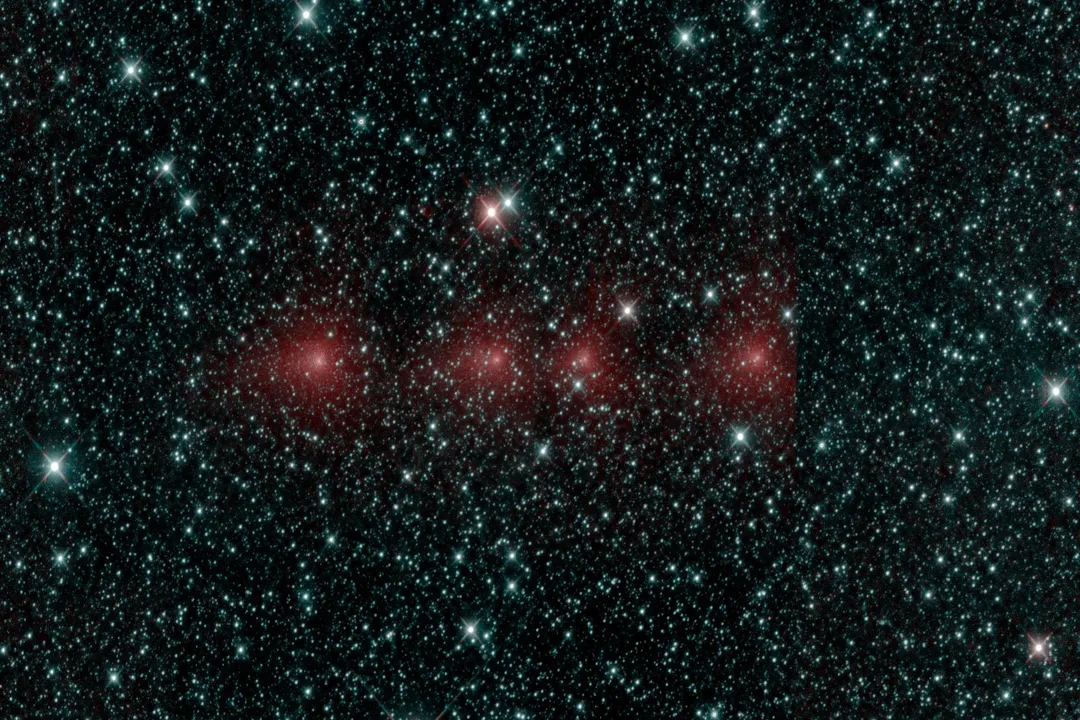
The realm of the Oort Cloud represents the very edge of our solar system's gravitational dominion, a vast, spherical halo of icy debris surrounding the Sun at distances perhaps 100,000 times farther out than Earth orbits. [2] Understanding whether we can see objects within this theoretical shell leads directly to the most profound challenges in observational astronomy: sheer distance, minuscule size, and vanishingly faint reflected light. [3][4] While the existence of the Oort Cloud is a necessary component of our understanding of solar system dynamics, particularly the origin of long-period comets, directly observing its constituent bodies remains firmly outside the capabilities of current technology. [1][6]
# Cloud Structure
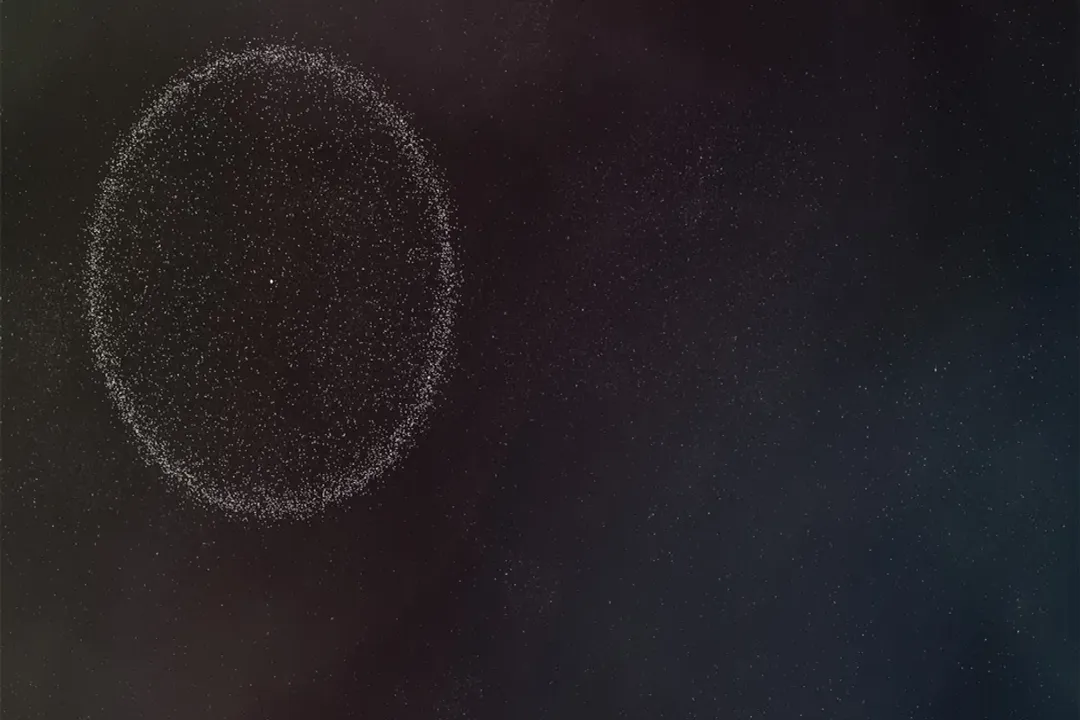
The Oort Cloud is not a flat plane like the asteroid belt or the Kuiper Belt; rather, it is conceived as a nearly spherical reservoir extending far into interstellar space. [2] This immense structure is thought to be composed of icy planetesimals—the pristine, rocky and icy building blocks left over from the solar system's initial formation billions of years ago. [2] Some estimates place its inner edge near the orbit of Pluto, while the outer edge could stretch out to 50,000 or even 100,000 Astronomical Units (AU) from the Sun. [2]
To put that distance into perspective, the Kuiper Belt, where Pluto resides, only extends to about 50 AU. [2] This means the Oort Cloud begins where our conventional map of the classical solar system ends and continues outward by an order of magnitude not seen anywhere else in our immediate neighborhood.
The geometry itself presents an observational hurdle. If we consider the solar system primarily confined to the ecliptic plane—the flat disk where the planets orbit—we are looking at the Oort Cloud edge-on. [9] Because the cloud is spherical, any survey searching for objects in the plane of the solar system is essentially trying to spot incredibly faint objects passing through the thinnest possible cross-section of this massive sphere. [9] The bulk of the material lies far above and below the plane we typically observe, meaning telescopes pointed in the familiar directions are inherently biased against detecting the cloud's main population.
# Visibility Limits
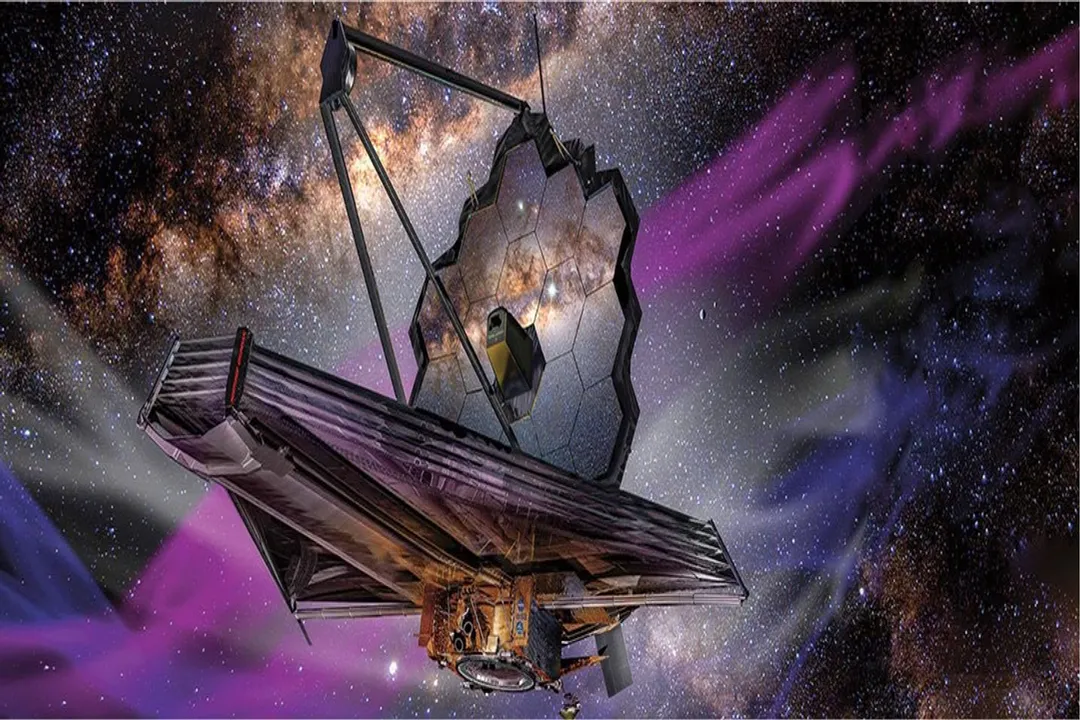
The fundamental reason we cannot simply point our most powerful instruments, like the James Webb Space Telescope (JWST), and resolve individual Oort Cloud bodies comes down to the inverse square law applied across unimaginable distances. [3][4] Even the largest objects hypothesized to be out there—perhaps kilometer-sized chunks of ice—are extremely small targets when viewed from Earth or even from the orbits of the outer planets. [3]
Light from the Sun, reflecting off an object millions or billions of kilometers away, diminishes rapidly. If an object is far enough away, the amount of light hitting our telescope mirrors becomes negligible, falling below the noise floor of even the most sensitive detectors. [3] For a faint, dark object residing at 50,000 AU, the light signature is simply too weak to register against the background glow of space, which includes stray light and the faint infrared emissions of the telescope itself. [4][5]
Moreover, the surfaces of these pristine objects are likely extremely dark—they have a low albedo. [9] Dark surfaces absorb more sunlight than they reflect, making them even harder to detect than similar-sized, brighter objects closer to the Sun. If an object has the reflectivity of asphalt, it requires even greater light-gathering power to confirm its existence. [9]
Even if we could achieve the necessary sensitivity, the objects are not static targets. They are relatively slow-moving compared to observations in the inner solar system, but their vast distances mean that accurate tracking over short observation periods is difficult, requiring extremely long exposure times to lock onto a faint point source. [3]
# Indirect Evidence
If direct observation is impossible, how is the Oort Cloud considered scientifically necessary? The answer lies in the population of long-period comets. [1] These are the icy wanderers that take thousands or even millions of years to complete one orbit around the Sun. [1]
Observations show that these comets arrive from all directions in the sky, suggesting their source is isotropic—spread uniformly around the Sun, which perfectly matches the geometry of a spherical cloud. [1] If they were all coming from the plane of the planets, they would suggest an origin in the Kuiper Belt, but the long-period comets simply don't fit that spatial distribution. [6] The Oort Cloud model provides the necessary reservoir to explain the observed orbital characteristics of these icy visitors. [1]
By studying the comets that do occasionally plunge into the inner solar system, astronomers can deduce the composition of the cloud objects. [8] When we analyze the chemical makeup of these comets—examining the volatile materials that vaporize as they near the Sun—we are, in essence, analyzing the composition of material from the Oort Cloud, even if we cannot see the source population itself. [8] The observation of surface features on such comets offers a glimpse into the raw material preserved since the solar system's birth. [8]
# Observational Technology
The advent of powerful new instruments like the James Webb Space Telescope often raises hopes for seeing further out. [5] However, even JWST, with its massive mirror and unmatched infrared sensitivity, is fundamentally constrained by the laws of physics as they apply to the Oort Cloud scenario. [4] While JWST excels at observing faint, distant galaxies or studying the atmosphere of nearby exoplanets, detecting a kilometer-sized, dark object at 50,000 AU remains prohibitively difficult. [4][5]
One analysis suggests that to detect the largest objects (say, 10 km across) in the outer Oort Cloud, we would require telescopes with mirror diameters significantly larger than any currently built or realistically planned, potentially needing apertures measured in the hundreds of meters, or even kilometers, just to collect enough photons for a definitive confirmation. [3] This requirement is far beyond our current technological reach, especially when considering that the largest current ground-based mirrors are around 10 meters in diameter.
Furthermore, the sheer emptiness of the region is a major factor in detection difficulty. Imagine an object the size of a large house located within a volume of space thousands of times larger than the distance between the Earth and the Sun. [9] Even if the cloud is denser than some models suggest, the volume encompassed by its sphere is staggering. Detecting an object requires not only enough light but also knowing precisely where to look for an extended period. [3] If the density is extremely low—perhaps only one object per cubic AU—the odds of randomly pointing a telescope at the right spot within the right integration time become astronomically small, effectively requiring a survey far more extensive than anything currently feasible.
For the foreseeable future, seeing the Oort Cloud directly remains a theoretical exercise in extreme distance observation. Our current knowledge will continue to be built indirectly: by tracing the faint, icy messengers—the comets—that occasionally escape the deep freeze of the outer solar system and deliver chemical clues about the formation environment of our Sun and planets. [1][8] The cloud itself will remain a necessary, unseen concept, inferred from the visitors it sends our way.
#Videos
Seeing the Oort Cloud, Rogue Planet Nearby, Knocking ... - YouTube
Related Questions
#Citations
Is there any other evidence for the oort cloud? : r/space - Reddit
Oort Cloud - NASA Science
Why can't we observe the Oort cloud with a telescope?
If the Oort Cloud really exists, why has it never been seen, even by ...
Why can't we see the Oort Cloud with JWST? - Facebook
Oort Cloud—No Evidence Required | Answers in Genesis
Seeing the Oort Cloud, Rogue Planet Nearby, Knocking ... - YouTube
First observations of the surfaces of objects from the Oort Cloud
The Oort cloud surrounds our solar system – why can't we see it?