Where can I see the Discovery space shuttle?
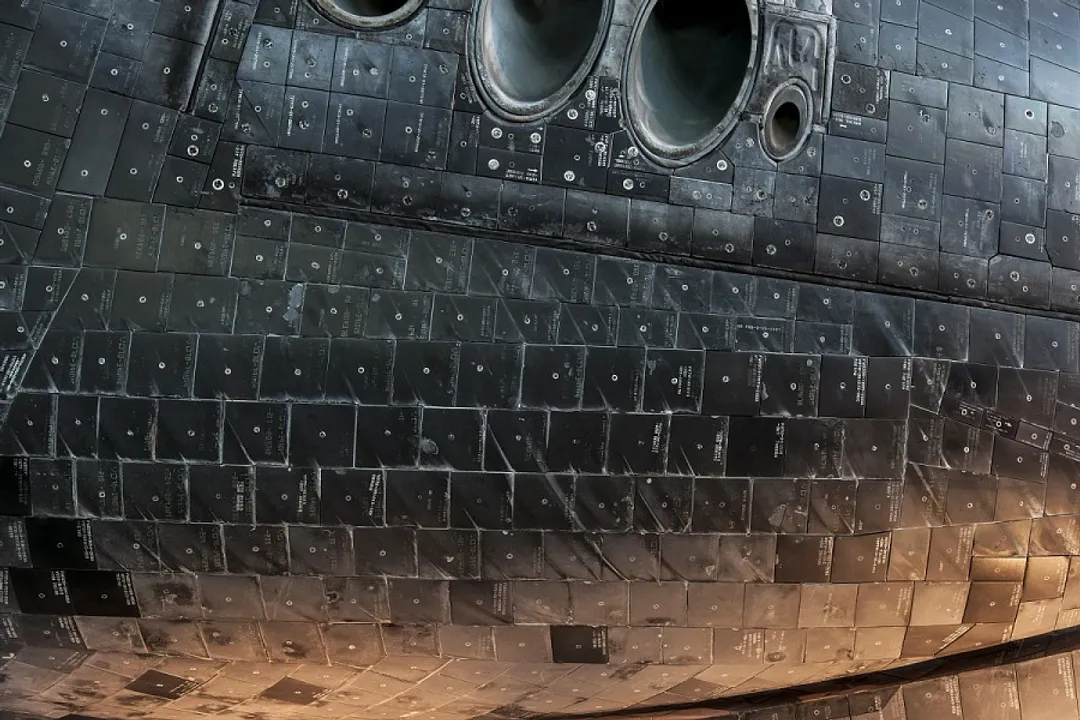
The iconic Space Shuttle Discovery, officially designated Orbiter Vehicle OV-103, resides in a location easily accessible to the public, preserved as a centerpiece of American aerospace history. Fans eager to stand in the presence of this veteran of spaceflight can find it displayed indoors at the Steven F. Udvar-Hazy Center in Chantilly, Virginia. [1][5][7] This center is part of the Smithsonian's National Air and Space Museum complex, situated near Washington Dulles International Airport. [1][2][8]
# Museum Home
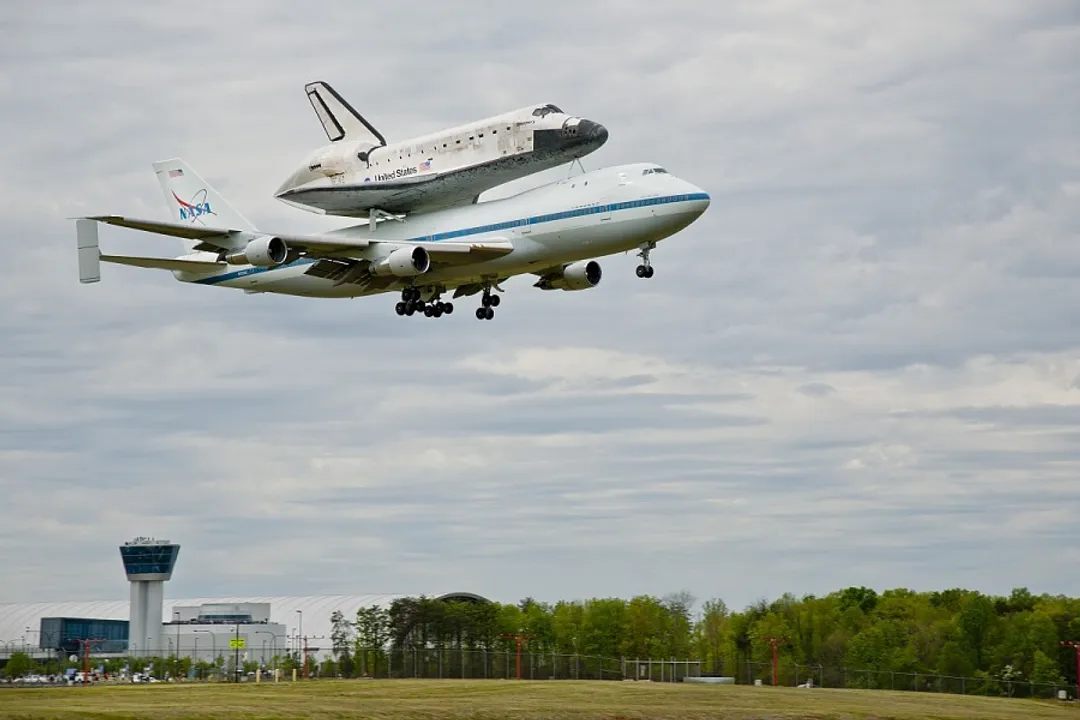
The Udvar-Hazy Center serves as the primary residence for Discovery. [1][5][7] Unlike the main museum buildings on the National Mall in Washington D.C., this location is dedicated to housing the largest artifacts of the Smithsonian's collection, often requiring significant physical space for display. [9] Discovery has been a fixture here since its retirement, offering visitors a close-up look at the orbiter that flew 39 missions into space. [1][9]
Its display is part of a larger national effort to preserve the retired fleet, though only Discovery remains under the Smithsonian's care, specifically at this Virginia annex. [2][8] Seeing the vehicle where it is housed provides a unique context; the sheer scale of the hangers at the Udvar-Hazy Center allows one to appreciate the massive dimensions of the shuttle stack, something often lost when viewing images or models. [1][9]
# Service Record
Discovery holds a significant place in the history of the Space Shuttle Program, having been the third orbiter to fly in space following Columbia and Challenger. [7] It entered service relatively early in the program's history, completing its first mission in November 1984. [7] Over its operational lifetime, it was crucial to many high-profile space endeavors. [9]
One notable aspect of Discovery's career is the sheer volume of personnel it carried aloft. Over its 39 flights, the orbiter transported 148 astronauts into orbit. [9] This places it second only to Atlantis in the total number of missions flown by an orbiter. [7] Furthermore, Discovery was the first orbiter to return to flight following both the Challenger disaster in 1986 and the Columbia disaster in 2003, underscoring its importance to NASA's recovery and return-to-flight efforts. [7] Its final mission, STS-133, concluded in March 2011. [7] Its retirement solidified its place as a historical artifact rather than an operational asset.

# Other Shuttles
Understanding where Discovery is displayed becomes clearer when looking at the locations of the other retired orbiters. The preservation of the fleet was distributed across several key locations to ensure national access, though this means a visitor interested in seeing all the orbiters must travel across the country. [2][8]
Here is a quick comparison of where the three retired, flight-worthy orbiters landed:
| Orbiter | Location | Institution | State |
|---|---|---|---|
| Discovery (OV-103) | Steven F. Udvar-Hazy Center | Smithsonian National Air and Space Museum | Virginia (VA) |
| Atlantis (OV-104) | Kennedy Space Center Visitor Complex | NASA/KSC | Florida (FL) |
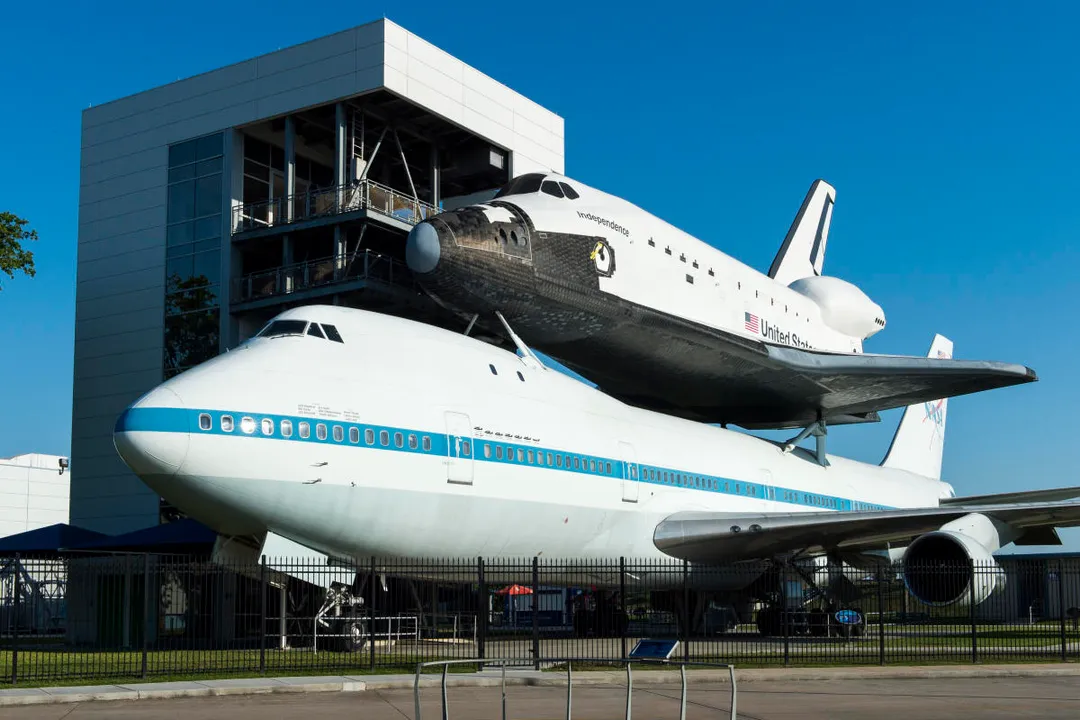
| Independence (FSA) | Space Center Houston | NASA Johnson Space Center affiliate | Texas (TX) |
It is important to note that Independence is technically a Full Fuselage Trainer (FFT) built for ground testing, not a flight-qualified orbiter like Discovery or Atlantis. [8] However, it is displayed alongside the other components in Houston. [8] If you are specifically seeking the actual, space-flown Discovery, the trip must be planned for Northern Virginia. [2][7] This geographical distribution means that a dedicated "shuttle road trip" covering the East Coast and Texas is required to view the entire retired fleet side-by-side, which requires a significant investment in travel time and budget. [2]
# Visitor Experience
Planning a visit to see Discovery involves more than just knowing the address; understanding the environment enhances the experience. The Steven F. Udvar-Hazy Center houses Discovery alongside other enormous artifacts, such as the Enola Gay bomber and the Space Shuttle Enterprise (which was previously displayed there before moving to NYC, though the sources confirm Discovery is the current occupant). [1][7] The sheer volume of material displayed at the Udvar-Hazy Center means that visitors should allocate a substantial amount of time, perhaps a full day, to do the facility justice. [9]
One useful consideration for potential visitors is that while the main Smithsonian museum on the Mall is free to enter, the Udvar-Hazy Center, while displaying its vast collection, often has parking fees. [1] It’s advisable to check the official Smithsonian website immediately prior to planning a trip for the most current information on admission and operating hours, as display status can sometimes shift, even if the vehicle's permanent home is established. [4][9] For instance, while Discovery's location is fixed, temporary facility closures or special exhibit rotations can always affect access.
When you finally approach Discovery, take a moment to absorb the scale. The orbiter is displayed alongside its external tank and solid rocket boosters (or mock-ups thereof, depending on the specific display configuration at the time). [1] Remembering that this machine flew dozens of times, enduring the extreme stresses of launch and re-entry, adds a profound layer of respect to the viewing. The fact that it is housed in a facility that also preserves the wings of the Wright Flyer and the Apollo 11 command module creates a unique chronological sequence of aviation and space exploration under one roof. [9] It offers a tangible link from the very beginning of powered flight to the era of reusable spacecraft.
#Videos
Space Shuttle Discovery: Discover What's Inside - YouTube
Related Questions
#Citations
Space Shuttle Discovery | National Air and Space Museum
Retired Space Shuttle Locations - NASA
Space Shuttle Discovery: Discover What's Inside - YouTube
Space shuttle Discovery leaving Air and Space Museum
Space Shuttle Discovery, currently housed in the Udvar-Hazy Center ...
Space shuttle discovery at air museum - Facebook
Space Shuttle Discovery - Wikipedia
Space shuttle Discovery is headed to Houston. The Smithsonian ...