What happened to the bodies in the space shuttle Columbia disaster?
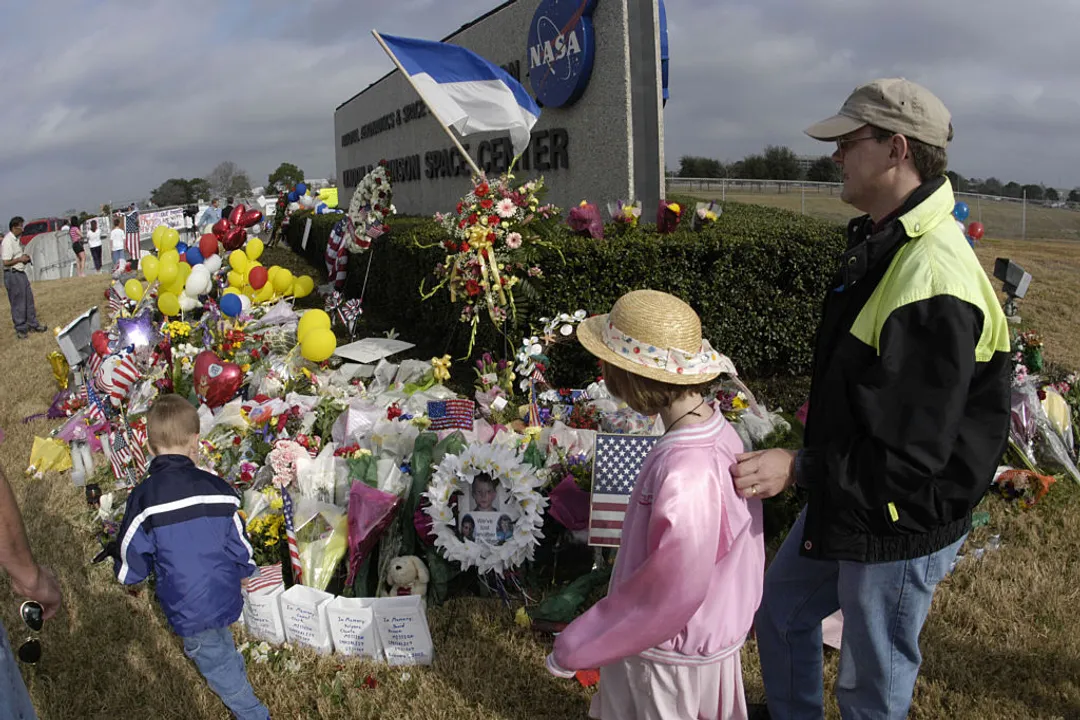
The final moments of the Space Shuttle Columbia on February 1, 2003, represented a catastrophic failure during re-entry that resulted in the loss of all seven crew members. [1][2] The nature of this disaster—a high-speed disintegration high in the atmosphere—raised difficult and sensitive questions about what became of the astronauts themselves. The breakup was not a controlled event; the shuttle was traveling at immense velocity, approximately Mach 20, when aerodynamic stresses overwhelmed the vehicle's structure. [4]
# Reentry Forces
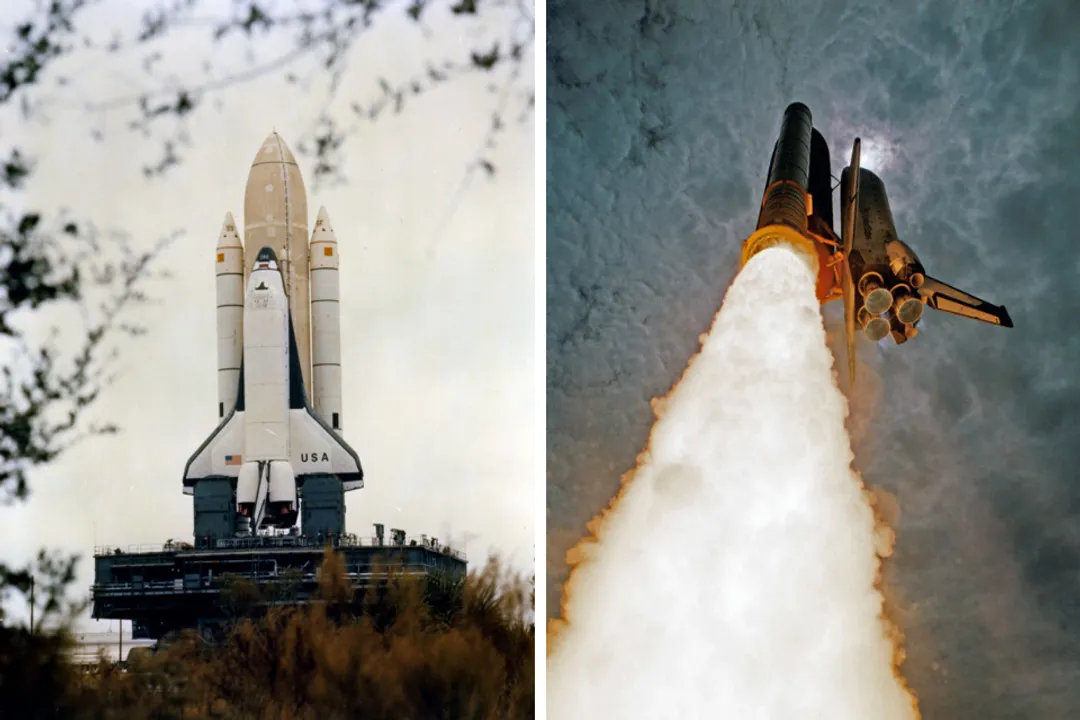
The failure began with a breach in the thermal protection system, specifically on the left wing's leading edge, caused by foam insulation that struck the wing during launch. [1] While this initial damage went unnoticed, it set the stage for disaster upon re-entry into Earth's atmosphere. As Columbia descended, superheated air began to penetrate the structure, leading to structural weakening and eventual breakup. [1]
This breakup was not instantaneous across the entire vehicle. Instead, it occurred as large sections of the shuttle disintegrated due to extreme aerodynamic heating and dynamic pressure. [4] The forces involved—extreme heat and crushing air pressure—meant that the crew cabin, pressurized and intended to withstand relatively lower atmospheric pressures, was exposed to conditions far exceeding its design limits. [6] The destruction was so violent that, as some sources suggest, the separation of the physical bodies from the shuttle structure occurred while the remains were still high above the ground. [4]
# Debris Field Search
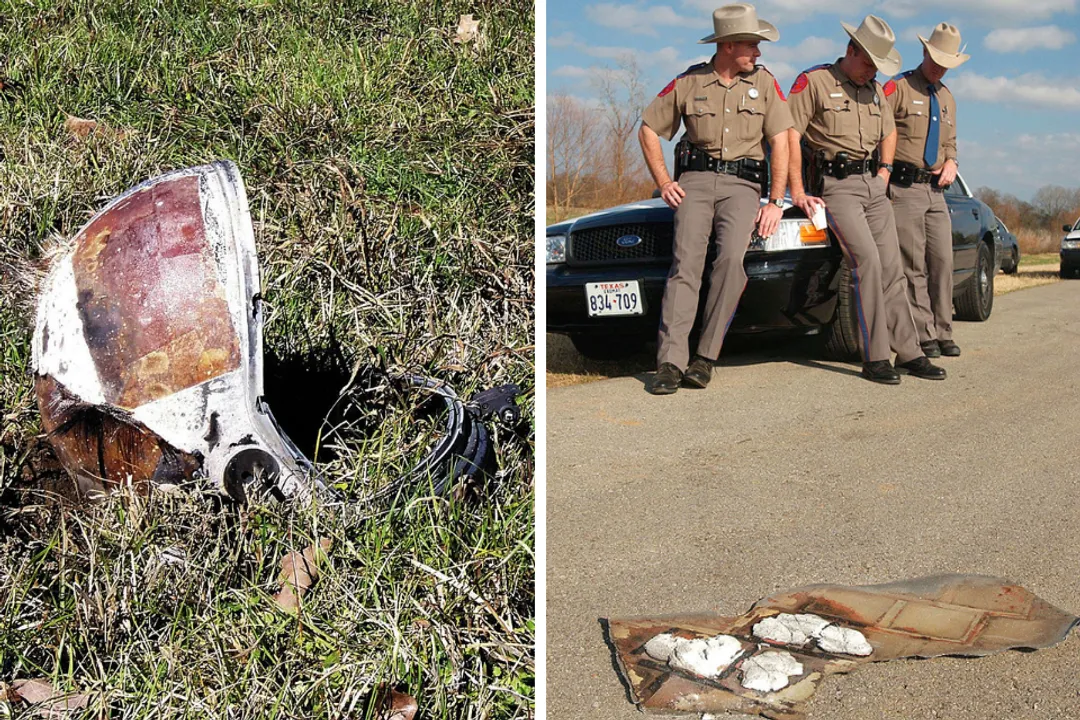
Following the loss of contact, an unprecedented search effort began across a vast swath of the central and eastern United States, ultimately covering about 140,000 square miles, primarily spanning East Texas and parts of Louisiana. [1][2] This search was not just for the shuttle's structure but critically for any sign of the crew. Thousands of pieces of debris were recovered, cataloged, and analyzed at a secure facility at Barksdale Air Force Base in Louisiana. [1]
The task was immense, complicated by the fact that many components were small, burned, or scattered across remote or difficult terrain. [2] The recovery teams were tasked with finding everything that fell to Earth, a grim accounting that included biological evidence alongside technological wreckage. Personnel involved in the recovery described the scene as finding "shattered glass" across the landscape, emphasizing the pulverized nature of the debris. [2]
# Biological Recovery
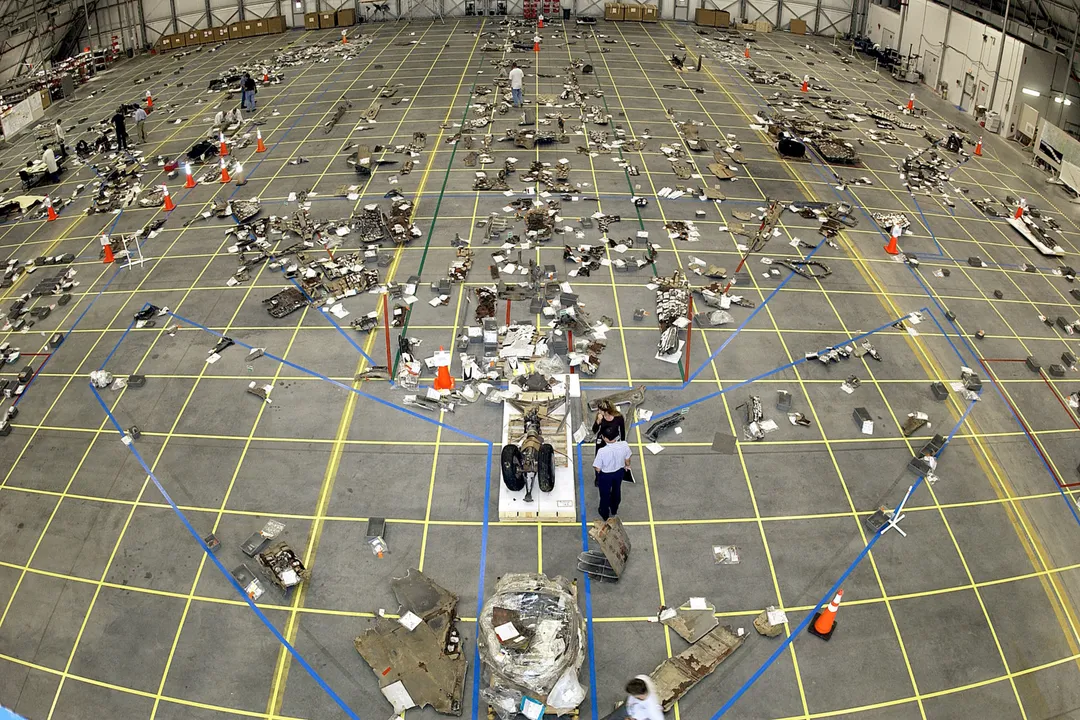
Given the nature of the breakup, the remains of the seven astronauts—Commander Rick Husband, Pilot William McCool, Mission Specialist Michael Anderson, Kalpana Chawla, David Brown, Laurel Clark, and Ilan Ramon—were scattered across the debris field. [6] The extreme disintegration meant that the biological matter was fragmented, mixed with wreckage, and subjected to high-velocity impacts. [4]
The process of finding and processing the remains was extraordinarily difficult. Initial recovery efforts brought back fragments of human tissue and bone. [6] Because the breakup occurred at high altitude and speed, the remains were often unrecognizable as distinct human forms. [4] The sheer scale of the disaster meant that locating and identifying every piece was a monumental, heartbreaking forensic undertaking.
# Forensic Accounting
The identification process relied heavily on the diligence of forensic pathologists and medical examiners. [6] Due to the fragmentation, traditional methods of identification were largely impossible for many samples. The solution lay in modern DNA analysis, which became the definitive method for identifying the crew members from the small, commingled biological samples recovered. [4][6]
It is documented that the remains of all seven crew members were eventually recovered, though this recovery involved finding numerous small fragments, not complete bodies. [4][6] The painstaking forensic work allowed NASA and the military to account for every astronaut, leading to memorial services and the eventual burial of the unidentified remains at Arlington National Cemetery. [6] The recovered biological material was treated with the utmost respect, despite its condition, representing the final physical connection to the crew.
# Artifact Versus Human Matter
A fascinating point arises when comparing the fate of the crew's durable personal belongings with the biological remains. While the astronauts' bodies were essentially atomized by atmospheric forces, some seemingly mundane personal items, protected by their material composition or luck, survived the fiery re-entry and impact relatively intact. [7]
For instance, documents and personal effects have been recovered from the debris field. [7] Ramon's diary pages, for example, were found among the wreckage. [7] Similarly, images exist showing specific personal items, like an astronaut's helmet, found amidst the debris. [5] This discrepancy—the survival of dense, non-biological materials like paper or plastic casings versus the complete obliteration of soft tissue—highlights the physics of the disaster. Materials with lower surface-area-to-mass ratios, or those shielded within protective casings like portions of the flight deck, had a higher probability of surviving the kinetic and thermal assault than the crew inside the pressure vessel. [7] Think of it this way: a small, dense piece of metal might survive impact by shedding heat effectively as it tumbles, whereas tissue cannot dissipate that extreme energy and vaporizes or shatters under the shear stress. [2]
# Legacy of Discovery
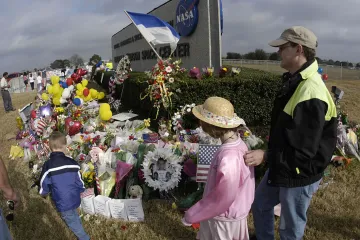
The commitment to recover every piece of Columbia, including the biological remains, speaks volumes about NASA's commitment to the astronauts and their families. The exhaustive search and identification effort, though harrowing, provided a necessary closure that simply saying the crew was "lost" could never offer. [6] In situations involving high-altitude structural failure, the dispersal pattern of human remains is directly correlated with the altitude and velocity at which the catastrophic separation occurred. The fact that identifiable fragments were recovered across hundreds of miles suggests a progressive breakup that continued as the wreckage descended through the lower, denser atmosphere. [4] This detailed recovery effort is an often-unspoken, crucial component of any space loss investigation, ensuring that the human element is accounted for alongside the hardware failure analysis. The recovered remains and debris collectively informed the investigation into why the tragedy occurred, ensuring that lessons learned would protect future crews.
#Videos
What Happened To The Bodies Of The Columbia Crew? - YouTube
What Happened to the Bodies of the Columbia Disaster Crew
Related Questions
#Citations
NASA reports graphic details of Columbia deaths - ABC News
Columbia Space Shuttle Disaster Dead Bodies: Where Did Debris ...
What Happened To The Bodies Of The Columbia Crew? - YouTube
What happened to the bodies of the Columbia shuttle crew during ...
Helmet of Columbia Astronaut : r/space - Reddit
What Happened To The Bodies Of The Columbia Crew? - Grunge
How did pages of Ramon's diary survive the Columbia disaster?