Which space shuttle flew the most times?

The question of which NASA Space Shuttle orbiter accumulated the highest number of journeys into orbit is easily answered, though the context surrounding that record holder tells a much richer story about the entire program. The Space Shuttle fleet, a truly unique collection of reusable spacecraft, consisted of five primary orbiters that flew operational missions: Columbia, Challenger, Discovery, Atlantis, and Endeavour. [9] Each vehicle developed its own identity shaped by the missions it flew, the milestones it achieved, and the tragedies it witnessed.
# Fleet Totals

Before singling out the record-setter, it is helpful to frame the scale of the entire Space Transportation System (STS) era. Across the program's lifespan, which spanned from 1981 to 2011, the fleet conducted a total of 135 missions. [4][5] This figure includes the initial test flight, Columbia's STS-1, and the final flight, Atlantis's STS-135. [6]
The five operational orbiters each had unique service records, complicated by the two tragic losses that marked the program’s history. Challenger was tragically lost on STS-51-L in 1986, having completed 10 flights. [5] Columbia was lost during re-entry following STS-107 in 2003, after completing 28 missions. [5] These losses necessarily curtailed the potential flight totals for those two vehicles. The remaining three orbiters—Discovery, Atlantis, and Endeavour—flew on, ultimately setting the records for longevity and flight count.
# The Leader
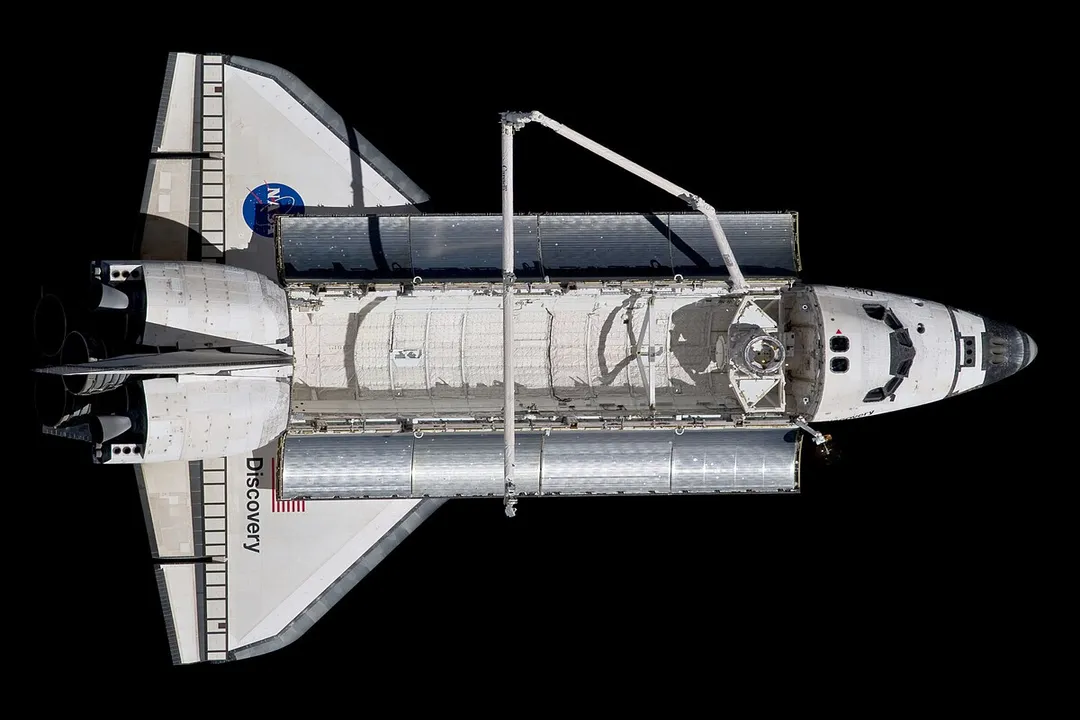
When looking solely at the raw number of flights completed by a single orbiter before retirement or final mission, Space Shuttle Discovery stands above the rest. [2][10] Discovery, designated Orbiter Vehicle OV-103, logged an impressive 39 missions during its career. [5] This made it the most-flown vehicle in the history of the Space Shuttle Program.
Discovery holds a special place in the operational history of the program, as it was the third orbiter to fly (after Columbia and Challenger) but the first to fly after the Challenger disaster. [10] Its return to flight, STS-26 in September 1988, was a critical moment, proving the safety modifications implemented by NASA and restarting the shuttle manifest after a gap of over two and a half years. [10] This essential role in the program's recovery undoubtedly contributed to its high mission count.
# Discovery Missions
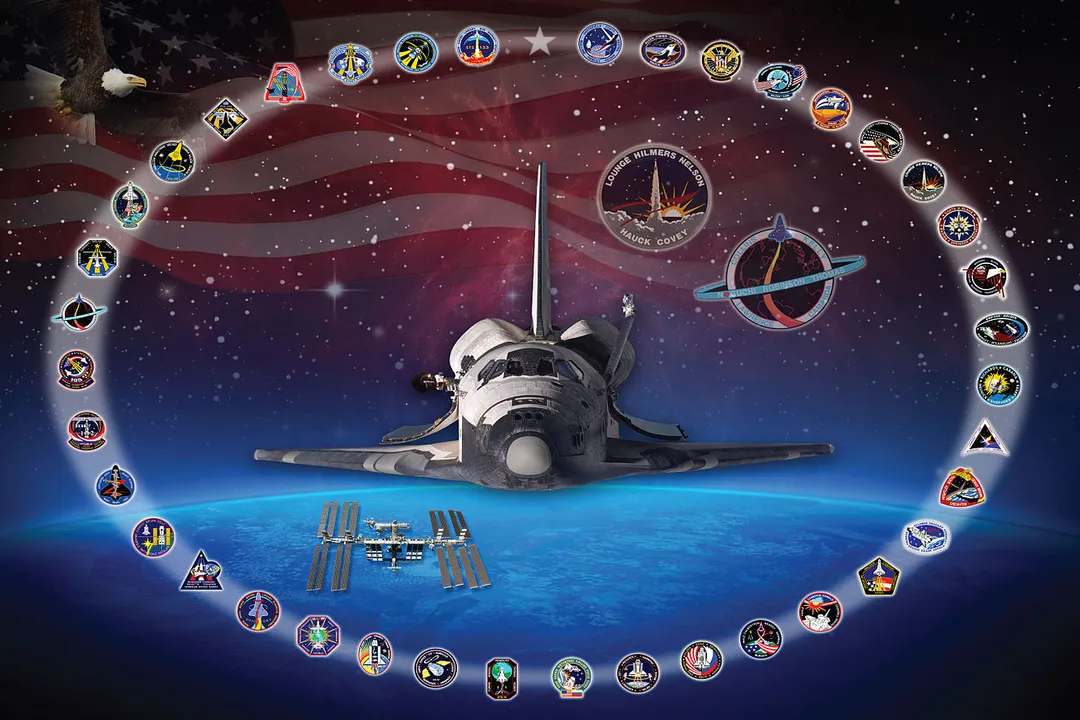
The missions flown by Discovery were incredibly varied, touching nearly every aspect of the shuttle program's objectives. It was the first shuttle to fly a Spacelab science module. [2] In the later years, Discovery became a workhorse for International Space Station (ISS) assembly and logistics. For instance, Discovery flew the first assembly mission (STS-88) to connect the U.S. and Russian modules of the ISS, a monumental task in space construction. [2]
If we look at the sheer distance covered, Discovery also performed exceptionally well, flying a total of over 148 million miles in space across its 39 flights. [1] To put that into perspective for anyone interested in spaceflight mechanics, Discovery's career mileage is equivalent to traveling from Earth to the Sun and back roughly 80 times. [1]
# Other High Flyers
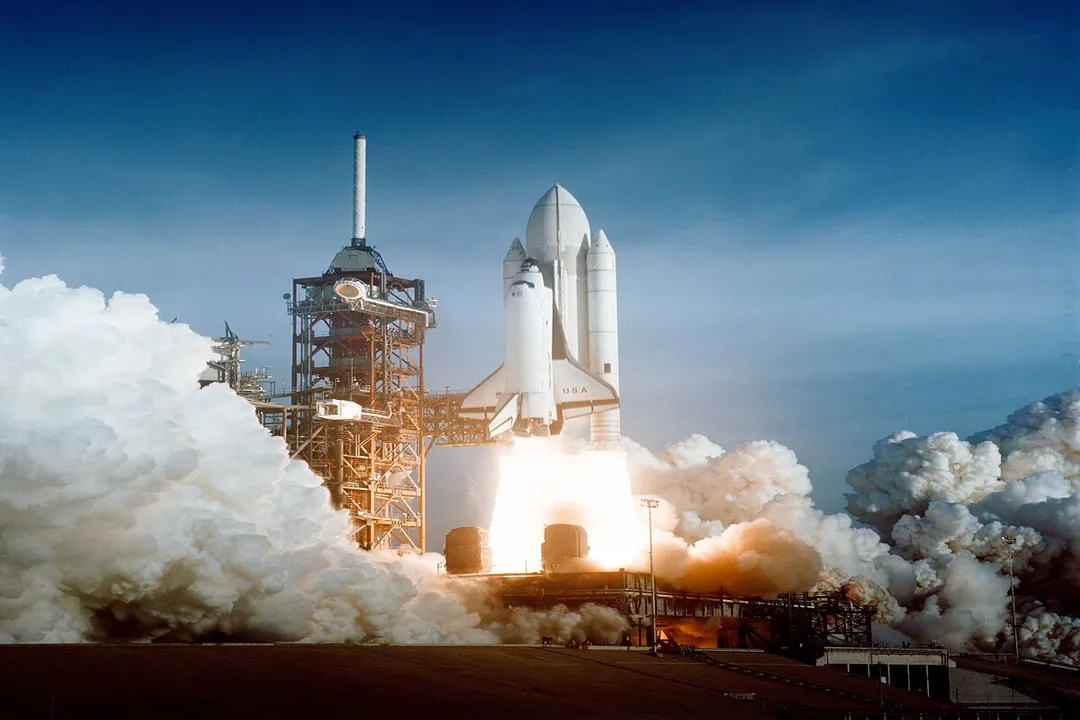
While Discovery holds the top spot, its sister ship, Atlantis (OV-104), was not far behind. Atlantis completed 33 missions. [7][5] Atlantis was also present for major assembly milestones, including delivering the first set of U.S. solar arrays to the ISS and flying the final mission of the entire program, STS-135. [7][5]
The final orbiter to join the fleet, Endeavour (OV-105), which was built to replace Challenger, flew 25 missions before its retirement. [5] Given that Endeavour began flying missions several years after the others, 25 flights is a substantial achievement, demonstrating its consistent utility through the later stages of the ISS construction phase.
It is a sobering exercise to look at the total flight record juxtaposed with the program's lifespan. Discovery's 39 flights across approximately 30 years of active service means that, on average, it launched every 9.5 months, a pace that speaks volumes about the demanding schedules NASA maintained during the program's peak. [10]
# Mission Variety
The operational span of the orbiters, from the early shuttle testing days through the Hubble deployment and the ISS construction era, meant their tasks were diverse. Discovery, for example, performed the crucial servicing missions for the Hubble Space Telescope (HST). The first servicing mission, STS-61 in 1993, corrected initial optical flaws in the telescope's mirror, effectively saving the observatory and allowing it to perform the groundbreaking science we now associate with it. [2] This mission type—complex, multi-day orbital maintenance—was highly specialized and contrasted sharply with the simpler cargo delivery runs later in the program.
One interesting observation derived from mapping out the entire mission list is the shift in focus following the Columbia accident. [5] Prior to STS-107, missions were often balanced between deploying satellites, servicing Hubble, and beginning ISS construction. After the return to flight with STS-114, the manifest became almost exclusively dedicated to delivering critical hardware and crew rotation for the ISS until the final few flights. [5] Discovery's later missions, like STS-120 and STS-124, were all high-stakes ISS construction flights, cementing its role as the program's most experienced ISS construction vehicle.
# Longevity and Retirement
The retirement of the orbiters marked the end of an era of reusable spacecraft development for the United States for many years. The decision to retire them was rooted in the costs associated with refurbishment and the growing age of the fleet. [10]
Discovery flew its final mission, STS-133, in February/March 2011, delivering key supplies and the Permanent Multipurpose Module to the ISS. [2] That mission stands as a testament to the orbiter's resilience, completing its final scheduled service without major incident. Following its landing, Discovery was retired and transferred to the Smithsonian National Air and Space Museum in Washington D.C.. [2][3] Its final ferry flight to Dulles International Airport was itself a major public event, drawing crowds eager to see the veteran orbiter one last time before it became a static display. [3]
The legacy of the Discovery is perhaps best summarized by considering its operational window. It was the first orbiter to fly after Challenger and, though Atlantis took the final mission honors, Discovery completed the highest number of flights before retirement, making it the operational standard-bearer for the program's most demanding phase. [10][7]
If we consider the total number of orbital flights flown by the five vehicles that flew operational missions—Columbia (28), Challenger (10), Discovery (39), Atlantis (33), and Endeavour (25)—the combined total is 135. [5] Discovery's 39 missions represent just under 29 percent of every single orbital flight the entire shuttle fleet ever executed. This percentage alone highlights that Discovery was not just slightly ahead; it carried a disproportionate share of the overall program manifest, an indicator of its reliability and the ongoing need for its specific capabilities, especially in the critical post-Columbia recovery period.

# The Fleet Appearance
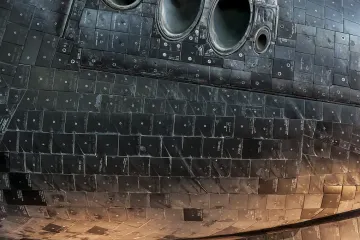
It is worth noting that while the core structure of the orbiters remained consistent, there were subtle differences that developed over time, even without considering the structural wear and tear of multiple re-entries. For example, the placement and configuration of external elements on the payload bay doors changed to accommodate specialized science experiments or attachment points for ISS modules. [3] While the internal avionics were continuously upgraded across the fleet, Discovery's long service life meant it likely incorporated more mid-life modifications than the later-built Endeavour.
The fate of the fleet is now sealed in museums across the country. Discovery resides in Virginia, [3] Atlantis is on display at the Kennedy Space Center Visitor Complex in Florida, [7] and Endeavour is housed in Los Angeles. [2] Each carries the marks of its cumulative 39, 33, and 25 flights, respectively, serving as tangible monuments to the sheer volume of work they accomplished. The fact that a total of five orbiters were involved throughout the program's history, with three surviving to retirement age, underscores the tremendous engineering challenge of designing a vehicle intended for routine, rapid reuse. [9]
# Final Count Summary
To clearly settle the primary question, the ranking by flight count among the operational orbiters is:
- Discovery: 39 Flights [2][5][10]
- Atlantis: 33 Flights [5][7]
- Columbia: 28 Flights (Lost in flight) [5]
- Endeavour: 25 Flights [5]
- Challenger: 10 Flights (Lost in flight) [5]
The record holder, Discovery, stood as the most frequently launched and returned spacecraft in American history when the program concluded. Its extensive flight log chronicles the evolution of human spaceflight from purely exploratory missions to extended orbital infrastructure building. [2] The endurance of Discovery and Atlantis ultimately defined the latter, most productive, phase of the Space Shuttle Program.
Related Questions
#Citations
The 3 Most Flown Space Shuttles of NASA's Fleet
Space Shuttle Discovery - Wikipedia
Space Shuttle Discovery | National Air and Space Museum
[PDF] Space Shuttle Era Facts - NASA.gov
TIL that the last space shuttle flight was in 2011 by the orbital Atlantis ...
Space Shuttle Atlantis - Kennedy Space Center Tickets
Space Shuttle fleet - ESA
On the fifth day of Christmas, my true love gave to me... five space ...
Space Shuttle Information | Historic Spacecraft