What major discoveries happened using the Hubble Space Telescope?
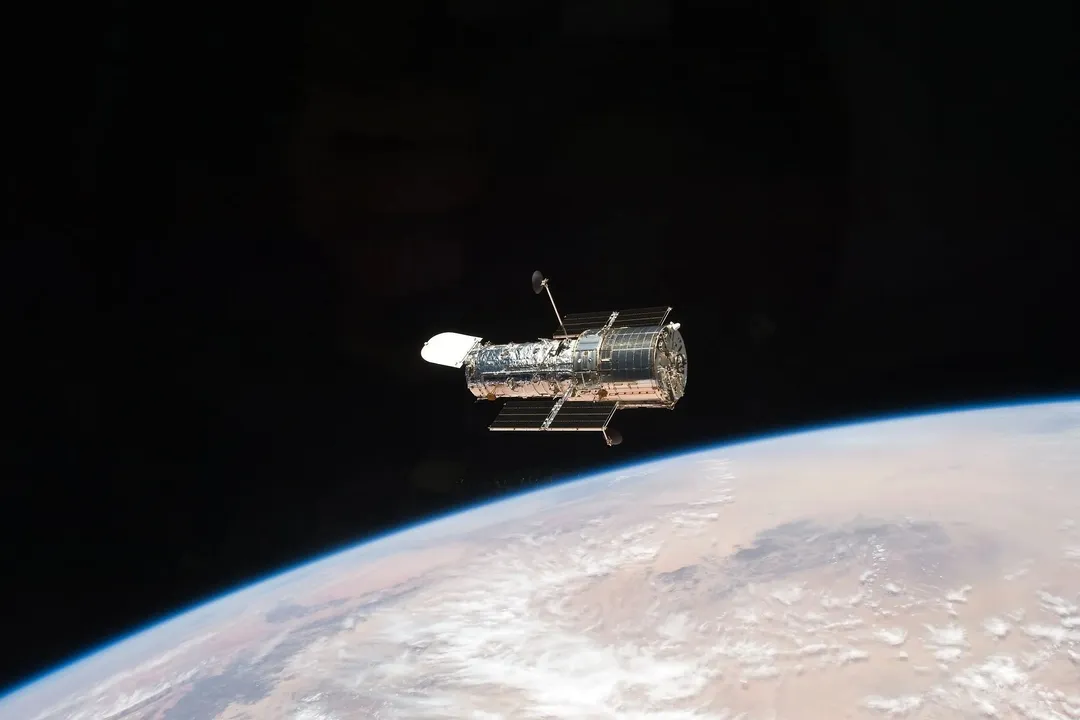
Launched into orbit in April 1990, the Hubble Space Telescope fundamentally reshaped humanity's view of the cosmos, moving astronomy from images often blurred by Earth's atmosphere to crystal-clear views across the electromagnetic spectrum accessible from space. [2][7] Its incredible longevity and servicing missions have allowed it to become arguably the most scientifically productive observatory in history, delivering discoveries that have rewritten textbooks across cosmology, stellar physics, and planetary science. [4][8]
# Measuring Universe Age
One of the most profound contributions Hubble made involves calculating the precise rate at which the universe is expanding, a value known as the Hubble Constant. [6] Before Hubble, estimates for the age of the universe varied wildly, sometimes spanning from 10 billion to 20 billion years, creating significant tension in cosmological models. [4] By observing Cepheid variable stars in distant galaxies, astronomers used Hubble to refine the cosmic distance ladder. [1][9] These Cepheids act as cosmic yardsticks because their pulsation period is directly related to their true brightness, allowing scientists to measure their distances accurately. [6]
This meticulous work narrowed the uncertainty in the universe's age significantly. [4] The consensus, largely solidified by Hubble data, places the age of the universe at approximately 13.8 billion years. [1] This achievement wasn't just about getting a number; it provided the bedrock upon which modern physical cosmology is built, validating theories about the Big Bang and the universe's overall fate. [4][8] It is fascinating to consider that the difference between the pre-Hubble best guess and the current figure could mean a missing 5 to 10 billion years of cosmic history, a gap that Hubble effectively closed through persistent, high-resolution observation. [4]
# Distant Galaxy Views
Hubble’s ability to stare deeply into seemingly empty patches of sky yielded spectacular insights into the universe's infancy. [6] The Hubble Deep Field (HDF), first taken in 1995, and subsequent variations like the Ultra Deep Field (HUDF), revealed thousands of galaxies in a sliver of sky smaller than a grain of sand held at arm's length. [3][6] These images captured galaxies as they appeared billions of years ago, offering a direct look back to the early stages of galaxy formation. [1]
These deep views showed that early galaxies were quite different from the grand spirals and ellipticals we see today; they were smaller, clumpier, and more irregular. [3][9] Comparing these ancient structures with modern galaxies provides a vital timeline for galactic evolution. [6] In fact, Hubble has observed galaxies that formed just a few hundred million years after the Big Bang, pushing our observational horizon further back in time than ever before. [1][8] This evidence strongly suggested that large, structured galaxies we observe now grew through mergers and accumulation of these smaller building blocks over eons. [8]
# Stars Forming Dying
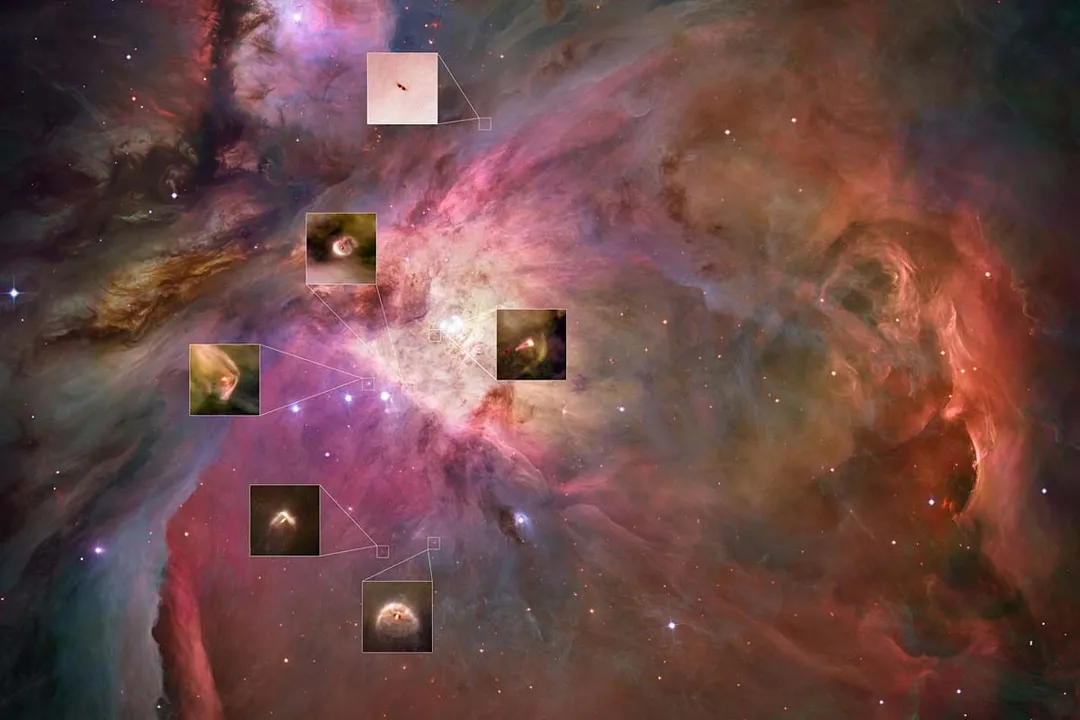
The telescope provided unparalleled clarity into the dramatic life cycles of stars, capturing both their violent deaths and their gentle births. [3] Regions of intense star formation, like the famous Pillars of Creation in the Eagle Nebula, were rendered in breathtaking detail, showing colossal columns of gas and dust where new stars are currently condensing. [6][8] Hubble’s ability to see in the near-infrared allowed it to peer through the obscuring dust clouds that hide these stellar nurseries from ground-based optical telescopes. [1]
Conversely, Hubble captured the beautiful, intricate remnants of stars that have already perished. Supernova remnants and planetary nebulae, which are the expanding shells of gas shed by dying stars, showed complex structures never before resolved. [3][9] Studying these remnants helps scientists understand the processes that enrich the cosmos with the heavy elements necessary for the formation of planets and life. [8] This dual view—seeing creation and destruction in vivid detail—offered a complete narrative arc for stellar existence. [3]
# Solar System Worlds
While built primarily to study deep space, Hubble has also proven an invaluable tool for observing our own cosmic backyard. [2] Because it orbits above the blurring effects of Earth's atmosphere, Hubble can achieve much sharper images of planets within our solar system than most ground-based observatories. [7] It has tracked long-term changes in the atmospheres of Jupiter and Saturn, observed the bizarre plumes erupting from Jupiter’s moon Io, and even captured the dramatic impact of Comet Shoemaker-Levy 9 on Jupiter in 1994. [3][9]
More recently, Hubble provided critical data on Pluto, capturing its surface features before the New Horizons probe arrived, and has helped characterize several Kuiper Belt Objects. [1][3] Even though the later generations of ground-based telescopes, like the Keck observatories, boast larger primary mirrors, Hubble’s stable, high-resolution vision, particularly in the ultraviolet range, still makes it an essential tool for detailed planetary monitoring. [7] It serves as a crucial, continuous baseline for tracking short-term atmospheric dynamics on the outer planets. [1]
# Black Hole Evidence
A critical scientific verification Hubble achieved involved the widespread presence of supermassive black holes at the centers of galaxies. [4] While the concept of black holes existed theoretically, proving they resided at the core of nearly every large galaxy was challenging. [9] Hubble used its high resolution to measure the velocities of stars and gas swirling violently around galactic centers, such as the one in the galaxy M87. [4][6] By analyzing how fast this material orbits—sometimes at millions of miles per hour—scientists could calculate the immense mass confined to the tiny central region, confirming the presence of an object with the gravity of millions or even billions of suns compressed into a singularity. [3][4]
This cemented the understanding that supermassive black holes are not rare anomalies but are integral to galaxy structure and evolution, often growing alongside their host galaxies. [8] The evidence gathered by Hubble established a correlation between the mass of the central black hole and the properties of the galaxy’s bulge, suggesting a deep, co-evolutionary relationship that governs galactic structure across the universe. [4]
# Exoplanet Atmospheres
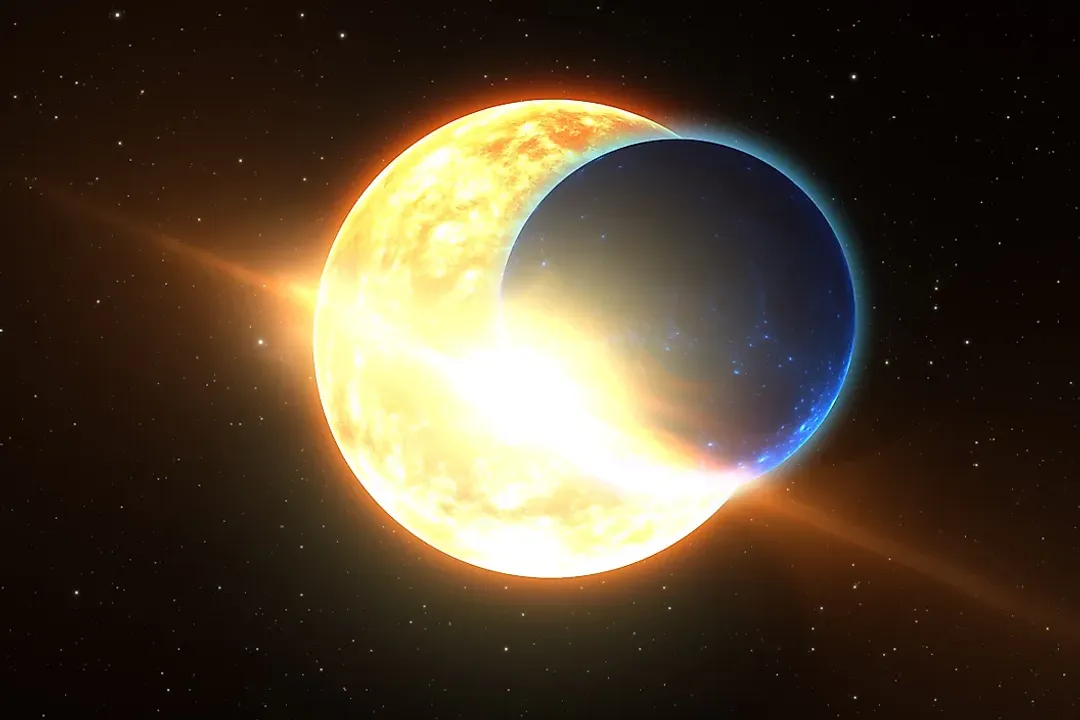
In the realm of exoplanets—worlds orbiting other stars—Hubble carved out an essential niche that complemented later missions designed specifically for their discovery. [9] While other ground-based instruments excel at finding these distant worlds by detecting the wobble or dip in a star's light, Hubble was instrumental in characterizing them. [3] By observing a star as a planet passed in front of it (a transit), Hubble could analyze the starlight filtering through the planet's atmosphere. [6]
This spectral analysis allowed astronomers to identify the chemical signatures of various elements and molecules present in those distant atmospheres, including water vapor, methane, and carbon dioxide. [1][3] Even though its capabilities are now being expanded upon by the James Webb Space Telescope (JWST), which focuses more on the infrared, Hubble’s ultraviolet and visible light observations remain essential data points for building a complete atmospheric profile of these alien worlds. [1] For example, Hubble helped determine that some exoplanets have incredibly hot, puffy atmospheres, while others might possess thin, tenuous envelopes, painting a complex picture of planetary diversity. [9] The continued coordination between Hubble's established visible/UV dataset and JWST's deep infrared capabilities offers a multi-wavelength understanding of these faraway environments, something no single telescope could achieve alone. [7] This multi-instrument approach ensures that the early data Hubble provided will remain relevant for interpreting future, more detailed observations.

# Faint Quasars and Dark Energy
Hubble’s incredible sensitivity allowed it to detect incredibly faint, distant objects, providing vital clues about the universe's composition and fate. [8] Quasars, which are extremely luminous active galactic nuclei powered by supermassive black holes, have been observed across vast distances. [6] Studying the light from these ancient beacons as it passes through intervening gas clouds helps map the distribution of matter throughout cosmic history. [1]
Perhaps more groundbreaking was Hubble’s indirect role in strengthening the evidence for dark energy. [3] While dark energy itself remains mysterious, the observations that revealed its accelerating effect on the universe's expansion were strongly supported by Hubble’s precise measurements of distant Type Ia supernovae. [4][8] These supernovae serve as standard candles, and their observed dimness indicated that the expansion of space is not slowing down due to gravity, but is instead speeding up—a finding attributed to the repulsive force of dark energy. [8] Hubble’s data confirmed the earlier, tantalizing hints from ground-based work, solidifying this revolutionary concept in cosmology. [3]
# Servicing and Longevity
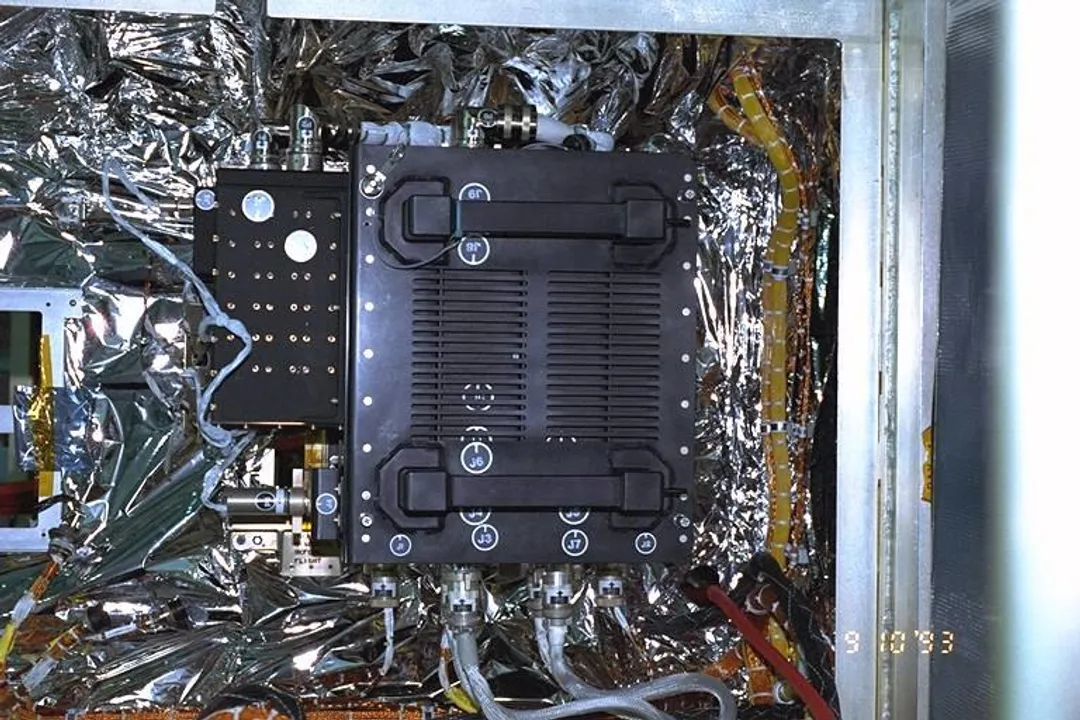
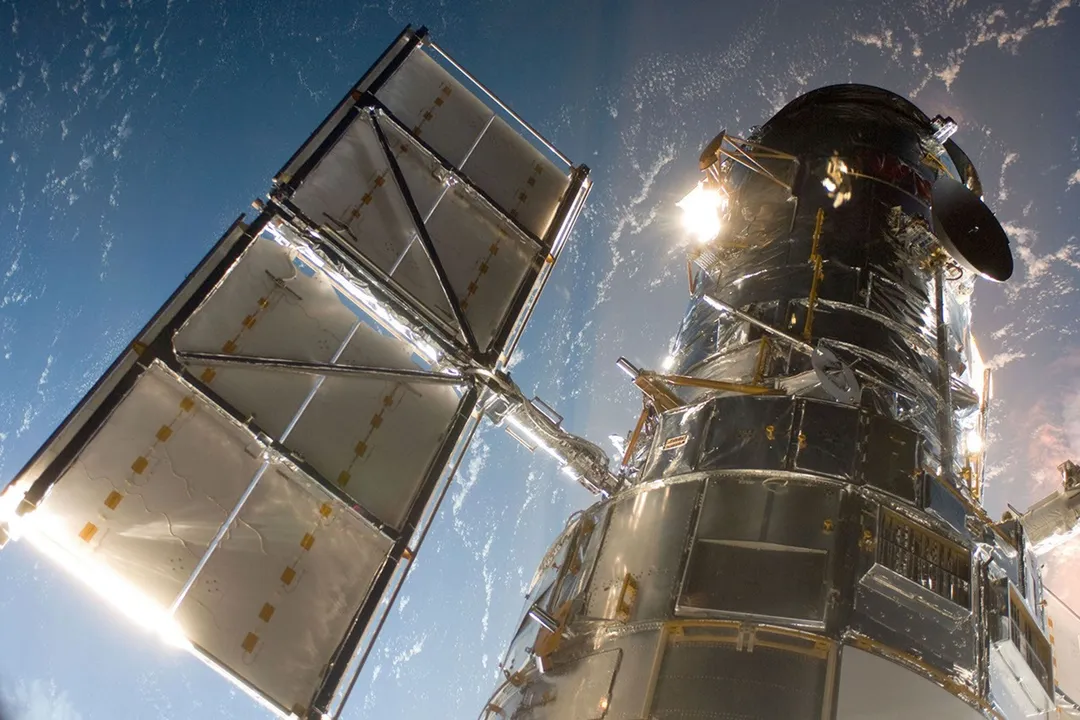
It is impossible to discuss Hubble’s achievements without acknowledging the Servicing Missions. [2] The telescope was designed with the unique foresight that in-orbit repairs and upgrades would be necessary. [7] The initial flaw—a spherical aberration in its primary mirror—was famously corrected during the first servicing mission in 1993 by installing corrective optics, turning what could have been a catastrophic failure into a legendary success story. [2][6]
Over five servicing missions between 1993 and 2009, astronauts installed new instruments, replaced batteries, and repaired failing components, essentially keeping the telescope technologically current for decades. [2][4] This commitment to on-orbit maintenance, a capability that the successor JWST lacks, is a key differentiator. Hubble’s continued operation, more than 35 years after launch, is a testament to this engineering marvel, allowing it to produce science across multiple generations of astronomical theory. [7] The ability to swap out instruments—like replacing older cameras with state-of-the-art Wide Field Camera 3—meant Hubble remained at the cutting edge long after it was first deployed. [4]
# Legacy and Future Context
Hubble’s impact extends far beyond the scientific papers it generated; it fundamentally changed the public's relationship with astronomy. [7] Its stunning, high-resolution color images—often processed to represent UV and infrared data—became cultural icons, making abstract concepts like nebulae and distant galaxies tangible and beautiful for general audiences worldwide. [6] The sheer volume of data, spanning visible light, ultraviolet, and near-infrared wavelengths, provides a unique observational baseline that complements the deeper infrared focus of the James Webb Space Telescope. [1][7] While JWST is designed to see further back in time and peer through heavier dust clouds, Hubble’s long, continuous record across the visible spectrum ensures its data remains indispensable for comparative studies. [7] The two telescopes are proving to be collaborators, each viewing the universe through a different, essential window. [1] The Hubble Space Telescope remains fully operational, continuing to deliver groundbreaking science years after its expected retirement, an unparalleled feat in space exploration history. [2][7]
#Videos
Hubble Telescope's Greatest Discoveries [4K] - YouTube
Related Questions
#Citations
Hubble Science Highlights
Hubble Space Telescope - Wikipedia
The Most Amazing Hubble Space Telescope Discoveries
[PDF] Hubble Top Ten Greatest Achievements_web.pdf
Hubble Telescope's Greatest Discoveries [4K] - YouTube
Great Discoveries of the Hubble Space Telescope
10 of the Hubble Space Telescope's greatest discoveries
Hubble's 10 Most Significant Discoveries - World Atlas