What are five uses of a telescope?
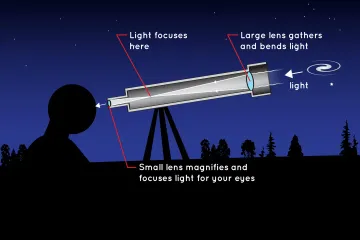
Observing the night sky is an activity as old as humanity itself, yet the tool that brought the distant cosmos into sharper focus—the telescope—remains one of the most awe-inspiring instruments ever invented. [8] Fundamentally, a telescope functions by collecting light from faint or distant objects and focusing it into a viewable image, thereby making things appear brighter and larger than they would to the naked eye. [5] While many people picture a telescope solely for viewing faraway stars, its applications span everything from examining the details on our nearest celestial neighbor to aiding complex scientific missions, and even observing things right here on Earth. [1][7] Understanding these varied functions reveals why this instrument holds a permanent place in both casual hobbyists' backyards and the orbiting infrastructure of space agencies. [2][4]
# Solar Bodies
One of the most immediate and rewarding uses of any optical telescope is gazing upon the familiar objects within our own Solar System. [1][4] These targets are relatively bright, large, and close enough to provide stunning visual details, even through modest beginner instruments. [4] The Moon, our constant companion, becomes an entirely different world when viewed through magnification. [1] Hobbyists can easily resolve features like large craters, mountain ranges along the terminator (the dividing line between light and shadow), and the vast, smooth plains known as maria. [1] This level of detail is accessible even with smaller aperture telescopes, offering instant gratification to the new owner. [4]
Moving outward, the giant planets offer spectacular sights. Jupiter, the largest in our system, frequently reveals its four largest moons—the Galilean moons (Io, Europa, Ganymede, and Callisto)—which often appear as tiny, bright pinpricks of light lined up near the planet. [1][4] With a slightly better view, observers might catch glimpses of cloud bands or even the Great Red Spot, though the latter requires steady conditions and a good aperture. [4] For many, the true showstopper is Saturn. [1] Seeing Saturn's rings—a system of icy particles orbiting the planet—for the very first time is often described as a definitive, unforgettable astronomical moment. [4] It transforms a simple bright dot in the sky into a three-dimensional world system. Furthermore, observers can track the phases of Venus, much like the phases of our own Moon, and spot Mars, particularly when it is near opposition, appearing as a distinct reddish disk. [4] The clarity achieved when viewing these nearby objects highlights the telescope's power to bring the familiar very close.
# Deep Sky
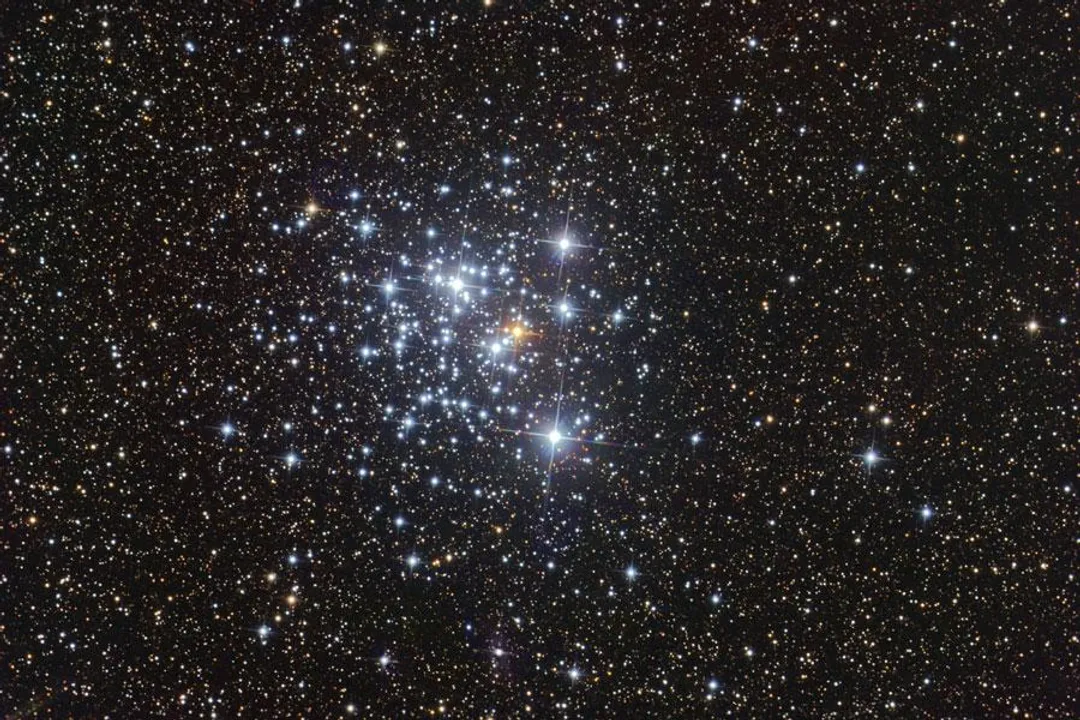
While the planets captivate us with their structure, the telescope’s ability to gather light unlocks views of objects truly distant: the Deep Sky Objects (DSOs). [1][4] These targets are composed of billions of stars, vast clouds of gas and dust, or entire island universes far outside the bounds of our Solar System. [1] For these fainter, more diffuse targets, the instrument’s ability to collect photons over time becomes paramount. [5]
A common starting point for DSO viewing is star clusters. [4] Open clusters, like the beautiful Pleiades (the Seven Sisters), appear as dazzling collections of hundreds of newly formed stars sprinkled across the field of view. [4] Globular clusters, older, densely packed spheres of stars, often look like fuzzy, spherical snowballs when viewed through a telescope, revealing individual stars near their edges. [1] Then there are the nebulae—vast interstellar clouds where stars are born or die. The Orion Nebula, located in the sword of the Orion constellation, is often bright enough to reveal structure and subtle coloring even in modest backyard scopes. [4]
The most distant objects accessible to amateur equipment are galaxies. The Andromeda Galaxy (M31) is a perennial favorite; even in light-polluted skies, a good telescope can resolve it as a bright, oblong smudge, hinting at the billions of stars it contains. [4] Reaching these targets requires more than just a powerful eyepiece; it hinges on the aperture, which is the diameter of the main light-collecting lens or mirror. [5] The larger the aperture, the more light it gathers, meaning fainter, more distant objects become visible. [5] If you are looking for DSOs, remember that while magnification makes an object appear bigger, it is the light-gathering power that makes a faint smudge visible in the first place. This is a crucial distinction beginners often miss: a small telescope with a large light bucket's view of a galaxy will look better (though smaller) than a large telescope with a tiny light bucket's view, simply because the small scope can actually collect enough photons to form an image. [5] This focus on light collection over raw magnification is what separates satisfying deep-sky observation from frustrating viewing sessions.
# Scientific Data
Beyond the sheer aesthetic pleasure of observation, one of the primary roles of telescopes, particularly those operated by professional bodies like NASA, is the systematic collection of data for scientific advancement. [3] Telescopes serve as the primary instruments through which astronomers study the universe, measuring everything from the brightness and spectra of stars to the movement of galaxies. [3] The goal here is not just to see something, but to quantify it. [5]
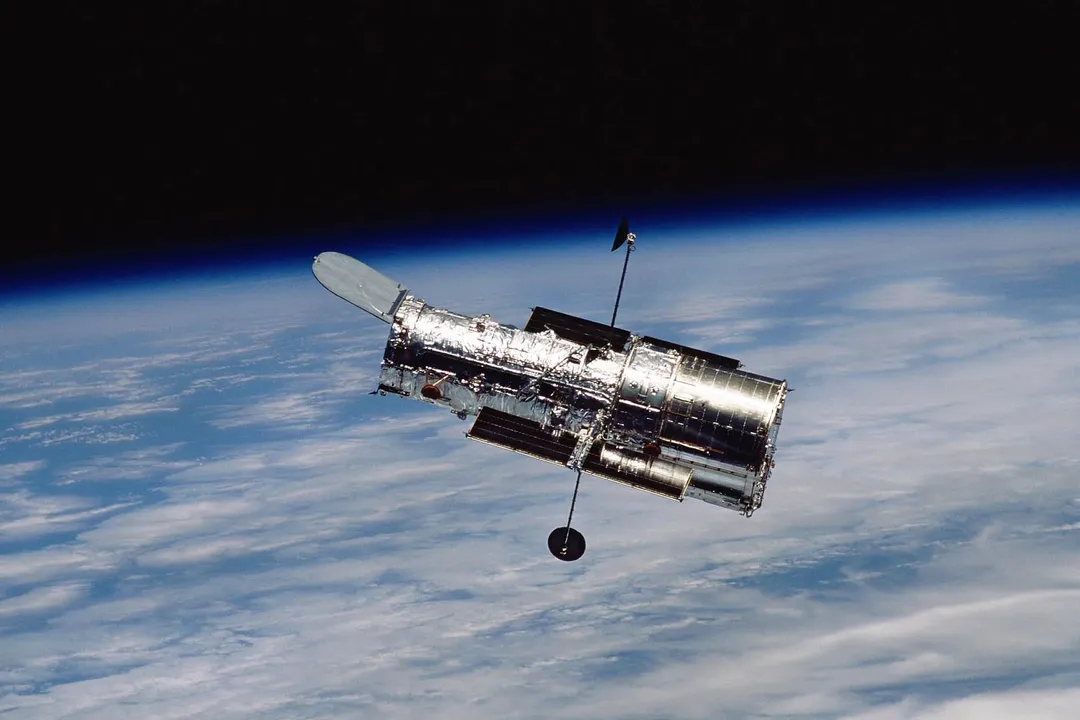
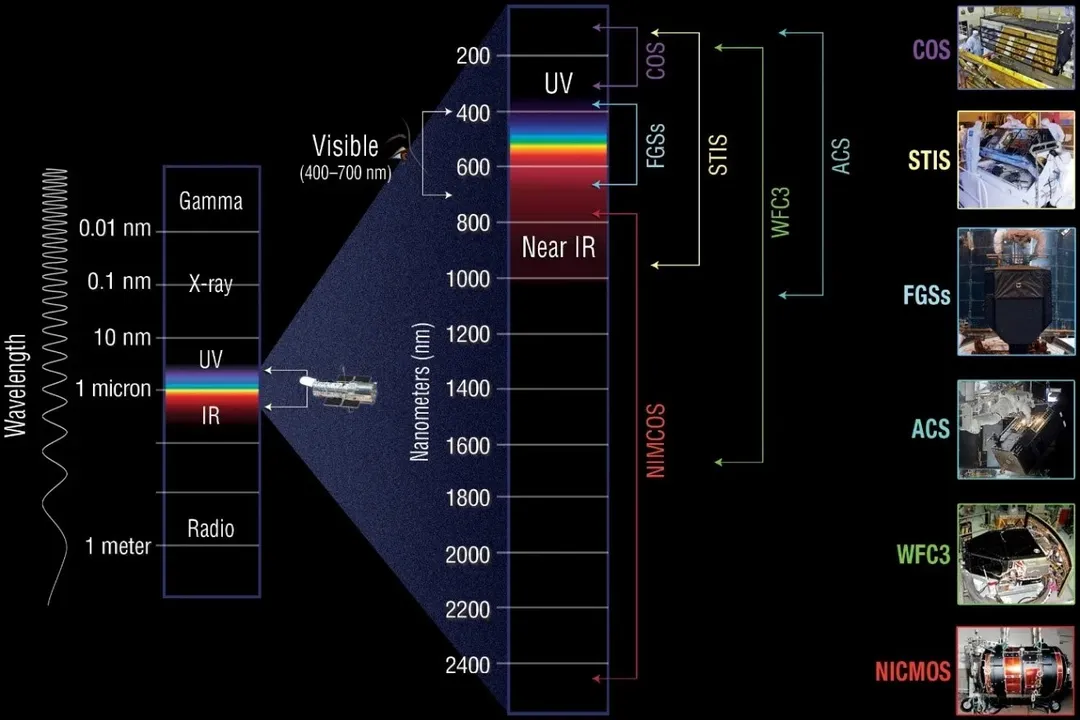
The function of gathering light is central to this scientific endeavor, as modern astrophysics relies on detecting light across the entire electromagnetic spectrum, not just the visible band. [5] This necessity leads directly to the role of space-based telescopes, such as the famous Hubble Space Telescope. [2] Placing a telescope in orbit is a direct acknowledgment of a limitation on Earth: the atmosphere. The atmosphere distorts light, causing stars to "twinkle," which blurs detailed observations, and it absorbs certain wavelengths, such as most ultraviolet (UV) and infrared (IR) light. [2] By sending instruments like Hubble above this atmospheric veil, scientists gain access to clearer, undistorted views and can observe light frequencies entirely unavailable from the ground. [2] This capability has been essential for measuring the age and expansion rate of the universe, among countless other breakthroughs. [2] While a backyard telescope uses its lens or mirror to form a simple image, a professional scope often feeds that focused light into sophisticated detectors, spectrographs, and cameras designed to record precise measurements. [3] This transforms the telescope from a visual aid into a high-precision scientific sensor.
# Terrestrial Scope
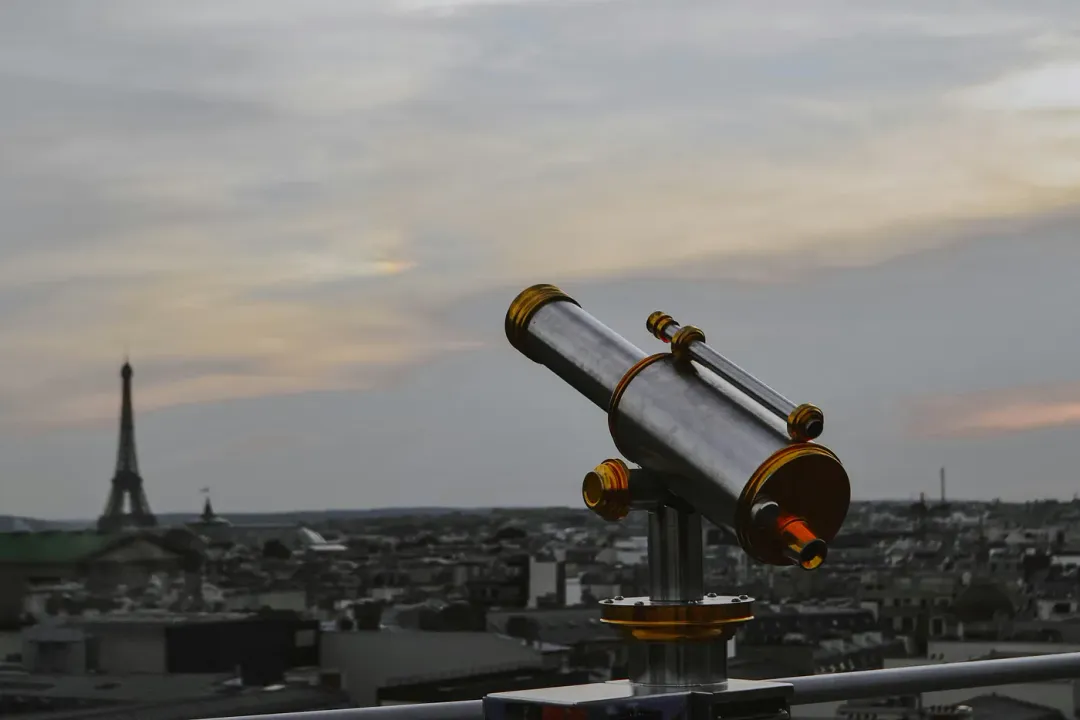
While the design and marketing of most telescopes focus squarely on astronomy, the fundamental optics that allow an instrument to bring distant celestial bodies closer can also be applied to objects right here on our planet. [7] In this context, the telescope functions as a powerful spotting scope. [7] This application is particularly useful for terrestrial observation, such as viewing distant landscapes, wildlife watching, or surveillance. [7]
When using a telescope for daytime, ground-based viewing, one must be aware of a couple of optical phenomena that differ from astronomical viewing. Firstly, telescopes inherently invert the image—up appears as down, and left appears as right. [3] While this is inconsequential when observing a galaxy millions of light years away, it is highly disorienting when trying to follow a bird on a branch. [3] Many astronomical telescopes, especially those using refractors (lens-based designs), often rely on secondary prisms or mirrors to flip the image back to correct orientation for terrestrial use, though this can slightly reduce light transmission. [3] Secondly, atmospheric turbulence (heat shimmer, dust, humidity) affects terrestrial objects just as much, if not more, than astronomical ones, especially over long distances on a hot day. [2] If you plan to use your scope for nature viewing, look for models specifically advertised as "spotting scopes" or confirm that the manufacturer includes an erecting eyepiece, as this specific use case requires a right-side-up image. [7] This dual-purpose capability means the instrument offers utility well beyond the evening hours.
# Science Inspiration
A less tangible but perhaps most enduring use of the telescope is its power as a catalyst for education and inspiration. [8] Simply sharing a view through a telescope—letting someone see Saturn's rings or the sharp definition of a lunar crater for themselves—can spark a lifelong interest in science, technology, engineering, and mathematics (STEM) fields. [8] Telescopes translate abstract astronomical concepts taught in textbooks into tangible, observable reality. [7]
For educational institutions, from primary schools to university observatories, telescopes are essential teaching aids. [7] They allow students to connect theoretical knowledge about gravity, light, and cosmic scales with direct sensory evidence. [7] The experience of seeing something that required years of development and millions of dollars to observe—like the faint glow of a distant nebula—fosters a sense of wonder that passive media cannot replicate. [8] When an individual looks through an eyepiece, they are actively participating in the human endeavor of discovery, mirroring the actions of historical figures like Galileo. [8] This democratization of sight, allowing everyday people to access the grandeur of the cosmos, solidifies the telescope's role not just as a scientific tool, but as a cultural artifact driving curiosity and public engagement with the universe. [8] It is an investment in perspective as much as it is an investment in optics.
#Videos
What SHOULD YOU SEE through a TELESCOPE? - YouTube
Related Questions
#Citations
What can you see with a telescope? - Levenhuk
Why Have a Telescope in Space? - NASA Science
What is the use of a telescope? What are the elements of any ...
The 10 Best Things to See With a Telescope | High Point Scientific
Main functions of a telescope
What SHOULD YOU SEE through a TELESCOPE? - YouTube
telescope - Kids | Britannica Kids | Homework Help
What is the Purpose of a Telescope? | by Antoninabio - Medium
What is the use of a telescope - Facebook