What two main optical problems does placing telescopes like Hubble in orbit mitigate regarding the Earth's atmosphere?
Distortion causing twinkling/blurring and absorption of UV and IR light.
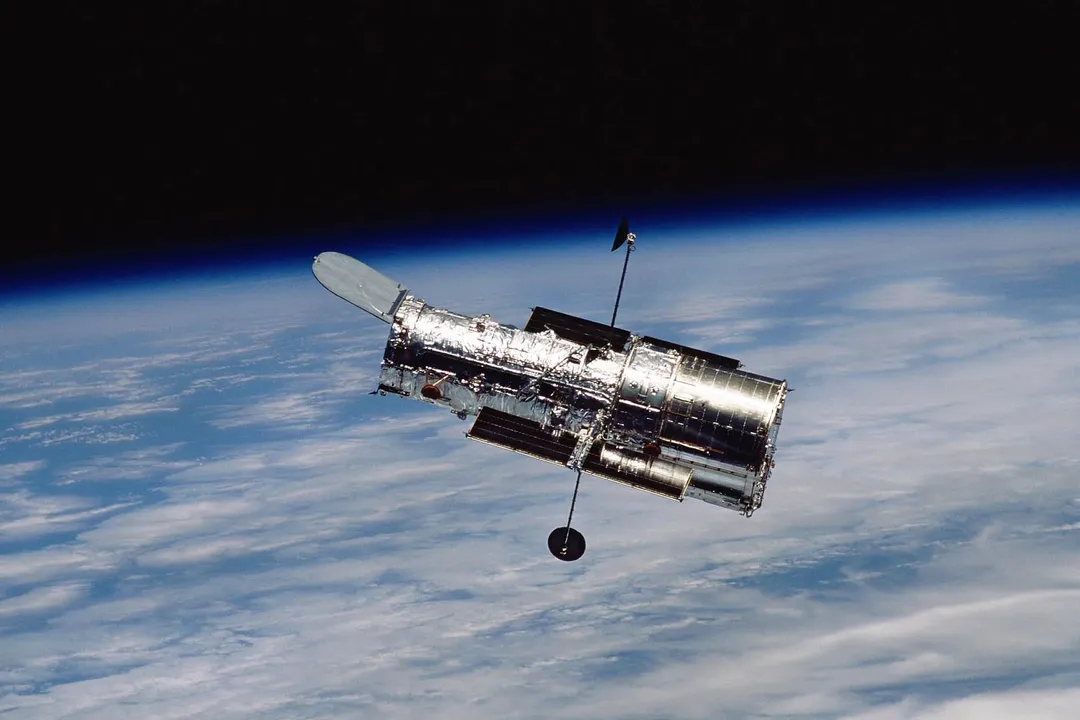
A primary driver for launching sophisticated telescopes, such as the Hubble Space Telescope, into Earth's orbit is the inherent limitation imposed by the terrestrial atmosphere. This atmospheric veil causes two significant issues for ground-based observation. Firstly, atmospheric turbulence causes light paths to shift rapidly, resulting in the phenomenon known as twinkling, which severely blurs detailed imaging. Secondly, the atmosphere selectively absorbs certain wavelengths of electromagnetic radiation; notably, much of the ultraviolet (UV) and infrared (IR) light from distant sources never reaches ground-based sensors. Placing instruments above this layer ensures clearer, undistorted views and grants access to light frequencies entirely blocked from ground observation.
#Videos
What SHOULD YOU SEE through a TELESCOPE? - YouTube