Which main problem is being solved by the Hubble Space Telescope?
The Hubble Space Telescope has fundamentally reshaped humanity’s understanding of the cosmos, offering views of distant nebulae, galaxies, and cosmic events with unparalleled clarity. Yet, its grand debut into orbit in 1990 was nearly a scientific tragedy, defined by a single, critical flaw that threatened to render its billion-dollar investment inert. The main problem Hubble was designed to solve—providing an unblemished view of the universe unobscured by Earth’s atmosphere—was almost immediately overshadowed by a problem of its own making: a severe optical defect that severely blurred its initial images. [2][5]
# Mirror Error
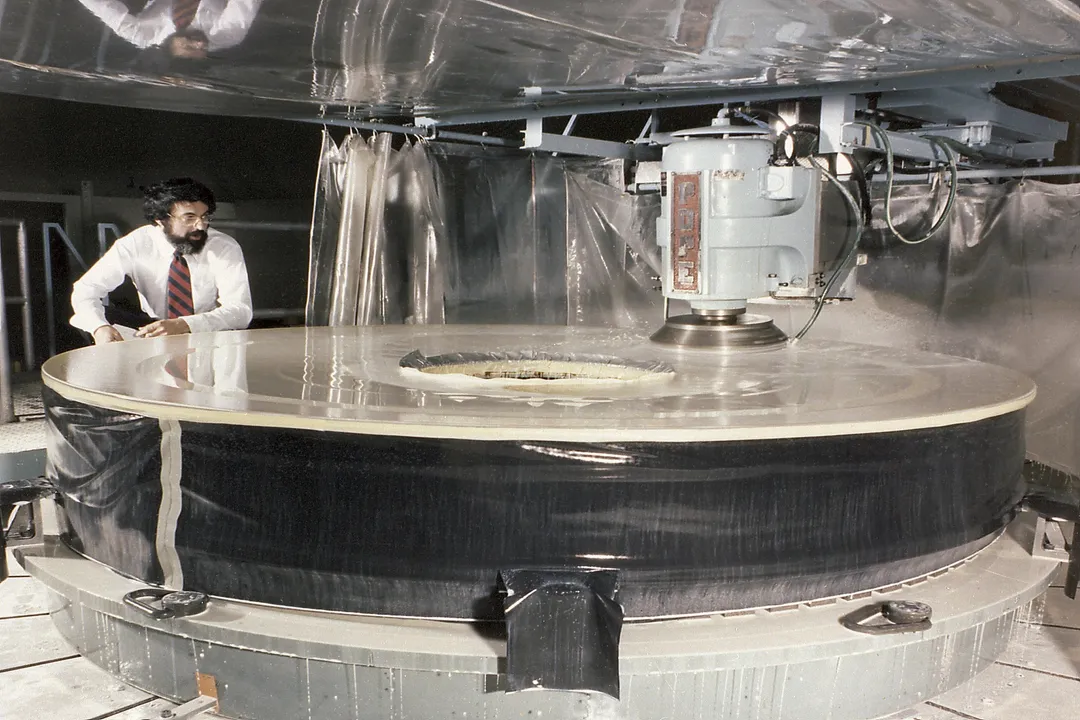
The specific issue plaguing the newly deployed telescope was known as spherical aberration. [2][5] This is not a term reserved for space hardware; it occurs when light rays reflecting off a mirror do not converge at a single focal point. [2] For Hubble, the primary mirror, intended to be perfectly shaped, was ground to the wrong contour. [2][5]
The mirror was supposed to be a perfect paraboloid, but instead, it suffered from a minute but disastrous error: the edges were too shallow by about 2 micrometers, or roughly 1/50th the thickness of a human hair. [2] While this measurement seems negligible on terrestrial scales, in the realm of precision optics required for deep-space observation, it was catastrophic. [2] Instead of capturing crisp points of light from distant stars, the light rays scattered, resulting in blurry, unfocused images. [4][5] The very capability that separated Hubble from ground-based telescopes—its lack of atmospheric interference—was negated by this internal imperfection. Essentially, the telescope could still see the sky, but it saw it through a perpetual, faint fog. [4]
# Technical Defect
The nature of the spherical aberration meant that the telescope could not achieve the sharpness it was designed for. An ideal telescope produces an image where all incoming parallel light rays converge precisely at one point. With the flawed mirror, the light rays hitting the center focused slightly differently than those hitting the outer edge. [2]
This error meant that Hubble could resolve features down to about 0.1 arcsecond, rather than the expected 0.05 arcsecond. [5] While a 0.1 arcsecond resolution might sound acceptable to a casual observer, for cutting-edge astrophysics, it was crippling. It meant that faint, distant objects were washed out by the light bleed from brighter, closer objects, preventing astronomers from accurately measuring the distances to galaxies or studying the fine details of stellar nurseries. [5] The problem was so significant that for the first few years of its operation, scientists were working with data that was far inferior to what many well-maintained ground-based observatories could achieve on a clear night. [4]
# Repair Mission Ingenuity
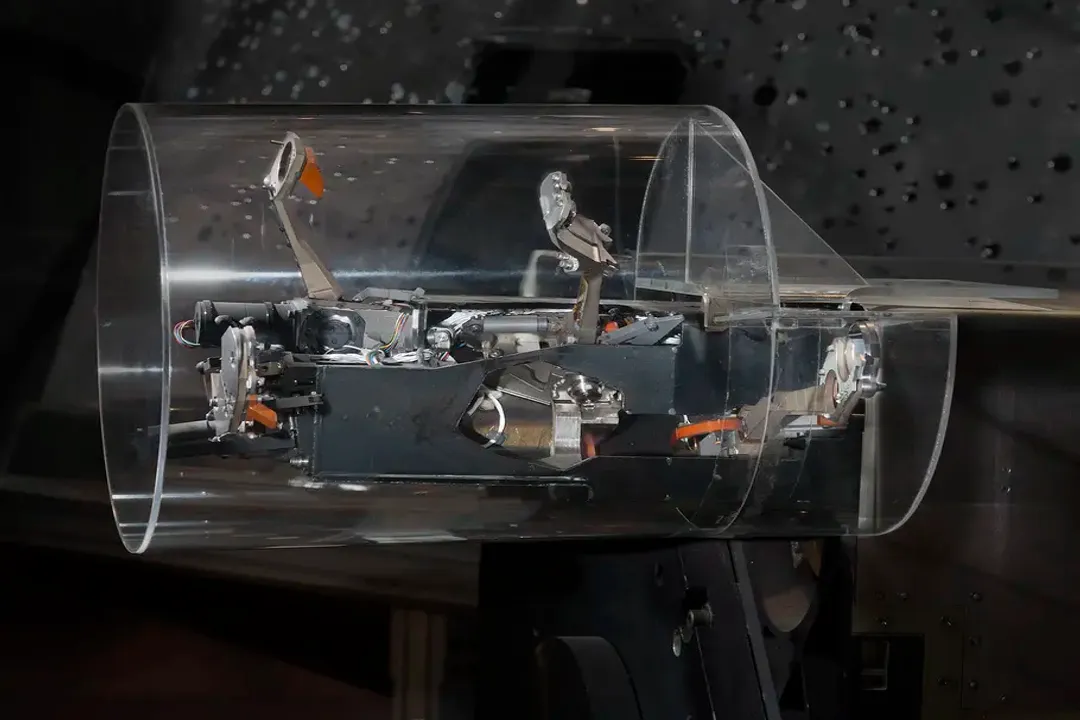
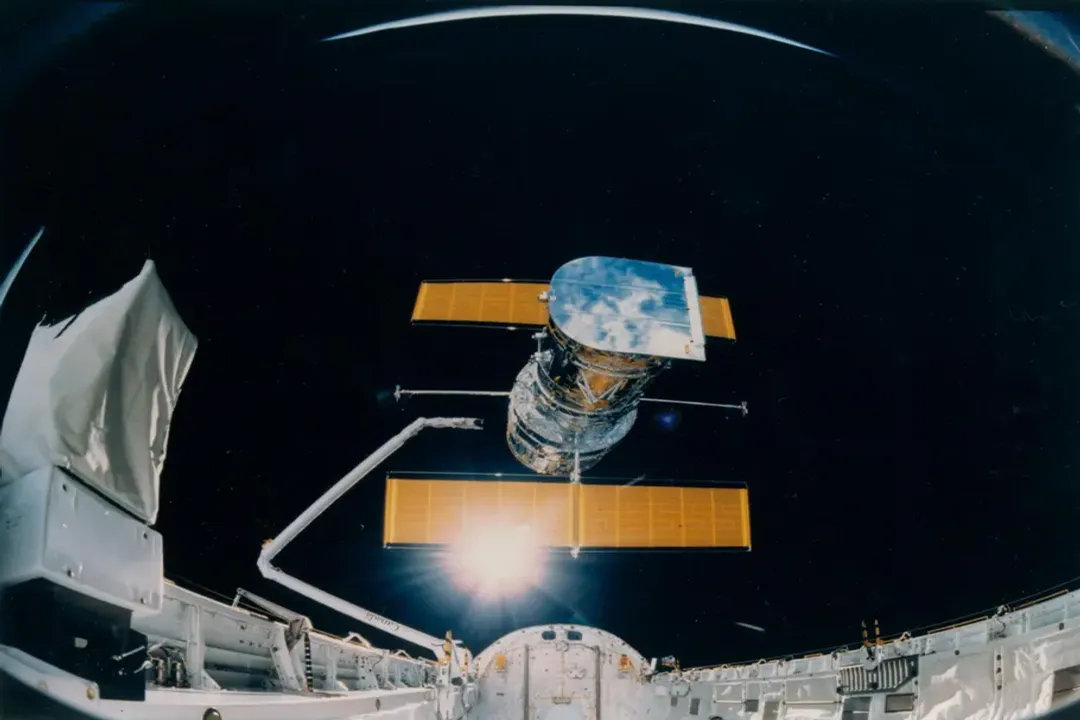
The solution to Hubble’s optical crisis required an unprecedented feat of engineering and astronaut skill: an on-orbit repair mission. [7][8] The decision to service the telescope rather than scrap it speaks volumes about the investment and the belief in its potential. [4] The primary goal of the first servicing mission, STS-61 in December 1993, was to install corrective optics. [7]
The main correction instrument was the Corrective Optics Space Telescope Axial Replacement (COSTAR). [2] COSTAR was essentially a set of corrective glasses for Hubble, designed to intercept the aberrated light path and redirect it correctly before it reached Hubble’s scientific instruments. [2] It contained five small, precisely shaped mirrors that compensated for the error in the primary mirror, ensuring the light path was corrected for the subsequent instruments. [2] Simultaneously, astronauts also installed the Wide Field and Planetary Camera 2 (WFPC2), which had corrective optics built directly into its design, effectively replacing one of the primary instruments with a perfectly corrected version from the start. [2][5]
It is fascinating to consider the immense pressure on the engineers and astronauts preparing for this mission. The entire scientific return of the observatory, and potentially the careers built around its promise, hinged on the success of a few spacewalks to install what were essentially highly complex corrective lenses. [7] This situation stands as a stark case study in engineering risk management; while extensive ground testing is standard, the sheer complexity of Hubble’s mirror grinding meant a pre-flight error was missed, demanding a post-launch recovery plan involving human intervention in space. [2]
# Scientific Returns Unlocked
Once the correction was installed and verified, the scientific floodgates opened. The main problem—the blurred vision—was solved, and Hubble began delivering on its promise, ushering in an era of astronomical discovery. [5] The difference was immediate and spectacular. When the first truly sharp images came back, scientists confirmed that the corrective measures had worked perfectly. [5]
The corrected vision allowed astronomers to tackle fundamental questions about the universe that were previously impossible to address. For instance, the telescope was instrumental in refining the measurement of the Hubble Constant, which describes the rate of the universe's expansion, allowing scientists to calculate the age of the universe with much greater precision. [5]
Hubble’s ability to see fainter, sharper details over vast distances also led to breakthrough observations of distant stellar populations and even provided the first direct visual evidence of a supermassive black hole at the center of the galaxy M87. [5] Its sharp vision enabled deep-field surveys, like the Hubble Deep Field, which stared at a seemingly blank patch of sky for days, revealing thousands of galaxies, each representing billions of stars, stretching back almost to the beginning of time. [5]
To put the significance of the correction into perspective, one might compare Hubble's post-repair resolution to a telescope built on Earth today. While ground-based telescopes have benefited from adaptive optics that compensate for atmospheric distortion, they still struggle to match Hubble's ability to survey large patches of sky consistently in the ultraviolet and visible spectra without atmospheric absorption, a capability uniquely afforded by its orbital location. [1][9] The corrective optics essentially gave the telescope the eyesight required to fully exploit its advantageous perch above the blurring atmosphere.
# Ongoing Exploration
While the spherical aberration was the single most critical problem Hubble had to solve immediately after launch, the observatory's ongoing mission is to solve countless other cosmic mysteries. [1][9] Its value lies in its longevity and the subsequent servicing missions that not only corrected the initial flaw but also upgraded its instruments, keeping it at the cutting edge of technology for decades. [7][8]
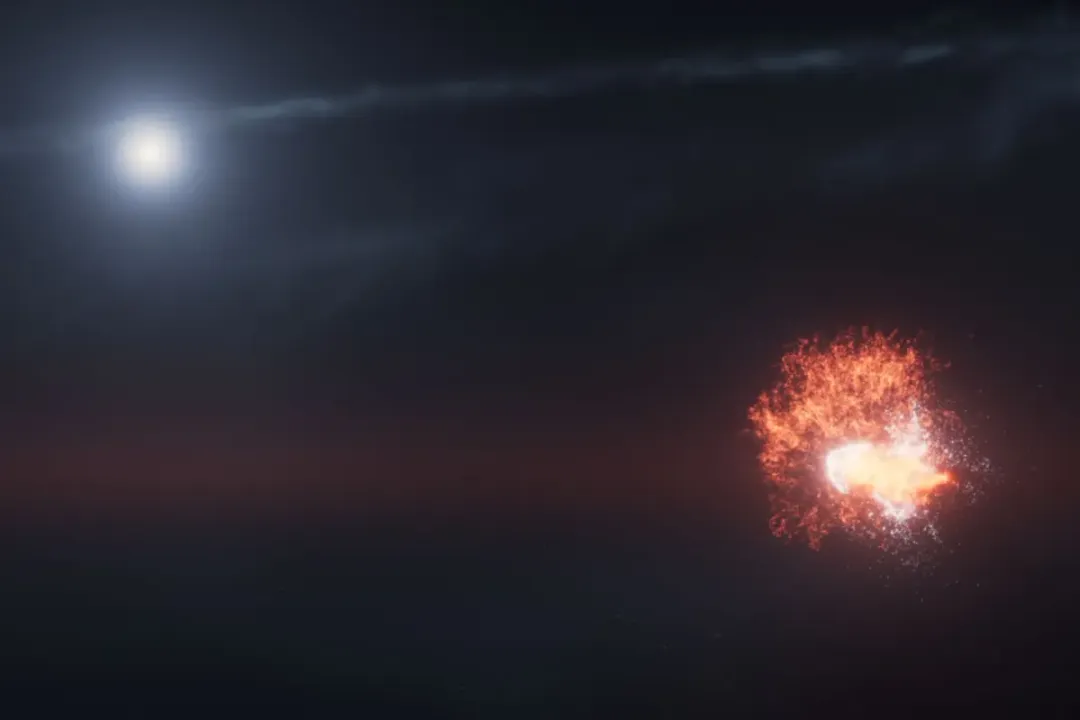
Recent observations continue to demonstrate its utility. For example, Hubble has recently provided stunning views of dusty debris fields resulting from colossal, ancient collisions between cosmic bodies—essentially acting as a time machine to view the aftermath of planetary-scale impacts in distant stellar systems. [3] These observations of impacts, some occurring billions of light-years away, are only possible because the telescope maintains a level of clarity that can differentiate subtle structures in deep space. [3]
The ability to perform these complex observations, like tracking dust from cosmic impacts or peering into the earliest epochs of galaxy formation, relies on maintaining the precision achieved during those initial repairs. [7] Furthermore, the telescope's capability to be repeatedly serviced by astronauts allowed for upgrades that kept it viable even as newer instruments came online elsewhere, such as the James Webb Space Telescope. [8] This iterative improvement, starting from a position of near failure, is a hallmark of the program's success. Astronomers are constantly finding ways to point this reliable instrument toward new phenomena, whether it is observing the immediate aftermath of a supernova or charting the structure of nebulae. [6]
# Lasting Astronomical Authority
The main problem solved by the Hubble Space Telescope was not a mystery of the universe, but a problem of its own construction. By overcoming the initial optical flaw through bold, in-orbit repair, Hubble transformed from a costly failure into arguably the most scientifically productive instrument in history. [2][5] This success story is deeply rooted in the confidence of scientists and engineers who designed a platform capable of being fixed after deployment. [7]
Hubble's legacy is therefore dual: it is a testament to humanity's capacity to correct grave errors in space through daring intervention, and it is the source of data that underpins a generation of astrophysical understanding. [4][8] It has provided the foundational images and data that allow us to trace the universe's history, measure its expansion, and comprehend the scale of cosmic structures. [5] The sharp images we now take for granted are the direct result of successfully reversing that initial, critical manufacturing blunder. [2]
Related Questions
#Citations
Which main problem is being solved by the Hubble Space ... - Brainly
Hubble's Mirror Flaw - NASA Science
Hubble Space Telescope spies dusty debris from two cosmic collisions
What was the problem with the Hubble Space Telescope ... - Quora
History: The Spherical Aberration Problem - ESA/Hubble
If they pointed the Hubble telescope back towards the Earth ... - Reddit
Repairing Hubble | National Air and Space Museum
Astronauts Repair the Hubble Space Telescope | Research Starters
Which main problem is being solved by the Hubble Space ... - Gauth