What are the disadvantages of space telescopes?

The simple truth about placing multi-billion-dollar scientific instruments high above the protective blanket of our atmosphere is that while the view improves dramatically, the practical liabilities multiply just as quickly. While space telescopes conquer issues like atmospheric distortion and light pollution that plague ground-based observatories, their very location introduces a host of unforgiving disadvantages that impact design, lifespan, and accessibility. [2] These trade-offs are not minor; they dictate mission planning, fuel budgets, and ultimately, the expected service life of humanity's most advanced eyes on the cosmos.
# Repair Impossibility
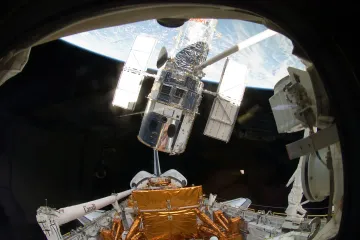
Perhaps the most severe logistical disadvantage inherent to space-based observatories is the near-total inability to service them once deployed, especially those positioned far from Earth. [3] The venerable Hubble Space Telescope stands as a unique historical exception; it benefited from multiple Space Shuttle servicing missions that allowed astronauts to replace aging components, upgrade cameras, and even correct initial optical flaws. [5] That level of accessibility is now largely a relic of a past era in human spaceflight capability.
When a modern telescope is sent to a distant location, such as the James Webb Space Telescope (JWST) operating at the Sun-Earth L2 Lagrange point, it is designed with a fixed configuration that must function perfectly for its entire duration. [5] A single, critical component failure—say, a gyroscope, a reaction wheel needed for pointing stability, or a specific sensor—can mean the immediate end of the mission, regardless of how well the rest of the hardware is performing. [1] The cost of sending a human crew or even an autonomous repair drone millions of miles out into space, or even just to the L2 point, is currently prohibitive for routine maintenance. [3] This mandates extraordinarily rigorous testing on the ground, driving up the upfront development cost substantially, as the cost of fixing a mistake in space is infinite compared to fixing it on Earth.
Imagine designing a luxury car that you know will never have its oil changed or tires rotated. Every potential failure point must be either redundant or so over-engineered that failure probability approaches zero. That necessity is the fundamental disadvantage of deep-space hardware.
# Environmental Toll
The vacuum of space is not benign; it is a harsh, unrelenting environment that constantly batters delicate instruments. [4] While we shield optics from Earth's atmosphere, we expose them to entirely new classes of hazards that shorten operational lifetimes.
# Radiation and Particles
One major threat comes from radiation exposure. [4] Outside Earth’s protective magnetosphere, components like electronics are subjected to high-energy particles that can degrade performance over time, causing what is sometimes termed "single-event upsets" or long-term cumulative damage. Furthermore, micrometeoroids and orbital debris, even tiny specks traveling at immense relative velocities, pose a constant threat of impact. [4] These collisions can damage mirrors, sensors, or critical thermal surfaces. While spacecraft are armored, small debris strikes are statistically inevitable over decades.
For instance, the JWST has already experienced minor micrometeoroid impacts to its primary mirror during its operational life. [4] While the design accounted for a certain level of expected impact damage, high-velocity strikes beyond the predicted spectrum will erode the mirror's performance over time, a degradation impossible to reverse without physical intervention.
# Thermal Extremes
A secondary but equally critical environmental disadvantage relates to temperature control, which becomes exponentially more complex when observing across the entire electromagnetic spectrum. [4] Telescopes like JWST must observe in the infrared, requiring them to maintain an extremely cold operating temperature, often below 50 Kelvin. [9] This necessitates massive, complex sunshields to block heat from the Sun, Earth, and Moon simultaneously, alongside active cryocoolers for some instruments. [5] The very act of escaping the atmosphere to gain clarity means the telescope must manage extreme thermal gradients—one side baked by the Sun, the other facing the deep cold of space—a feat ground telescopes avoid by virtue of the relatively stable insulating effects of our lower atmosphere. This thermal management system itself represents a significant mass, cost, and potential failure point. [9]
# Finite Lifespan
Unlike ground-based observatories, which are theoretically limitable only by funding for upgrades and maintenance, space telescopes have an inherent, pre-calculated expiration date governed by consumables. [5] This is a direct consequence of needing propulsion for station-keeping and attitude control.
For a telescope operating at an Earth-Sun Lagrange point, like L2, the observatory is not truly stationary; it follows a path around the Sun that keeps it in line with the Earth. To maintain its precise halo orbit around L2—which is necessary to keep the Earth, Sun, and Moon behind the sunshield—the spacecraft must periodically fire small thrusters to correct its trajectory. [5] The James Webb Space Telescope's operational lifespan is largely dictated by the finite amount of propellant it carries for these station-keeping maneuvers. [5]
It is an ironic trade-off: the very mission that allows JWST to operate flawlessly without atmospheric noise is what limits its duration. If the instrument itself were built to last 50 years, its mission might be cut short to 20 or 25 years simply because the fuel ran out. [5] Ground telescopes, in contrast, can operate as long as the power grid is stable and optics are maintained, often spanning decades longer than their space counterparts. Furthermore, the initial launch must place the telescope precisely in its target orbit, as a significant fuel budget must be reserved for mid-course corrections and orbital insertion itself.
# Logistical Hurdles
The process of getting a space telescope working is fraught with unique, high-stakes logistical challenges that add cost and risk far exceeding terrestrial installations.
# Deployment Complexity
Space telescopes are almost universally launched folded up like origami to fit inside a rocket fairing, requiring complex, often single-use deployment sequences once in orbit. [1][9] The Hubble deployment was relatively simple, but missions like JWST involved unfolding a tennis-court-sized sunshield and deploying its segmented primary mirror—hundreds of critical mechanical steps that had to execute perfectly, far from any possibility of manual intervention. [5] A failure in any one of these mechanisms means the entire mission fails before science can even begin. The risk profile for deployment alone is orders of magnitude higher than building a telescope on a mountain top and simply flipping a switch.
# Data Transmission Costs
While not as visually dramatic as a deployment failure, the sheer logistics of moving scientific data back to Earth represent a constant, recurring disadvantage. [3] Because space telescopes are often situated far from Earth (LEO is one thing; L2 is another), they rely on deep-space network antennas to transmit information, often at lower data rates than ground-based instruments with fiber-optic connections or high-bandwidth links to local data centers. [3] While the data volume might be less than a massive ground survey telescope, the time delay and dependence on dedicated receiving resources add an ongoing operational overhead that ground-based facilities simply do not carry in the same manner.
# Constraints on Size and Scope
While space offers freedom from gravity's worst effects, it imposes the tyranny of rocket payload envelopes. The size of a space telescope’s mirror—the single most critical factor for light-gathering power—is strictly limited by the size of the rocket that can launch it. [1] This constraint forces compromises on resolution and sensitivity that ground-based facilities are beginning to surpass.
For example, massive future ground telescopes, like the Extremely Large Telescope (ELT) or the Thirty Meter Telescope (TMT), are designed with primary mirrors exceeding 30 meters in diameter. [2] These enormous apertures are physically impossible to launch in one piece. Even with advanced folding designs like JWST’s 6.5-meter mirror, the engineering complexity scales non-linearly with size. [5]
This leads to an interesting current contrast: space telescopes provide unparalleled clarity in wavelengths blocked by the atmosphere (like mid- and far-infrared), [9] but the largest, light-gathering capability is increasingly falling to ground-based instruments. A terrestrial observatory can be built bigger, more power-hungry, and more complex in its mechanics because it is not constrained by a launch vehicle's maximum volume and mass capacity. [2] The primary disadvantage here is the hard ceiling on aperture size imposed by launch vehicle technology. A decision to place an observatory in space is often a decision to trade maximum light-gathering power for access to specific spectral windows. [9]
#Videos
Space Telescopes Are In Danger - YouTube
Related Questions
#Citations
What is a disadvantage of having a telescope in space? - Quora
Space Telescopes - Space FM
What are the advantages and disadvantages of sending a telescope ...
Space telescope - Wikipedia
5 Hazards of Human Spaceflight - NASA
Why NASA's James Webb Space Telescope Will Never Live As ...
If space based telescopes cant see planets how will the ... - Reddit
Stardust and Eternity – 3.5.3 - STARLIGHT
Space Telescopes Are In Danger - YouTube