What are three disadvantages of space exploration?
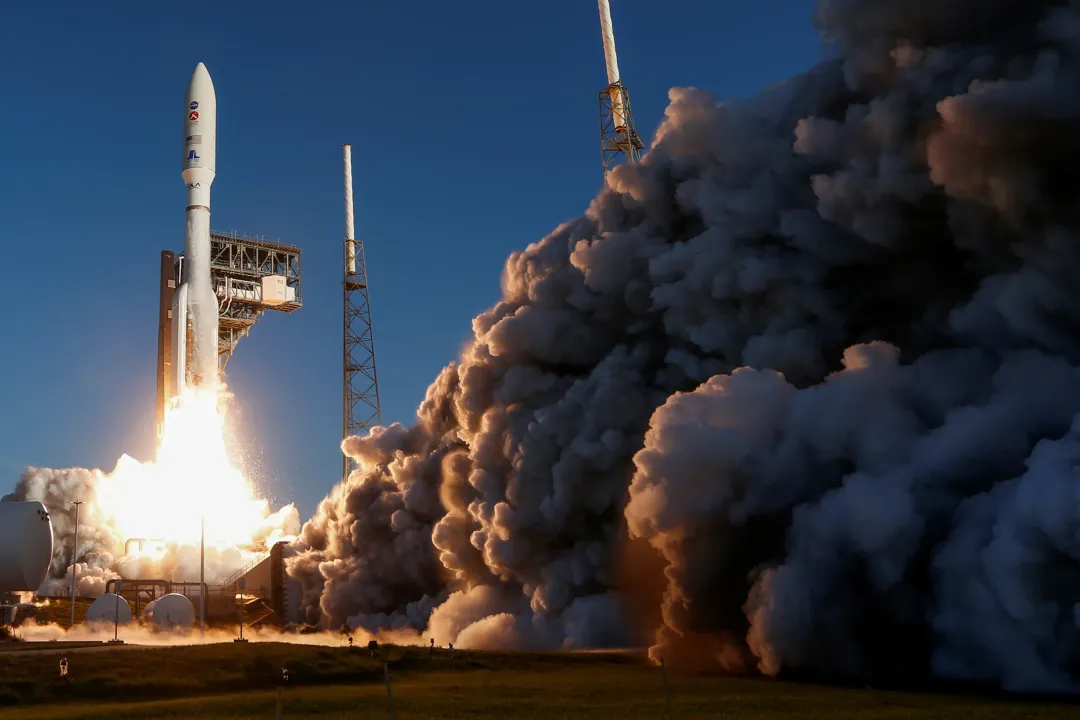
The dream of reaching for the stars, of planting flags on distant worlds, carries with it a significant shadow: the very real and often prohibitive disadvantages of reaching that far. While the public imagination is captured by lunar landings and images from new telescopes, a sober assessment reveals steep costs in finance, human life, and even the immediate environment of Earth. These are not minor footnotes; they are fundamental challenges that weigh heavily on the decision to fund and pursue ambitious extraterrestrial endeavors.
# Financial Strain
Perhaps the most tangible barrier to widespread space exploration is the staggering cost associated with any mission beyond our planet's immediate influence. Human spaceflight, in particular, demands an expenditure that critics argue could be better allocated to pressing terrestrial needs. The infrastructure required for launching, sustaining, and recovering humans is immensely expensive, demanding highly reliable—and therefore costly—equipment for every stage of the journey: launch, flight, and especially reentry. [1]
For instance, looking back at the American Space Shuttle program, which operated for thirty years, the estimated cost by its anniversary in 2011 reached an astonishing **25.2 billion in 2021, a figure that taxpayers must ultimately support. [2] While proponents rightly point out that this represents only a fraction of a nation's total budget—less than half a percent of the entire country’s budget in one assessment—the sheer magnitude of the investment remains a point of contention when juxtaposed against global poverty, climate change mitigation, or public health crises. [2]
This leads directly to the concept of opportunity cost. Every dollar funneled into a deep-space propulsion system or a Mars habitat is a dollar not spent on Earth-bound problems. The argument often boils down to this: robotic missions, while sometimes less capable of on-the-spot decision-making, can generate significant scientific results at a much lower expenditure than crewed missions. [1] The debate centers on whether the unmatched flexibility of human intelligence in orbit and during initial exploratory journeys justifies the massive premium paid for human life support systems. [1]
A particularly complex financial consideration arises when planning interplanetary travel, such as a mission to Mars. The transit time is so great that real-time ground support for emergencies becomes impossible. [3] This necessitates bringing enormous quantities of consumables—oxygen, water, propellant—or developing complex in situ resource utilization (ISRU) technologies before launch. [3] The logistical imperative to pre-position up to 40 tonnes of equipment for a human trip to Mars dictates launch vehicle capacity and mission architecture, inflating preliminary costs far beyond those of simpler robotic sample returns. This heavy dependency on self-sufficiency underscores that the true "cost" of human deep-space exploration isn't just the ticket price; it's the price of guaranteed, completely autonomous life support over years.
When weighing the budget, it is useful to frame the expenditure against other governmental spending, as some analyses suggest that for every dollar NASA spends, it generates roughly eight dollars in the US economy. [2] However, for those struggling with immediate needs, even a fractional investment into space exploration can feel like a misallocation of precious resources, particularly when viewed through the lens of immediate, measurable terrestrial benefit. It prompts a necessary, if uncomfortable, evaluation: what is the non-monetary return on investment for sending a handful of people to a dead world versus allocating those funds to tangible improvements on the only living world we know?
# Health Toll
The human body evolved under the constant, predictable pressure of Earth’s gravity () and within the shield of its magnetic field. Transitioning into the space environment—characterized by microgravity, radiation, and isolation—imposes profound physiological stress that fundamentally undermines astronaut health, representing a massive disadvantage, especially for long-duration missions away from Earth. [1][3]
# The Weightlessness Effect
The virtual absence of gravity, or microgravity, quickly disrupts systems built to counteract that force. Weight-bearing bones begin to atrophy, and muscle mass is lost, particularly in the calf and thigh muscles used to maintain posture on Earth. [1][3] This deconditioning is systemic: the heart muscle can also show loss of mass, and blood plasma volume decreases as fluids redistribute to the upper body, leading to puffy faces and sinus congestion. [1][3] While exercise acts as a countermeasure in Low Earth Orbit (LEO), recovery from these changes upon return to can take weeks for balance and months or even years for bone atrophy to resolve. [1] For future interplanetary missions, experiencing this initial deconditioning only to face a new gravitational environment (like Mars) or attempting emergency maneuvers after years of adaptation presents a significant physiological hurdle. [3] The cessation of normal mechanical stimulation uncouples bone formation and resorption, leading to increased bone loss and accelerated osteoporosis. [3]
# Radiation Exposure
Beyond the protection offered by Earth's magnetosphere, astronauts face dangerous levels of ionizing radiation composed of Solar Particle Events (SPEs) and Galactic Cosmic Radiation (GCR). [3] GCR, containing highly energetic heavy ions (HZE nuclei), is an enormous threat because these particles have sufficient energy to penetrate several centimeters of material; it has been estimated that a hydrogen ion can pass through every cell nucleus of an astronaut daily when outside LEO. [3]
The health consequences are severe and long-term. Exposure can lead to an increased incidence of cancer later in life, cataracts, and degenerative tissue disorders that resemble accelerated aging. [3] Furthermore, radiation can interfere with cognitive functions; studies suggest low doses of GCR can impact learning and memory, potentially leading to a deterioration of executive functions over time. [3] If a significant SPE occurs, the acute risk is radiation sickness, potentially leading to death. [3] Shielding against this radiation is inherently limited by launch mass constraints, meaning passive shielding like aluminum or water is often insufficient against high-energy HZE ions. [3]
The sheer novelty of this exposure is another challenge. Most data on radiation effects stem from atomic bomb survivors or those receiving therapeutic radiation, which are not perfectly analogous to the constant, mixed-field exposure in space. [3] This gap in data necessitates conservative risk models, yet these models still leave significant uncertainty regarding long-term career exposure, as demonstrated by the recent modification of NASA’s career dose limits. [3]
# Psychological and Systemic Effects
The isolation, confinement, and extreme environment contribute to psychological and sociological issues, particularly on longer voyages. [1] Compounding these factors is the impact on the immune system. Microgravity and environmental stressors like radiation can lead to immunodeficiency, making crews susceptible to infections and potentially reactivating latent viruses, as reported after long-duration flights. [3] Wound healing is also impaired because the components of the clotting process, like collagen production by fibroblasts, function less efficiently in space, meaning minor cuts and injuries heal more slowly and poorly. [3] The inability to completely contain or manage severe illness or injury far from Earth elevates the inherent danger of any mission beyond Earth orbit.

# Space Pollution
A less frequently discussed, yet pressing, disadvantage is the issue of polluting outer space itself. As humanity increases its presence, the problem of orbital debris—or "space junk"—escalates, posing tangible risks to ongoing and future operations. [2]
This orbital graveyard is comprised of old, defunct satellites, spent rocket boosters, and fragments created from collisions or tests. [2] Two specific historical events dramatically increased this hazard: a 2007 missile test by the Chinese government that shattered an old weather satellite into about 150,000 pieces of debris, and a subsequent collision between Russian and American satellites two years later. [2] NASA estimates that approximately six thousand tons of material currently occupy Low Earth Orbit (LEO). [2]
The danger is not academic. These pieces of defunct hardware travel at incredible speeds, meaning even a small fleck of paint or a discarded bolt carries enough kinetic energy to cause catastrophic damage to an operational spacecraft or space station. [2] While studies have proposed unconventional clean-up methods—like using nets, harpoons, or magnetic tethers to de-orbit debris—these remain logistical and diplomatic hurdles away from routine implementation. [2]
Consider the practical difficulty of managing this risk: while LEO operations rely on tracking and maneuvering to avoid large pieces, the sheer number of smaller, untrackable fragments guarantees a constant, low-level threat of impact damage that requires passive shielding, which in turn adds mass and complexity to the spacecraft. Moreover, the prospect of further developing space infrastructure is hampered by the pollution already present, creating a self-limiting feedback loop. If we cannot secure the immediate orbital highway we already use, expanding operations to the Moon or Mars risks carrying that terrestrial problem—the inability to sustainably manage our waste—into the cosmos. It is an example of how an initial step, such as a missile test against an old satellite, creates a hazard that persists for decades or centuries, costing current and future programs valuable resources in mitigation efforts. [2]
The immediate health hazards of radiation and the sheer financial gulf required for deep space missions are often cited, but the very act of getting there and staying there without littering the environment is a complex problem that demands equal attention. A pragmatic approach to long-term exploration must account for the physical waste trail we leave behind, as the environment immediately surrounding Earth is now effectively part of humanity’s shared, high-velocity junkyard. The technology required to clean up these orbital relics often mirrors the technology needed for asteroid defense or resource capture, suggesting that the investment in mitigating space pollution could yield dual-use benefits for future exploration, mitigating the opportunity cost argument in a subtle way. The continued accumulation of this orbital material means that future generations may face a significantly more hazardous "launch window" than we do today, making proactive cleanup a necessary, if unpopular, expenditure now.
Related Questions
#Citations
[PDF] Advantages and Disadvantages of Space Exploration
Evaluation of deep space exploration risks and mitigations against ...
Space exploration - Human, Debate, Consequences - Britannica