What are the disadvantages of an astronomical telescope?
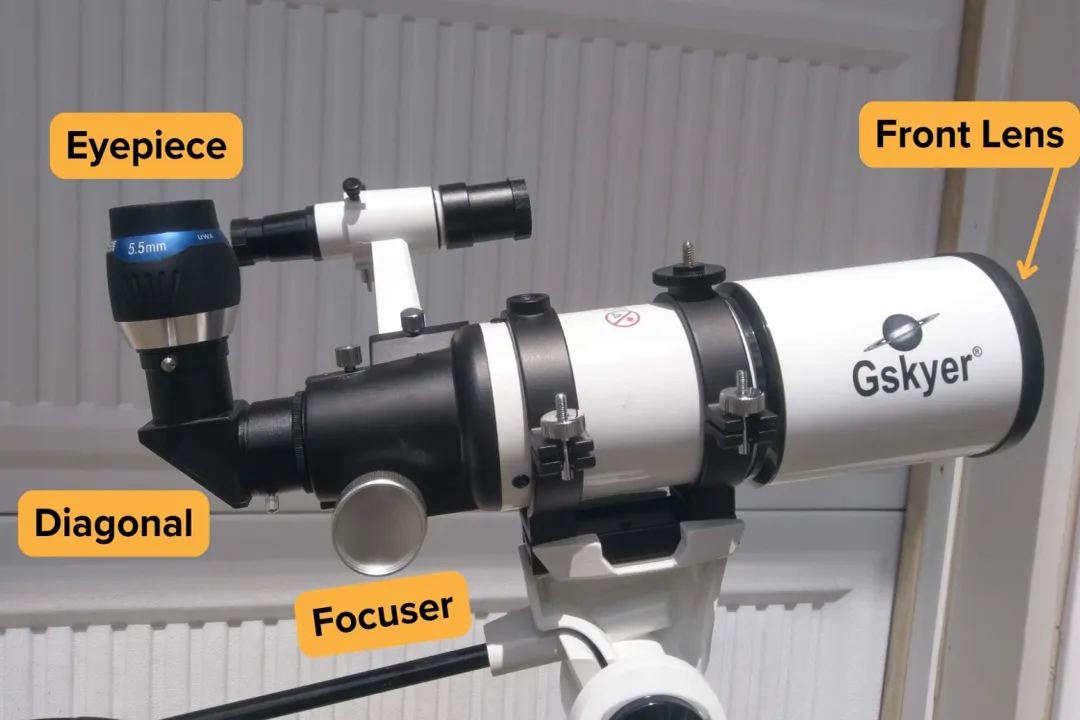
The allure of the night sky, magnified through an optical instrument, often overshadows the practical hurdles and inherent compromises required to achieve those breathtaking views. While telescopes are indispensable tools for stargazers, they are far from perfect, presenting a spectrum of disadvantages that new and experienced observers alike must contend with. These limitations range from significant financial investment to frustrating technical requirements imposed by physics and manufacturing realities. [4][1]
# Initial Expense
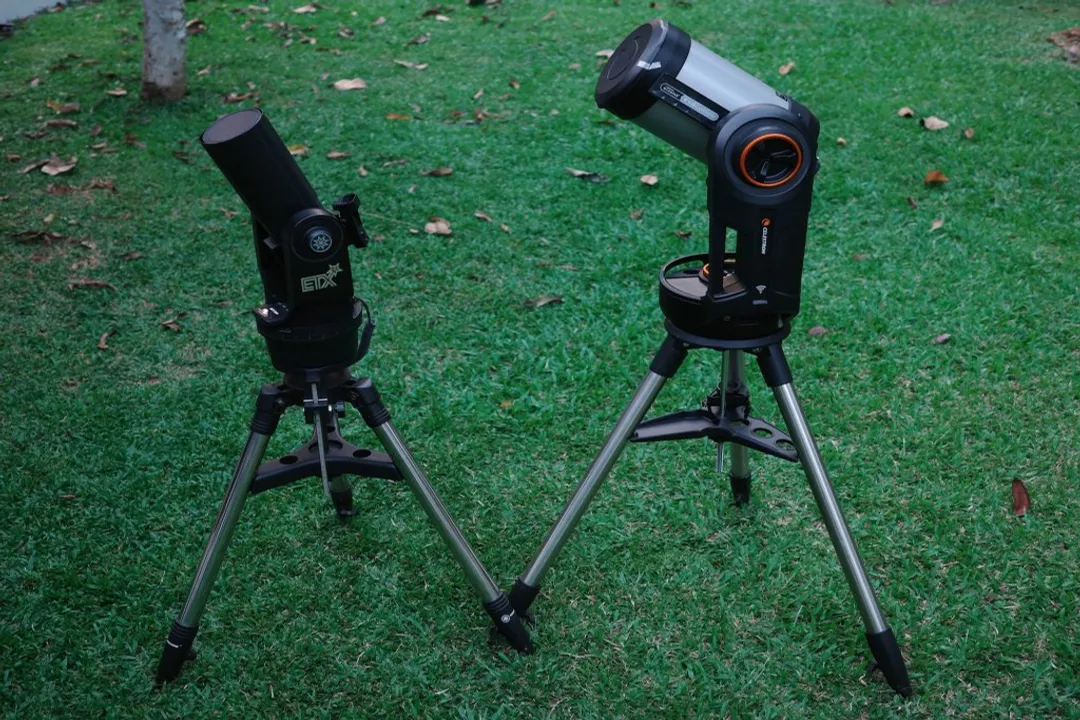
Perhaps the most immediate barrier to entry is the cost. Unlike simple binoculars, a quality astronomical telescope requires precision optics and stable support, which scales up rapidly with aperture size. For instance, high-quality refractors, which use lenses to gather light, carry a "very high initial cost relative to reflector" designs for the same light-gathering potential. [4] This trend continues with more complex designs: Schmidt-Cassegrain (SCT) and Maksutov-Cassegrain (MCT) optical tubes often demand a significantly "higher cost per inch of aperture than the Newtonian design". [1] While a powerful Newtonian reflector might be acquired for under five hundred pounds (in one contemporary estimate), an SCT of comparable aperture can easily cost three times that amount, making budget a primary limiting factor, especially for beginners unsure if the hobby will stick. [1] Even for specialized types like the Maksutov, the relative expense compared to simpler Newtonian models is a reason they are often not recommended as a first purchase. [1]
# Optical Flaws

The very nature of light manipulation in optics introduces unavoidable imperfections. In refracting telescopes, the objective lens acts like a prism, separating white light into its component colors—a phenomenon known as chromatic aberration. [1] This results in "false color" or colored halos around bright objects like the Moon or planets, as the different colors do not converge at the exact same focal point. [1][4] While high-end apochromatic (APO) refractors mitigate this using specialized, expensive glass, standard achromatic lenses only reduce the effect, leaving noticeable blue or purple fringing on bright targets. [1] Furthermore, a refractor’s focal ratio dictates how severe this problem is; lower focal ratios, like f/6, make the chromatic aberration much more obvious than longer ratios, like f/10 or above. [1]
Newtonian reflectors, while free from chromatic aberration since they use mirrors to reflect light, introduce their own compromises. A significant drawback is the central obstruction caused by the secondary mirror and its supporting structure (the spider vanes). [1] This obstruction blocks some of the light path, meaning that, technically, a refractor with the same aperture as a Newtonian will gather more actual light and can offer superior resolution for the same size. [1] The SCT design suffers from this as well, possessing the "largest obstruction to the lightpath of all reflecting types". [1]

# Mechanical Sensitivity
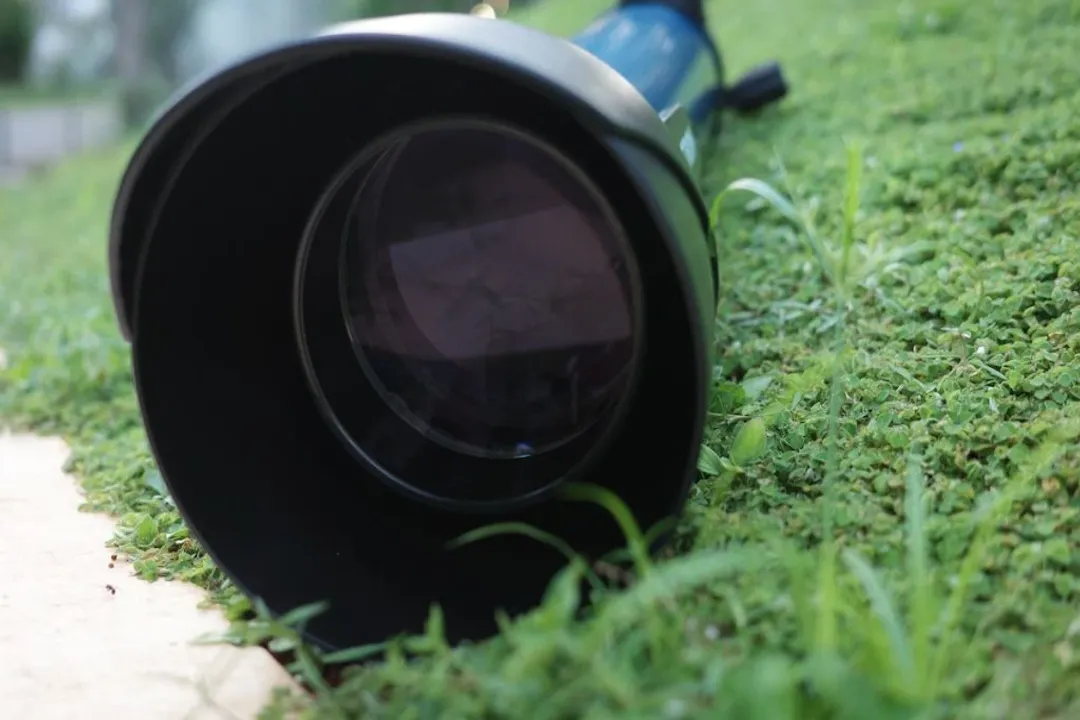
The telescope mount, which supports and moves the optical tube assembly (OTA), presents a unique set of disadvantages centered on stability and tracking. For high-magnification viewing, which is often desired for planetary observation, an Alt-Azimuth (Alt-Az) mount can be frustrating because the observer must constantly adjust both the horizontal and vertical movements simultaneously to follow an object as the sky rotates. [1] While Equatorial (EQ) mounts simplify tracking by aligning one axis with the celestial pole, they require precise setup based on the observer's latitude, which is another step to manage. [1] Even the popular Dobsonian mount, lauded for its intuitive pointing, becomes difficult for tracking objects precisely when using high powers—a situation common when a beginner first tries to observe planetary detail. [1]
Reflectors, particularly Newtonians, are inherently more susceptible to positional errors due to their design. Their mirrors must be kept in precise alignment—a process called collimation. [1] Rough handling during transport or setup can easily knock the mirrors out of adjustment, leading to blurry, degraded images until realignment is performed. [1] Compounding this mechanical sensitivity, Newtonians are open-tube designs, meaning they are prone to tube currents—internal air movements caused by the telescope not being perfectly at ambient temperature—which further degrade image quality. [1]
# Design Trade-Offs Illustrated

Choosing a telescope type means accepting a specific set of inherent weaknesses. For example, the folded light path of Catadioptric systems (SCT/MCT) allows for a short physical tube length relative to a long focal length, which is excellent for packing away, but this design confines them to a "narrow-field-of-view" compared to typical Newtonians, making wide-field deep-sky scanning less natural. [1] On the other hand, large Newtonian reflectors, which excel at gathering light for faint deep-sky objects (DSOs), are inherently bulky, and taking them apart—even if designed in a truss style for transport—is a significant logistical task. [1]
It is worth noting the particular pitfalls of budget optics, which are a distinct disadvantage of the market, though tied to the technology itself. Smaller Newtonians often utilize spherically figured mirrors instead of the necessary parabolic shape to save manufacturing costs. [1] A spherical mirror fails to bring all light rays to a single focus point, resulting in "awful image quality," blurring faint stars and smudging planetary detail, effectively wasting the potential light-gathering power. [1] Worse still are the "Bird-Jones" or "Catadioptric-Newtonian" hybrids, which attempt to correct cheap spherical mirrors with an added corrective lens, a design considered optically poor and extremely difficult to collimate correctly. [1] Purchasing equipment that falls into these sub-standard categories is a significant disadvantage for the novice, often leading to immediate frustration and abandonment of the hobby.
# Environmental Limitations
Even with a perfect, expensive instrument, the view is largely at the mercy of the environment. The greatest performance limiter is almost always the Earth’s atmosphere, often referred to as "seeing". [1] On nights with atmospheric turbulence—caused by churning warm and cold air currents—the image jitters and blurs, rendering high magnifications useless, regardless of the telescope’s theoretical resolving power. [1] On such nights, a powerful telescope is no better than a modest one because the air itself is the constraint. [1] While a smaller aperture telescope might theoretically see steady images more often because the light passes through fewer turbulent air cells, the larger instrument's potential is locked away by poor conditions. [1]
The secondary issue is light pollution. While bright targets like the Moon and planets are generally viewable even from city centers, deep-sky targets such as faint nebulae and galaxies are severely washed out by artificial light. [1] While some might suggest driving out to the countryside for improvement, the source material wisely points out that for observers living near smaller towns (under about 60,000 inhabitants), traveling out of town may offer minimal atmospheric or light pollution benefit. [1] The primary actionable advice is ensuring local lights (like one's own house lights) are off, and the horizon is clear, which can often be achieved at a local park, negating the need for long, inconvenient excursions. [1]
# Thermal Management Delays
A less obvious, yet time-consuming, disadvantage is the requirement for the telescope optics to reach thermal equilibrium with the outside air. Closed-tube systems, which include refractors and Catadioptrics (MCT/SCT), trap air inside the tube. [1] If the telescope is brought outside on a warm evening and pointed at space, the internal air is warmer than the surroundings, causing internal currents that degrade sharpness, much like tube currents in a Newtonian, just less visually obvious until you try to focus on fine detail. [1] Observers must wait, sometimes for an hour or more, for the entire mass of glass and metal to cool down sufficiently to stop distorting the light path, meaning observation time might be significantly shortened by this necessary waiting period. [1]
To give a sense of how critical this is for image fidelity, consider that the difference between a view that shows subtle detail (like the Great Red Spot on Jupiter) and one that is merely a fuzzy disc can hinge on whether the telescope is thermally stable or not, even when using a relatively modest magnification around 150x. [1] This waiting period is time the observer is unable to actively use their expensive equipment.

# The Hidden Cost of Time
Beyond the financial outlay, an astronomical telescope extracts a significant cost in time, which can feel like a disadvantage when excitement outpaces practical results. This manifests in several ways. First is the time spent on setup and cooldown mentioned previously. [1] A bulky setup may take considerable effort to assemble, especially for an EQ mount that needs alignment, only for the observer to realize the seeing conditions are terrible and to pack up again shortly after. [1] Second is the time spent on focusing. Achieving perfect focus is critical, as a slightly unfocused image becomes larger and blurrier, obscuring detail. [1] Experts suggest that achieving perfect focus can take a significant amount of time, sometimes an hour on troubled nights, as the observer must wait for momentary steady air pockets to pinpoint the sharpest focus. [1] Finally, there is the time sink involved in learning the sky to locate fainter objects via techniques like "star hopping". [1] While a Go-To mount automates finding objects, it bypasses the rewarding learning process and results in a user who cannot easily operate a manual scope if the electronics fail or if they borrow another instrument. [1]
In considering the atmospheric limitation, one can draw an analytical conclusion about the practical application of large apertures. While a larger aperture gathers more light and theoretically offers higher resolution (as quantified by formulas like the Dawes Limit), [1] the atmospheric turbulence acts as a physical filter. If the air cells are only 100mm wide, a 150mm telescope looking through the boundaries of these cells suffers more image degradation than a 90mm telescope that fits neatly within a larger number of those cells. [1] This means that on nights with poor seeing, the actual usable detail delivered by a significantly larger, more expensive telescope is often comparable to what a smaller, less expensive scope can manage, turning the investment into an underutilized asset until the atmosphere calms down. [1] It is this dependency on external, uncontrollable factors—the atmosphere—that makes the entire enterprise feel constrained, regardless of the technology owned.
# Maintenance and Specialized Knowledge
The final set of disadvantages relates to the necessary technical knowledge and ongoing upkeep required to keep the instrument performing at its peak. As noted, Newtonian reflectors demand regular collimation, a task that requires understanding the alignment of two mirrors. [1] While this skill is manageable, it is an added responsibility absent from simpler optical systems like refractors, which, due to the rigid mounting of their lenses, generally do not need collimation throughout their life. [1]
Furthermore, as observers progress, they may want to use more demanding accessories, such as Barlow lenses, which effectively double magnification but also double the focal ratio. [1] A Barlow lens that works wonderfully on a long-focal-ratio MCT might ruin the wide-field performance of a fast, short-focal-ratio Newtonian, turning an f/5 system into an f/10 system that is no longer ideal for observing sprawling Deep Sky Objects. [1] This constant need to understand focal ratios, magnification limits (avoiding "empty magnification"), and accessory compatibility adds a layer of complexity that can feel like a disadvantage when the goal is simply to enjoy the view. [1] The market itself is filled with confusing specifications and marketing terms—like the term "aspherical" being sometimes used to describe a parabolic mirror—requiring the user to acquire specialized vocabulary to avoid buying substandard or unsuitable equipment. [1]
#Videos
What Are The Drawbacks Of A Reflecting Telescope? - YouTube
Related Questions
#Citations
Advantages and Disadvantages of Refracting Telescopes - UBC Math
What Are The Drawbacks Of A Reflecting Telescope? - YouTube
PLEASE DO NOT BUY ANY TELESCOPE UNTIL YOU READ THIS!
Telescope Types Compared: Pros, Cons, and Best Uses
Lessons Overview : Disdvantages of Radio Astronomy