What are the two main things that telescopes do?
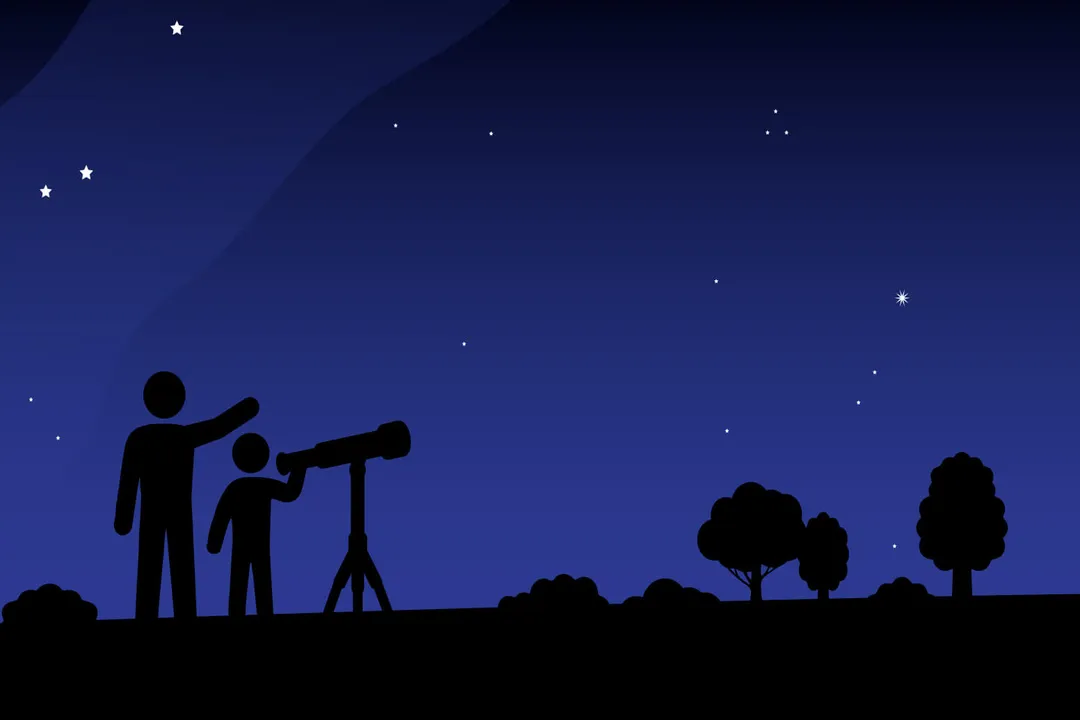
The simple act of looking up at the night sky reveals wonders, but even the sharpest human eye has limitations when trying to decipher the faint glow of distant galaxies or the fine surface details of a nearby planet. To overcome these natural boundaries, humanity invented the telescope. At its heart, this instrument is not some magical viewing portal; it is a sophisticated light collector and manipulator. When we break down what a telescope actually does for the observer, the functions distill down to two fundamental operations: it gathers light, and it enlarges the view of what it sees. [1][2][6]
# Light Collection
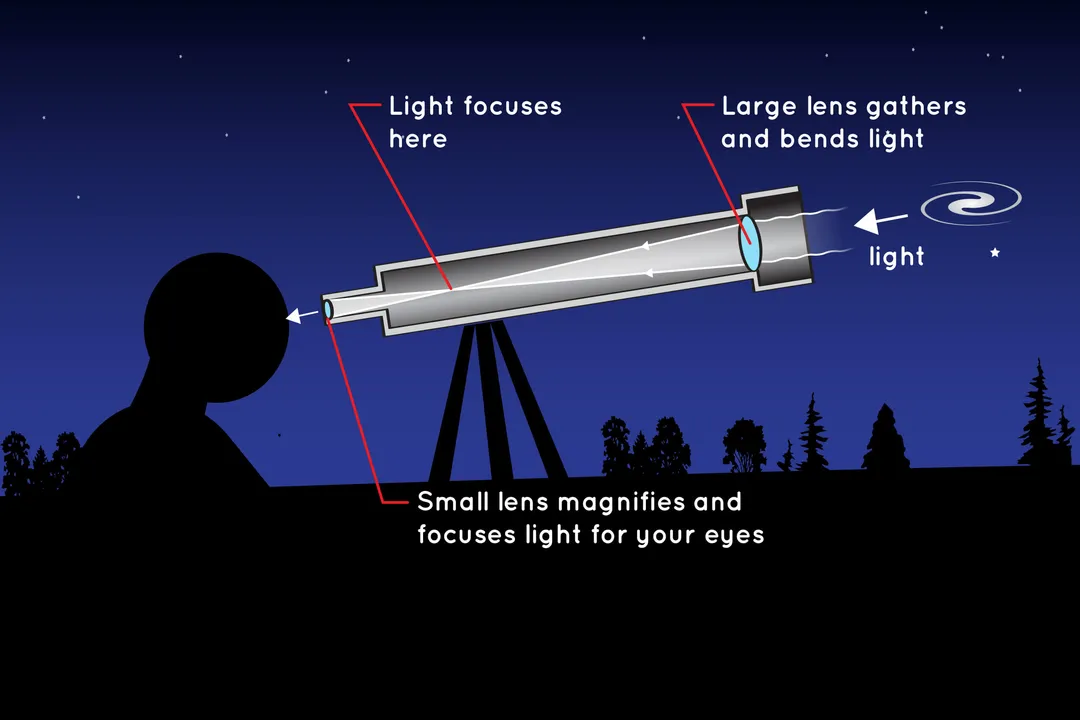
The single most important function of any telescope, whether it is a modest backyard instrument or a massive observatory eye pointed toward the cosmos, is its ability to collect electromagnetic radiation, primarily visible light. [5][9] Our eyes are marvelous instruments, but their pupils—the aperture through which light enters—are relatively small, typically maxing out around 7 millimeters in diameter in bright conditions. [4] A telescope’s primary mirror or lens, known as the aperture, is dramatically larger, sometimes measuring several meters across.
This difference in area translates directly into the amount of light captured. Think of it this way: if your eye is a small drinking straw trying to catch raindrops, a large telescope aperture is like setting out a massive rain barrel. [9] The barrel collects far more water (light) during the same rainfall (exposure time) than the straw ever could. This collected light is then concentrated onto a small point, making distant, faint objects appear much brighter than they would to the naked eye. [6][9] This light-gathering power is often considered the telescope’s most vital attribute. [5] Without sufficient light, even perfect magnification will only yield a large, dark smudge. [1][5]
This concept explains why a large, slow telescope might show you details in a faint nebula that a smaller, high-magnification instrument simply cannot, regardless of the eyepiece used. The ability to see fainter objects, like distant galaxies or dim stars, is entirely dependent on the diameter of the primary objective. [1][9] For instance, doubling the diameter of a telescope’s mirror results in four times the light-gathering capacity. If you were comparing a 3-inch telescope to a 6-inch telescope, the 6-inch model gathers four times the light, making objects that are four times fainter potentially visible to the observer. [4]
# Enlarging Views
The second main purpose, often what people first associate with telescopes, is magnification or enlargement. [5][9] This is the function that makes distant planets seem closer and allows us to distinguish features on the Moon that are invisible to the unaided eye. [6]
Magnification is calculated by taking the focal length of the telescope’s objective (the main lens or mirror) and dividing it by the focal length of the eyepiece currently in use. [1] If a telescope has a focal length of 1000 millimeters and you place a 25-millimeter eyepiece in it, the resulting magnification is . [1] Changing the eyepiece allows the observer to dial in different levels of enlargement. A low-power eyepiece (like the 25mm example) is used for wide fields and brighter views, while a high-power eyepiece (say, 6mm) provides greater enlargement for viewing details on the Moon or Jupiter, resulting in . [1]
However, it is essential to understand the relationship between light gathering and magnification. Many beginners mistakenly believe that higher magnification is always better. In reality, magnification only works after the telescope has done its job of gathering enough light. [5] If you try to use a very high-power eyepiece on a small telescope, you are simply taking the limited amount of light you gathered and spreading it over a much larger apparent area. [8] The result is a larger, but extremely dim and often blurry image. [1] The magnification must be appropriate for the amount of light collected by the aperture. [9] A good rule of thumb, useful when purchasing initial equipment, is that the maximum useful magnification is roughly twice the aperture size in millimeters. For a 100mm telescope, you might expect clear detail up to about , though atmospheric conditions often limit this significantly. [4]
# Detail Clarity
While closely related to enlargement, another function telescopes perform is resolution—the ability to separate fine details that appear close together. [4] This is distinct from magnification. You can magnify a blurry image indefinitely, but it will never become sharp. Resolution is governed by the quality of the optics and, again, the diameter of the aperture, not just the eyepiece. [4] A larger aperture, having collected more photons and minimized the spreading effects of diffraction, can resolve finer details than a smaller scope, even if both are set to the same magnification. [5]
This is particularly noticeable when viewing double stars or the subtle cloud bands on Jupiter. A telescope with superior resolution will show two distinct points of light where a lesser one shows a single elongated blob, or it will reveal clearer boundaries between Jupiter’s zones. [4]
# Optical Handling
To achieve these two primary functions—gathering light and enlarging the image—telescopes must manipulate the incoming light rays. The method of manipulation defines the type of telescope. [3][9]
# Refraction versus Reflection
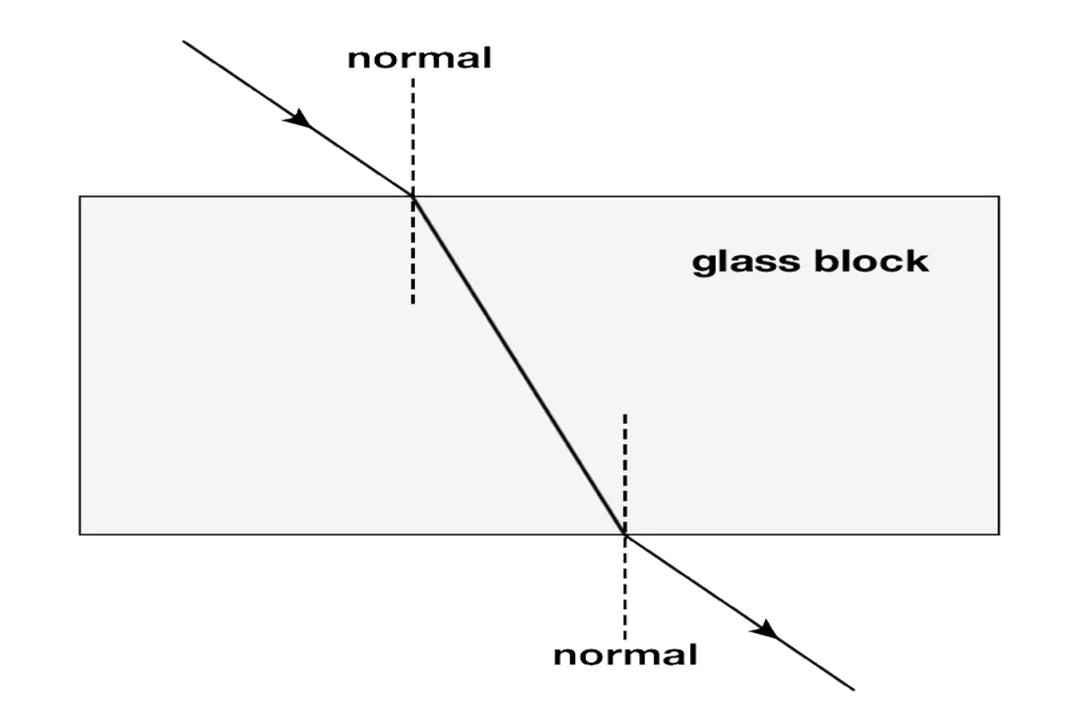
The oldest and perhaps most recognizable style is the refracting telescope, which uses lenses to bend, or refract, light towards a single focal point. [3] In a basic refractor, a large lens at the front gathers the light and bends it so that it converges at the back of the tube where the eyepiece is located. [3]
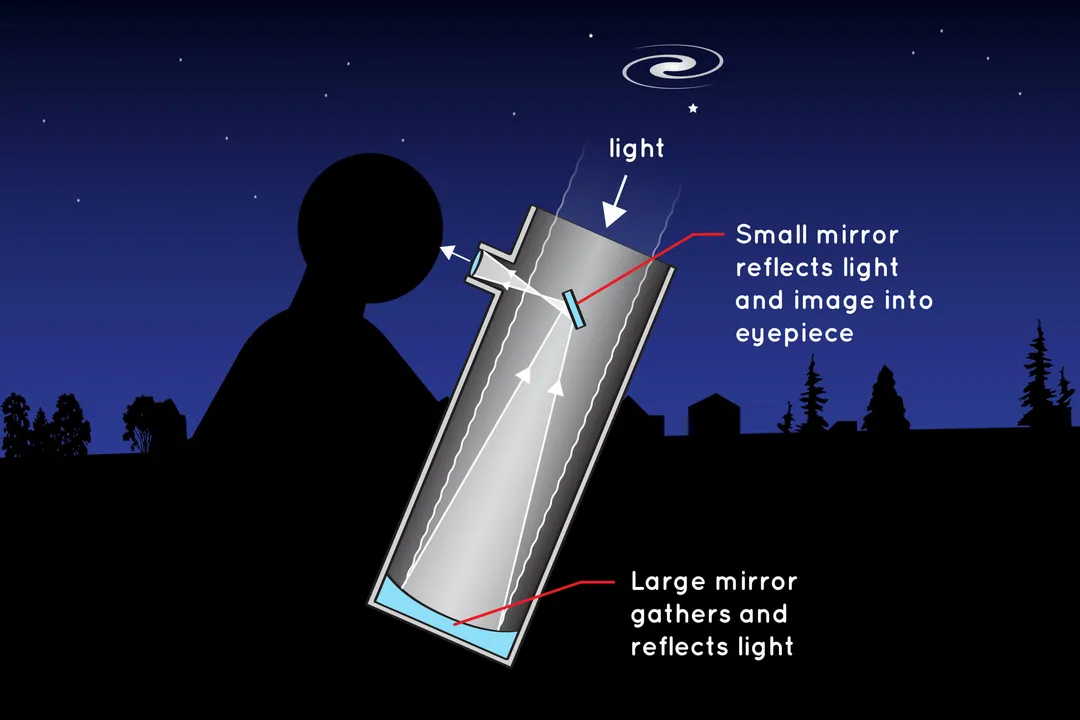
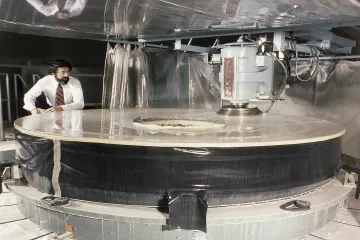
In contrast, reflecting telescopes use mirrors. A large, curved primary mirror collects the light and reflects it back up the tube to a smaller, secondary mirror, which then directs the focused light out the side of the tube to the eyepiece or detector. [9] Reflectors are often favored for larger apertures because it is technologically simpler and more cost-effective to build and support large mirrors than large, perfect lenses. [9]
When considering the core functions, the design choice (refractor vs. reflector) dictates how the light is gathered and focused, but the primary goals remain the same: maximize photon capture and appropriately magnify the result. [3][5]
# Viewing Expectations
Understanding the mechanics of light gathering versus magnification is crucial for setting realistic expectations when beginning astronomical observation. A common scenario involves purchasing a department-store telescope advertised with extreme magnification, perhaps or . [1] While the math might support that number using the smallest eyepiece, the actual experience is often disappointing. [8]
For example, consider a small 60mm refractor with a 700mm focal length. Using the provided 4mm eyepiece yields . [1] While sounds impressive, that 60mm aperture has a relatively small light-gathering area compared to a modern amateur 8-inch (200mm) reflecting telescope. [5] The 8-inch scope gathers significantly more light, meaning its view will be bright and detailed, whereas the 60mm scope’s view will appear dim and fuzzy because it simply did not collect enough raw light information from the distant object to support that degree of enlargement. [9]
This illustrates why the light-gathering function takes precedence. A telescope that gathers light well but has low magnification is always more useful than one with high magnification but poor light collection. [5] You can always improve magnification by changing to a lower focal length eyepiece, provided the image is bright enough to begin with. [1] If the image is too dark, no eyepiece change can fix that fundamental limitation. [6]
Furthermore, while we discuss the functions in terms of visible light, modern telescopes are often designed to collect other parts of the electromagnetic spectrum, such as infrared or radio waves, depending on their purpose. [1] Even amateur instruments today are frequently paired with digital cameras or specialized sensors, meaning the "viewer" is often a computer screen rather than a human eye. [5] In these cases, the telescope is still performing its two core tasks—collecting photons and focusing them—but the data is being recorded digitally instead of being perceived directly. [5] The collected electronic data can then be "stacked" over time, effectively extending the telescope's light-gathering power far beyond what a brief glance could achieve, allowing us to see objects that are technically too faint even for the largest ground-based instruments in a single exposure. [5] This digital enhancement effectively boosts the light-gathering function by integrating observations over time.
#Videos
How do telescopes work? - YouTube
Related Questions
#Citations
How Do Telescopes Work? - NASA Space Place
Telescopy | Research Starters - EBSCO
Refracting Telescopes - Las Cumbres Observatory
Lecture 12: Telescopes
How a Telescope Works - Imaging.org
How do telescopes work, and how do they help us see distant ...
How do telescopes work? - YouTube
ELI5: how do telescopes work? : r/explainlikeimfive - Reddit
Telescope Basics | Naperville Astronomical Association