What is the main element found in the nebula?
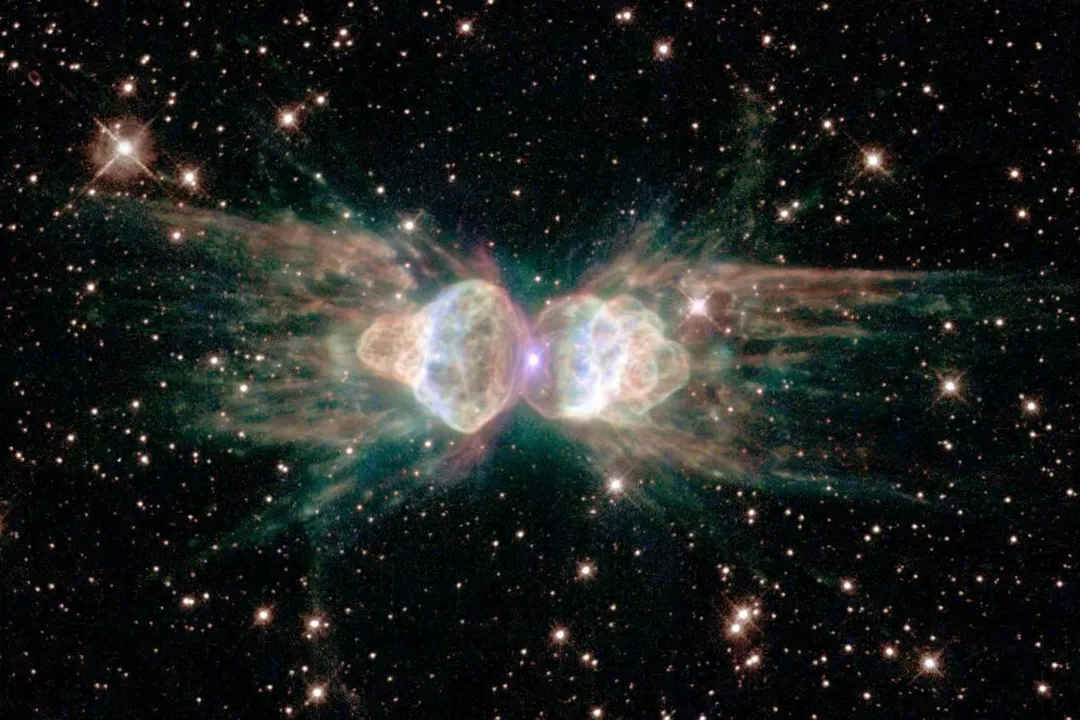
The clouds that drift across the interstellar medium, which astronomers call nebulae, represent some of the most stunning visual subjects in the night sky, yet their true nature lies in their chemical makeup—the raw ingredients for stars and planets. [6] These vast, ethereal structures are not uniform; they are massive collections of interstellar gas and dust. [4][6] When we ask what the main element found within these cosmic nurseries is, the answer points directly back to the earliest moments of the universe itself: Hydrogen. [1][5]
# Defining Nebulae
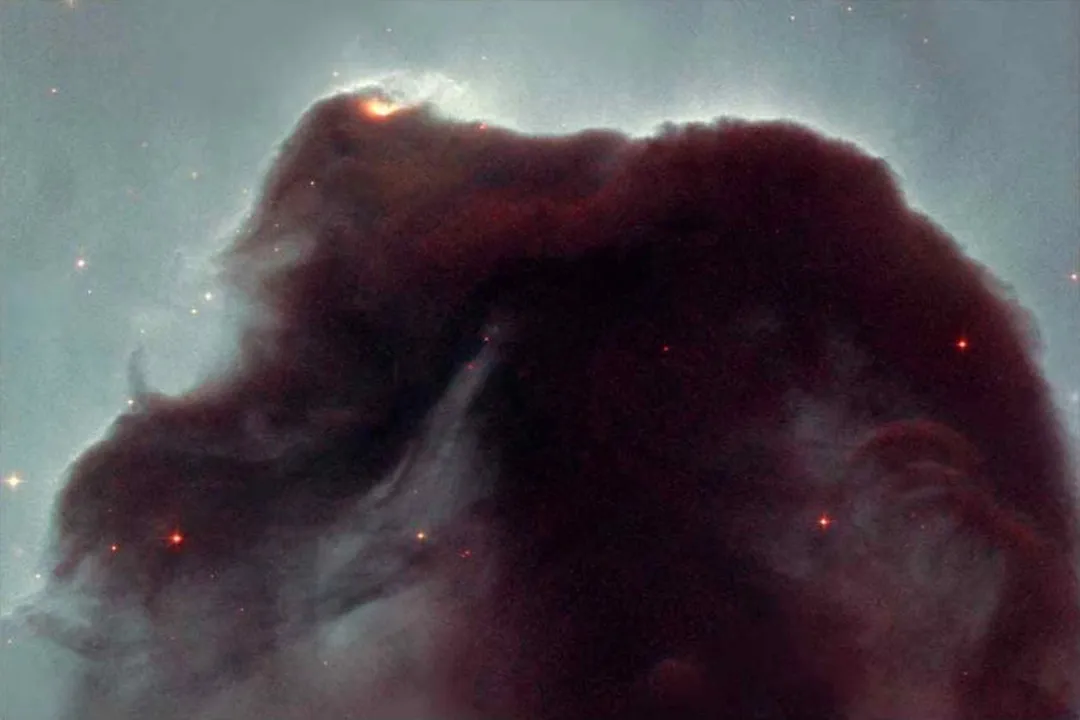
A nebula, which is Latin for "mist" or "cloud," is fundamentally a giant cloud of gas and dust spread out in space. [4][6] They are not just passive collections of matter; they are active sites of star formation, or they represent the remnants of stars that have already lived out their lives. [8] The sheer scale of these objects is staggering, often spanning light-years across the void between stars. [4]
These clouds contain both gas and solid particulate matter, often referred to as cosmic dust. [1][5] While the dust gets the attention for creating the dramatic dark lanes and vibrant colors we see through telescopes, it is the gas component that overwhelmingly dictates the elemental mass of any given nebula. [1][5]
# Primary Constituents
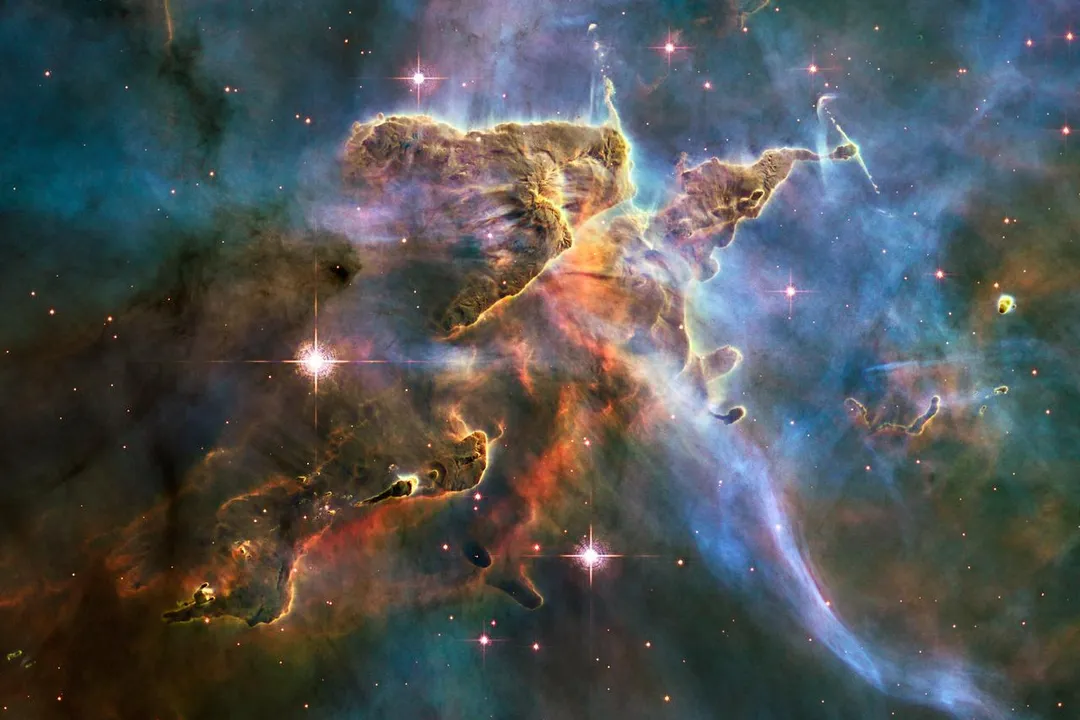
The composition of nearly every nebula reflects the original material forged in the Big Bang. Consequently, the gas component is dominated by the two lightest elements. [5] Specifically, the gas in nebulae is mostly hydrogen and helium. [2][4][5]
When we examine the general chemical makeup of nebulae across the cosmos, hydrogen is consistently found to be the most abundant element, making up the overwhelming majority of the material by mass. [5] Helium is the second most common gas present. [5]
If we were to take a representative sample of the gas in a typical star-forming region, or an emission nebula glowing from nearby starlight, we would find that hydrogen accounts for an estimated to of the total elemental mass, with helium following closely behind, usually making up between and . [5] This overwhelming abundance of the first two elements of the periodic table is a fundamental characteristic of the universe that has remained largely unchanged since its genesis. [5]
# Hydrogen Dominance
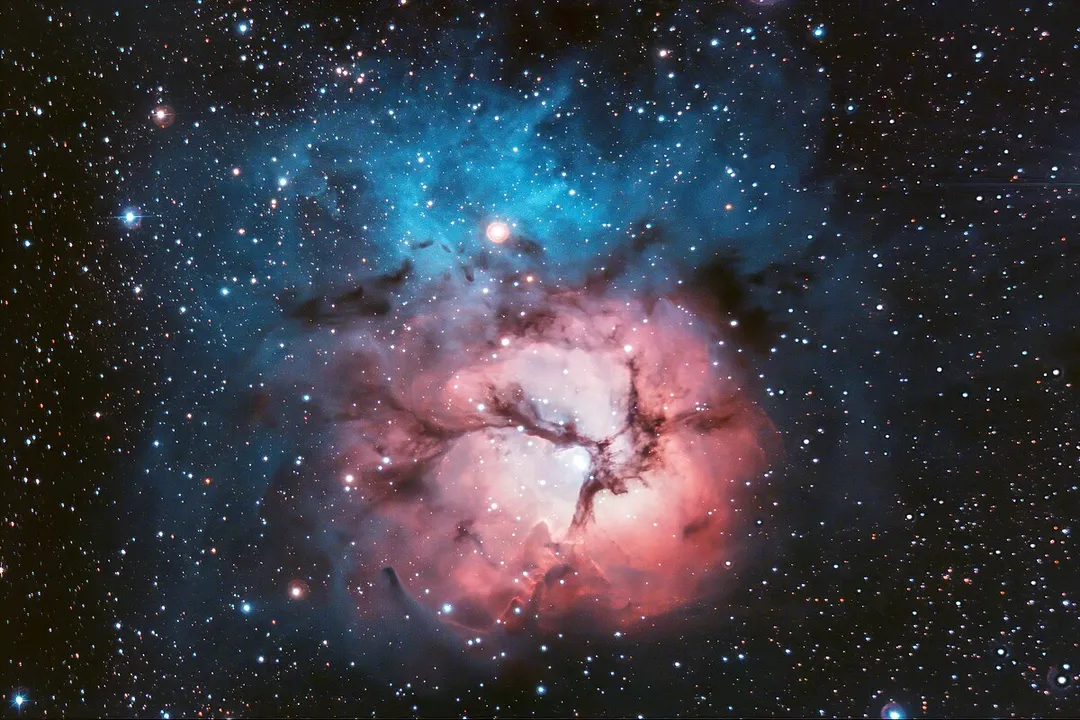
The sheer quantity of hydrogen within nebulae is a direct consequence of cosmic history. [5] Hydrogen is the simplest element, consisting of just one proton and one electron (in its most common form, protium). [1] Because it was synthesized in the first few minutes after the Big Bang, it exists in the greatest quantities throughout the cosmos. [5]
In the context of a nebula, this hydrogen exists primarily in the form of atomic hydrogen ( I) or molecular hydrogen (). [1] Molecular clouds, which are often the coldest and densest types of nebulae, are rich in molecules, which are the primary fuel source for the birth of new stars. [1] Even in the hotter, ionized regions, like those glowing brightly due to nearby massive stars, the gas is still predominantly hydrogen, just in an ionized state (). [1]
It is this massive reservoir of hydrogen that makes nebulae the universe's stellar incubators. A collapsing pocket of gas within the cloud needs sufficient density and mass, almost all of which must come from this abundant hydrogen, to initiate fusion in its core and become a true star. [8]
# Helium Presence
Though secondary to hydrogen, helium is critically important in nebular composition. [5] As the second lightest element, it was also produced in significant amounts during Big Bang nucleosynthesis. [1] In most nebulae, helium is present at roughly of the mass abundance compared to hydrogen, making it the second largest constituent by a considerable margin. [5]
Helium’s presence is often utilized by astronomers as a diagnostic tool. For example, in emission nebulae, the amount of helium that has been ionized by the ultraviolet radiation from hot, young stars can tell researchers about the temperature and energy output of those stars. [5] A higher ratio of ionized helium compared to hydrogen can signal the presence of extremely hot, massive stellar objects within the cloud. [5]
# Heavier Elements
While hydrogen and helium account for almost all the gas by mass, the concept of a nebula composition must also account for the dust component and the chemically richer material found in later-generation clouds. [5]
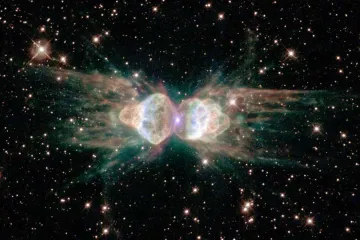
Beyond the dominant duo, the next most common elements are oxygen, carbon, neon, and nitrogen, existing in trace amounts relative to hydrogen and helium. [5] These heavier elements, often called "metals" by astronomers (anything heavier than helium), were not created in the Big Bang but were instead manufactured inside stars through nuclear fusion and then dispersed into space when those stars died, often explosively. [5]
This means that the elemental mix in a nebula isn't strictly universal; it depends on its cosmic lineage. A nebula forming in a region where previous generations of stars have lived and died will have a higher concentration of these heavier elements—the products of stellar nucleosynthesis—than a pristine cloud in the early universe. [5] If we consider the total mass of a nebula, the dust component—made up of silicates, carbon compounds, and frozen ices of water, methane, and ammonia—can sometimes constitute a significant fraction in certain types of dark or cold nebulae, though the gaseous hydrogen still vastly outweighs it overall. [1]
An interesting consideration arises when comparing different stellar nurseries. While a massive molecular cloud near the galactic center might be enriched with heavier elements from countless supernovae, a remote nebula in the outer reaches of a galaxy, untouched by many stellar cycles, might exhibit a composition almost perfectly mirroring the primordial hydrogen and helium ratio. [5] This elemental "signature" acts as a timeline, allowing astrophysicists to map out the chemical evolution of the Milky Way itself.
# Compositional Diversity
Nebulae are classified by how they interact with light, and this interaction often reveals differences in their elemental makeup and physical state. [1][7]
# Emission Nebulae
These clouds glow because they are ionized by intense radiation from nearby hot, young stars. [7] Because the gas is energized enough to emit light, we can easily observe the spectral lines of the elements present, confirming the hydrogen and helium dominance, but also highlighting the presence of oxygen (often appearing green) and nitrogen. [7] The vibrant red color characteristic of many emission nebulae, like the famous Orion Nebula, is specifically caused by the strong spectral emission from excited hydrogen atoms. [7]
# Reflection Nebulae
These nebulae do not emit their own light but rather scatter the light from nearby stars. [1] The light we see scattered is predominantly blue, which is often indicative of the particle size of the dust grains present, rather than the primary gas composition. [1] While the gas is still mostly hydrogen and helium, the visual characteristic is dictated by the heavier elements bound in microscopic dust particles. [1]
# Dark Nebulae
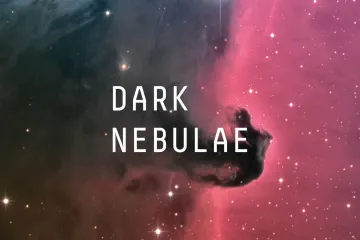
These are dense clouds that block the light from objects behind them. [1] Their composition is largely cold molecular hydrogen (), often mixed with significant amounts of dust that absorbs visible light effectively. [1] The darkness itself is a testament to the density of the hydrogen and the shielding effect of the dust shroud. [1]
# The Role of Dust
While gas is the main elemental constituent, the role of dust deserves emphasis, as it significantly impacts the nebula’s appearance and future star formation potential. [1][5] Interstellar dust consists of tiny solid particles, typically much smaller than a micron. [1] These particles aggregate the heavier elements—carbon, silicon, iron, and oxygen—that were synthesized in previous stellar generations. [5]
In dense molecular clouds, where temperatures are low, the dust grains can accumulate volatile materials like water, carbon monoxide, and methane as icy mantles. [1] This dust is the essential catalyst for star formation. It helps cool the cloud by radiating heat away, allowing gravity to overcome thermal pressure, and it shields the interior from harsh ultraviolet radiation, preserving the molecular hydrogen needed to build new stellar cores. [1]
To put the mass ratio into perspective, while hydrogen gas outweighs everything else by far, if you consider a typical volume of interstellar space, the dust might only make up about of the total mass, yet this tiny fraction dictates whether a collapsing core will proceed to form a star or simply disperse. Imagine a large bathtub where is clear water (gas), but the residue along the sides (dust) is what makes the difference in what can be held or filtered within that container.
# Spectral Fingerprints
The primary method for confirming the main elements is through spectroscopy. [5] When light passes through or is emitted from a nebula, the atoms absorb or emit light at specific, unique wavelengths corresponding to the energy transitions of their electrons. [5] By analyzing the spectrum received from a nebula, astronomers can precisely measure the relative strengths of these spectral lines, which directly correlates to the abundance of the elements present. [5]
The strongest spectral lines observed in most nebulae belong to neutral or ionized hydrogen, unequivocally confirming its primary role. [5] Helium lines are also readily identifiable in emission nebulae, providing the confirmation for the second-most abundant element. [5] Only when looking at very specific, highly evolved nebulae, such as planetary nebulae that are the final stages of Sun-like stars, do we see the spectral contribution of elements like nitrogen and oxygen begin to approach a more significant visible proportion relative to the vast background of hydrogen. [5] Even in those cases, the foundational elemental majority remains hydrogen.
In summary, the main element by mass in any given nebula is overwhelmingly hydrogen, supported by the universe's elemental history and confirmed by direct spectroscopic observation of the light emitted or absorbed by these magnificent cosmic structures. [1][5]
Related Questions
#Citations
Nebula - Wikipedia
What gas does a nebula contain of? : r/askastronomy - Reddit
[FREE] A nebula is composed of dust and gas, but what are ... - Brainly
What Is a Nebula? | NASA Space Place – NASA Science for Kids
Nebula - Gas, Dust, Radiation | Britannica
Nebula interstellar cloud composition and formation - Facebook
What is a nebula? - Space Center Houston
Emission Nebula Facts For Kids | AstroSafe Search - DIY.org
Planetary Nebula - ASPIRE