What materials are found on Jupiter?
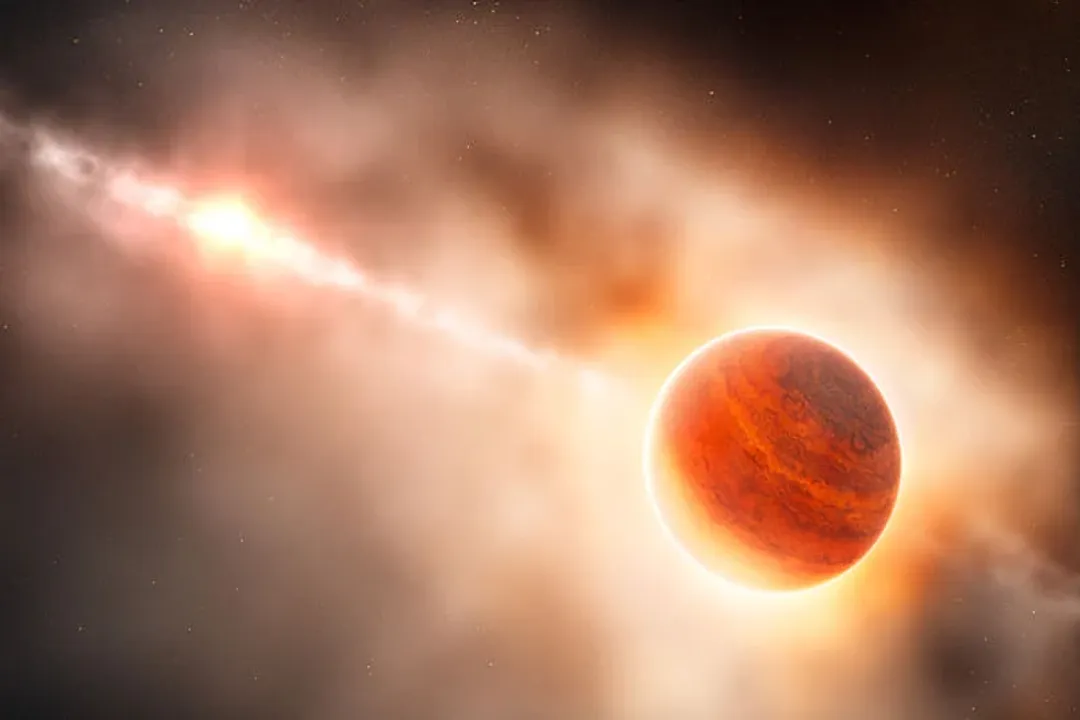
Jupiter, the Solar System’s behemoth, does not present a familiar, solid surface like Earth or Mars; rather, what we observe is the very top layer of its incredibly deep and dense atmosphere. [2][4] The materials that constitute this giant world are layered, transitioning dramatically under immense pressure from gases and ices into exotic states of matter deeper within. [5] By mass, Jupiter is overwhelmingly dominated by the two lightest elements: hydrogen and helium, mirroring the composition of the Sun itself. [1][2]
# Hydrogen Helium Bulk
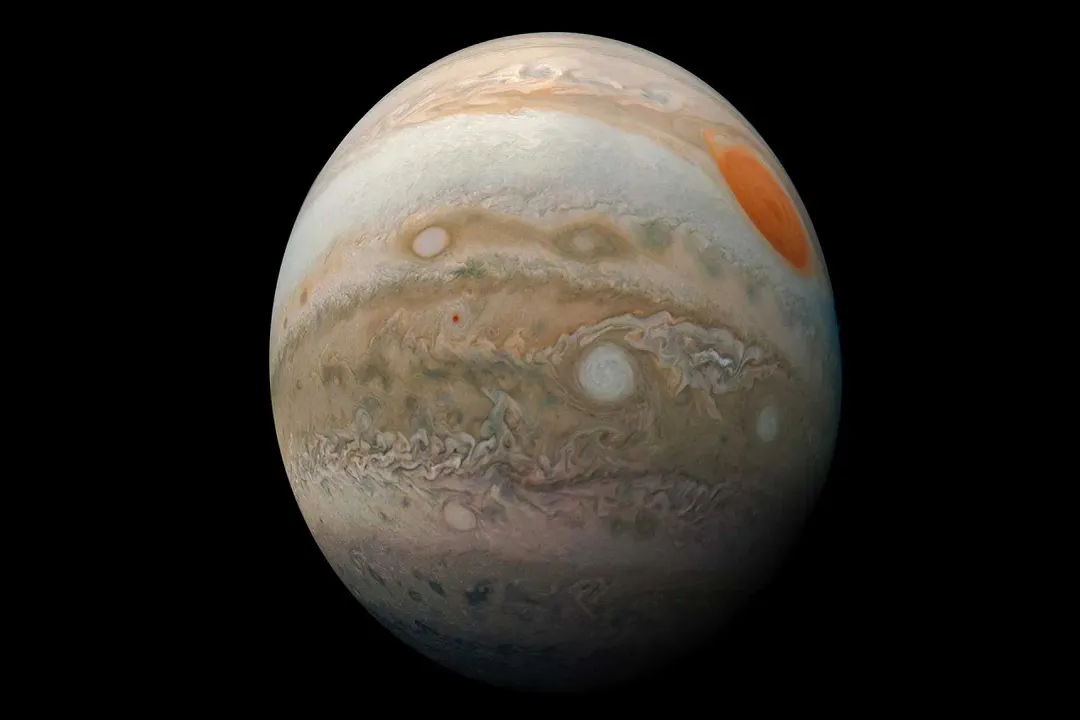
The bulk composition of Jupiter is startlingly simple when viewed on a planetary scale, consisting almost entirely of hydrogen () and helium (). [1][9] These two elements make up the vast majority of the planet’s mass, reflecting the primordial material from which the solar system formed. [2] While the exact ratio is still refined by missions like Juno, the proportions are generally close to those found in the Sun. [1] Hydrogen, being the lightest element, constitutes the overwhelming majority of the planet's volume. [2]
# Cloud Materials
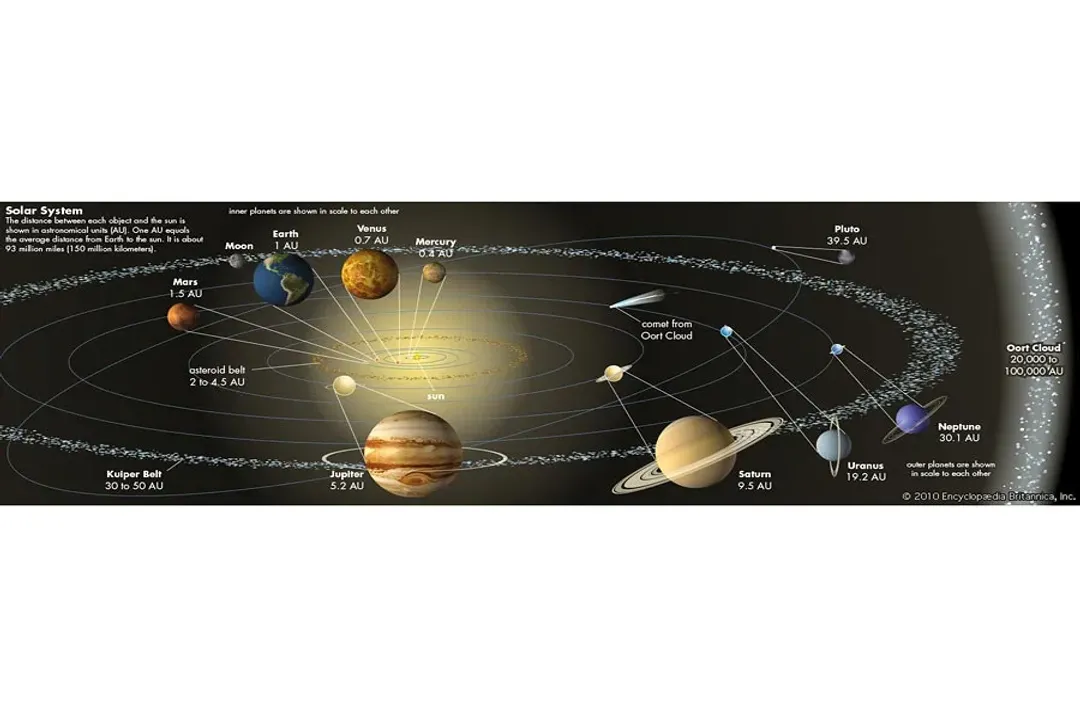
The visible "surface" that spacecraft encounter is actually a complex, multi-layered cloud deck. [6][9] These clouds are formed from various compounds condensing at different atmospheric pressures and temperatures as one descends through the Jovian atmosphere. [6][4]
The outermost layer, which appears white or colorless, is primarily composed of frozen ammonia ice () crystals. [6][9] Beneath this, the next significant cloud layer forms from ammonium hydrosulfide (), which is responsible for the distinctive brown and reddish hues often seen in the planet’s famous belts and zones. [6] Farther down, where temperatures and pressures are much higher, the deepest major cloud layer is believed to consist of water ice () and liquid water droplets. [6][9] Trace amounts of other substances are also present in the atmosphere, including methane (), ethane, acetylene, phosphine, and hydrogen sulfide, which contribute to the complex chemistry occurring high in the atmosphere. [6][9]
To better grasp how these materials are distributed compared to the planet’s overall makeup, one can see the stark difference between the thin veneer of clouds and the massive interior:
| Component | Location | Approximate State |
|---|---|---|
| Hydrogen () | Outer Atmosphere/Envelope | Gas/Molecular Liquid |
| Helium () | Outer Atmosphere/Envelope | Gas/Molecular Liquid |
| Ammonia () | High Altitude Clouds | Ice |
| Ammonium Hydrosulfide | Mid-Altitude Clouds | Solid/Liquid Mix |
| Water () | Lower Cloud Decks | Ice/Liquid |
| Hydrogen () | Deep Interior | Metallic Liquid |
| Rock/Metal Ices | Central Core (Hypothesized) | Solid/Dense Fluid |
# Liquid Metallic
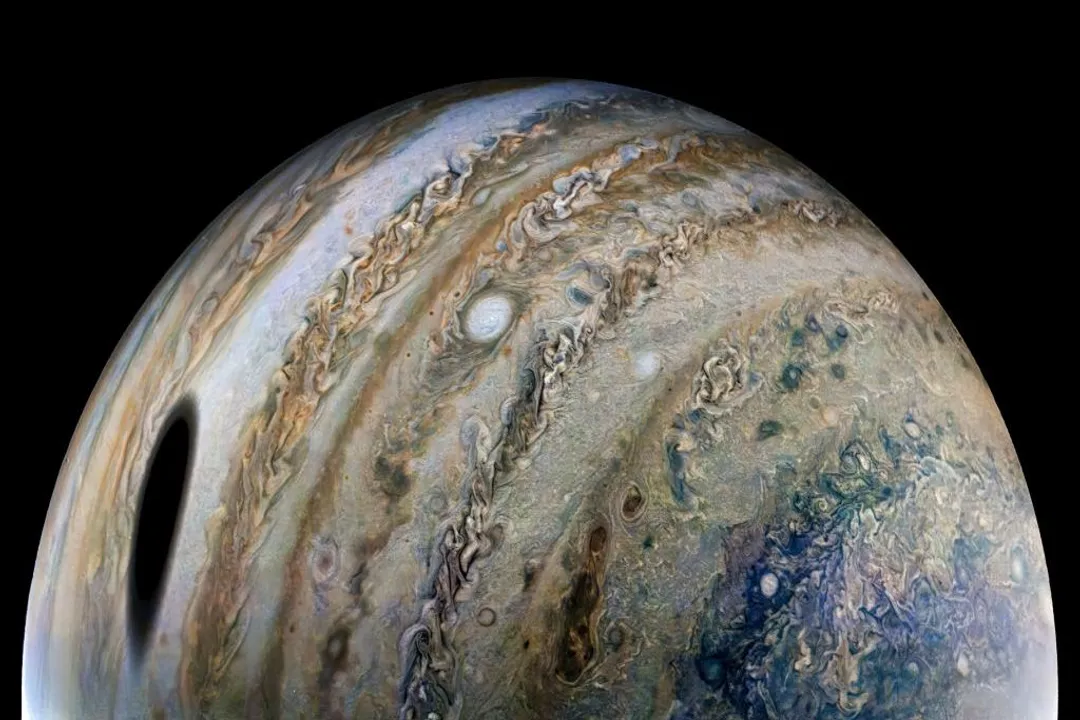
As you travel deeper past the visible cloud layers, the pressure escalates dramatically. At depths around $10,000$ kilometers below the cloud tops, the molecular hydrogen gas transitions into a fundamentally different state: liquid metallic hydrogen. [10][5] The sheer gravitational force squeezes the hydrogen atoms so tightly that their electrons are stripped away from the protons, allowing the material to conduct electricity like a metal. [10] This immense layer of conductive fluid is thought to be the source of Jupiter’s extraordinarily powerful magnetic field, which dwarfs that of any other planet in the Solar System. [10][1]
If a hypothetical explorer could somehow reach this boundary without being crushed, the transition would feel less like moving from air to water, and more like diving from the lightest gas into a pressurized, electrically active fluid that behaves like molten metal. [5] It is an environment entirely unlike anything found on Earth, representing a major fraction of the planet's total mass. [10]
# Planetary Core
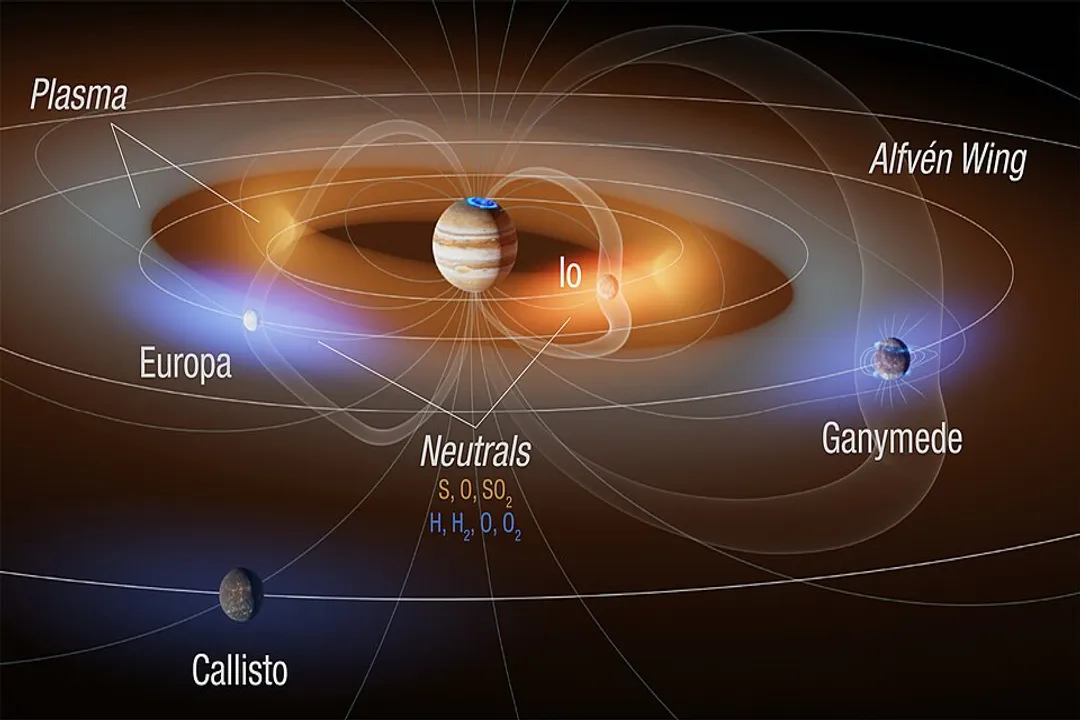
The innermost material content of Jupiter remains one of the great unsolved questions in planetary science, as direct observation of the core is impossible with current technology. [3] However, models based on gravitational measurements suggest the presence of a centralized, dense core. [3]
Current thinking posits that this core is likely a mix of heavier elements—rock and metal—compressed together. [7][3] Estimates for the mass of this core vary significantly; some analyses suggest it could be several times the mass of Earth, perhaps up to $9$ times the mass of Earth, implying that Jupiter consumed a substantial amount of solid material early in its formation history. [7] Other theories suggest that the pressure is so intense that the core material—the rock, metal, and ices—may have become so hot and mixed that it has diffused or smeared out into the surrounding metallic hydrogen layer, meaning there may not be a clearly defined, discrete solid core at all. [3][8] The composition could range from standard silicates and iron to exotic, high-pressure ices that remain solid despite the heat due to the crushing pressure. [3][6] The existence of a distinct, solid core is still debated among planetary scientists. [8]
Considering the sheer scale of Jupiter, even a small percentage of "heavy" material (rock and metal) translates into an enormous absolute mass compared to terrestrial planets. For instance, if Jupiter possessed a core mass equivalent to $10$ Earths, that material alone would be more massive than all the other known rocky and icy bodies in the outer solar system combined. This accretion history, inferred from the required core material, suggests a much more violent and material-rich early solar nebula than previously assumed for gas giant formation. [7]
The atmosphere itself, consisting primarily of hydrogen and helium, is not just passively surrounding the core; it is an active component of the planet's structure. As the materials transition from gas to liquid metallic hydrogen, the density gradient is smooth yet profound. The lack of a sharp boundary between the liquid envelope and the core, if confirmed, suggests a structure where the materials are constantly churning and mixing over billions of years, making Jupiter a truly dynamic machine built from the most common elements in the universe subjected to the most extreme physical conditions. [3]
Related Questions
#Citations
Jupiter Facts - NASA Science
Jupiter - Wikipedia
What's In Jupiter's Core? - Mission Juno
What is Jupiter Made Of? | Space
[PDF] Top 5 elements in the atmosphere of Jupiter
Jupiter - Ammonia, Water, Sulfur | Britannica
Jupiter is up to 9% Rock and Metal, Which Means it Ate a lot of ...
Does Jupiter have a solid core of anything or is it truly just a large ...
Jupiter Atmosphere - an overview | ScienceDirect Topics
Jupiter is a planet of extremes. Twice the size of all the ... - Facebook