Where is hot Jupiter located?
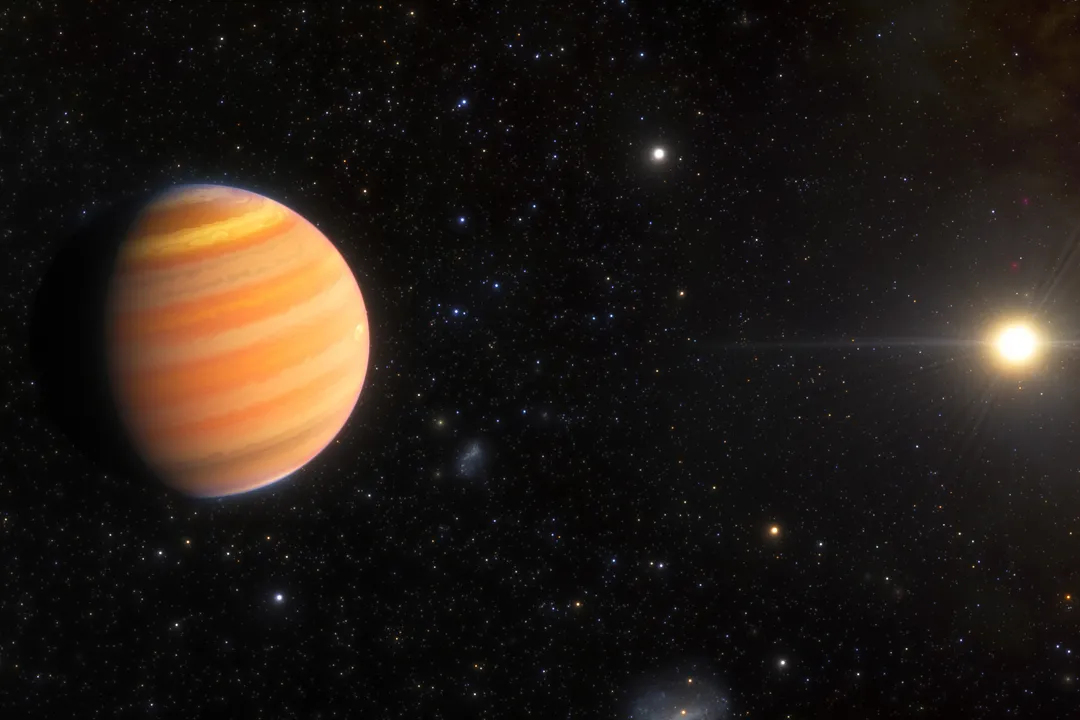
The concept of a planet like Jupiter, a massive gas giant, orbiting incredibly close to its parent star is one of the most surprising discoveries in modern astronomy. When we ask where a Hot Jupiter is located, the answer is primarily defined by its proximity to its star—a location dramatically different from the giant planets in our own solar system. These worlds are found in orbits so tight that they are scorched by intense stellar radiation, radically altering our understanding of planetary system architecture.
# Orbital Proximity
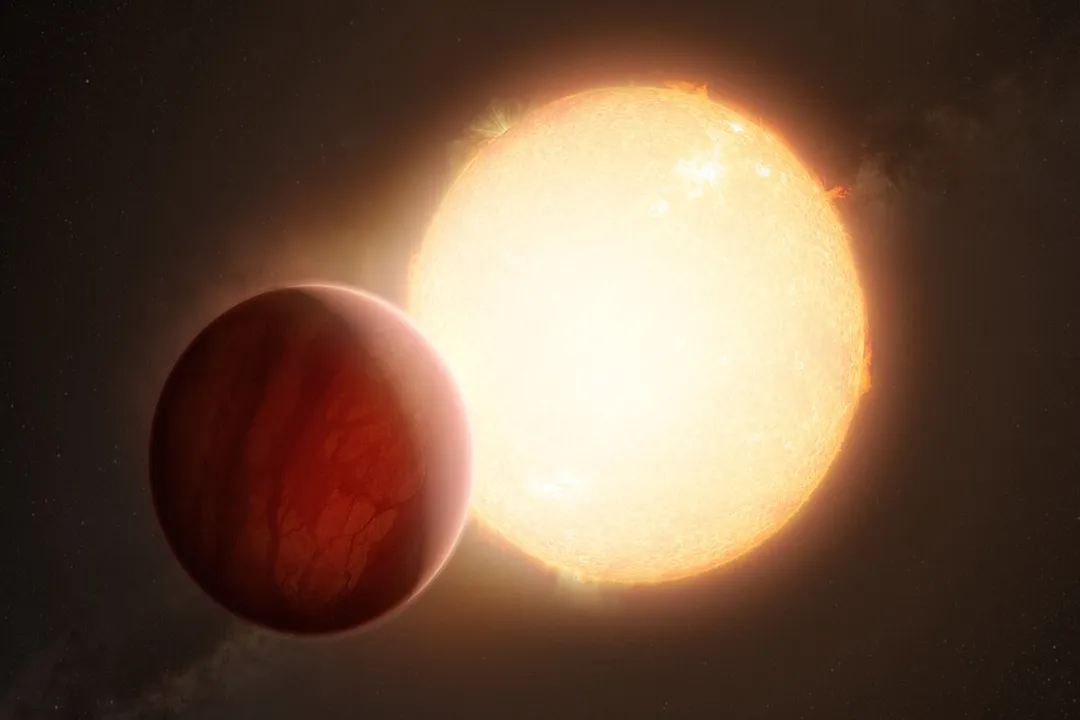
A Hot Jupiter is an exoplanet, meaning it orbits a star other than our Sun, and it falls into the category of gas giants similar in mass to Jupiter. The defining characteristic of their location is their orbital separation. They reside much closer to their host stars than Mercury orbits our Sun. For context, Mercury orbits at about $0.39$ Astronomical Units (AU) from the Sun, taking roughly 88 Earth days to complete one revolution. Hot Jupiters, conversely, often have orbital periods measured in mere Earth days, sometimes completing a full circuit in less than five days. This places their orbital distance well within $0.5$ AU, and frequently much closer to the star.
This extreme proximity dictates much about the planet itself. Because the orbital period is so short, the planet experiences a year that lasts only a fraction of ours. This intense gravitationally dictated location means the planet is also likely to be tidally locked, presenting the same face permanently toward its star, much like how the Moon faces Earth.
If a planet orbits at a common Hot Jupiter distance, such as $0.05$ AU from a star similar to the Sun, its year would be only about six days long. This demonstrates the radical departure from the configuration of our own solar system, where the gas giants—Jupiter, Saturn, Uranus, and Neptune—all reside many AU away in the cooler outer reaches. The location is therefore defined not by a specific star or galaxy, but by a universal orbital characteristic: a very small semi-major axis relative to its star's luminosity.
# Defining Heat
The location immediately dictates the planet's thermal environment. Being so close to a star means the planet is bathed in tremendously intense radiation, making it exceptionally hot. Astronomers have categorized some of these worlds as "ultra-hot Jupiters," where the daytime side temperatures can reach extraordinary highs, often exceeding $2,300$ Kelvin.
This blistering heat has severe consequences for the planet’s physical structure and atmosphere. In the most extreme cases, the stellar radiation is powerful enough to cause the planet to essentially "blow its top," meaning the atmosphere is actively being stripped away and vaporized by the star. This process is so violent that we can observe the atmospheric gases escaping into space, sometimes creating a visible plume or tail trailing the planet. The atmosphere isn't just hot; it is actively dissipating due to its unfavorable location relative to the central star.
For researchers attempting to characterize these planets, this location provides a unique, albeit challenging, laboratory. We can use instruments to directly study the atmospheric composition of these worlds as their outer layers are being boiled away by the star, offering an up-close look at extreme planetary weather and physics.

# Formation Migration

Understanding where a Hot Jupiter is located now is only half the story; understanding how it got there is crucial to understanding its nature. Current leading theories suggest that Hot Jupiters did not form in their current close orbits. Instead, they are thought to have originated much farther out, beyond the "snow line" in the cooler, outer regions of their star's protoplanetary disk, where volatile materials like ice are stable.
The planet then migrated inward through gravitational interactions. This migration process could involve the planet interacting with the remaining gas and dust in the protoplanetary disk, causing its orbit to decay and spiral toward the star. Alternatively, gravitational interactions with other massive planets in the system could have also dynamically nudged the gas giant into its tight, final resting place. The presence of a Hot Jupiter, therefore, implies a dynamic and often chaotic history involving orbital reconfiguration.
# System Neighbors
When we examine the location of a Hot Jupiter, it is important to distinguish between the orbit of the planet itself and the architecture of the entire star system. While Hot Jupiters occupy the inner zone, they are not necessarily alone. Their discovery expanded our view of possible planetary layouts.
It has been found that some star systems host an entire suite of planets with vastly different thermal locations. For instance, one documented star system contains both a scorching Hot Jupiter and a "Cold Super Jupiter" orbiting much farther out. This stark contrast within a single system highlights that the processes creating close-in giants do not necessarily exclude the formation of smaller or more distant worlds, even if the Hot Jupiter’s migration likely influenced the final orbits of its siblings.
The fact that a planet orbits at $0.05$ AU (a Hot Jupiter location) while another orbits at several AU (a Cold Super Jupiter location) around the same star provides crucial data for migration models. The inward push that placed one planet in an extreme environment must have, at some point, affected the orbital parameters of the others present in the disk.
# Orbital Oddities
The location is not always static or perfectly circular. Many Hot Jupiters occupy orbits that are not neat, near-circular paths, which is another indicator of their violent formation history.
Some Hot Jupiters are found in highly eccentric orbits, meaning the distance between the planet and its star varies significantly over the course of its year. A planet in an extremely eccentric orbit might spend most of its time relatively far from its star, but then plunge into the fiery inner region for a brief, intense period before swinging back out. Over time, the immense tidal forces exerted by the star during these close passages can circularize the orbit, locking the planet into its present, tight configuration. The observation of a planet with a highly eccentric orbit that is becoming a Hot Jupiter shows this process in action—it is currently en route to the scorched inner perimeter.
Furthermore, the direction of their orbit can also be unusual. Most planets in our solar system orbit in the same direction as the Sun rotates, known as a prograde orbit. However, some Hot Jupiters orbit in the opposite direction, a retrograde or "wrong-way" orbit. This suggests that the gravitational scattering or interaction that forced the planet inward involved a major dynamical event, perhaps a close encounter with another massive body that flipped its angular momentum, leading it to its current, unusual location relative to the star's spin axis.
The intense stellar energy constantly bombarding these worlds limits their longevity as we observe them. A planet orbiting at a distance that subjects it to extreme heating is, by definition, in a transient state on a cosmic timescale. The sheer intensity of the radiation acts as a cosmic expiration date for their current state.
If we were to build a table summarizing the positional factors that define these worlds, it would look something like this:
| Positional Parameter | Typical Range/Observation | Implication |
|---|---|---|
| Orbital Radius (AU) | $<0.5$ AU, often $<0.1$ AU | Extreme stellar irradiation and heat |
| Orbital Period | A few Earth days | Indicates high orbital velocity |
| Orbital Shape (Eccentricity) | Can be highly eccentric | Evidence of past gravitational scattering |
| Orbital Alignment | Can be retrograde (wrong-way) | Suggests violent formation/migration history |
The study of where Hot Jupiters are located is intrinsically linked to understanding planetary evolution. Their current homes are almost certainly not their birthplaces, revealing that the seemingly orderly arrangement of our own solar system is just one possibility out of many dramatic scenarios played out across the galaxy. The fact that we can detect planets actively losing their atmospheres provides observational evidence for the migration process that brought them to their extremely hot locations in the first place.
#Videos
Hot Jupiter Study - YouTube
Related Questions
#Citations
Hot Jupiter - Wikipedia
The Atmosphere of an Ultra Hot Jupiter Exoplanet
Hot Jupiter Blows Its Top - Texas Advanced Computing Center
Hot Jupiter - NASA Science
Astronomers Have Found a Star with a Hot Jupiter and a Cold Super ...
Hot Jupiter Study - YouTube
Astronomers spot a highly “eccentric” planet on its way to becoming ...
Wrong way, hot Jupiter | University of Michigan News
How to Make a Hot Jupiter - Yale Scientific Magazine