What is the best explanation for the close-in orbits of hot Jupiters?
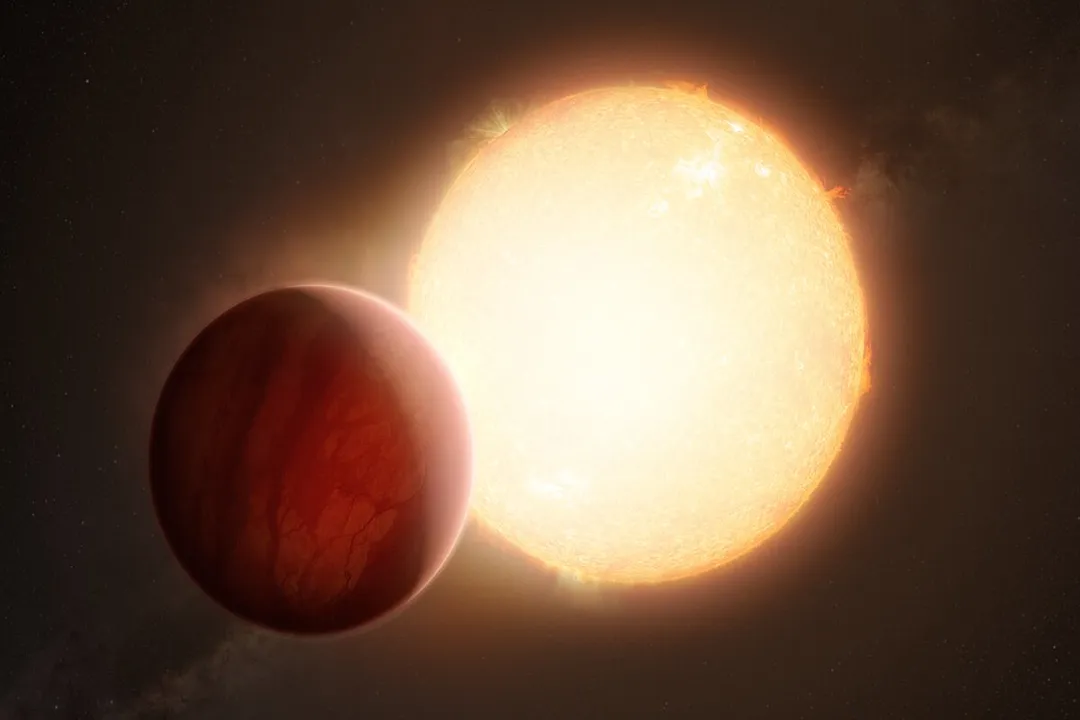
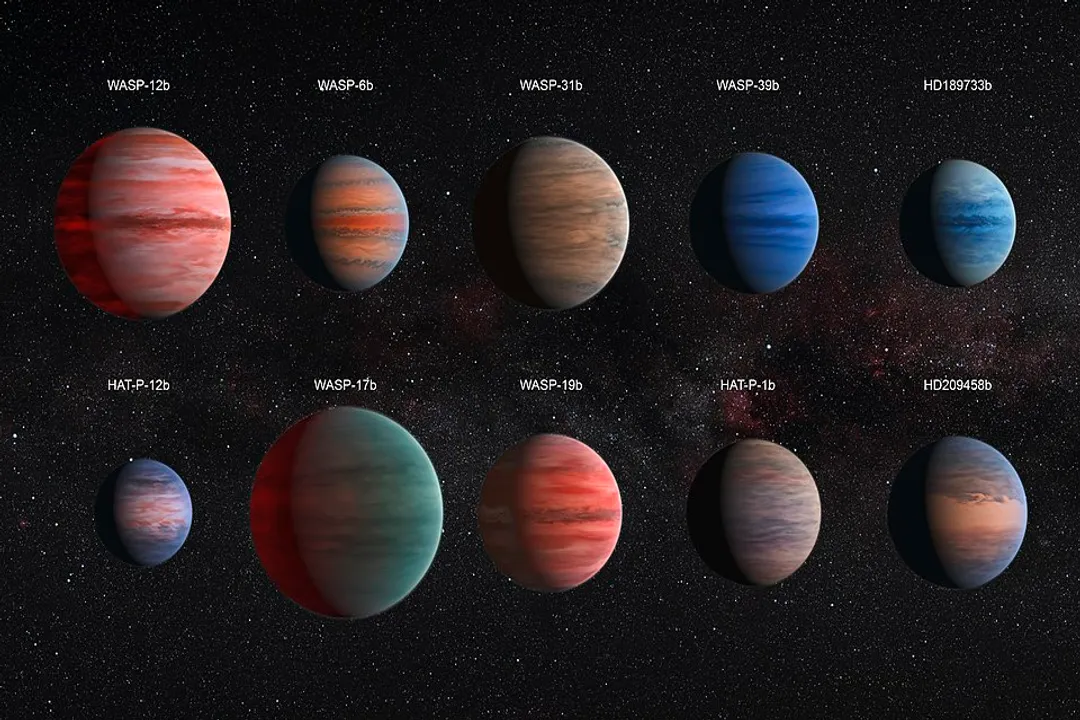
The discovery of exoplanets radically reshaped our understanding of planetary systems, but few findings were as surprising as the Hot Jupiters. [3] These are worlds that mimic Jupiter in size and mass—gas giants—yet orbit astonishingly close to their parent stars, often completing an entire revolution in just a few Earth days. [3][4][7] For instance, a planet like WASP-12b orbits so near its star that its year lasts just over one Earth day. [3] This tight configuration presents a significant puzzle: current planet formation models suggested that giant planets, which require vast amounts of material to accumulate, should only form in the colder, outer regions of a stellar system, far beyond the "ice line" where volatile compounds condense. [3][6]
# The Orbital Conundrum
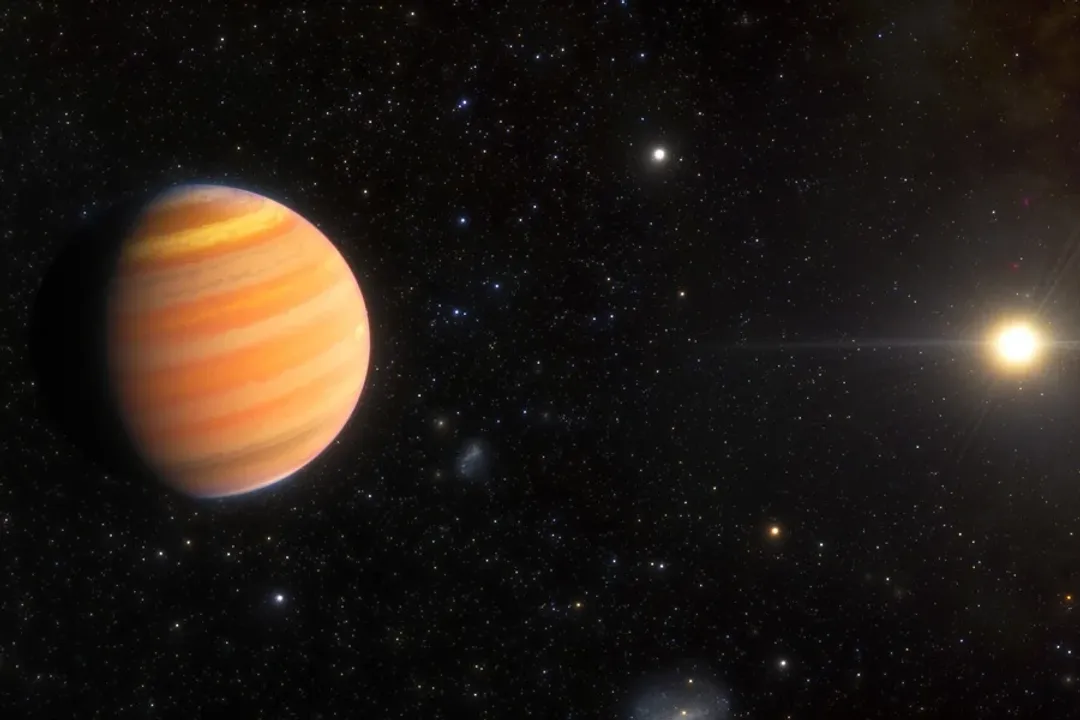
In our own Solar System, Jupiter resides far from the Sun, protecting the inner planets. The existence of Hot Jupiters, orbiting perhaps inside the orbit of Mercury, demands an explanation for how such massive bodies ended up so perilously close to their star. [5] It is highly improbable that they formed in situ—that is, right where we observe them now. [3] The protoplanetary disk of gas and dust surrounding a young star, from which planets coalesce, is generally thought to dissipate over a few million years. [3] Building a Jupiter-sized planet takes significant time, and the intense radiation and heat so close to the star would have vaporized the necessary volatile materials long before the planet could accrete to such a mass. [3] Therefore, the scientific consensus points toward an evolutionary path: these planets must have formed farther out and subsequently migrated inward. [3][5]
# Migration Theories
The central question then shifts from where they formed to how they moved inward. Two main mechanisms, or variations thereof, are generally invoked to explain this inward rush, often categorized by whether the planet interacts with the surrounding disk or through gravitational interactions with other bodies in the system. [5]
# Disk Interactions
The most classical explanation involves interaction with the initial gas and dust disk. [5] As a massive planet like Jupiter orbits within this disk, it carves out a gap, transferring angular momentum to the disk material. [5] This transfer causes the planet to lose orbital energy and spiral inward toward the star—a process called Type II migration. [5]
This inward drift is a relatively gentle, steady process, and it works best when the protoplanetary disk is still present. [5] If the planet migrates all the way in while the disk is thick, it could spiral into the star or stop at a very close orbit before the disk evaporates. [3] The efficiency of this migration is directly tied to the properties of the disk, such as its density and viscosity. [5]
# Gravitational Scattering
A more dramatic, and perhaps more common, explanation for the most extreme Hot Jupiters involves gravitational scattering among multiple massive planets. [5][6] In these models, giant planets might form several AU out, similar to the outer Solar System bodies. [5] Over time, internal gravitational interactions—perhaps involving an early instability in the disk or later encounters between planets—can radically alter their orbits. [6]
This process is often characterized by a dynamical instability where planets may engage in close gravitational encounters that fling one or more planets either into the star or out into interstellar space. [5] The planet that remains, having survived the chaotic scattering, can be left on a highly eccentric, or even retrograde, orbit. [5] If this planet's orbit is subsequently circularized by tidal forces from the host star, it settles into the tight, nearly circular orbit characteristic of a Hot Jupiter. [5] This mechanism is crucial for explaining misaligned or highly eccentric Hot Jupiters, as disk migration tends to keep the planet’s orbit aligned with the star’s equatorial plane. [5]
When we consider the tidal forces involved, it becomes clear why these planets are "hot." The extreme proximity means that tidal interactions with the star quickly circularize any eccentric orbits left over from gravitational scattering, leading to the nearly circular orbits often observed, especially for the shortest-period worlds. [5]
# Original Insight 1: Migration Pathway Dominance
The presence of both disk-driven migration and gravitational scattering suggests that Hot Jupiters may not be a monolithic population. If we were to construct a population model based on formation distances—say, all giants form at 5 AU—the resultant distribution of final orbital distances should reveal the dominant migration channel. Systems with perfectly aligned, near-circular, short orbits (< 3 days) might lean toward efficient disk migration terminating just before the star consumes them. Conversely, systems exhibiting high orbital inclinations or eccentricities would strongly favor the gravitational scattering route. It is an observation that the prevalence of perfectly circular orbits is high, yet highly inclined orbits do exist, suggesting both mechanisms contribute, with the disk-migration scenario perhaps being more common but the scattering scenario providing the most extreme—and perhaps easiest to detect—examples early on due to instability triggering faster inward movement.

# New Clues from Extreme Orbits
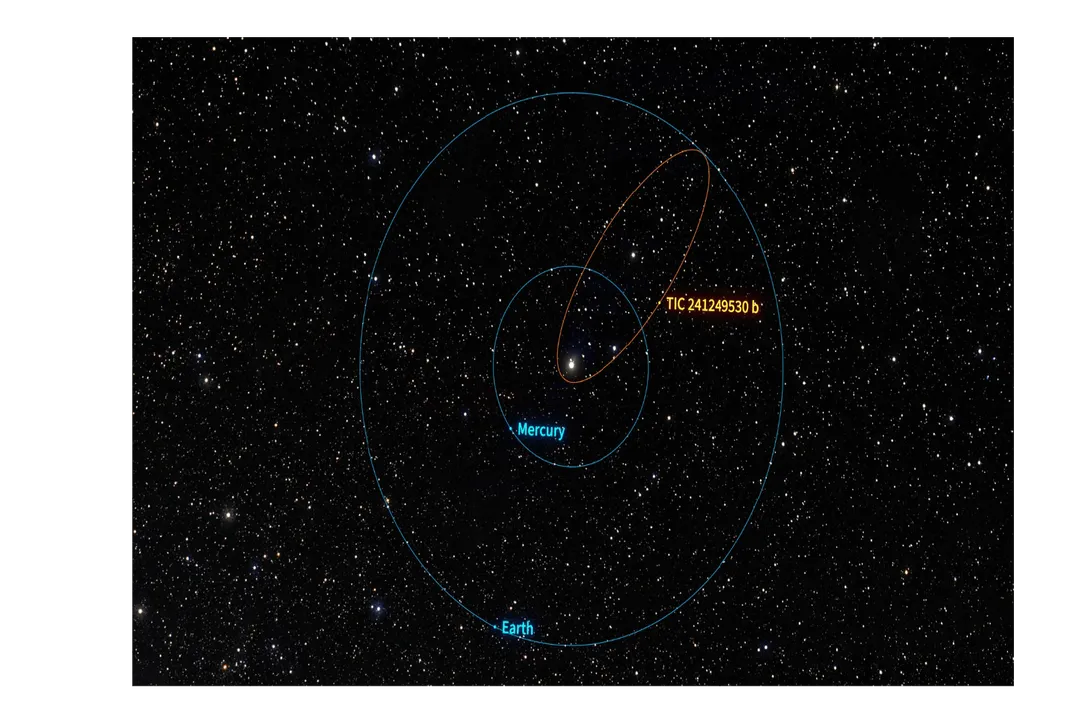
Recent observations continue to refine the migration picture, often by studying systems that seem to break the mold. [7][9] The search for origins is not just about finding a pathway, but understanding which ones are most probable for the observed population. [9]
A significant clue comes from studying planets in rare orbital configurations. [7] One recent finding involved a colossal planet observed in a rare orbit that offered new insights into the origins of these close-in giants. [7] Such discoveries help astronomers constrain the parameters of migration models, especially regarding the role of stellar companions or the dynamics within young stellar systems. [9]
Planets that manage to migrate inward without being tidally disrupted or scattered away entirely must have navigated a tricky evolutionary path. [4] The very fact that we see Hot Jupiters implies that the inward migration process must be terminated, usually by the dissipation of the protoplanetary disk. [3]
# The Observational Context
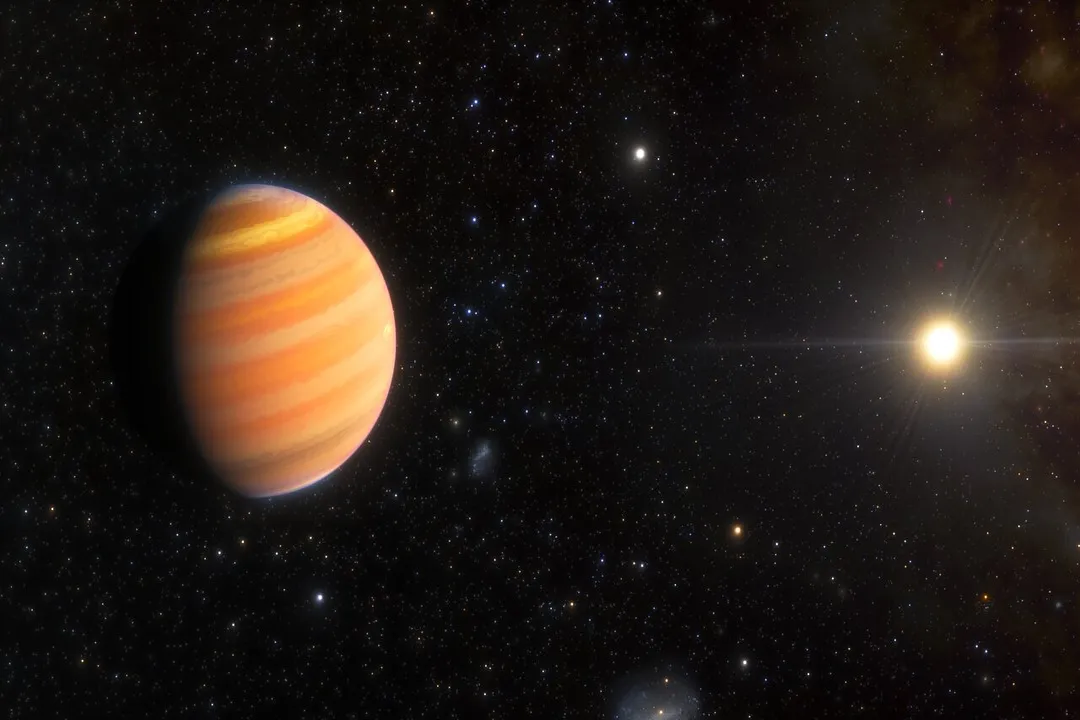
It is important to remember that our detection methods influence what we define as "Hot Jupiters". [3] Current detection techniques, such as the transit method, are best suited for finding planets close to their stars because those planets transit more frequently, allowing for quicker confirmation. [3] Therefore, we might be biased toward finding the planets that migrated the furthest or fastest. [3]
Consider the data collected by missions like Kepler and TESS. While they search wide areas, the necessity of multiple observed transits to confirm a candidate strongly favors short periods. This observational bias means that the true population of giant planets might include many "warm Jupiters" or "cold Jupiters" that have not yet migrated to the scorching inner region, or whose migration was incomplete. [3]
# Jupiter Twins
To put the scale into perspective, if we compare Hot Jupiters to our own Solar System, the contrast is stark. [2] Jupiter itself is a gas giant, but its orbital distance is about $5.2$ Astronomical Units (AU) from the Sun. [2] A Hot Jupiter might orbit at $0.05$ AU—a distance more typical of Mercury. [2]
| Planet Type | Typical Mass (Jupiter Masses) | Typical Orbital Period | Location Comparison |
|---|---|---|---|
| Jupiter (Solar System) | $11.8$ years | Outer System | |
| Hot Jupiter | to $13$ | $< 10$ days | Inner System (Close-in) |
| Warm Jupiter | Variable | to $100$ days | Intermediate Zone |
This table illustrates that the key differentiator between a "Hot Jupiter" and a standard giant planet is not just mass, but the proximity to the star, which dictates the thermal environment. [3]
# Original Insight 2: The Survival Gap and Tidal Disruption
While migration explains the inward movement, it doesn't fully explain the lack of planets in the very closest orbits, sometimes referred to as the "close-in desert." If tidal circularization is efficient, why don't we see more planets orbiting with periods of just a few hours? This suggests a critical survival gap exists just inside the closest observed orbits. The strong tidal forces necessary to circularize a highly eccentric orbit left over from scattering also become destructive once the orbital distance crosses a certain threshold, known as the Roche limit for solid bodies or a tidal disruption limit for gas giants. [5] The most extreme migration events likely result in the planet being torn apart by the star's gravity if it crosses this boundary, creating a population where the observed planets are those that migrated just enough to circularize but not so much as to be destroyed. The absence of planets closer than a few hours' orbit is, therefore, as informative as the presence of those a few days' orbit away—it marks the stellar 'graveyard.'
# The Role of Stellar Companions
The environment around the host star is not always solitary. The presence of a binary companion can significantly influence planetary evolution and migration. [5] In some models, a nearby stellar companion can dynamically stir up the protoplanetary disk or excite the orbital eccentricity of forming planets. [5] This excitation can drive a planet into a faster, more eccentric orbit that then couples with the disk or leads directly to the gravitational scattering events mentioned previously. [5] A companion star can effectively accelerate the entire dynamical evolution of the system.
In essence, the best explanation for the close orbits of Hot Jupiters is migration, with the precise pathway likely split between two main avenues: gentle, disk-driven spiraling, and violent, gravity-driven scattering followed by tidal circularization. [3][5] The specific characteristics of a given Hot Jupiter—its orbital inclination, eccentricity, and period—often provide the fingerprint needed to deduce which evolutionary track it followed from its birthplace far from the star. [5] The ongoing study of rare systems promises to further refine the timescale and efficiency of these fascinating, yet violent, planetary relocations. [7][9]
Related Questions
#Citations
ast hw12 Flashcards - Quizlet
What's the best explanation for the location of hot Jupiter? - Quora
Hot Jupiter - Wikipedia
Is This How You Get Hot Jupiters? - Universe Today
How do the “hot Jupiter” planets get so close to their host star?
Hot Jupiters Are Very Bad Neighbors - Astrobites
New orbital clue reveals how hot Jupiters really formed - ScienceDaily
The Strange Attraction of Hot Jupiters - NASA Science
Colossal Planet in Rare Orbit Offers Clues to Origins of 'Hot Jupiters'