Is Beetlejuice close to supernova?
The question of when the colossal red supergiant Betelgeuse will end its life in a spectacular supernova is one that currently occupies the minds of astronomers and casual stargazers alike. While the star is certainly in its final evolutionary phase, the notion that its explosive demise is imminent is far from the scientific consensus. Betelgeuse, which occupies one of the "shoulders" of the familiar constellation Orion, is destined to blow, but that event is predicted by current models to occur perhaps within the next 100,000 years. Statistically, this means there is only about a one-in-four-thousand chance that the star has already exploded, and we are simply awaiting the arrival of its light, which takes hundreds of years to cross the vast distance to Earth.
# Stellar Variation
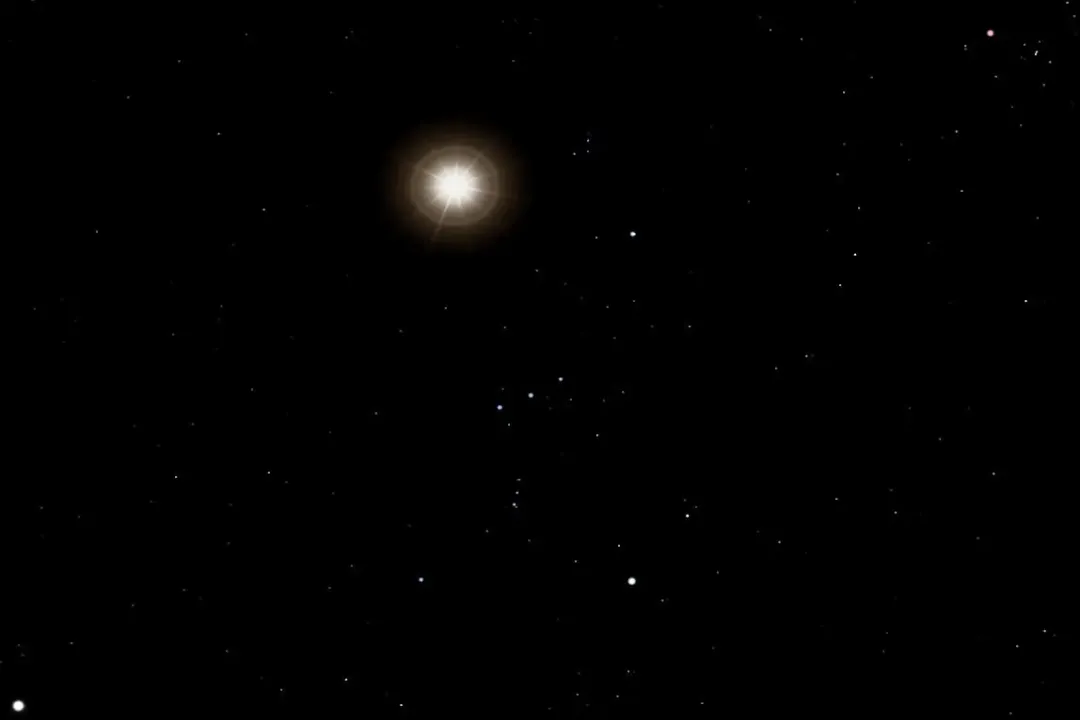
Betelgeuse stands out in the night sky not just for its massive size and reddish hue, but for its unpredictable flickering. It is classified as a semiregular variable star, meaning its brightness waxes and wanes through noticeable cycles, though these are not as clockwork precise as some other variable stars. It typically exhibits a main period of around 400 days in its brightness fluctuation, accompanied by a longer, secondary cycle stretching close to five years.
Its typical rank among the brightest stars is tenth, but this is far from guaranteed. Over the last five years, it has fluctuated in apparent magnitude between a high of about +0.0 and a low near +1.6. During its deepest known dimming, it fell out of the top twenty brightest stars. For context, during its recent minimum, it became noticeably dimmer than its neighbor Aldebaran.
# Great Dimming
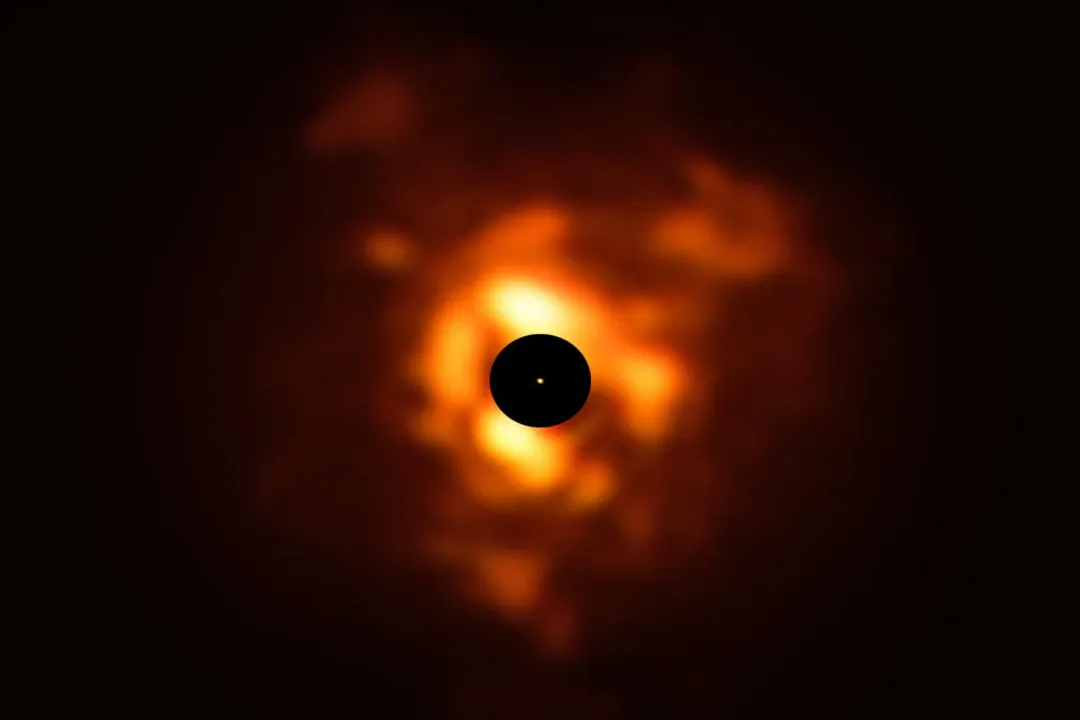
The most dramatic recent event was the "Great Dimming" observed in late 2019 and early 2020. The star dimmed by approximately 60%—a drop from magnitude 0.5 down to 1.7 in some reports—sparking worldwide speculation about a possible pre-supernova state. However, detailed analysis from observatories like the Hubble Space Telescope provided a less dramatic explanation: the star experienced a surface mass ejection. This was not a typical solar event; the star literally blew a massive chunk of its surface material into space. This ejected material cooled as it moved away from the stellar surface, forming an enormous cloud of dust that temporarily blocked the light coming from about a quarter of Betelgeuse’s surface as viewed from our angle.
The star recovered, reaching a peak brightness around April 2023 that put it back near its usual prominence. Scientists have noted that while the event was spectacular to watch, it appears to be an extreme manifestation of stellar behavior rather than an immediate precursor to core collapse. This entire episode highlights how volatile the outer layers of a red supergiant are, driven by underlying convective processes that we are only beginning to resolve with advanced technology.
This recent behavior offers a unique observational record. While we cannot predict the supernova, observing and meticulously logging the current characteristics—such as the precise timing of its 400-day pulsation or the infrared output as the star recovers—gives scientists calibration points that are invaluable for modeling the final, swift collapse stages. For the contemporary observer, this means every slight change warrants recording, as we are watching a star change in a way no living human has witnessed before.
# Stellar Scale
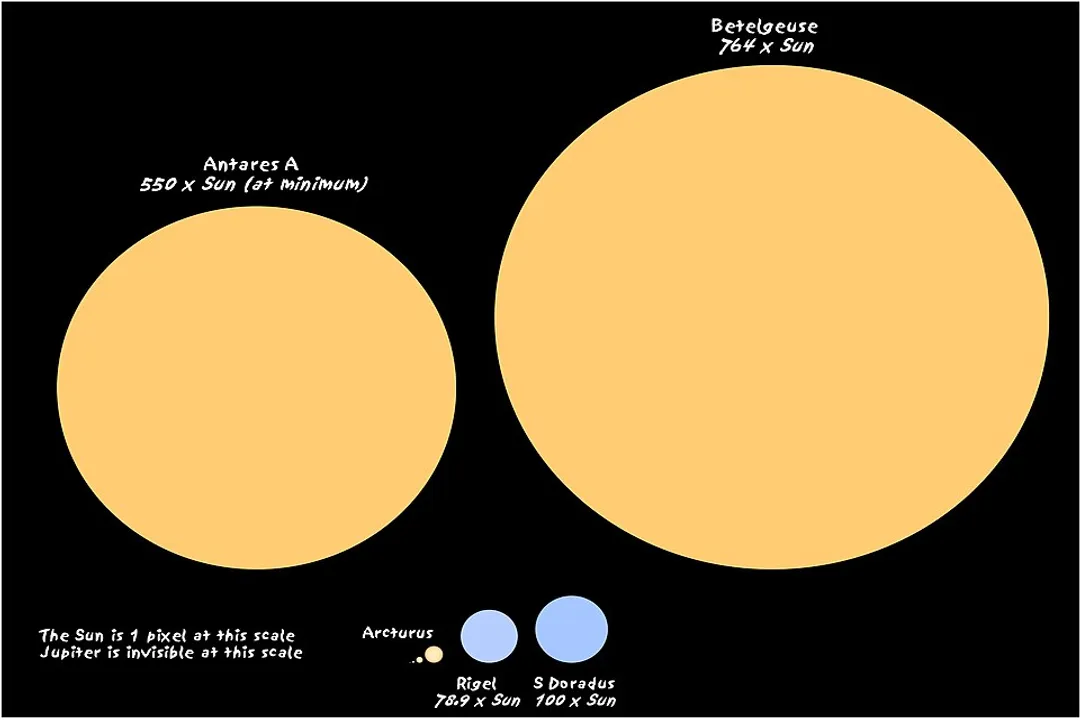
To truly appreciate the impending supernova, one must grasp the sheer scale of Betelgeuse. It is a red supergiant, a term reserved for stars that have exhausted their core hydrogen fuel and expanded to gargantuan proportions in their old age. While it is comparatively young at only about 10 million years old (compared to our Sun's nearly 5 billion years), its high initial mass—estimated between 15 and 20 times that of the Sun—forced it to burn through its fuel rapidly.
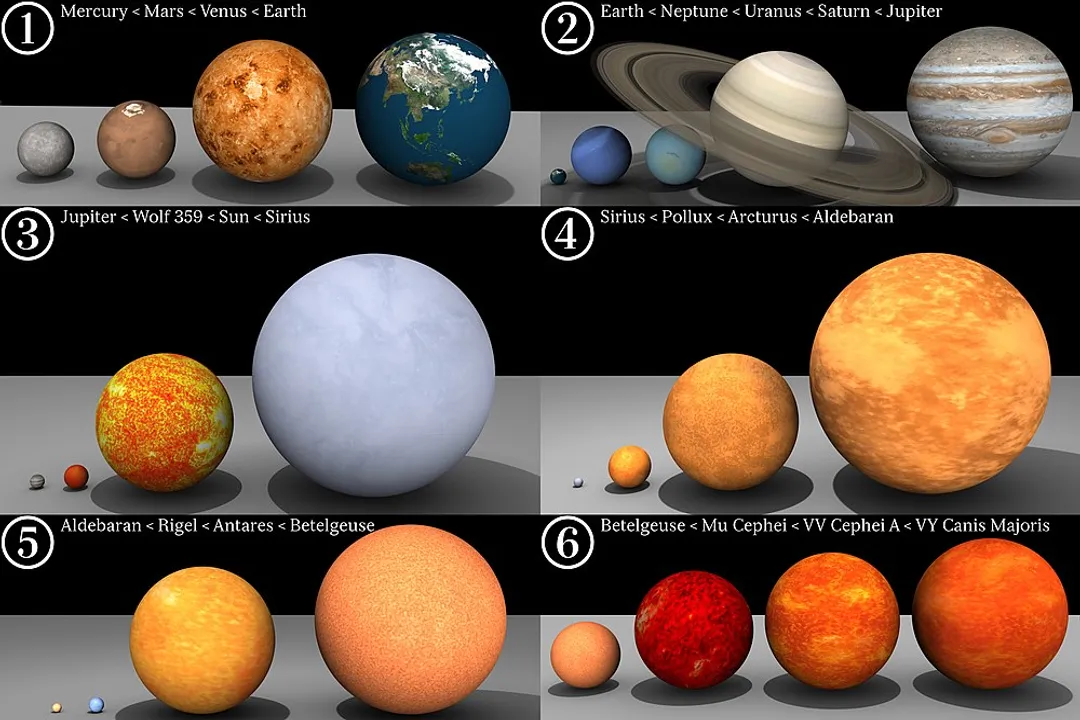
Its physical dimensions are staggering. Estimates place its radius at roughly 900 times that of our Sun, or perhaps slightly less, depending on the measurement method. If Betelgeuse were placed where the Sun is, its surface would easily swallow Mercury, Venus, Earth, and Mars, extending well beyond the orbit of the asteroid belt, potentially reaching out to Jupiter’s orbit. The star is also surrounded by an extensive envelope of ejected gas and dust that extends farther than Neptune's orbit from our Sun.
Despite its enormous size, Betelgeuse is actually cooler than our Sun, with a surface temperature around 6,000 degrees Fahrenheit (over 3,300 degrees Celsius). This relative coolness is why it glows with that characteristic orange-red hue. Furthermore, only about 13% of its total energy output is emitted as visible light; the majority radiates in the near-infrared spectrum, meaning if our eyes could perceive all wavelengths, Betelgeuse would appear as the brightest star in the sky.
# Core Collapse
The supernova event itself will be a core-collapse event, following the end of fusion in the star’s iron core. Once silicon burning ceases in the core, the outward radiation pressure that held the star up against gravity vanishes instantly. The core, now composed of iron, nickel, and cobalt, implodes catastrophically.
The process occurs on a timescale of mere seconds. The inner core is crushed into an ultra-dense ball of neutrons—a proto-neutron star—while the massive outer layers crash down and then rebound violently off this new, rigid core. This rebound generates an incredible shockwave and a flood of energy. Crucially, the overwhelming majority of the energy released in this cataclysm is carried away by neutrinos.
# Signal Arrival
For observers on Earth, the first confirmation of Betelgeuse’s death will not be visible light, but these elusive, high-energy neutrinos. Because neutrinos travel at speeds effectively indistinguishable from the speed of light, they will arrive nearly 640 years after the explosion, closely followed by the light. Given the current sensitivity of neutrino observatories, if Betelgeuse exploded tonight, we would register a burst of millions of neutrinos in mere seconds across worldwide detectors.
A few hours later, the light signal would reach us. The visible display will start with a sudden, intense "breakout" spike as the initial shockwave breaks through the star's outer layers, temporarily boosting the star's luminosity by a factor of about 7,000. This initial flash would be overwhelming, momentarily making Betelgeuse shine as brightly as a thin crescent Moon.
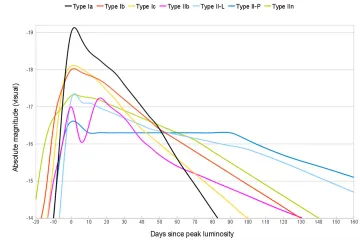
Following this initial jolt, the visible light curve proceeds in phases. Over approximately ten days, the brightness will gradually increase until it rivals that of the full Moon. This peak—where the light is concentrated into a single, saturated point rather than the disk of our actual Moon—will last for about a few minutes before it begins its slow fade.
# Terrestrial Safety
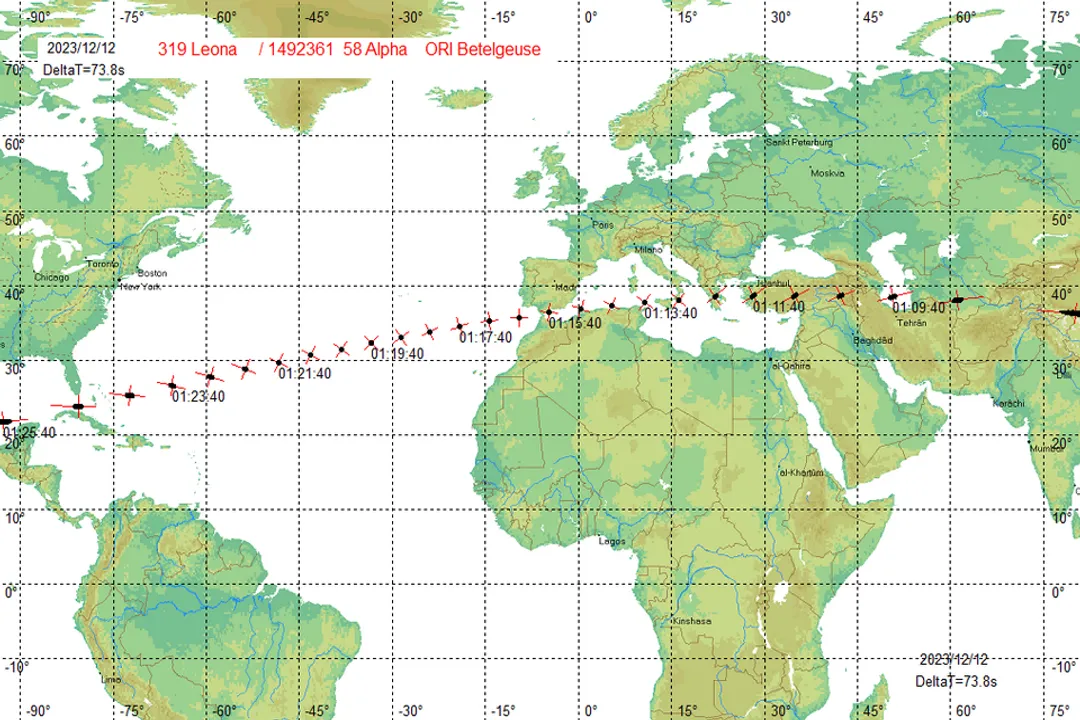
The distance to Betelgeuse is the most significant factor preventing any danger to Earth. While early estimates varied widely, the best current estimates place it around 500 to 640 light-years away. Astronomers generally agree that a supernova must occur within a "danger zone" of about 100 light-years to pose a threat to terrestrial life due to the intense burst of X-rays, ultraviolet radiation, and other energetic particles.
Because Betelgeuse is well outside this safety buffer, its impending demise will be a magnificent, but entirely safe, astronomical show. We will not experience harmful radiation doses, nor will the star eject material that could impact us. The light that reaches us, even at its peak fullness-of-the-moon equivalent, will not overwhelm our daytime sky. In fact, for over three months, it will be easily visible in daylight, a phenomenon that hasn't been witnessed in our galaxy since 1604.
The fact that the light we see left Betelgeuse centuries ago means that the star could have exploded already, and we simply haven't received the news yet. Considering the vastness of the universe and the relative speeds involved, this time delay is a necessary reminder that our observation of any stellar event is always historical data. For example, if the supernova happened in the year 1000 AD, the light would arrive in the year 1640 AD—a gap that highlights the temporal gulf we observe across the cosmos.
# Remnant Appearance
Once the initial dramatic phases pass, the supernova will settle into a longer period of declining brightness. The light is sustained initially by the radioactive decay of elements created in the explosion, like cobalt-56, combined with the expanding gas cloud.
The light curve shows a plateau where brightness remains relatively constant for about two to three months before beginning a steep drop. After about four months, it will be too faint to discern easily against the night sky, diminishing to a brightness level close to that of Venus. Over the subsequent year or two, it will slowly fade from naked-eye visibility entirely.
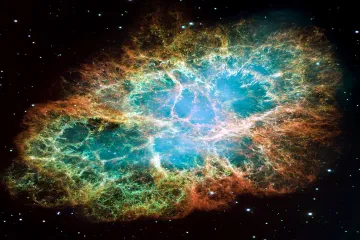
What remains will be the supernova remnant—the expanding shell of gas ejected by the explosion. This nebula, illuminated by the residual energy, will continue to be visible through telescopes for centuries, perhaps millennia, offering future astronomers a pristine, close-up study object of stellar death. When the initial dust settles, the constellation Orion will have lost its bright shoulder, forever altering the familiar shape of the celestial hunter for observers in the coming millennia. The remnant will become the closest supernova remnant recorded in modern history, a spectacular, albeit fading, monument to a star's final act.
Related Questions
#Citations
Betelgeuse - Wikipedia
Is Earth in danger if Betelgeuse goes supernova?
What is Betelgeuse? Inside the Strange, Volatile Star - NASA Science
This is what we'll see when Betelgeuse goes supernova - Big Think