What do supernova remnants do?
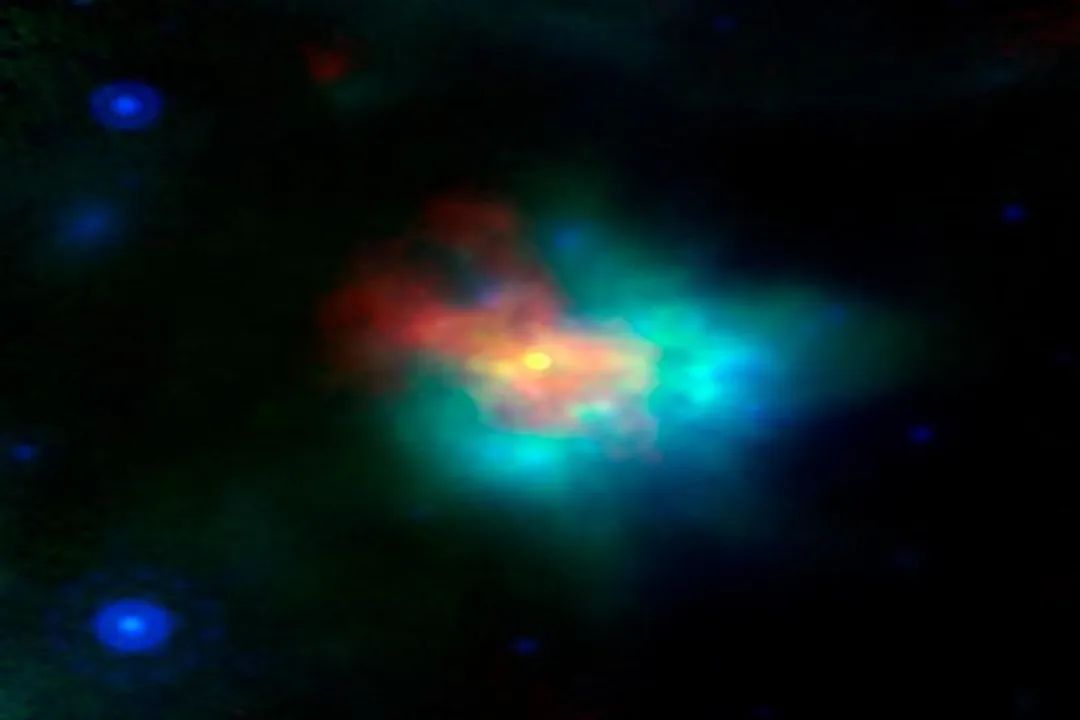
The structure resulting from a star's violent death, known as a supernova remnant (SNR), is anything but static; it is a highly dynamic and energetic bubble carving its way through the interstellar medium (ISM). [3] These nebulae mark the aftermath of one of the most powerful explosions in the cosmos, where a single event can briefly outshine an entire galaxy. [4] The initial explosion expels stellar material at tremendous velocities, sometimes reaching 10% of the speed of light, roughly , generating a powerful shock wave ahead of the expanding debris. [3] What these remnants do is shape the galaxy itself, acting as cosmic engines for element dispersal, heating the sparse gas between stars, and accelerating high-energy particles across vast distances. [6]
# Explosion Aftermath
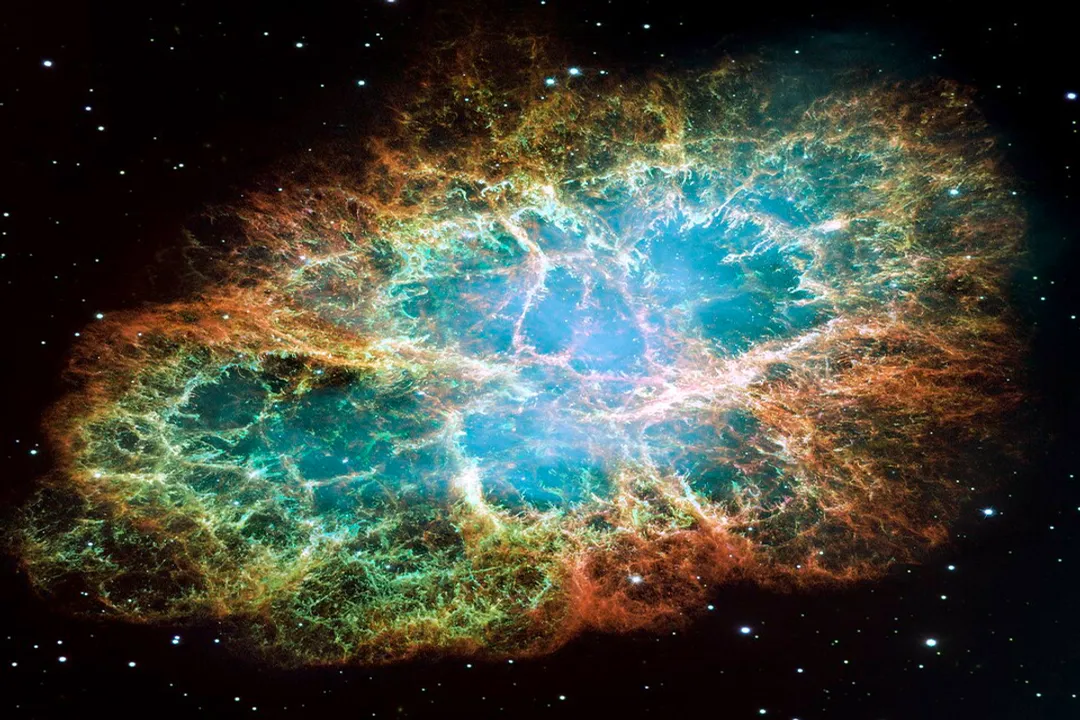
A supernova remnant is fundamentally composed of two main ingredients: the material ejected from the dying star itself (the ejecta) and the surrounding interstellar material that the blast wave sweeps up as it expands. [3] These events arise from two primary stellar fates: either a massive star exhausts its nuclear fuel, causing its core to collapse into a neutron star or a black hole, or a white dwarf star accretes too much mass and undergoes catastrophic carbon detonation. [3][6] In both scenarios, the resulting explosion drives a shock front into the ambient environment. [3] This initial heating process raises the temperature of the shocked plasma far above millions of Kelvin, making the young remnant intensely visible in X-rays. [3]
The study of these objects allows scientists to probe fundamental physics, such as how energy is transmitted through shocks and how particles are accelerated to incredible energies. [6] Furthermore, examining the composition of the gas within the remnant provides direct evidence of nucleosynthesis—the creation of heavy elements—that occurred inside the star before it blew apart. [4]
# Evolving Structure
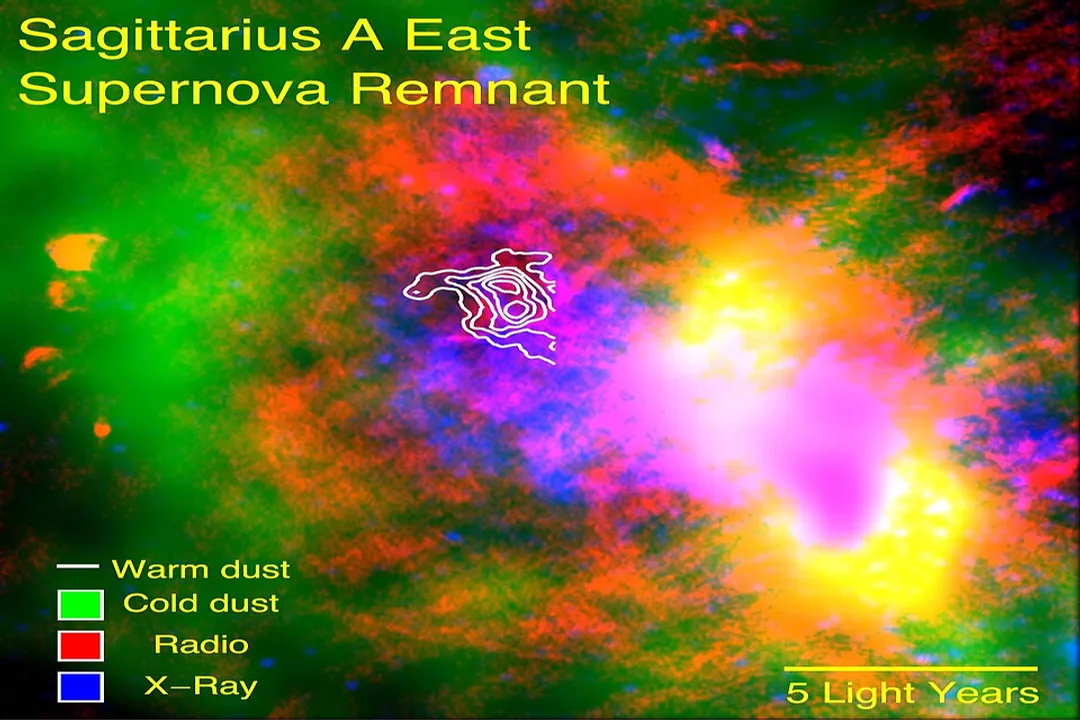
Supernova remnants do not look the same throughout their long lives; they progress through distinct evolutionary stages as they interact with, and slow down against, the surrounding interstellar gas. [1] This evolution typically spans hundreds of thousands of years.
# Free Expansion
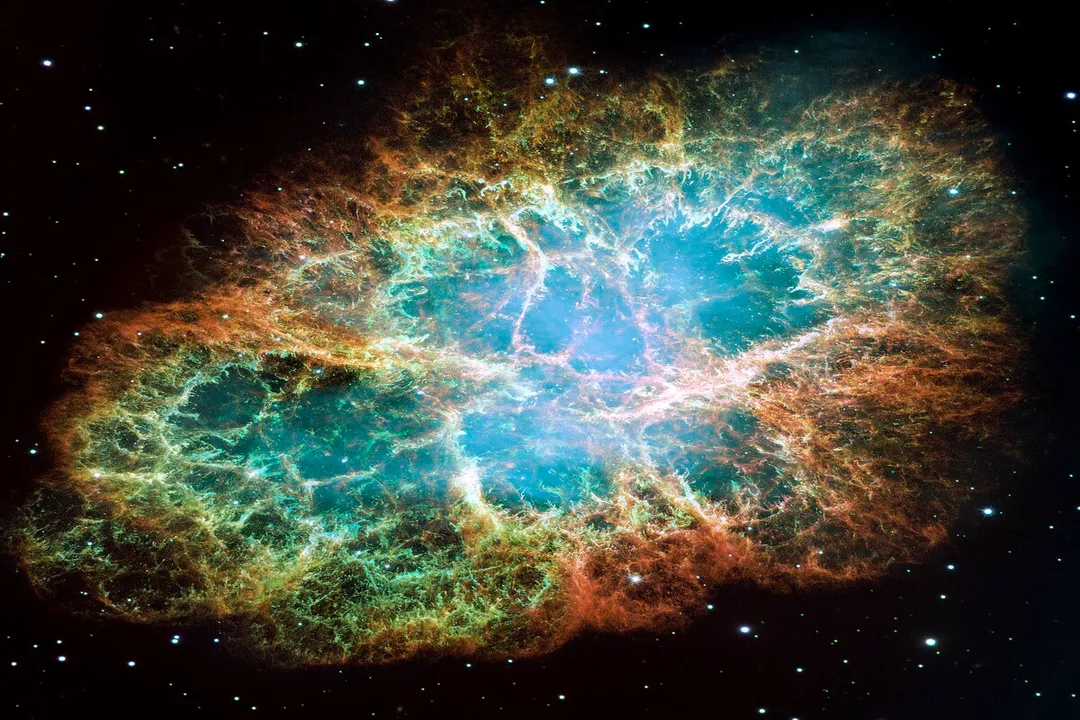
Immediately following the explosion, the ejecta expands violently into the ISM with little resistance, a phase that can last anywhere from a few decades to a few hundred years, depending on the initial density of the surrounding cloud. [1][3] During this phase, the shocked material is very hot, emitting strongly in X-rays. The Crab Nebula, a relatively young remnant from the supernova of , is still expanding rapidly, though slower than the initial burst, at about . [5][1] Considering this speed, the remnant covers approximately 13 million kilometers per day in this initial phase. This dramatic, rapid initial growth is then followed by stages lasting hundreds of thousands of years where the expansion rate drops significantly as it fights the ambient medium. It’s the difference between a rapid "punch" followed by a very long, slow "smear."
# Sedov-Taylor
As the remnant expands, the mass of the swept-up ISM begins to approach the mass of the ejected stellar material, and the expansion rate slows considerably. [1] This period, sometimes called the Sedov-Taylor phase, is characterized by the growth of instabilities—specifically Rayleigh-Taylor instabilities—that mix the shocked ISM with the original stellar ejecta, often enhancing the magnetic field within the structure. This phase can last for $10,000$ to $20,000$ years.
# Cooling Shell
The subsequent stage involves the cooling of the shell structure. Once the gas temperature drops below approximately , electrons begin to recombine, allowing the remnant to radiate energy much more efficiently, primarily through optical emission from elements like ionized hydrogen and oxygen. [1] This radiative cooling allows the remnant to be clearly seen in visible light as filaments of glowing gas, as is evident in parts of the Cygnus Loop. [1] This phase can persist for hundreds of thousands of years as the shell, driven by its own momentum, continues to expand outward. [1]
# Dissipation
The final stage occurs when the remnant's internal pressure becomes comparable to the pressure exerted by the surrounding ISM. At this point, the remnant loses its distinct, energetic structure and begins to merge with the general, turbulent flow of the galaxy. [1] After roughly $30,000$ years, the remnant’s bulk motion slows to the random velocities present in the local medium. [3]
# Particle Accelerators
Perhaps one of the most significant actions of a supernova remnant is its role in cosmic ray production. [4] These objects are widely considered the primary source of galactic cosmic rays—highly energized subatomic particles that travel throughout space, some eventually reaching Earth. [3][4]
The mechanism responsible is called shock wave acceleration, specifically the "First Order Fermi Mechanism". [3] As charged particles (like protons or atomic nuclei) encounter the powerful shock front moving outward from the explosion, they are repeatedly bounced back and forth across this front by magnetic fields within the remnant. [3] Each crossing imparts a small energy boost, allowing particles to gain significant kinetic energy over time. [3] Observations of remnants like SN $1006$ show synchrotron emission consistent with this process, which is produced when these high-energy electrons spiral within a magnetic field. [1][3] This acceleration process can propel particles up to energies of about per particle. [1]
It is still an area of active research whether SNRs can accelerate particles to the highest observed energies, those exceeding , though they certainly compensate for the energy losses of cosmic rays within the Milky Way if their acceleration efficiency is around $10%$. [3]
# Cosmic Chemistry
Beyond kinetic energy, supernova remnants actively participate in the chemical evolution of the galaxy by dispersing manufactured elements into the ISM. Stars fuse lighter elements into heavier ones up to iron, but the supernova explosion itself provides the necessary energy to forge elements heavier than iron. [4] This process seeds the surrounding interstellar gas with elements essential for planets and life, such as oxygen, carbon, nitrogen, and crucial metals like gold and copper. [4] The heavy elements created inside the progenitor star are violently flung out into the galaxy. [1]
The remnants are also a major source of heating for the interstellar gas, using the magnetic turbulence and violent shocks they generate to inject thermal energy into the ISM. [1] Furthermore, if a massive star explodes while still embedded in the molecular cloud where it formed, the expanding remnant can compress the surrounding interstellar gas. This compression, in turn, can trigger the gravitational collapse of dense pockets, leading to the formation of new generations of stars. [1]
When we consider our own Solar System, the presence of certain heavy elements in the Sun's environment that decay relatively quickly suggests that a supernova occurred recently and relatively close to the molecular cloud that eventually formed our Sun. [5] This localized "over-enrichment" implies that the mixing of stellar debris is not always perfectly uniform across the entire galaxy over immense timescales, leaving chemical fingerprints detectable in our local stellar nursery.
# Remnant Classes
Supernova remnants are categorized based on their observed structure and emission characteristics, which reflect differences in the initial star, the explosive event, and the density of the local ISM.
| Type | Key Feature | Notable Examples |
|---|---|---|
| Shell-like | Characterized by a distinct, ring-like structure composed of material disturbed by the outward shock wave. [3][4] | Cassiopeia A [3] |
| Crab-type (Plerion) | Features a central pulsar wind nebula; most radiation originates from inside the shock wave. [4] | The Crab Nebula (M1) [4] |
| Composite | Displays characteristics of both shell-like and crab-type remnants. [3] | G11.2-0.3, G21.5-0.9 [3] |
| Mixed-Morphology (Thermal Composite) | Shows central thermal X-ray emission encased within a surrounding radio shell. [3] | W28, W44 [3] |
The visual appearance, such as whether the remnant is shell-like or dominated by a central feature, depends heavily on the wavelength being observed. [4] For instance, a thermal composite may look like a shell at radio frequencies but crab-like at X-ray frequencies. [3]
# Central Engines
A key component in the puzzle of what a supernova remnant does is what remains at its heart. About $50$ known supernova remnants contain a pulsar—the rapidly spinning, extremely dense remnant of the collapsed core of a massive star. [1] The Crab Nebula is famously powered by such an object, a pulsar flashing radiation at a period of about . [1] This pulsar acts as a continuous power source, slowing its rotation over time and losing energy, which it feeds back into the nebula, allowing the X-ray emission to continue long after the initial explosion. [1]
However, the absence of a visible pulsar in other strong remnants, such as Tycho's or Kepler's, presents an intriguing contrast. [1] While Tycho's and Kepler's remnants are conspicuous radio sources radiating via synchrotron emission, no detectable pulsar has been found in either case. [1] The lack of this central beacon suggests that either the explosion was so symmetrical that the resulting neutron star did not receive the common recoil kick that would eject it from view, or that the core collapse resulted in a black hole instead of a neutron star, offering no such bright, spinning electromagnetic source. The type of remnant we observe is thus significantly influenced by the final state of the core that initiated the collapse. [1] The diffuse gas filling the Milky Way is generally a plasma, often around , but it is so thin that it behaves more like an insulator than something that would feel hot to an observer, even within the remnant itself. [5] Even after hundreds of thousands of years, remnants can leave behind traces, such as faint, soft X-ray emission from lingering hot gas pockets in the local ISM. [1]
The massive explosion and subsequent expansion of the remnant slow down over time, but the dispersed material remains gravitationally significant enough that in dense areas, the slowed debris can eventually contribute to the cycle of stellar birth, completing a grand cosmic recycling process. [5]
Related Questions
#Citations
Supernova remnant - Wikipedia
Supernova Remnants | Research Starters - EBSCO
Supernova Remnant | COSMOS
How can supernova remnants become "static" in a region of space?
X-ray Astrophysics Laboratory - Supernova Remnants - NASA
Supernova remnant | Astronomy, Physics & Formation | Britannica