What are the classification of supernova remnants?

Supernova remnants (SNRs) are the expanding clouds of gas and dust that result from the violent explosion of a star ending its life. [2][4] These cosmic structures are incredibly diverse, offering astronomers a tangible connection to the final moments of massive stars or white dwarfs. [3] Because they represent an extended, dynamic process spanning thousands of years, no single characteristic defines them completely. Consequently, astronomers classify these remnants using several overlapping criteria, typically based on their observed shape, their physical stage of evolution dictated by age, or the dominant wavelength of light they emit. [1][7]
# Dynamical Stages
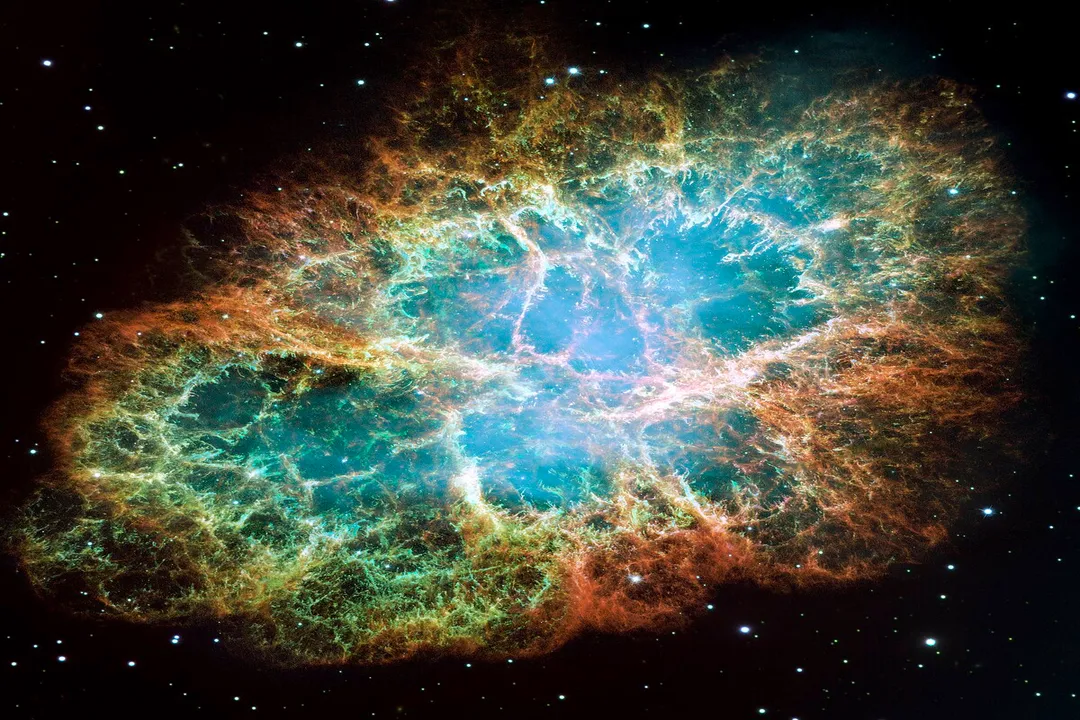
The life cycle of an SNR is a progression marked by dramatic changes in its internal physics, primarily driven by the interplay between the expanding ejecta and the surrounding interstellar medium (ISM). [8][9] This evolution is often divided into distinct dynamical phases, offering a classification scheme based on time since explosion. [7]
# Free Expansion
Immediately following the stellar demise, the primary characteristic of the nascent remnant is its incredibly high velocity, often exceeding . [8] During this initial period, the ejecta expands essentially unimpeded, as the mass of the material blown out is far greater than the mass of the interstellar gas it has encountered so far. [9] This phase, known as free expansion, is relatively short in the grand scheme of the remnant's lifetime, lasting only for the first few hundred years. [7][8] The shock wave generated by this explosion is highly pronounced, but the structure is less defined by the external ISM than by the properties of the original stellar explosion itself. [9]
# Sedov Taylor Phase
As the remnant expands outward, it sweeps up an ever-increasing amount of the surrounding interstellar material. Once the kinetic energy of the blast wave begins to be spent on accelerating and heating the captured ISM, the remnant enters the Sedov-Taylor phase, named for the scientists who developed the model describing this stage. [8][9] In this middle-aged phase, the remnant is characterized by a sharply defined shock front that adiabatically heats the interior gas to extremely high temperatures—millions of degrees Kelvin. [7] The structure becomes more organized, often appearing as a relatively uniform sphere or shell of hot gas. [1] This phase can persist for tens of thousands of years, depending heavily on the ambient density of the ISM; a dense environment causes the phase to end sooner. [7]
# Radiative Cooling
The final major phase begins when the interior gas cools sufficiently that radiation (primarily in the optical and X-ray regimes) begins to carry away energy more effectively than the shock wave can heat it. [7][9] This marks the radiative phase. As the gas cools, it can become denser, and the structure often becomes filamentary, showing bright optical emission tracing the original shock front as the gas recombines and slows down significantly. [1][7] Over very long timescales, the remnant disperses, eventually blending into the general interstellar medium, though the heavy elements synthesized in the progenitor star are now dispersed throughout the galaxy. [4]
# Morphological Types
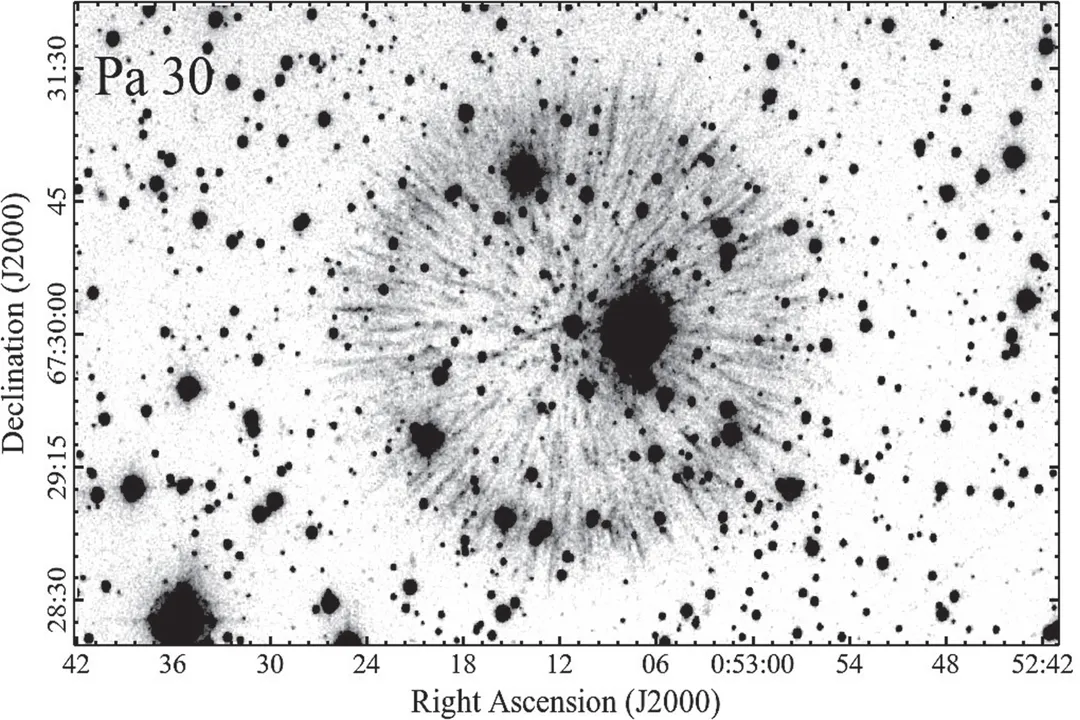
While the dynamical stages describe how a remnant evolves over time, observationally, astronomers frequently categorize them by what they look like at any given moment, especially in radio or optical wavelengths. [1] This visual classification system is perhaps the most intuitive, though it sometimes overlaps with the physical age classification. [4]
# Shell Structure
The most commonly recognized type is the shell-type remnant. [1] These objects are characterized by a prominent, relatively thin, and often circular shell of emission surrounding a relatively empty interior. [4] The Crab Nebula, for example, while complex, shows distinct shell features in many wavelengths. [2] This morphology typically corresponds to remnants that are well into the Sedov-Taylor or early radiative phases, where the strong forward shock has compressed the gas into a distinct boundary against the unshocked ISM. [1][7] The sharpness of the shell depends on the observational wavelength; in radio images, the structure is often very clear due to synchrotron radiation from accelerated electrons. [2]
# Composite Remnants
A particularly interesting category involves composite remnants. [1] These objects possess characteristics of more than one type, often exhibiting a clear shell structure but also containing a strong, centrally located non-thermal radio source. [1] This central feature is often the pulsar wind nebula (PWN) powered by the rapidly spinning neutron star left behind by a core-collapse supernova. [2] The coexistence of the expanding shock-driven shell and the distinct central nebula creates a composite appearance that signals the presence of a central engine actively influencing the structure of the expanding shell. [1]
# Other Forms
Beyond the dominant shell and composite types, remnants can also be described as filled-center or evolved. [1] Filled-center remnants might appear more uniform throughout their volume, sometimes seen in X-ray observations where the emission is dominated by very hot interior gas rather than just the dense forward shock boundary. [1] Conversely, evolved remnants represent the very late stages, where the structure has become highly irregular, fragmented, and diffuse as it merges with the surrounding molecular clouds and loses its coherent blast wave structure. [1]
It is fascinating to consider how a remnant's appearance can be wavelength-dependent, leading to potential classification ambiguity. For instance, a remnant might be labeled a "shell" based on its bright radio contours, yet an X-ray image of the same object might reveal a more "filled-center" morphology dominated by the thermal emission from the interior hot gas rather than the compressed material at the shock front. [1][2] This observational dependence illustrates that the morphological labels are effective descriptive tools but are secondary to the underlying physical processes driving the emission. A single object can therefore fit multiple descriptive categories depending on how we choose to view it.
# Emission Signatures
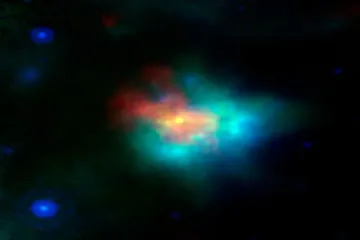
Classification is also frequently rooted in how the energy from the explosion is being radiated across the electromagnetic spectrum. [2] Since different physical processes dominate at different energies, observing the remnant across radio, optical, and X-ray bands provides critical insight into its stage and composition. [7]
# Radio Emission Dominance
Many SNRs are initially detected as powerful radio sources. [2] The radio emission is typically synchrotron radiation, generated when high-energy electrons spiral around magnetic field lines in the shocked gas. [2][8] Remnants observed primarily in the radio are often those whose forward shocks are still efficiently accelerating particles to relativistic speeds, placing them firmly within the Sedov phase. [7] Radio surveys are excellent for mapping the large-scale structure and identifying the characteristic shell shape. [2]
# X-ray Characteristics
When observing in X-rays, the emission primarily comes from the extremely hot, post-shock gas—the thermal component resulting from adiabatic compression in the Sedov phase. [7] X-ray observations are crucial for measuring the temperature and density profiles of the shocked interior material, which helps confirm the dynamical stage. [9] For younger remnants, the X-ray brightness can be high due to the intense heat, while older, radiative remnants might show fainter, more filamentary X-ray features tracing the slower-moving cooling gas. [1]
# Optical Filaments
Optical light often highlights cooler, denser material—either the material ejected from the star or the interstellar medium that has been heated and then subsequently cooled enough to emit visible light. [1][7] These optical structures often appear as bright, knotty filaments. [1] The visual appearance of these filaments is a strong indicator that the remnant has either entered or is nearing the radiative phase, as the necessary cooling has occurred to allow for optical line emission from ionized atoms. [7]
To put these observational methods into context, consider that a young, clean shock wave in a low-density environment might appear faint in optical wavelengths but show a strong, smooth X-ray shell and a clear radio outline. [7][8] Conversely, an older remnant that has slammed into a dense molecular cloud might exhibit spectacular, chaotic optical filaments while its radio structure has become more disturbed or fragmented. [1] The classification, therefore, is less about a definitive label and more about describing the dominant process occurring in that specific environment at that specific time.
# Progenitor Influence
While the classification focuses on the remnant itself, the nature of the star that exploded inevitably sets the initial conditions. [3] Supernovae are broadly categorized as Type Ia (thermonuclear explosion of a white dwarf) or core-collapse (explosion of a massive star). [3] Although the resulting remnants all go through the same general physical stages, the initial energy and the amount of heavy element ejecta differ, leading to subtle differences in the final SNR population. [4]
Core-collapse SNRs, which leave behind neutron stars or black holes, are often associated with the pulsars detected as central engines in composite remnants. [1][2] Their distribution and composition are tied to the life cycles of high-mass stars. [3] Type Ia remnants, resulting from white dwarfs, are thought to lack a central compact object and are often less energetic initially, though they still evolve through the same dynamical phases. [3] Distinguishing the progenitor type through remnant morphology alone is challenging, especially once the remnant is old, as the memory of the initial explosion fades into the overwhelming energy exchange with the ISM. [4] However, the presence of key heavy elements—which can be mapped spectroscopically—offers a direct fingerprint of the original stellar core that created the explosion. [3]
The vast diversity in size, age, and observed morphology means that any single SNR classification system provides only a partial view of these enigmatic structures. Whether we label one by its shell shape, its Sedov-Taylor status, or its synchrotron glow, we are describing just one facet of a long, violent interaction between stellar death and the galactic environment that ultimately recycles that stellar material back into the next generation of stars and planets. [4][5]
Related Questions
#Citations
Supernova remnant - Wikipedia
Supernova Remnants - Imagine the Universe!
List of Supernovae Remnants (SNR) - Go-Astronomy.com
Supernova Remnant | COSMOS
So You Think You Know What Supernova Remnants Look Like …
[PDF] Supernova remnants: Types and evolution - arXiv
Mixed-Morphology Supernova Remnants - IOP Science
Supernovae - HyperPhysics Concepts
Supernova Remnants - Rutgers Physics