What do supernovas give us?
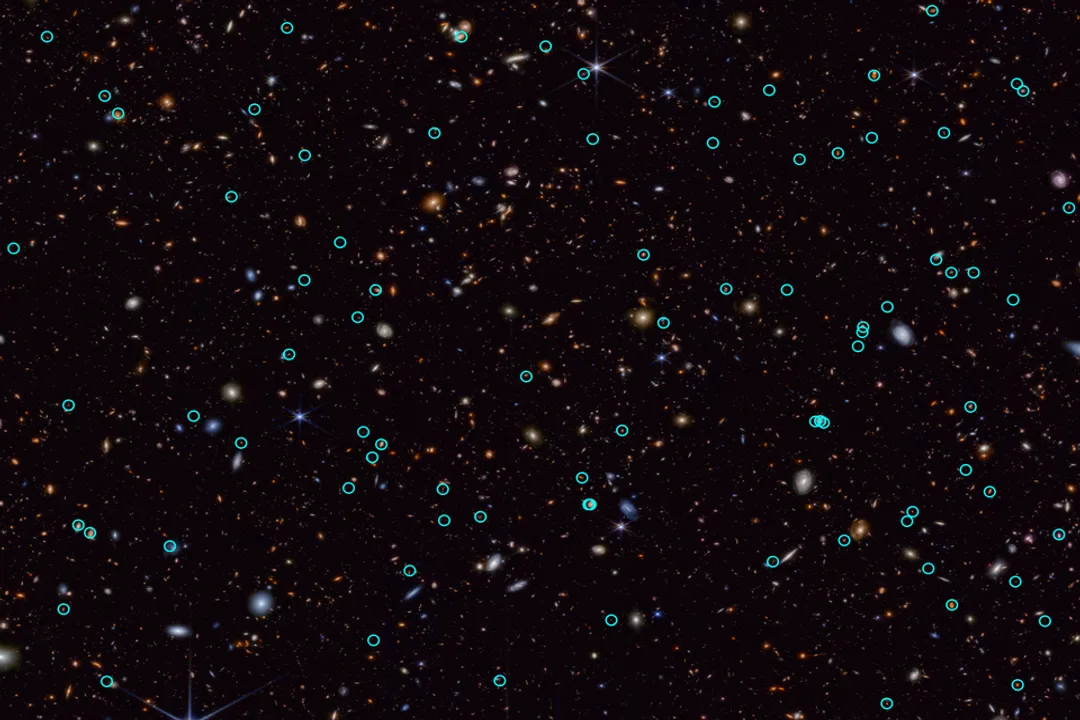
The spectacular death of a massive star, an event we call a supernova, is far more than just a fleeting flash across the cosmos; it is one of the most powerful and generative forces in the universe, fundamentally shaping the chemistry and structure of everything we observe. These explosions release an amount of energy so vast that they can temporarily outshine an entire galaxy, briefly becoming the brightest objects in the observable universe. When we ask what these cataclysmic events give us, the answer spans from the building blocks of planets to the very tools scientists use to map the expansion of space itself.
# Elemental Gifts
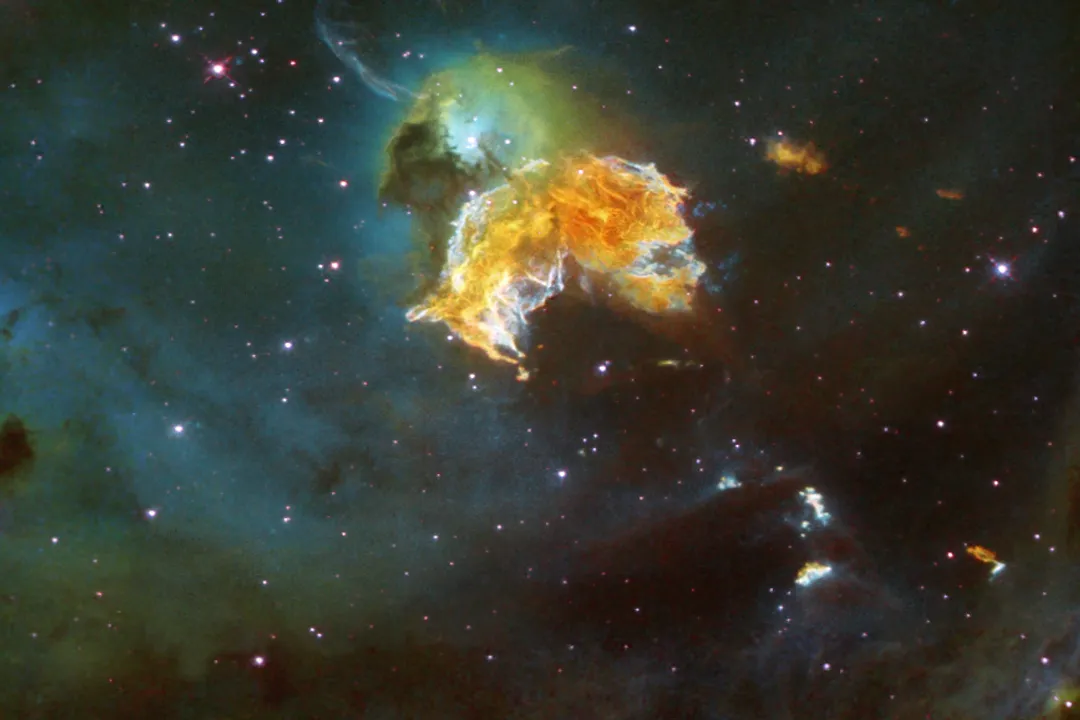
Perhaps the most profound contribution of a supernova is its role as the universe's primary element recycler and creator of heavy matter. While the earlier, less violent deaths of smaller stars, like our Sun, might only produce elements up to iron through fusion, the sheer intensity of a supernova explosion is required for heavier elements. These explosions create elements heavier than iron, such as gold, silver, and uranium, through rapid neutron-capture processes occurring in the collapsing layers or the expanding shockwave.
This process of nucleosynthesis injects these newly forged materials, along with the lighter elements already present, back into the interstellar medium. Think of it as the universe’s most extreme cooking event, where all the ingredients necessary for rocky planets, complex chemistry, and ultimately, life, are mixed and scattered. Astronomers often refer to the elements heavier than hydrogen and helium as "metals," and supernovae are responsible for seeding the cosmos with almost all of them.
For instance, if you look at the periodic table, you might notice that elements like calcium (essential for bones) or iodine (critical for the thyroid) were not made in the peaceful, long life of a main-sequence star; they were born in the violent compression and rapid cooling of a supernova. An interesting perspective to consider is that the trace amounts of elements like platinum, which are rare on Earth, may only require the combined output of a few dozen core-collapse supernovae happening in our galaxy over its lifetime to explain their local abundance. This means that the availability of certain precious, high-density materials on a terrestrial world is directly tied to the history of massive star death in its cosmic neighborhood.
# Remnant Structures
The aftermath of a supernova explosion is not just a dispersal of gas and dust; it leaves behind incredibly dense and exotic stellar corpses. What remains depends largely on the original mass of the progenitor star.
# Neutron Stars
If the core of the dying star is between about $1.4$ and $3$ times the mass of our Sun, the gravitational collapse is halted by neutron degeneracy pressure, resulting in a neutron star. These objects are mind-bogglingly dense; a teaspoon of neutron star material would weigh billions of tons. They represent an extreme state of matter, packing the mass of a star into a sphere only about $20$ kilometers across. The rapid rotation and powerful magnetic fields of some neutron stars create pulsars, which sweep beams of radiation across space like cosmic lighthouses.
# Black Holes
If the core remnant exceeds roughly three solar masses, no known force can resist gravity, and the object collapses completely into a black hole. Black holes represent a point where gravity is so intense that nothing, not even light, can escape its grasp. While not giving us material in the traditional sense, they give us extreme gravitational laboratories and objects that strongly influence the dynamics of their surrounding galaxy clusters.
# Nebulae
Even the expanding shell of gas and dust is a gift. These expanding clouds, known as supernova remnants, are visible structures that enrich the surrounding space with heavy elements. These remnants, like the famous Crab Nebula, expand for thousands of years, acting as shockwaves that compress existing interstellar gas and dust, potentially triggering the formation of the next generation of stars and planetary systems. These remnants provide astronomers with visible targets to study element dispersal and shock physics.

# Cosmic Rulers
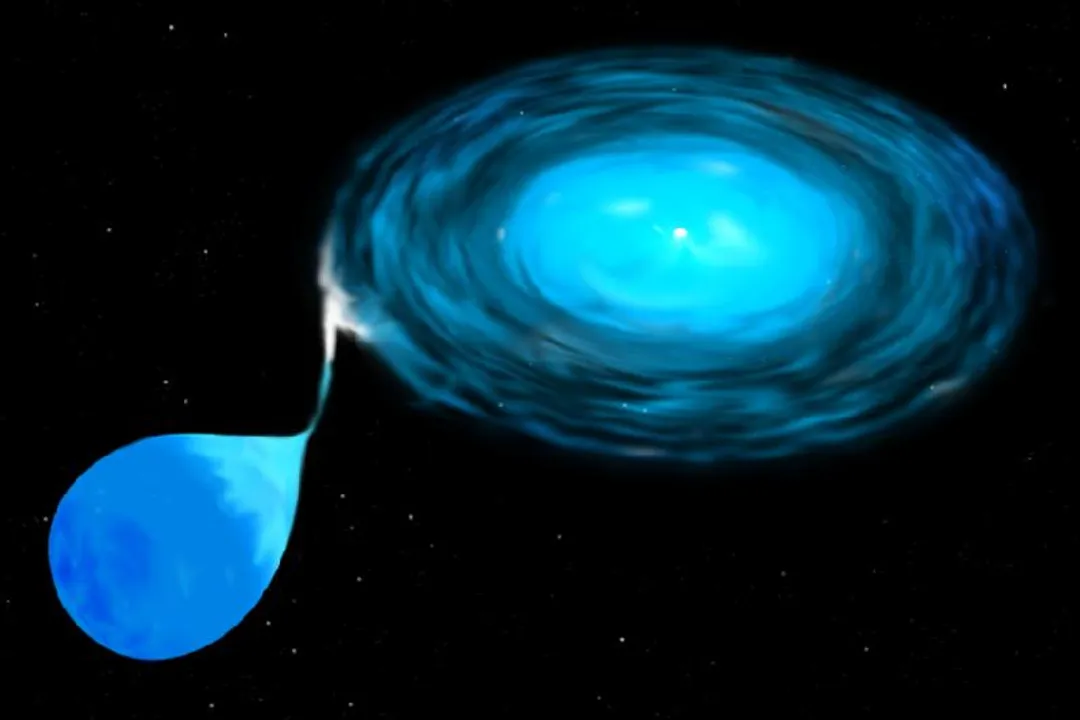
Beyond physical matter, supernovae provide an invaluable service to modern astrophysics by offering a precise yardstick for measuring the vastness of the universe. This function relies almost exclusively on Type Ia supernovae. These events occur when a white dwarf star in a binary system accumulates mass from its companion until it reaches a critical limit, the Chandrasekhar limit, triggering a runaway thermonuclear explosion.
Crucially, because they all explode after reaching nearly the same critical mass, these Type Ia events serve as "standard candles". This means they all have almost the same intrinsic peak luminosity, or true brightness. By comparing how bright an observed Type Ia supernova appears from Earth to its known intrinsic brightness, astronomers can calculate its distance with remarkable accuracy.
This ability to accurately measure distance across billions of light-years led to one of the most significant discoveries of the late 20th century: the realization that the expansion of the universe is accelerating. The data collected from these distant stellar explosions revealed that dark energy—the mysterious repulsive force driving this acceleration—is a dominant component of the cosmos. Without the predictable light curve of a Type Ia supernova, our current understanding of cosmic expansion, the age of the universe, and the existence of dark energy would be based on much weaker evidence.
If you were to track the brightness curve of a typical Type Ia event, you would observe it brightening quickly, peaking, and then fading over several weeks or months. This predictable light signature is what makes them so dependable compared to other variable stars.
# Stardust Legacy
The elements created in supernovae—the carbon in our DNA, the oxygen we breathe, the iron in our blood—ensure that the death of one star leads directly to the possibility of new life. Every atom in your body, save for the primordial hydrogen and helium forged in the Big Bang, was once part of a star that lived and died.
This cyclical connection is what makes the term "stardust" so apt. It’s a tangible, chemical inheritance that connects us directly to events that occurred billions of years ago, far from our solar system. To put this into a more personal context, consider the mass ratio: the iron in your hemoglobin, which carries oxygen, originated from the core collapse of a massive star. This is not merely poetic; it's a statement about elemental provenance. The sheer volume of material ejected—sometimes exceeding the mass of the Sun—guarantees that these ingredients are widely distributed throughout the galaxy, forming the raw materials for subsequent generations of stars, planets, and potentially, life.
Therefore, what supernovae give us is continuity. They provide the heavy building blocks that allow for complexity, the dense artifacts that test our understanding of physics, and the measurable distances that allow us to map the universe’s destiny. They are not just endings; they are the indispensable engines of cosmic enrichment.
Related Questions
#Citations
Supernova - Wikipedia
What Is a Supernova? | NASA Space Place – NASA Science for Kids
(Super)novas - what is actually happening during the explosion?
Supernovae Information and Facts | National Geographic
Supernovas & Remnants | Center for Astrophysics
Supernova - ESA/Hubble
Are we made of stardust? | Natural History Museum
Supernova explosions - Las Cumbres Observatory
Illuminating Dark Energy with Supernovae | American Scientist