Is China's space program better than the US?

The comparison between the space programs of the United States and China has shifted from a distant gap to a near-term contest for supremacy, prompting significant concern in Washington and among Western analysts. [4][10] While the US has historically held a commanding lead, recent assessments suggest that China’s focused, state-driven approach is rapidly closing that distance. [2][5][9] Reports indicate that China’s space program could soon equal that of the US, with some experts claiming parity could arrive within five to ten years. [2][5] This dynamic isn't merely about flags on the Moon; it reflects deep-seated strategic competition played out on a technological and international stage. [4]
# Rapid Ascent
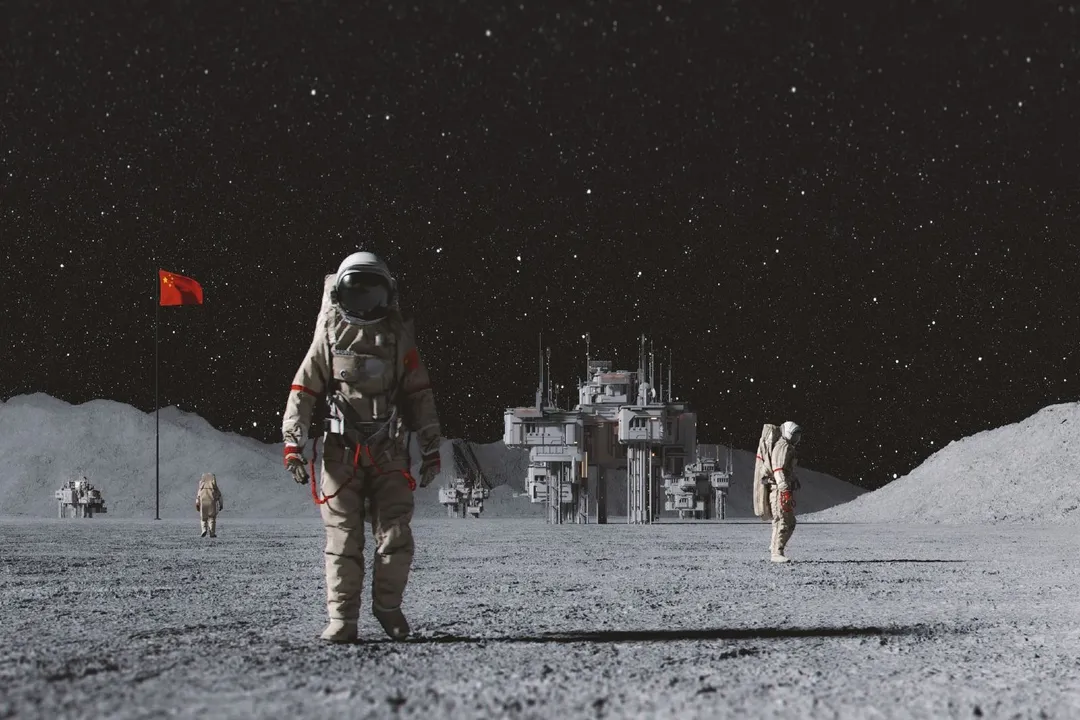
The speed of China's progress is a major point of discussion. One expert review has suggested that China is on a trajectory to match or surpass the US in space capabilities soon. [5] This rapid ascent places US leadership at risk, according to a new report highlighted by Arizona State University. [9] China's strategy appears to involve targeted investments and a consistent, state-backed mandate, allowing them to achieve milestones rapidly, from building their own space station to achieving complex lunar missions. [10] Some observers even maintain that China is currently more advanced than the US, anticipating they will win the overall contest. [1]
# Program Structure

A fundamental difference lies in the very nature of the two programs. The American effort is now heavily influenced by private industry, with companies like SpaceX taking on major roles in launch services and spacecraft development, often operating under fixed-price contracts or partnership models with NASA. [6] This privatization introduces flexibility and speed, but also inherent commercial risks and dependencies. [6] In contrast, China's program operates under a centralized, government-controlled structure, often managed through the China National Space Administration (CNSA) and state-owned entities. [8] While this central control can sometimes lead to slower initial decision-making, it ensures unified national focus and massive, sustained resource allocation toward specific long-term goals without quarterly shareholder pressures. [4]
This difference in organizational philosophy creates a fascinating dynamic. Where the US program sees competition between entities driving innovation, the Chinese program relies on coordination across national entities to execute its plan precisely. [4] For instance, looking at the development timelines for their heavy-lift rockets or crewed vehicles, one can often observe a more linear, albeit sometimes slower to start, progression in China compared to the sometimes erratic but occasionally revolutionary leaps seen in the US commercial sector. [6]
# Hardware Milestones
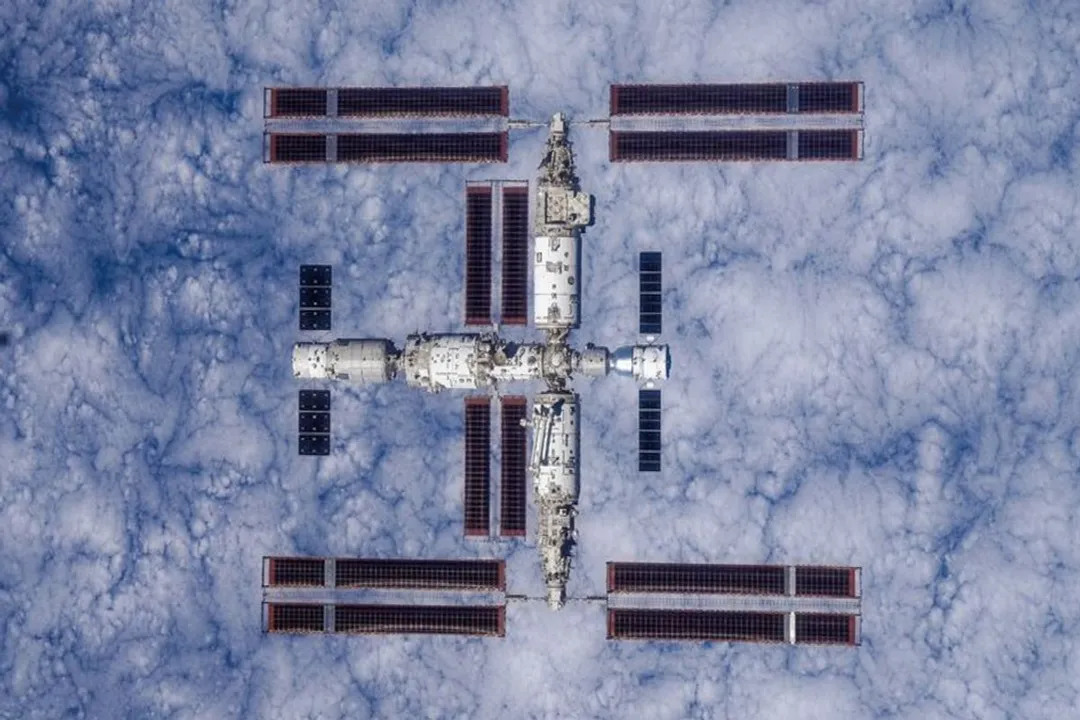
When comparing tangible assets, the focus often falls on launch vehicles and orbital infrastructure. China has successfully established the Tiangong space station, a significant independent achievement following their exclusion from the International Space Station (ISS) partnership. [8] The Tiangong station is now fully operational, providing China with a permanent, independent human presence in low Earth orbit (LEO). [8] The US approach, while rooted in the ISS, is transitioning toward commercial LEO destinations following the ISS's planned retirement. [2]
In terms of rocketry, the development of super-heavy-lift vehicles is critical for deep space ambitions. China is developing its Long March 9 rocket, intended to rival the capabilities of NASA’s Space Launch System (SLS). [2] While the US has the advantage of operating the Falcon Heavy and having successfully flown the SLS for Artemis missions, the consistency and planned scale of China’s Long March family offer a powerful, state-backed launch capability. [6] The capacity to launch significantly heavier payloads is a non-negotiable requirement for sustained lunar bases or crewed missions to Mars, making the race for the most capable heavy-lift rocket central to overall dominance. [2]
# Lunar Competition
The Moon is clearly the next major proving ground for both nations. China has established an impressive track record of robotic lunar exploration, including landing on the far side of the Moon—a feat the US has yet to accomplish—and returning samples from the lunar surface. [8][10] Their next defined goal is sending taikonauts to the Moon by around 2030. [10] The US, under the Artemis program, aims to return humans to the Moon even earlier, in the mid-2020s, establishing a long-term presence. [2]
The difference here might be strategic intent. The US Artemis program is often framed as an international coalition effort, bringing partners like the European Space Agency and Canada aboard, which builds soft power and spreads costs. [6] China's lunar efforts, conversely, are characterized by national self-reliance, attracting a smaller circle of international partners. [8] If the US focuses on establishing a collaborative foothold, China appears focused on establishing a dominant national foothold first.
# Policy Momentum
One area where an original comparison can be drawn relates to political inertia versus program pacing. The US system, with its reliance on annual Congressional appropriations, changes in administration priorities, and the shifting landscape of commercial contracts, can sometimes result in stop-start funding and mission rescheduling. [6] The SLS program, for example, has faced significant cost overruns and schedule delays across its development phases. [6]
Conversely, China benefits from a long-term national plan that transcends individual leadership cycles, giving their program an almost unrelenting momentum. This sustained focus allows them to avoid the political whiplash that sometimes plagues US projects. Imagine a hypothetical scenario: if a major US deep-space exploration initiative loses favor with a new administration, its funding could be slashed or redirected almost immediately. In China, a commitment made at the top of the political structure is far more likely to be funded across multiple five-year plans, treating space development as a non-negotiable element of national rejuvenation, irrespective of short-term domestic political turbulence. [4] This long-term commitment is a subtle but profound advantage when pursuing goals that span decades.
# Operational Experience
While China is advancing rapidly, experts note that the US still maintains superiority in certain areas of expertise, even if the overall program metrics are narrowing. [4] The US benefits from decades of operational experience with complex systems like the Space Shuttle, Hubble, and the ISS, generating a deep bench of engineers and operators familiar with overcoming unforeseen, high-stakes in-flight failures. [8] China’s experience, while impressive, is much younger, having only launched its first crewed mission in 2003. [8]
This experience translates into subtle efficiencies and deeper institutional knowledge, particularly in mission assurance and risk management for human spaceflight—areas where the public tolerance for error is effectively zero. [4] While China has proven its ability to execute complex robotic missions brilliantly, the operational maturity required to sustain a permanent, routine human presence across multiple deep-space vehicles remains an area where US legacy knowledge provides a significant buffer, even as they transition away from the ISS. [2]
# Metric Interpretation
It is important to recognize that perceptions of which program is "better" often depend on the metric used. If "better" means achieving specific, state-mandated milestones on a rigid schedule, China has demonstrated exceptional capability in recent years. [5] If "better" is defined by the volume of scientific discovery, sheer number of launches per year, or operational history across decades, the US still maintains a strong lead based on historical accumulation. [8] One analyst suggests that China is currently pursuing capabilities that the US already possesses, such as a functional LEO station, but they are doing so at a breakneck speed that the US, due to its more decentralized and commercially-oriented approach, struggles to match across the board. [6]
For example, consider the development timeline of their heavy-lift rockets again. While the SLS finally flew, the Long March 9 is still in development, but once operational, it is expected to feature a standardized, large-scale production methodology that could allow for rapid fleet expansion that private US companies might find difficult to scale up to under current industrial structures. [2]
# Investment Efficiency
The economic realities shaping investment also shape the competition. The US space budget, although large, is subject to political negotiation and often competes with other national priorities. [6] China, conversely, treats space development as a critical component of its national security and technological advancement strategy, often allocating necessary funds without the same level of public scrutiny or legislative debate seen in the US. [4]
A second key insight concerns the cost of capability maturity. The US commercial model excels at rapidly iterating on established technologies to drive down per-unit costs for routine tasks, like reaching LEO. However, for frontier capabilities—like developing a crewed Mars lander or a fully reusable super-heavy booster—the upfront, foundational R&D costs borne by the US government are enormous and often inflated by the complexities of integrating commercial providers with governmental quality standards. [6] China, by absorbing these foundational costs centrally through state enterprises, might appear to be spending less overall in certain phases, but their true economic efficiency lies in their ability to transition a proven national technology into rapid, standardized production once the technological hurdle is cleared, bypassing the prolonged "valley of death" that often separates US prototype success from broad fleet deployment.
# Navigating the Future Landscape
The reports indicating China may equal or surpass the US in space capabilities by the mid-2030s serve as a clear signal of the current strategic environment. [5][9] The US response involves doubling down on commercial partnerships for LEO activities while focusing government resources like NASA on deep space exploration (Artemis). [6] The challenge for the US is managing this dual-track approach—sustaining commercial innovation while ensuring national capability doesn't atrophy in areas where commercial interests might not align perfectly with long-term strategic needs, such as foundational research or certain aspects of national security space. [4]
The competition is less about a single "winner" for a specific mission and more about establishing long-term, sustainable access and presence across cislunar space and beyond. [10] If China secures an early, permanent, and cost-effective presence on the Moon supported by its own independent launch and logistics chain, it sets a precedent for future resource utilization and strategic positioning that the US would then have to compete against on China's established terms. [4] To maintain an edge, the US must look beyond simply matching launch counts or station modules. It must focus on where the next generation of breakthrough technology lies—be it advanced in-situ resource utilization (ISRU) on the Moon, next-generation propulsion, or superior autonomous operations. [2] The current situation is a direct result of China's relentless, decades-long commitment to this field, something noted by various observers. [10] While the US program boasts extraordinary historical achievements and currently leads in several key technological domains, the rate of change favoring China is what warrants the attention being paid to this emerging strategic trajectory. [2][9] The divergence in program philosophies means that direct, one-to-one comparisons of current status are often misleading. It is more productive to assess velocity. The US is moving fast, driven by commercial agility; China is moving fast, driven by centralized mandate and unified national will. The outcome hinges on which approach proves more sustainable and adaptable over the next two decades of intensive off-world development. [4] The stakes are high, as leadership in space is increasingly intertwined with leadership in global technology and economics. [10]
#Videos
Does the US/CHINA Space Race really matter? - YouTube
Related Questions
#Citations
“China is more advanced and they're going to beat the US back to ...
A new report finds China's space program will soon equal that of the ...
Does the US/CHINA Space Race really matter? - YouTube
Strategic Trajectories Assessing China's Space Rise and the Risks ...
New report warns that China could overtake the US as top nation in ...
[PDF] The Modern Space Race Between the U.S. and China
Comparison of Chinese and NASA Space Stations - Facebook
Is the Chinese space agency better than the American one? - Quora
China's rapid ascent in space puts U.S. leadership at risk, new ...
The new 'space race': what are China's ambitions and why is the US ...