Why is LEO better than GEO?
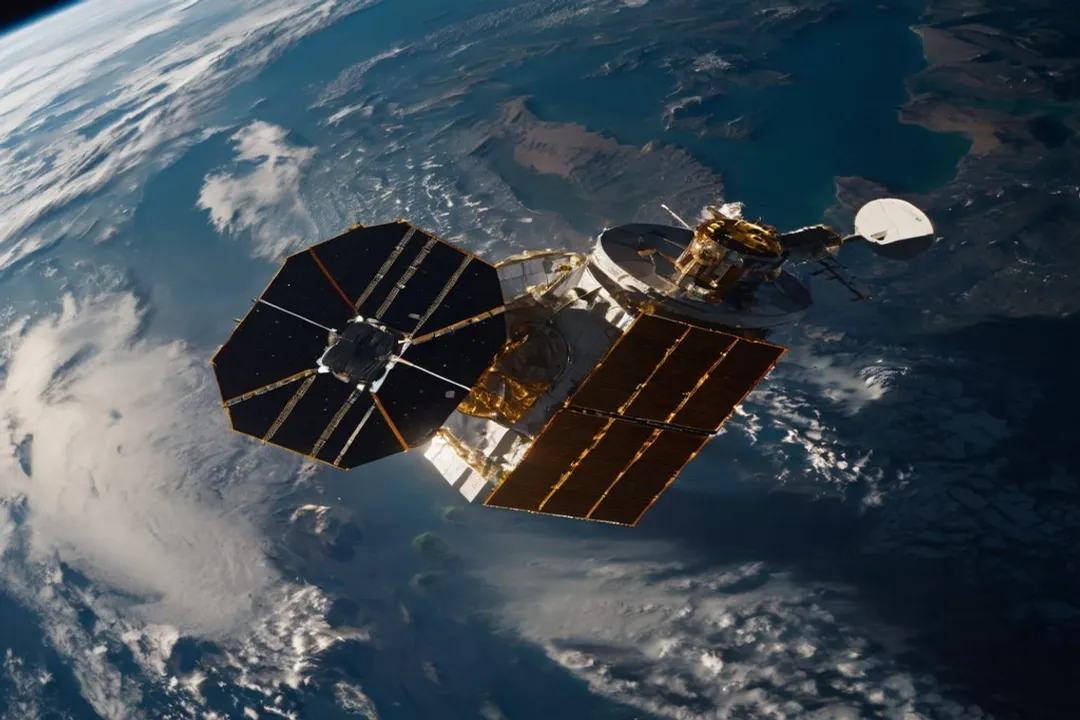
The distinction between Low Earth Orbit (LEO) and Geostationary Orbit (GEO) satellites centers almost entirely on distance from our planet, but this single physical variable dictates profound differences in performance, deployment, and application suitability. [1][7] When assessing which orbit provides superior service for modern data demands, LEO systems frequently gain the advantage, largely due to their relative proximity. [5][9]
# Orbital Heights
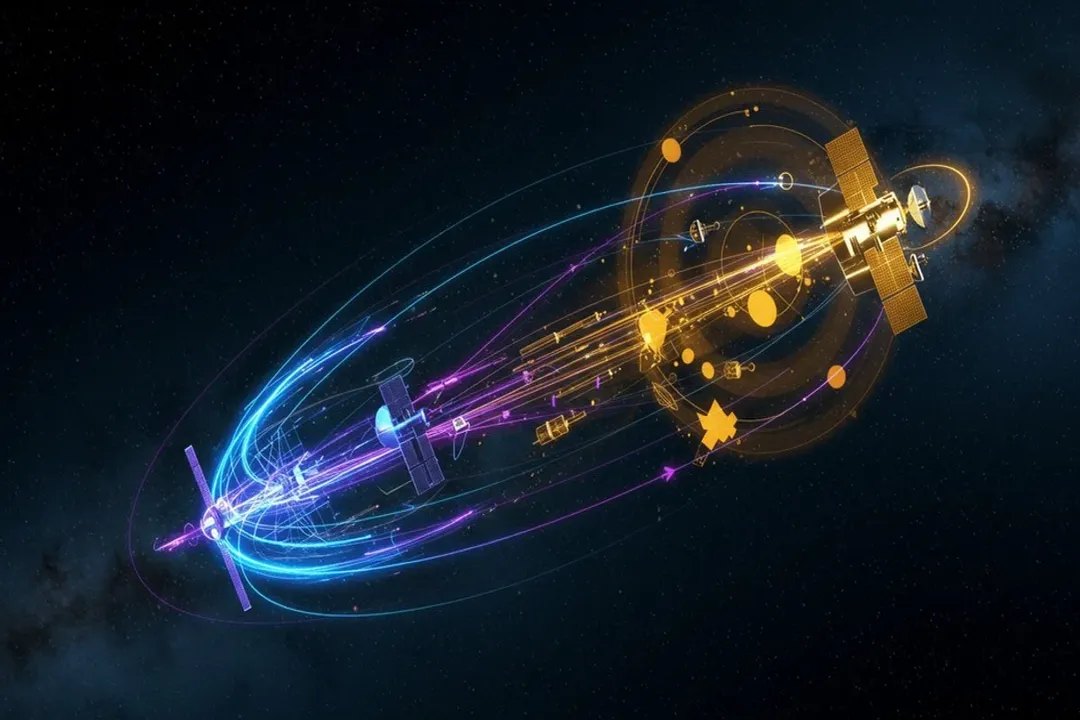
The most fundamental difference lies in altitude. Satellites in GEO orbit at an extremely high altitude of approximately 35,786 kilometers above the equator. [1] At this distance, the satellite moves at the same speed as the Earth rotates, meaning it appears stationary over a fixed point on the ground, offering constant coverage to a vast geographical area. [5] Conversely, LEO satellites operate much closer, typically ranging from about 500 to 2,000 kilometers above the surface. [1] This closeness is the engine behind LEO's modern appeal.
# Signal Speed
The proximity of LEO translates directly into a massive reduction in signal latency, which is the time delay experienced when data travels from a transmitter to a receiver and back. [6] Because GEO signals must travel nearly 72,000 kilometers round trip (to the satellite and back down), the inherent latency is high, often around 500 to 600 milliseconds. [1][5] This delay makes real-time interactive applications, such as high-speed financial trading, remote surgery, or even smooth online gaming, impractical or highly frustrating when relying solely on GEO links. [4]
LEO satellites, by contrast, are dramatically closer. This proximity reduces the round-trip latency significantly, often down to just 20 to 40 milliseconds. [1][9] For general internet access and public safety communications that demand near-instantaneous feedback, this low-latency characteristic makes LEO the superior choice for supporting modern, data-intensive user expectations. [4][9] The difference between 500ms and 30ms is not just incremental; it shifts a service from being marginally usable for interactive tasks to feeling comparable to fiber or cable broadband. [6]

# Equipment Scale
The path length also dictates how much power is required for the signal to reach Earth effectively. Because LEO satellites are so much nearer, they require considerably less transmission power to deliver the same signal strength to the ground compared to their distant GEO counterparts. [5][7]
This reduction in power translates into smaller, less expensive, and simpler ground terminals. [2][5] A GEO terminal, sometimes called a dish, can be fixed, pointing permanently toward the stationary satellite, which simplifies the antenna design. [5] However, LEO systems demand a trade-off: the satellites move very quickly across the sky—a necessity due to their low altitude—so the ground equipment must employ more complex tracking technology to maintain a link with the fast-moving target. [7]
However, the benefit of lower power draw extends to the satellite itself. Smaller power requirements allow the spacecraft to be physically smaller and lighter, which reduces the cost and complexity of launching them into orbit. [5][7]
# Network Density
One of the major drawbacks often cited against LEO is the requirement for a massive number of satellites to provide continuous, global coverage. A single GEO satellite can illuminate roughly one-third of the Earth, allowing for constellations of only three to four satellites to cover the entire planet effectively. [1][5]
LEO cannot achieve this with just a handful of assets. Because their footprint over the Earth is small at any given moment, a constellation must be very large, often involving thousands of units, to ensure that as one satellite passes out of range, another is already entering the visibility window for a user. [1][7] This necessity for density is the primary driver behind the massive constellation projects seen today. [7]
Yet, this density also enables specialized advantages. For instance, LEO constellations can provide reliable coverage to the polar regions, areas that GEO satellites, fixed on the equator, cannot serve effectively. [4] Furthermore, by distributing the communication load across many smaller, lower-power satellites rather than concentrating it on a few high-powered ones, the overall system can become more resilient to localized outages or interference impacting a single asset. [2] If one LEO satellite fails, it represents a tiny fraction of the total capacity, whereas the failure of a single GEO satellite can eliminate coverage for an entire continent or region. [3]

# Operational Lifecycles
The physical environment of LEO dictates a significantly shorter service life for the spacecraft compared to GEO. GEO satellites benefit from a relatively calm orbital environment; they experience minimal atmospheric drag, allowing them to operate for 15 years or more. [5][8]
LEO satellites, positioned much lower, are subject to residual atmospheric drag. This drag constantly pulls the satellite slightly out of its intended orbit, causing it to slowly spiral toward Earth. [8] To counteract this decay, LEO satellites must reserve propellant for station-keeping maneuvers throughout their operational life. This propellant use, combined with the increased wear from completing many more orbits than a GEO satellite in the same timeframe, limits the practical lifespan of LEO craft, often to five to seven years, though newer designs are pushing this duration. [5][8]
This difference in lifespan creates a distinct cost profile. GEO involves a massive upfront investment in a single, very complex satellite designed for long-term service, accepting a high consequence should failure occur. [3] LEO requires a much lower investment per satellite but necessitates a persistent, ongoing launch cadence to replace expired units and expand the network. [3][5] From a risk management perspective, the inherent high replacement frequency in LEO allows operators to integrate newer, more capable technology into the network faster than waiting 15 years to refresh a GEO system. [2]
# Comparison Summary
To illustrate the trade-offs inherent in choosing an orbit, the core differences can be summarized:
| Feature | LEO Systems | GEO Systems |
|---|---|---|
| Altitude | ~500 to 2,000 km [1] | ~35,786 km [1] |
| Latency | Very Low (20-40 ms) [1] | High (~500-600 ms) [1] |
| Constellation Size | Thousands needed for coverage [7] | A few (3-4) suffice for global coverage [1] |
| Lifespan | Shorter (5–7+ years) due to drag [8] | Longer (15+ years) [8] |
| Ground Terminal | Must track satellites, smaller/less power [7] | Fixed antennas, larger power needs [5] |
While GEO remains the established standard for applications requiring constant coverage over a vast region with minimal physical infrastructure on the ground, LEO's advantages in speed and power have made it the preferred choice for broadband expansion and latency-sensitive services. [9] The complexity of managing vast LEO constellations—including tracking, collision avoidance, and maintaining handover between satellites—is a significant engineering hurdle, but one that is being overcome by current advancements in automation and manufacturing. [2][3] The capability to offer near real-time connectivity, even if it requires a constellation counted in the thousands rather than the tens, is the defining reason LEO is currently considered superior for a growing segment of the telecommunications market. [9]
Related Questions
#Citations
[PDF] GEO vs LEO – Quick facts | Avanti.space
LEO, MEO or GEO? Diversifying orbits is not a one-size-fits-all ...
The Changing Risk Landscape in LEO vs. GEO - Kratos Space
Above and Beyond: LEO vs GEO in Public Safety Communications
What are the advantages and disadvantages of GEO and LEO ...
This really gave me perspective on LEO vs GEO vs Moon (also +L2 ...
Low Earth Orbit (LEO) Satellites vs. Geostationary Satellites - Medium
Why is the life span of a LEO satellite less than that of a GEO satellite?
Starlink, Viasat & HughesNet: LEO vs GEO for Telco Growth