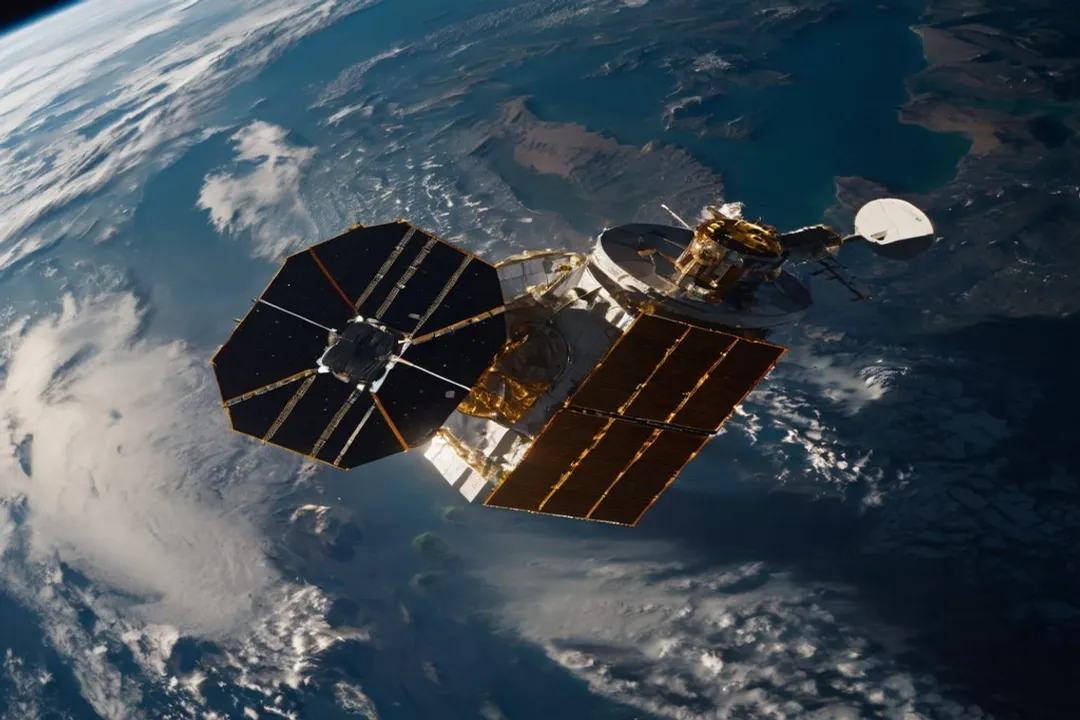
What physical environmental factor limits the practical lifespan of LEO craft to five to seven years?
Residual atmospheric drag causing the satellite to slowly spiral toward Earth.
The operational environment presents a critical challenge for LEO satellites due to their relative proximity to the Earth's atmosphere. Unlike GEO satellites operating in a relatively calm vacuum far above the surface, LEO craft are subject to residual atmospheric drag. This constant, gentle braking effect pulls the satellite slightly out of its intended orbital path, causing it to decay and spiral inward over time. To maintain their correct position and counteract this decay, LEO spacecraft must continuously utilize onboard propellant for station-keeping maneuvers. This necessary expenditure of propellant, coupled with the increased mechanical wear from completing many more orbits than a GEO satellite in the same timeframe, limits their practical service life, typically capping it between five and seven years, while GEO systems can last 15 years or more.