Which is more better, ISRO or NASA?

Comparing the Indian Space Research Organisation (ISRO) and the National Aeronautics and Space Administration (NASA) is less about declaring an outright winner and more about understanding two vastly different operational philosophies driven by differing national resources and mandates. [1][5] Both agencies command global respect, but they operate on entirely different scales of funding and historical experience. [1]
# Budget Context
The most striking difference between the two agencies lies in their financial backing. NASA's annual budget dwarfs that of ISRO by orders of magnitude. [1][2][5] NASA operates with billions of dollars allocated annually, enabling it to pursue extremely high-cost, long-duration projects involving human life and the development of cutting-edge, large-scale infrastructure, such as the Artemis program aimed at returning humans to the Moon. [1][5]
In contrast, ISRO operates with a significantly leaner budget, often managing complex missions for a fraction of what a comparable NASA mission might cost. [2][5] For instance, the budget for ISRO’s successful Mars Orbiter Mission (MOM), or Mangalyaan, was considerably lower than the budget for NASA’s MAVEN Mars orbiter. [1] This financial reality immediately dictates the scope and risk tolerance of each organization’s projects. [5] NASA can afford redundancy and extensive preliminary research that ISRO must streamline to meet budgetary constraints. [2]
# Cost Effectiveness
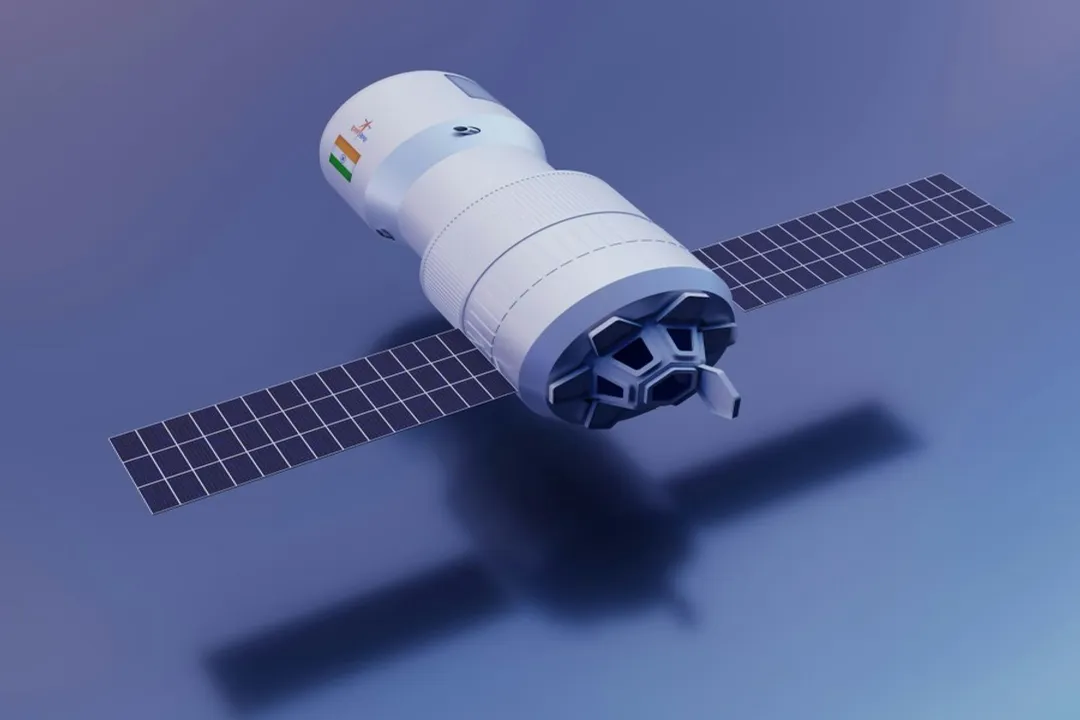
While NASA possesses superior raw financial muscle, ISRO has earned a formidable reputation for achieving remarkable results with minimal expenditure. [1][4] This high degree of cost efficiency is perhaps ISRO’s most frequently cited strength when compared globally. [2] The success of Chandrayaan-3, India’s third lunar mission, further cemented this image, achieving a soft landing on the Moon’s south pole region. [1]
When looking at output per investment, ISRO often demonstrates an extraordinary return. A project that might require several years and a multi-billion dollar budget at a Western space agency can sometimes be executed by ISRO in a shorter timeframe and for less capital outlay, as seen with their initial Mars mission. [4] This capability is not accidental; it stems from decades of focusing intensely on frugal engineering and minimizing system complexity while maximizing component reliability. [2] An observer analyzing the two agencies might conclude that NASA is built for scale and long-term presence, while ISRO is perfected for maximum impact on a restricted budget. [2]
# Mission Portfolio
The historical achievements of both agencies reflect their differing timelines and national goals. NASA has an unparalleled legacy spanning decades, including the first crewed missions to the Moon via the Apollo program and continuous operation of scientific instruments that have reshaped astrophysics, such as the Hubble and James Webb Space Telescopes. [5] Furthermore, NASA has deep, ongoing experience in human spaceflight through projects like the Space Shuttle program and its involvement with the International Space Station (ISS). [5]
ISRO, though younger, has rapidly built a strong portfolio focused heavily on satellite technology, communication, and remote sensing for national development, alongside increasingly ambitious planetary missions. [5] The successful first-attempt insertion into Mars orbit with Mangalyaan in 2013 served as a massive confidence builder, demonstrating complex orbital mechanics capability early in its interplanetary attempts. [4] In terms of sheer frequency and national service delivery—like providing telecommunications and meteorological data—ISRO’s operational tempo for domestic satellite deployment is often exceptionally high. [5]
It is worth noting the difference in mission focus. While NASA is deeply involved in crewed missions and large orbital observatories requiring enormous fiscal commitment, ISRO has concentrated on proving its capabilities in cost-effective robotic exploration and establishing a reliable launch vehicle family, such as the PSLV and GSLV rockets. [1][5]
# Technological Maturity
Assessing maturity requires segmenting the field. In the domain of human spaceflight, NASA’s experience base is incomparably deeper, given the risk and complexity involved in keeping humans alive in space for extended periods. [5] This area represents a technological hurdle ISRO is only beginning to tackle with its Gaganyaan program, which aims to send Indian astronauts into low Earth orbit. [5]
Conversely, in specific areas of robotic probe technology and Earth observation satellite deployment, ISRO has demonstrated expertise that stands shoulder-to-shoulder with any global peer. [1] The ability to manage high-precision orbital insertions and lunar landings, even on the first or second attempt, speaks to a highly refined ground control and engineering process within ISRO. [4]
If we view technological maturity as the ability to perform complex tasks reliably under constraint, ISRO arguably shows a high degree of maturity in constrained execution. If we define it by the sheer breadth of accumulated knowledge across all space domains—especially human spaceflight—NASA maintains the lead due to its extensive operational history and vast funding base. [5]
# National Mandates
The inherent differences in structure and funding flow directly from what each nation requires from its space program. NASA often operates under mandates that blend scientific discovery, geopolitical visibility, and technological demonstration, frequently requiring the highest possible engineering standard, even if cost is secondary. [5]
ISRO’s mandate is heavily weighted toward providing direct, tangible benefits to the Indian populace—from weather forecasting and disaster management to broadband connectivity—while simultaneously establishing India as a key player in the global launch services market. [1] This dual responsibility necessitates prioritizing highly reliable, cost-efficient solutions that can be deployed swiftly to address domestic needs. [5] Therefore, the comparison often boils down to: is the goal to push the absolute scientific boundary with unlimited resources, or is it to achieve significant, high-profile scientific milestones through radical cost optimization?[1][2]
Both agencies represent pinnacles of engineering achievement within their respective economic and political contexts. NASA carries the weight of being the long-established global leader with unmatched depth, while ISRO impresses the world by consistently punching far above its financial weight class, providing an essential model for developing space powers worldwide. [2][4]
#Videos
ISRO vs NASA | The History and Future of Space Race | Dhruv Rathee
ISRO's Thrifty Mission Compared to NASA's Billion-Dollar Venture
Here's How ISRO Compares With NASA - YouTube
Related Questions
#Citations
Is ISRO more competent than NASA? - Quora
Is it logical to compare budgets of ISRO with other space agencies?
ISRO VS NASA- COMPARISON - NbliK
3 Reasons Why ISRO is Better than NASA - Aarav Iyer - Medium
What is the Difference Between NASA and ISRO? - Digit Insurance
ISRO vs NASA | The History and Future of Space Race | Dhruv Rathee
ISRO vs NASA: Who's Spending Smarter? NASA has billions, but ...