What is the highest position at NASA?
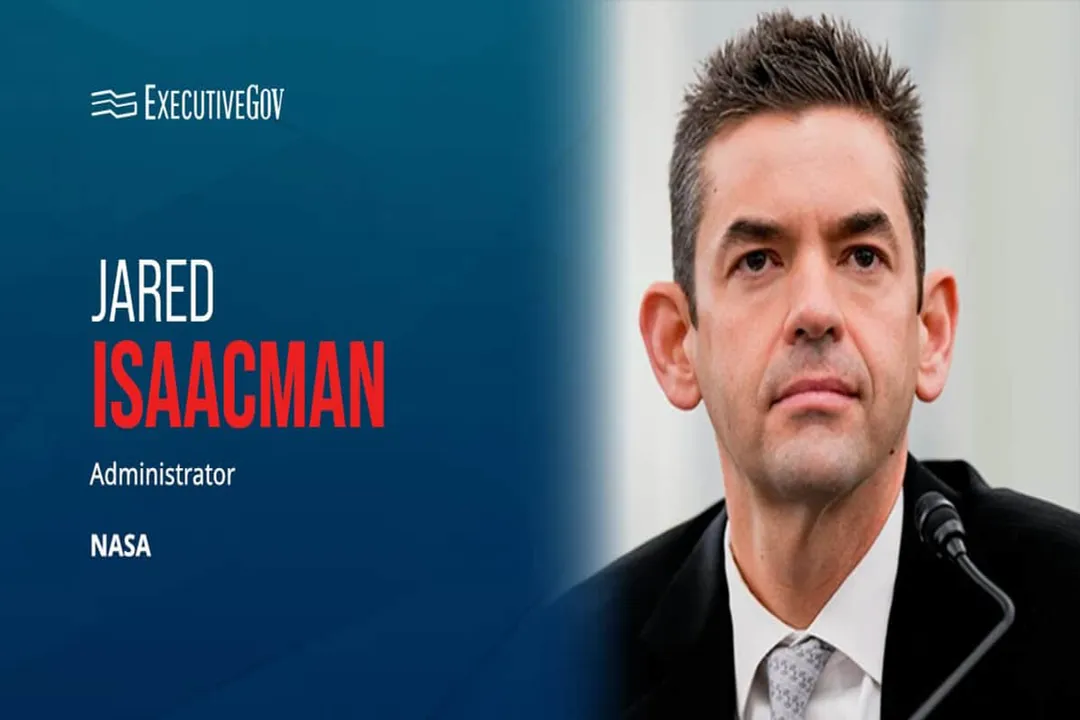
The position holding the ultimate authority within the National Aeronautics and Space Administration is that of the Administrator. This is the agency's highest appointed office, comparable to the CEO of a major corporation or the Secretary of a cabinet-level department, though NASA technically sits within the executive branch under the President's authority. The Administrator acts as the principal advisor to the President on space policy and execution of the agency's civil space program.
# Agency Head

The role demands a unique blend of political acumen, technical understanding, and executive experience, given NASA's broad mandate spanning scientific discovery, aeronautics research, and deep space exploration. The Administrator is responsible for leading the entire organization, setting its strategic direction, and managing its vast budget and workforce across multiple centers nationwide. Because the position is a presidential appointment, the person filling this role often signifies a shift in the administration's priorities for space exploration, tying NASA's immediate future closely to the political climate.
This appointment process is significant. The nominee must undergo vetting and confirmation by the United States Senate before officially taking the oath of office. This requirement underscores the critical national security and international relevance of the agency's work, demanding legislative oversight for its highest executive.
# New Leader

The agency recently welcomed its fifteenth leader, Jared Isaacman, who was officially sworn in on December 18, 2025. This transition marked the end of the period under acting leadership, formalizing the top spot after the confirmation process. Isaacman arrives at NASA following a career that provided him with firsthand experience operating outside of traditional government channels, which is a distinct background for an Administrator.
Isaacman is perhaps best known outside of government circles as a billionaire entrepreneur and pilot who sponsored notable private space missions, including Inspiration4 and Polaris Dawn. His background is rooted in finance and technology, having founded companies like Shift4 Payments. Bringing a pilot’s perspective to the top job means he has direct operational familiarity with the high-stakes environments NASA manages, even if his previous flights were commercially crewed rather than government astronaut missions. The fact that he is the fifteenth person to hold this title gives context to the revolving door of executive leadership NASA experiences, where the tenure of an Administrator is often tied to presidential terms, though career civil servants manage the day-to-day technical operations across administrations.
Observing the transition, one can see a recurring theme in how new Administrators are selected: balancing political necessity with technical credibility. While prior leaders often came from long government service, military backgrounds, or established aerospace industry roles, Isaacman’s selection emphasizes private sector innovation and the growing importance of commercial partnerships in achieving deep space objectives. This selection itself suggests an organizational pivot toward integrating commercial capabilities more deeply into NASA’s core planning.

# Structure Details
To understand the Administrator’s scope, it helps to visualize the agency’s structure. NASA operates through a complex organizational chart featuring several key executive positions reporting up to the Administrator. While the Administrator sets the overall vision, the day-to-day management and execution fall to a hierarchy of deputies and associate administrators overseeing specific directorates.
The Deputy Administrator is the second-in-command, stepping in for the Administrator when needed and often managing internal affairs or special initiatives. Beneath this top tier, NASA divides its massive responsibilities into specialized areas, typically managed by Associate Administrators. For example, one manages the Science Mission Directorate, another the Exploration Systems Development Mission Directorate, and others handle Aeronautics, Safety/Mission Assurance, and Administration.
For instance, individuals like Amit Kshatriya hold significant leadership roles, currently serving as the Deputy Associate Administrator for the Moon to Mars Program. Roles like Kshatriya's are critical because they translate the Administrator’s high-level strategy into actionable, multi-center projects, such as the Artemis program. The Administrator relies heavily on these deputies to maintain continuity and operational excellence across the agency’s technical enterprise, ensuring that political direction does not immediately disrupt ongoing mission timelines.
Here is a simplified view of the top echelon reporting structure:
| Position | Function | Reporting Line |
|---|---|---|
| Administrator | Principal Advisor, Chief Executive | Reports to the President |
| Deputy Administrator | Second-in-Command, Internal Oversight | Reports to the Administrator |
| Associate Administrators | Leads specific Mission Directorates (e.g., Science, Exploration) | Reports to the Administrator/Deputy |
A point worth noting is the distinction between the political appointees—the Administrator and Deputy—and the career civil servants who occupy many of the Associate Administrator roles. While the political team sets the destination, the career staff possess the institutional memory and technical expertise necessary to engineer the spacecraft and manage the launch cadence. The success of a new Administrator often hinges on how quickly they earn the trust of these long-serving technical leaders.
# Governing Vision
The primary responsibility channeled through the Administrator is the execution of the U.S. civil space policy as mandated by Congress and directed by the White House. This involves securing funding from Congress, which requires constant communication and justification for exploration goals. For a new Administrator coming from the private sector, the shift from private funding accountability (as experienced with philanthropic spaceflight efforts) to public funding accountability before Congress represents a steep learning curve.
The agency’s portfolio is massive, covering everything from Earth science satellites that monitor climate change to astrophysics observatories peering into the early universe, alongside the complex human spaceflight efforts aiming for the Moon and eventually Mars. The Administrator must maintain a delicate balance, preventing a focus on high-profile human exploration from entirely overshadowing vital, but less visible, scientific research and aeronautics advancements.
In assessing the role, it becomes clear that the highest position is not purely one of engineering oversight but one of advocacy and integration. The Administrator must advocate for NASA’s budget against competing federal priorities and integrate the work of dozens of disparate field centers—from the Jet Propulsion Laboratory in California to the Kennedy Space Center in Florida—under a single, coherent strategic banner. The individual selected must ensure that the agency, despite its scale, acts as a unified entity capable of meeting ambitious long-term goals, like landing humans on Mars, which demands coordination across decades of planning and trillions of dollars in investment over time. This need for long-term vision, irrespective of short electoral cycles, is perhaps the single greatest challenge inherent in the Administrator role.
Related Questions
#Citations
NASA Leadership
Billionaire Jared Isaacman, an Elon Musk ally, confirmed as Nasa ...
Isaacman sworn in as 15th NASA Administrator - Spectrum News 13
NASA's Organizational Structure [Interactive Chart] Organimi
Jared Isaacman Confirmed as NASA Administrator - ExecutiveGov
Second-time NASA nominee confirmed to lead space agency - Politico
Jared Isaacman confirmed as NASA chief - WDSU
From billionaire pilot to NASA chief – Jared Isaacman is now in ...