What has NASA launched into space?

The sheer breadth of hardware NASA has propelled beyond Earth’s atmosphere represents one of humanity’s greatest ongoing engineering feats. From small, experimental satellites that test new technologies to massive observatories designed to peer back to the dawn of time, the catalog of objects launched by the U.S. space agency is staggering in its scope and variety. It is a collection that spans decades, encompassing everything from the initial steps of the Space Race to today’s complex robotic explorers circling distant planets.
# Early Ambitions
NASA’s history is rooted in the drive to push scientific and exploratory boundaries, a goal that necessitated continuous development and deployment of space hardware. The foundational work laid out in the early days set the precedent for the kinds of objects we see launched today—not just crewed vehicles, but automated probes designed for specific scientific measurements. These early efforts established the methodology for everything that followed, proving that complex machinery could survive the violent forces of launch and the hostile vacuum of space to perform delicate tasks millions of miles away.
# Mission Types

If we attempt to categorize what NASA has sent upward, we quickly find that the destinations and objectives dictate the hardware deployed. The missions are not monolithic; they involve a wide spectrum of specialized spacecraft, instruments, and supporting hardware.
One major category involves planetary science. These are the probes sent to investigate bodies within our own solar system. We have launched spacecraft to orbit Mars, to land on its surface, to study the gas giants like Jupiter and Saturn, and to zip past distant icy bodies like Pluto. These missions often require spacecraft capable of navigating autonomously for years, surviving intense radiation fields, and communicating over vast distances.
Then there are the space telescopes and observatories. These missions involve placing sophisticated scientific instruments far above the distorting effects of Earth’s atmosphere. Instruments like the Hubble Space Telescope or its successor, the James Webb Space Telescope, are essentially massive, highly sensitive cameras and sensors designed for deep-field astronomical study. These are some of the most complex and expensive payloads ever constructed, demanding pinpoint precision in their final orbital positioning.
Another significant body of work centers on Earth science. NASA constantly launches satellites dedicated to observing our home planet. These craft monitor everything from ice cap melt rates and sea surface temperatures to atmospheric composition and changes in vegetation health. The data returned from these Earth-facing assets is crucial for understanding climate patterns and environmental shifts.
It is interesting to note the sheer volume available in the agency's records. While top-level pages highlight flagship missions, the existence of an "A-to-Z of NASA Missions" archive suggests that the total number of projects cataloged runs into the hundreds, encompassing everything from small research payloads to major international collaborations. Comparing the curated lists on official NASA portals with aggregated external mission trackers highlights that the agency’s operational scope includes numerous smaller, sometimes less publicized, research flights alongside the headline-grabbing planetary explorers.
# Small Payloads
A clear trend in recent years involves the increasing launch of much smaller hardware. While the massive planetary probes get the headlines, NASA also frequently deploys small satellites, sometimes referred to as CubeSats. These compact, standardized units often serve as technology demonstrations or quick-turnaround science experiments. Launching these small packages is often more economical and allows for rapid testing of new instruments before committing to full-scale mission designs. The sheer variety of objects now being lofted into orbit reflects this flexibility; it’s not just monolithic ships anymore, but constellations of diverse technological demonstrators.

# A Snapshot of Recent Deployment

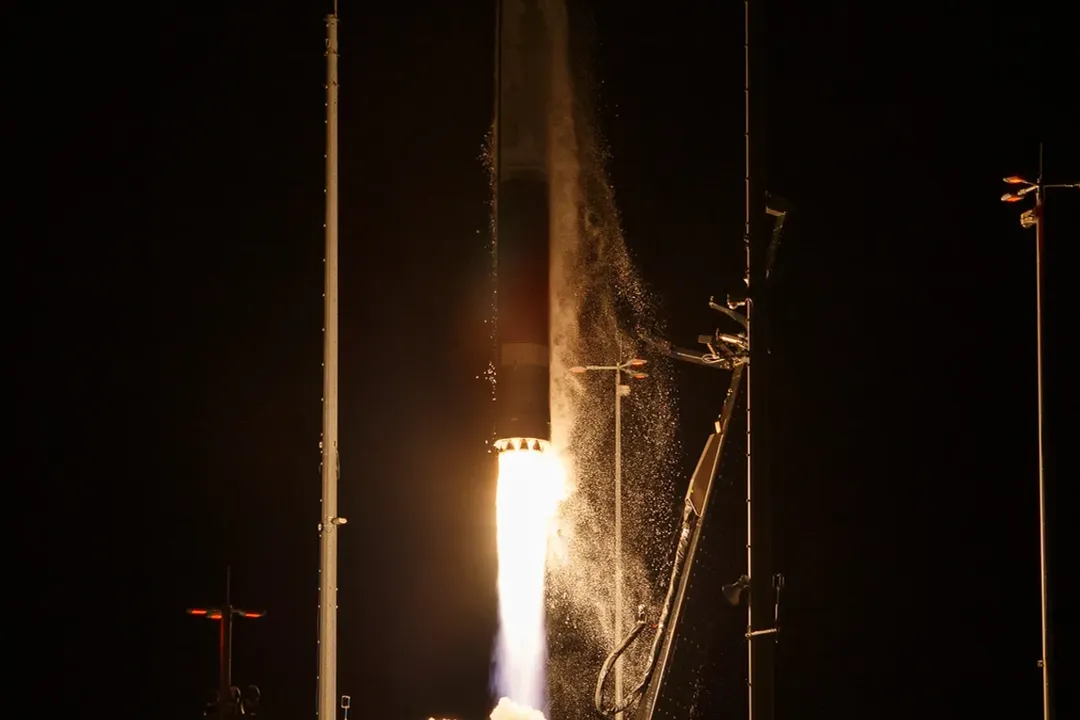
To get a concrete idea of what is being launched now, we can look at very specific, recent activity. For instance, a launch from Wallops Island in December 2025 involved an experimental spacecraft. This particular launch was noted for carrying scientific payloads, indicating that even routine launches often serve the purpose of testing concepts that might evolve into future flagship missions. Such launches confirm that NASA's activity remains constant, involving both the scheduled deployment of large, established programs and the occasional, targeted release of new experimental technology from various launch sites.
It is worth observing the nature of these operational deployments. When a massive interplanetary probe is sent out, the launch vehicle needs to be capable of achieving specific, extremely high-energy trajectories, a capability that is relatively rare in the global launch environment. Conversely, when deploying smaller research vehicles, the launch might be hitched a ride on a commercial or government vehicle headed for a lower, more accessible orbit, proving that the "launch" event is tailored precisely to the object’s final destination and power requirements.
# Historical Milestones Cataloged
If one examines the historical records, specific landmark objects stand out, though they all share the commonality of being launched. The Mercury, Gemini, and Apollo programs launched crewed capsules and lunar landers, representing missions where the payload was human life itself. In contrast, missions like Voyager, launched decades ago, are now interstellar, having performed decades of flybys and data collection on distant worlds before finally leaving the solar system’s influence. These longevity differences—a few days in orbit versus decades crossing interstellar space—underscore the extreme variations in design specifications NASA engineers must meet.
The agency’s archives detail the sheer range of hardware types: orbiters that circle a planet or moon, landers that touch down softly, rovers that drive across the surface, and flyby probes that take snapshots during high-speed passes. It’s a testament to mission diversity that a single agency can design and execute missions that are simultaneously focused on mapping the composition of Jupiter's atmosphere and measuring carbon dioxide levels over downtown Los Angeles.
# Future Trajectories
The activity doesn't slow down; it simply changes focus. Today, many of the missions being prepared for launch, or recently launched, are centered around returning humans to the Moon under the Artemis program, which involves launching large components of the Orion spacecraft and the Space Launch System (SLS) rocket. These represent a return to the heavy-lift capability necessary for deep-space human transport, a clear contrast to the purely robotic missions that dominated the 2000s. Looking ahead, launch schedules indicate a continued mix of scientific endeavors alongside these monumental human exploration goals.
The ongoing process of preparing and executing these launches requires intricate coordination, detailed in mission schedules that track not just the rocket but the readiness of the payload itself. Every object launched, whether a simple technology demonstrator or a complex flagship orbiter, represents the culmination of years, sometimes decades, of work in design, construction, testing, and integration.
Related Questions
#Citations
Missions - NASA
Launch Schedule - Spaceflight Now
NASA launches experimental low cost space craft from Wallops Island
Space Exploration Missions | The Planetary Society