Does NASA only study space?
The common image of the National Aeronautics and Space Administration (NASA) is often one of rockets blasting off toward distant stars or robotic rovers kicking up red dust on Mars. It is an image steeped in awe and the pursuit of the unknown. However, to define the agency solely by its celestial voyages is to miss a vast and perhaps more immediately relevant portion of its mandate: looking back toward home. [1] NASA’s portfolio is significantly broader than deep-space astronomy, encompassing intensive study of our own planet, the mechanics of our nearest star, and fundamental research whose breakthroughs ripple directly into terrestrial life and medicine.
# Earth Science
NASA’s work on Earth is extensive, often employing the same high-tech instruments designed for space to monitor our own atmosphere, oceans, and landmasses. [6] The agency uses sophisticated instruments aboard satellites to study our planet in a multitude of ways. [6] This isn't simply taking pretty pictures; it involves rigorous, continuous data collection that forms the backbone of modern climate science and hazard prediction.
For instance, the instruments measure things like sea-level rise, atmospheric composition, changes in polar ice, and the health of our forests. [6] The sheer volume of data collected means NASA is running one of the world’s most significant, ongoing environmental monitoring programs. Consider the tracking of hurricanes or volcanic ash plumes; this capability stems directly from the remote sensing technology pioneered for space exploration but is applied daily to protect lives and property here on the ground. We often focus on the data from Mars orbiters, yet the data from Earth-observing missions directly influences crop yields, water resource management, and urban planning across the globe. [6] One might observe that while the public pays close attention to a new telescope peering at the early universe, the steady stream of highly precise data confirming subtle, long-term shifts in Earth's ocean salinity—data gathered by instruments built to withstand launch vibration and vacuum—is arguably the most critical information for future global stability.
# Solar Dynamics
The Sun, while appearing placid in the daytime sky, is the engine of our solar system, and understanding it is a major preoccupation for NASA scientists. This area of study falls under Heliophysics, which focuses on the Sun and its influence across the solar system. [2] This research is not purely academic; it has direct implications for our technology and safety back on Earth.
Heliophysics research investigates the space environment, essentially studying the "weather" in the region between the Sun and Earth. [2] This involves examining solar flares, coronal mass ejections (CMEs), and the solar wind. When the Sun has a major outburst, the resulting solar storms can have tangible, disruptive effects on Earth. These effects range from causing spectacular aurora displays to potentially knocking out power grids, disrupting GPS navigation, and interfering with satellite communications. [2] Therefore, understanding the physics governing the Sun’s activity is a matter of infrastructure security. By modeling and predicting these events, scientists are essentially providing a solar weather forecast, much like atmospheric meteorologists forecast rain, allowing power companies and satellite operators to take protective measures against surges or particle bombardment. [2]
# Biological Inquiry
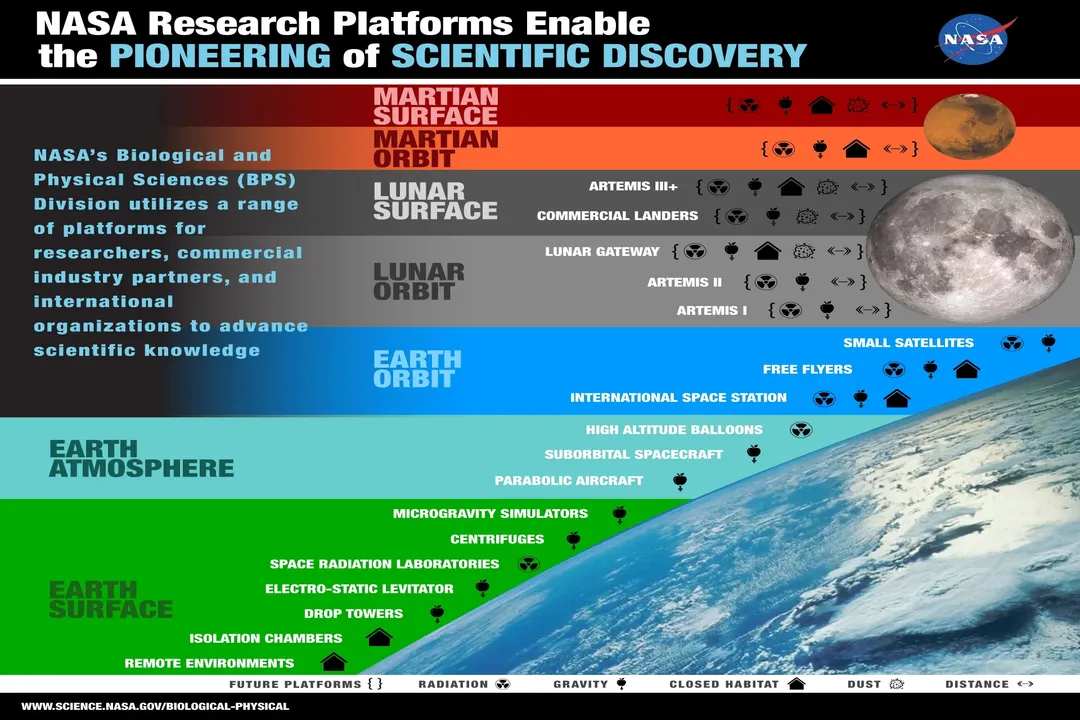
Another critical component of NASA’s work that often gets overshadowed by the search for alien life is the fundamental research conducted concerning life itself, often under the unique conditions experienced in space. [4] This research spans both biological and physical sciences and is a core area of focus for the agency. [5]
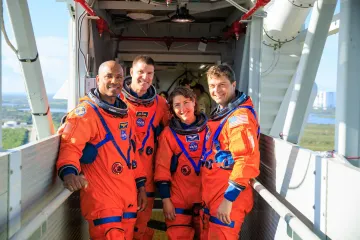
When astronauts spend months aboard the International Space Station (ISS), they become subjects in a high-stakes laboratory. Scientists study how the human body adapts—or fails to adapt—to prolonged exposure to microgravity and increased radiation. [4] This includes looking at bone density loss, fluid shifts in the body, changes in the immune system, and muscle atrophy. [4] The insights gained from this research are invaluable for astronaut health on long-duration missions, such as potential trips to Mars, but they also illuminate basic human physiology in ways that are difficult to replicate in ground-based labs. For example, understanding how gravity affects bone remodeling in astronauts can offer new perspectives on osteoporosis treatment here on Earth. [4]
Furthermore, research extends to microbiology, plant growth, and fluid dynamics in space. [5] Studying how disease-causing microbes behave differently in microgravity, or how plants grow more efficiently under controlled, minimal-gravity conditions, can lead to advances in areas like pharmaceutical development or controlled-environment agriculture here. The context of space provides a unique, consistent variable—the near absence of gravity—that allows researchers to isolate and study other biological processes with greater clarity. [5]
# Terrestrial Benefits
The investment in space exploration pays dividends that return to Earth in unexpected and concrete ways. The International Space Station (ISS) itself serves as a microgravity laboratory demonstrating this principle clearly. [7] Over its two decades of operation, the ISS has been the site of thousands of experiments leading to tangible breakthroughs that benefit daily life. [7]
These breakthroughs span multiple sectors. In materials science, research on crystal growth in space has helped refine the development of purer semiconductor materials used in electronics on Earth. [7] In medicine, research related to mitigating bone and muscle loss has directly informed therapies for patients suffering from chronic conditions involving muscle wasting. [7] Even innovations in water purification systems developed for the closed-loop life support on the ISS have been adapted for use in remote or disaster-stricken areas on Earth. [7]
The tangible benefits of this work are not accidental; they are often an intended consequence of rigorous engineering and scientific investigation driven by the need to solve problems for spaceflight itself. [8] Solving for long-term self-sufficiency in space forces innovation that yields more efficient, durable, and miniaturized technologies applicable across numerous industries. [8]
# Institutional Structure
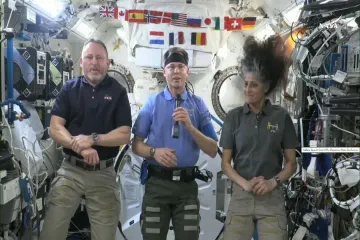
NASA’s expansive mission requires a structure capable of managing diverse scientific and engineering endeavors. While the public sees the launch vehicle and the resulting space image, the underlying infrastructure includes partnerships and programs designed to manage the execution of these varied goals. [9] The agency works across numerous centers, often in collaboration with other national labs and academic institutions, to execute its broad charter covering everything from deep space telescopes to atmospheric monitoring systems. [9] This network ensures that expertise from fields like materials science, computation, and remote sensing—developed for space—is effectively transferred to terrestrial applications and vice versa. [9] This distributed approach reflects a realization that no single laboratory can manage the breadth of research required to fulfill its goals related to both the cosmos and our home world.
# Scientific Synthesis
When examining NASA’s activities side-by-side—studying the Sun's magnetic fields, monitoring Greenland's ice sheet, and testing new drug delivery methods on the ISS—a clearer picture emerges. The agency functions less as a purely astronomical society and more as a vast Earth and Planetary System Science organization that uses space as its primary laboratory and observatory. [2][6] Space is the medium through which they gather data unobtainable from the surface, and the environment in which they test the limits of human and material endurance.
The connection between the seemingly esoteric study of galactic radiation and the practical need for better radiation shielding in terrestrial hospitals illustrates this synthesis. A challenge posed by one domain frequently creates a solution for another. [4][8] This cross-pollination is a critical, often unstated, element of the agency's value proposition. For researchers focused on Earth systems, the fact that NASA’s scientific data, derived from instruments operating in the harsh vacuum of space, is often publicly available for direct download and analysis for non-space projects is a profound resource. [6] This commitment to open science allows local environmental studies to benefit from a global perspective, grounding the agency's space exploration efforts in immediate, actionable environmental intelligence.
The work on Earth—monitoring climate change, understanding solar weather, and performing fundamental life science research in microgravity—is not secondary to space travel; it is the essential counterpoint that gives context and application to the missions aimed at the stars. NASA’s mission is inherently dual-focused: understanding the universe out there to better understand and safeguard the environment right here.
Related Questions
#Citations
Does NASA do anything besides space? - Quora
What We Study - NASA Science
What is the point of deep space research & space exploration?
How does NASA study our planet? In more ways than you might ...
20 Breakthroughs from 20 Years of Science aboard the International ...
Benefits of Space Exploration on Daily Life | Florida Tech Ad Astra
NASA Centers and Facilities