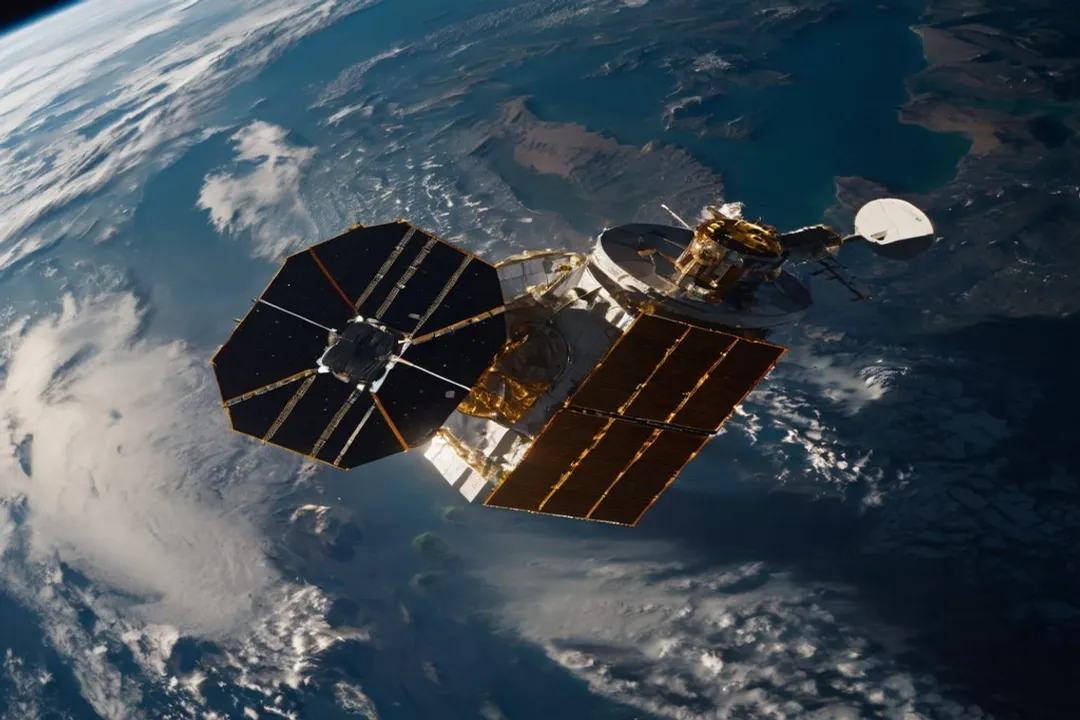
What complexity must LEO ground equipment employ that GEO terminals, which point to a stationary satellite, do not require?
More complex tracking technology to maintain a link with the fast-moving target
The operational differences between the orbits necessitate distinct designs for the ground receiving equipment. GEO satellites orbit synchronously with the Earth's rotation, meaning they appear fixed over one geographical point. Consequently, the ground terminal antenna can be a fixed dish pointed permanently in one direction toward the stationary satellite, simplifying its mechanical design. LEO satellites, however, move very rapidly across the sky because of their low altitude requirement. This rapid movement mandates that the ground equipment must incorporate sophisticated and complex tracking technology to constantly adjust its aim and maintain a stable link with the fast-moving communication asset passing overhead.