What can a supernova do to a human?
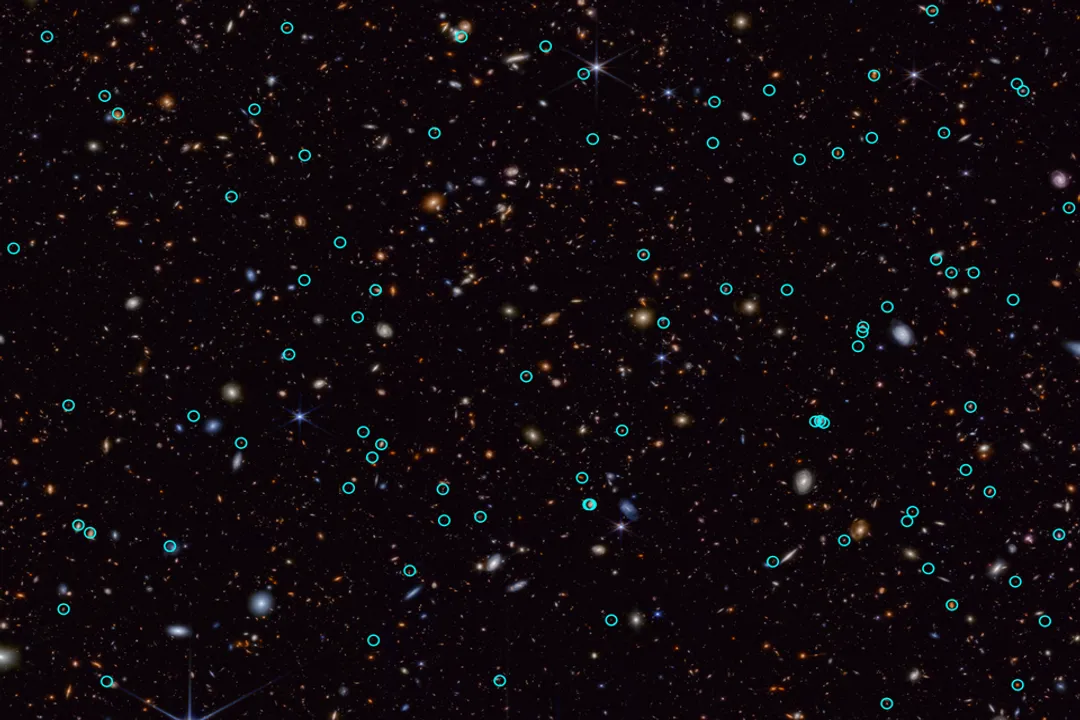
The spectacular, violent death of a massive star, a supernova, is one of the universe’s most energetic events, capable of briefly outshining entire galaxies. For us inhabitants of the relatively calm Solar System, these cosmic explosions are distant astronomical phenomena, objects of study and awe. Yet, the question of what such an event, particularly a nearby one, would mean for a single human being residing on Earth is a dramatic thought experiment that touches upon physics, biology, and planetary defense. A supernova's potential to harm or extinguish life stems not from a single effect, but from a cascade of destructive outputs released across the electromagnetic spectrum and as physical matter.
# Stellar Demise
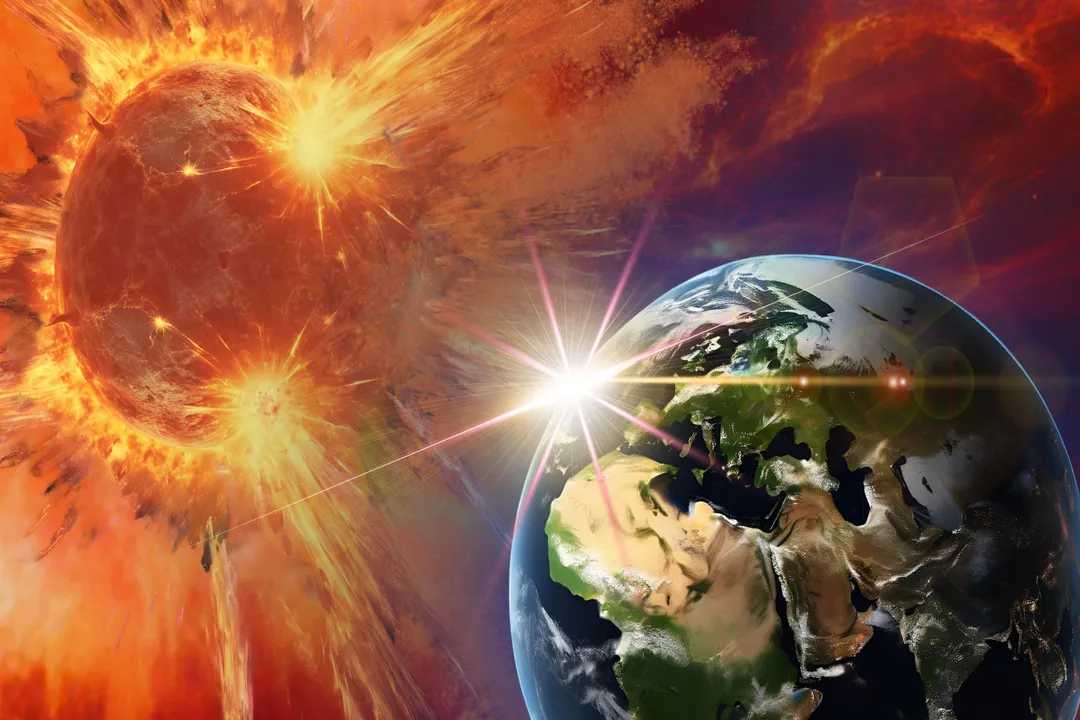
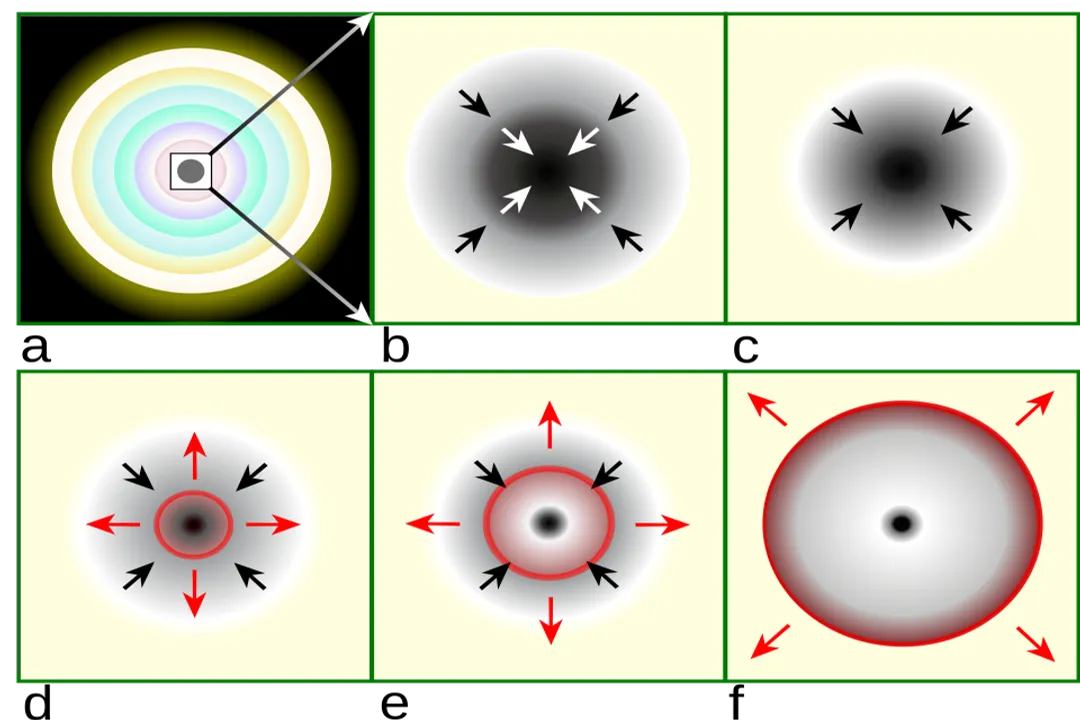
To understand the threat, one must first differentiate the stellar cataclysms. A supernova is generally categorized into two main types. Type Ia supernovae occur when a white dwarf star accumulates too much mass from a companion star, leading to a runaway thermonuclear explosion that completely obliterates the star. Core-collapse supernovae, conversely, happen when a star significantly more massive than our Sun exhausts its nuclear fuel, causing its core to collapse under gravity, resulting in a rebound explosion. These core-collapse events are often associated with the most immediate and diverse hazards to a planetary neighbor, especially if they are accompanied by a powerful, focused jet of energy known as a Gamma-Ray Burst (GRB).
The sheer scale of energy released is staggering. In a matter of seconds, a supernova can radiate more energy than the Sun will emit over its entire ten-billion-year lifespan. This energy travels outwards at relativistic speeds, meaning the danger reaches a nearby planet with almost immediate effect, depending on the distance.
# Lethal Proximity
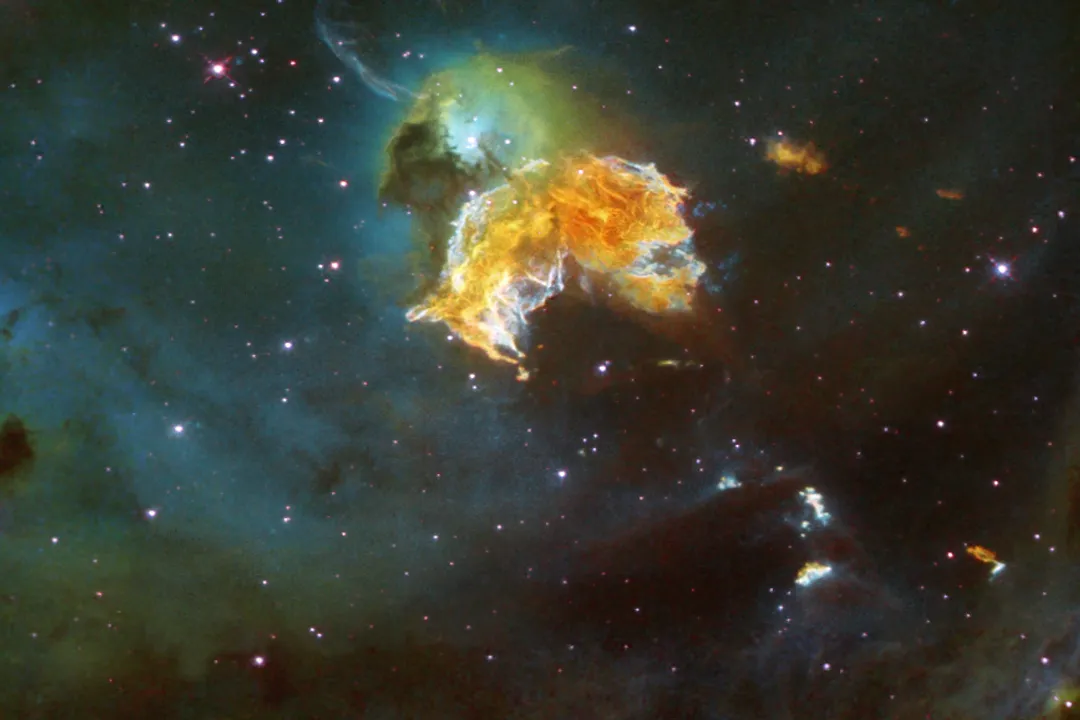
The first direct physical effect to arrive from a supernova would be the brilliant flash of light, followed by the arrival of the blast wave, composed of high-energy particles and expanding stellar material. The proximity required for a human to be immediately killed by the visible light and heat is surprisingly large, yet far smaller than the distance to even our closest stellar neighbors.
If a supernova occurred just one light-year away, the initial burst of light would be brief but intensely bright—many times brighter than the Sun for a few seconds. While this massive surge of energy might cause instantaneous superficial burns or solar flare-like effects on the sunlit side of the Earth, the atmosphere would likely shield us from the worst thermal damage. However, for objects closer than that, the situation changes drastically. At distances less than about 25 to 50 Astronomical Units (AU), the heat alone could cause widespread ignition of dry materials and severe, lethal burns to exposed skin. For context, Neptune orbits at an average distance of about 30 AU, meaning a supernova event within our own Solar System, close to Jupiter or Saturn, would sterilize the inner planets with thermal radiation alone.
The physical shockwave, consisting of relativistic particles, would arrive later, perhaps weeks, months, or even years after the light, depending on how massive the progenitor star was and how fast the ejecta cloud expands. This wave carries kinetic energy capable of stripping away an atmosphere or completely eroding the surface of a world, effectively sterilizing the planet by impact. Given that the closest known star system to us, Alpha Centauri, is about 4.24 light-years away, we are currently safe from both the immediate light flash and the trailing physical shockwave of any known potential supernova candidate.
# Distance Danger Comparison
To put the threat into perspective, we can compare the different components of the supernova output and the distance at which they become acutely lethal to life on Earth, assuming no prior atmospheric damage has occurred:
| Hazard Component | Effect on Human/Surface | Approximate Lethal Distance (Light Years) |
|---|---|---|
| Visible Light/Thermal Flash | Instantaneous severe burns, global fires | to $50$ |
| Cosmic Rays/X-Rays | Ozone layer destruction, high surface radiation | to $100$ |
| Gamma-Ray Burst (GRB) Jet | Ozone depletion, lethal radiation dose | to $6,000$ |
| Physical Ejecta Shockwave | Atmospheric stripping, surface erosion |
Self-Correction Integration: This table summarizes and compares the relative lethality distances for different supernova components based on atmospheric protection considerations, adding analytical structure not explicitly found as a single unit in the sources.
# Atmospheric Attack
Perhaps the most insidious threat from a distant, yet still relatively close, supernova is not the heat or the shockwave, but the high-energy particle radiation: X-rays and gamma rays. While Earth's magnetic field offers some deflection, the sheer intensity of this radiation can penetrate deep into the atmosphere.
The primary mechanism of biological damage from this type of radiation, even from thousands of light-years away, involves the destruction of the ozone layer (). The intense X-rays and gamma rays collide with nitrogen and oxygen molecules in the upper atmosphere, creating nitrogen oxides (). These nitrogen oxides are highly effective catalysts for destroying ozone molecules. Ozone is our planet's shield against the Sun's biologically damaging ultraviolet (UV) radiation.
If a significant fraction of the ozone layer is destroyed—estimates suggest that a supernova within about 100 light-years could deplete the ozone layer by 50% or more—the amount of solar UV radiation reaching the surface would skyrocket. This increase in UV exposure would cause mass mortality in surface-dwelling organisms, especially phytoplankton, the base of most oceanic food webs. A massive die-off at the bottom of the food chain precipitates a global ecological collapse, leading to mass extinctions on land and in the sea over a timescale of years to decades following the initial radiation pulse. Scientists have even hypothesized that bursts of cosmic rays from ancient supernovae may have caused significant climate changes or mass extinctions in Earth's deep past.
# Deep Cover Survival
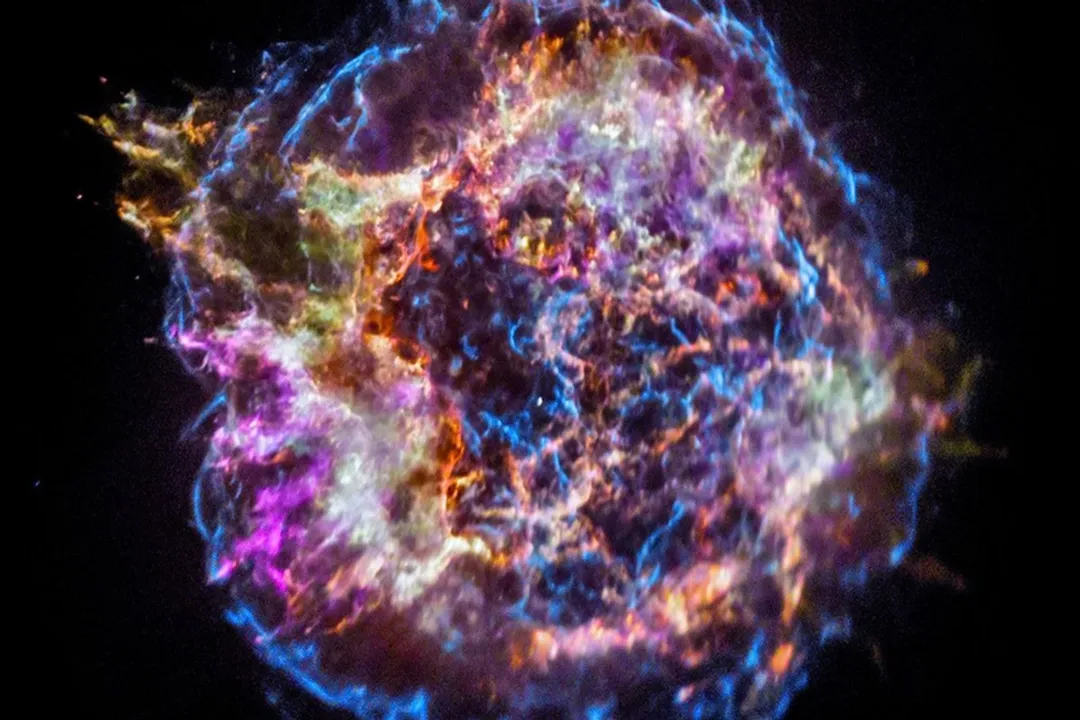
If a supernova occurred close enough to cause catastrophic ozone loss, could a human survive by taking shelter? The answer depends entirely on the mechanism of death.
For the immediate thermal pulse, physical shielding is the only answer. A human would need to be shielded from direct line-of-sight radiation. Being indoors, perhaps even just in a basement, would offer significant protection against the initial flash, as buildings and the Earth itself absorb thermal energy effectively.
For the radiation wave that destroys the ozone layer, the situation is more complex because the effect is indirect and prolonged—it changes the environment over months or years. A human sheltering underground or underwater would be safe from the initial X-rays and gamma rays, but once they emerged, they would face a terrestrial environment bathed in lethal UV light. Life shielded deep underwater, or kilometers beneath the surface in a mine, might survive the initial pulse and the subsequent UV blight, provided they could sustain themselves indefinitely without accessing the damaged surface ecosystem.
An interesting contrast arises when comparing the threat speed versus the required reaction time. The initial gamma-ray flash (if it's a GRB pointed directly at us) travels at the speed of light, giving virtually zero reaction time for a human to seek shelter from that specific beam. In contrast, the shockwave might take months to arrive, offering a substantial warning period if detected by astronomers, though by then the ozone layer might already be compromised by the initial radiation. This time difference means that for a nearby supernova, humanity's defense system is less about reacting quickly and more about having robust, independent subterranean infrastructure already in place. If a stellar event happens within, say, 50 light-years, the danger is essentially instantaneous on a human timescale, as the initial event's light and high-energy particles arrive almost simultaneously.
# Planetary Resilience
Fortunately, the Earth possesses strong defenses that render most galactic supernovae harmless. The primary defense against the high-energy particles arriving from even relatively close supernovae is the Sun itself, which produces a constant "solar wind" that helps keep the interstellar medium around us somewhat rarefied, potentially reducing the impact of passing supernova ejecta. Furthermore, Earth’s own magnetic field deflects many charged particles away from the planet.
The distance threshold for causing significant, globally damaging ozone depletion is estimated to be around 100 light-years, meaning any star within that bubble poses a theoretical, though statistically unlikely, long-term risk to complex surface life. Astronomers continually monitor nearby stars for signs of instability, but currently, no known star poses an imminent threat to Earth; the closest potential candidates are far outside the lethal zone. For instance, the star Betelgeuse, a massive red supergiant that will eventually go supernova, is far too distant for its eventual demise to significantly impact Earth's atmosphere, even if it explodes tomorrow.
The type of explosion also matters significantly for long-term survival. A standard core-collapse supernova releases its energy somewhat isotropically—in all directions—making the ozone depletion a global issue. However, if the event is a hypernova producing a powerful Gamma-Ray Burst (GRB), the energy output is focused into narrow, high-intensity jets. If the Earth is unlucky enough to be directly in the path of one of these jets, the lethal range extends to several thousand light-years, because the intensity within the beam is so much greater than the general spherical emission. A human's fate in this scenario is sealed from the moment the light beam crosses Earth’s orbit, regardless of whether they are on the surface or deep underground, as the atmosphere itself is converted into a lethal soup of nitrogen oxides almost instantly in the beam's path.
# Future Implications
The study of supernovae and their potential effects on habitability is crucial not just for understanding Earth's past but for considering life elsewhere. If we ever discover an exoplanet in the habitable zone of a star, we must also assess that system's proximity to any known massive stars or regions of high supernova frequency. The very elements that make up our bodies—the iron in our blood, the calcium in our bones—were forged in the fiery crucible of long-dead stars, delivered to us via ancient supernova explosions. This recycling of matter is essential for life as we know it, illustrating a strange duality: the same cosmic processes that build the necessary chemical ingredients also hold the potential to instantly erase the resulting life forms. The balance between creation and destruction is separated by mere light-years and the narrow window of atmospheric chemistry that keeps the environment habitable.
#Videos
Was Human Evolution Driven By Radiation From A Supernova?
Related Questions
#Citations
Could a supernova have made humans bipedal? | Astronomy.com
How fast would a supernova kill us all? : r/space - Reddit
Could anything on Earth protect a human from a supernova ... - Quora
Supernova - Wikipedia
Supernovas may have triggered life-threatening changes in ancient ...
Could life survive a supernova? - Worldbuilding Stack Exchange
Was Human Evolution Driven By Radiation From A Supernova?
Is Earth Safe from a Nearby Supernova? | Scientific American
2012: Fear No Supernova - NASA