Could humans reproduce on Mars?
The prospect of humanity establishing a self-sustaining foothold on the Red Planet inevitably brings up one of the most fundamental biological questions: Can humans successfully reproduce there? It is a query that moves the conversation past simple survival on a short-term mission and into the realm of true settlement, but the answer is far from simple, resting precariously on a tightrope strung between advanced engineering and fundamental biology. [2]
# Martian Hazards
The immediate environment of Mars presents a relentless assault on terrestrial biology. The thin atmosphere, lacking the protection Earth benefits from, means the surface is constantly bathed in higher levels of cosmic and solar radiation. [7] This is not merely an inconvenience for a short visit; for a developing fetus or for the creation of viable germ cells, chronic exposure to ionizing radiation poses significant, perhaps insurmountable, risks without aggressive intervention. [2][6]
Furthermore, the lack of a global magnetic field, which strips away much of the incoming high-energy particles before they reach Earth, leaves Mars exposed. [7] While the atmosphere offers some attenuation, it is not enough to guarantee safety for long-term habitation, especially concerning reproductive health where DNA integrity is paramount. [2]
# Gravitational Changes
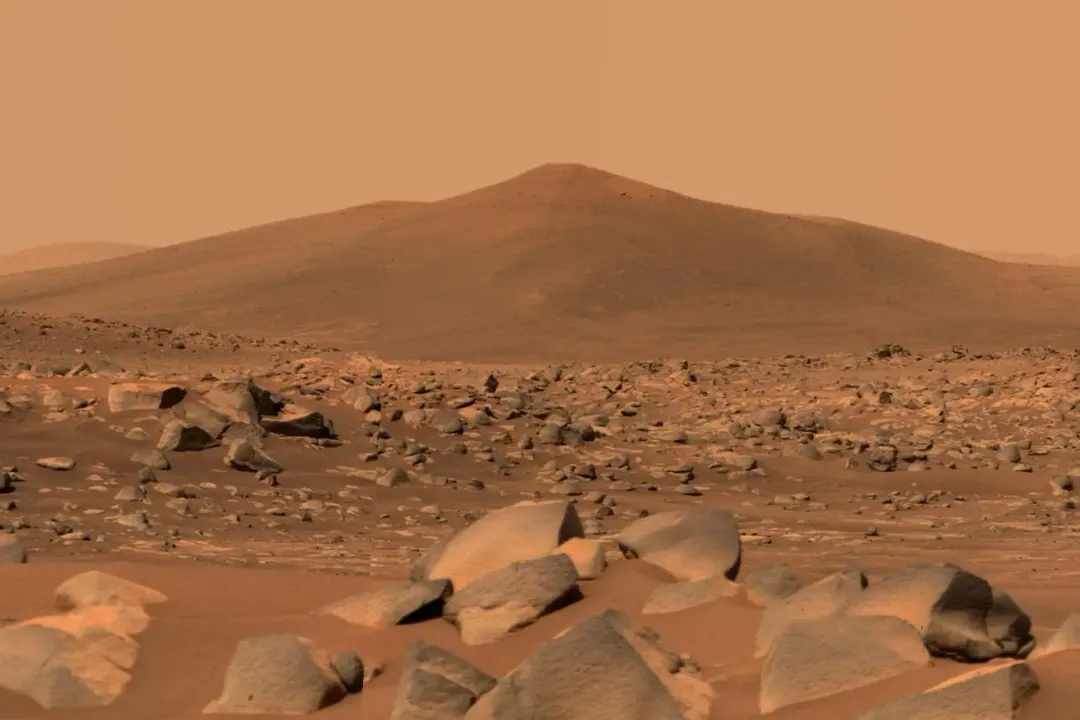
Beyond radiation, the mechanical reality of living on Mars differs profoundly from Earth. Mars possesses only about $38%$ of Earth's gravitational pull. [4] This change in force, while seemingly small compared to the near-weightlessness of orbit, is significant over the course of a nine-month gestation period and the subsequent decades of childhood development. [4]
We have extensive data from astronauts on the International Space Station regarding the effects of microgravity on the human body, noting issues like bone density loss and cardiovascular deconditioning. [4] Extending this to Mars' partial gravity environment introduces a massive variable into developmental biology. We must consider how this reduced force affects the formation of the inner ear, the development of the skeletal structure, and the establishment of circulatory systems calibrated for . We can look at data from long-duration spaceflight analogues. For instance, if human growth hormone secretion, which is influenced by gravity loading, is altered significantly over nine months in low-g, we must consider whether a Martian-born child, never experiencing , would develop skeletal density or cardiovascular systems robust enough for potential future return to Earth, or even just to handle the slightly higher Martian gravity compared to, say, the ISS. [4] This is a multi-generational viability question, not just a single pregnancy query.
# Biological Readiness
The success of reproduction requires more than just a surviving adult; it requires healthy gametes—sperm and eggs—capable of combining and developing normally. [5] Research suggests that radiation exposure can damage the DNA in reproductive cells, reducing fertility or introducing defects into the next generation. [6]
For males, the viability of sperm in a hostile, high-radiation environment outside protective shielding is highly questionable. [5] For females, the long-term effects on ovarian function under chronic stress, low gravity, and potential nutritional deficiencies remain theoretical. [6] Scientists are attempting to model and study these effects, but the reality is that the first human conception on Mars will be an experiment with the highest possible stakes. [2][8]
# Creating Safe Havens
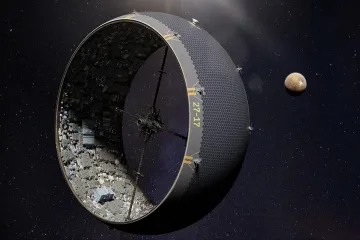
Given the environmental realities, the general scientific consensus suggests that reproduction cannot occur on the Martian surface unprotected. [1] The only way to safely initiate and complete pregnancy is through extensive technological intervention, essentially creating small, mobile Earth environments underground or beneath thick artificial shielding. [1][9]
This points toward the necessity of deep subsurface habitats, perhaps utilizing natural lava tubes or burying structures beneath several meters of regolith, to provide the necessary mass shielding against galactic cosmic rays and solar particle events. [9] These controlled biospheres must not only manage radiation but also maintain perfect atmospheric pressure, gas composition, temperature, and humidity, all while providing a steady supply of Earth-derived nutrition or successfully culturing Martian-grown food sources. [9]
Successful Martian reproduction will likely necessitate a phased approach in habitat design that evolves with the population. Phase One requires small, heavily shielded 'birthing pods' buried under several meters of regolith or rock. Phase Two, once infrastructure is mature, might involve large, pressurized, shielded agricultural domes where the environment (air pressure, gas mix, and radiation shielding) is replicated perfectly, treating the habitat not as a temporary shelter but as a permanent, artificial Earth environment maintained on Mars, which is an engineering challenge orders of magnitude greater than simply keeping astronauts alive for a few years. [9]
# Ethical Considerations
The technical feasibility is only half the battle; the other half involves profound ethical considerations that must be addressed before a pregnancy is even considered. [3] The decision to bring a child into existence on another world is not purely scientific; it is deeply moral and societal. [3]
The ethics revolve around several key areas:
- Risk Acceptance: What level of risk is acceptable for a non-consenting human—the fetus and future child?[3]
- Parental Rights vs. Mission Goals: If the mission requires returning to Earth, are the parents obligated to risk the child’s health in a transition back to ?[3]
- Legal Standing: What laws govern the first generation of Martians? Are they citizens of Earth nations, or do they constitute an entirely new legal jurisdiction?[3]
These discussions about the ethics of human reproduction on Mars suggest that establishing clear governance and agreed-upon safety thresholds is as vital as developing the life support systems themselves. [3]
# The Path Forward
Despite the immense challenges, some research suggests that human procreation could one day happen on the Red Planet, provided specific conditions are met. [8] This hinges on scientists gaining a more precise understanding of the absolute dose limits for human reproduction under the unique Martian radiation profile and gravity regime. [6] While Earth-based analogs and animal studies offer clues, only successful gestation within a perfectly shielded Martian habitat will provide definitive proof. [2][8]
Ultimately, the ability to reproduce on Mars marks the true transition from short-term scientific outpost to a permanent human presence. It forces humanity to design an environment that doesn't just sustain life as we know it, but one that actively nurtures the next generation of off-world humans. [1][9] The current stance acknowledges that while it is theoretically possible with heavy engineering solutions, the practical, biological, and ethical hurdles make it one of the most demanding goals of Martian colonization efforts. [2][3]
Related Questions
#Citations
The only way to safely reproduce on Mars is a massive orbiting ...
Can humans have babies on Mars? It may be harder than you think.
Ethics of human reproduction on Mars
Can You Have a Baby on Mars? - Science | HowStuffWorks
Mars: Humans Able to Reproduce on Planet, Sperm Can Survive for ...
ethical implications of pregnancy on missions to colonize other planets
Life on Mars - Wikipedia
Humans could one day reproduce on Mars, new study finds - The Hill
[PDF] BABY ON BOARD! ROCKETING THE CRADLE TO MARS