Did Mars once had an ocean with sandy beaches?
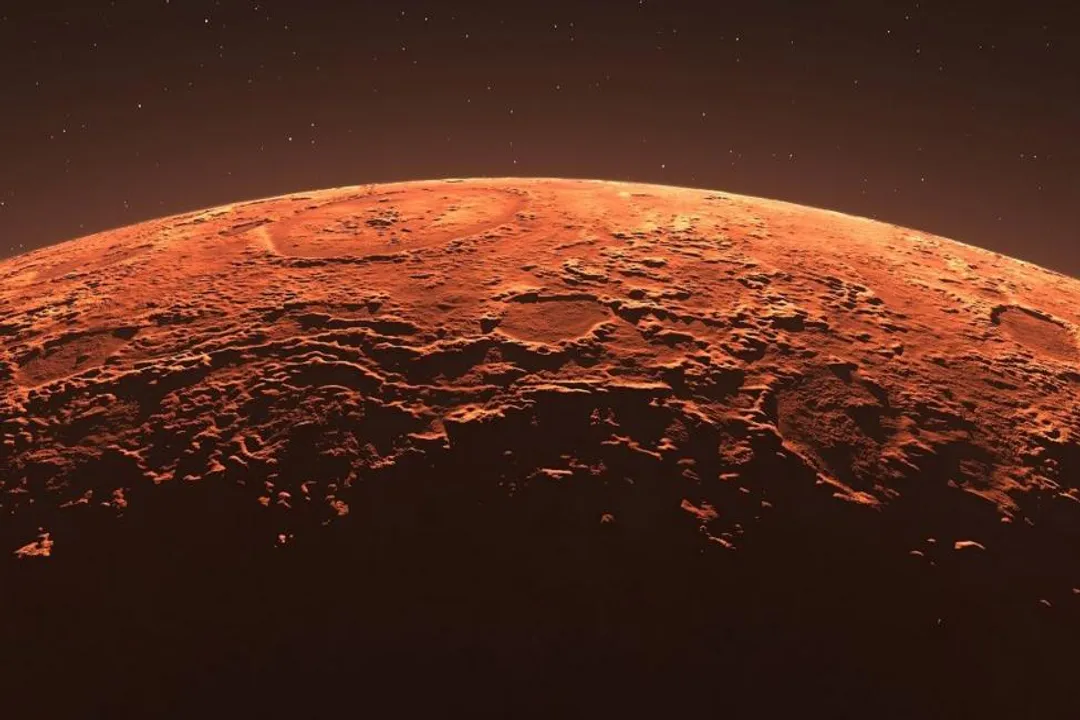
The idea that Mars, our rusty neighbor, might have once hosted vast bodies of liquid water is not new, but recent scientific work has sharpened the image, suggesting a much more dynamic environment than previously imagined, complete with features strikingly similar to Earth’s own coastal regions. [1][4] New analysis of radar data, combined with information gathered by rovers exploring the planet's southern lowlands, strongly suggests that a massive ancient ocean once covered significant portions of the Red Planet, and where that water met the land, it likely left behind sandy shorelines. [1][5] This shifts the discussion from if Mars had water to how that water behaved and for how long.
# Radar Signatures
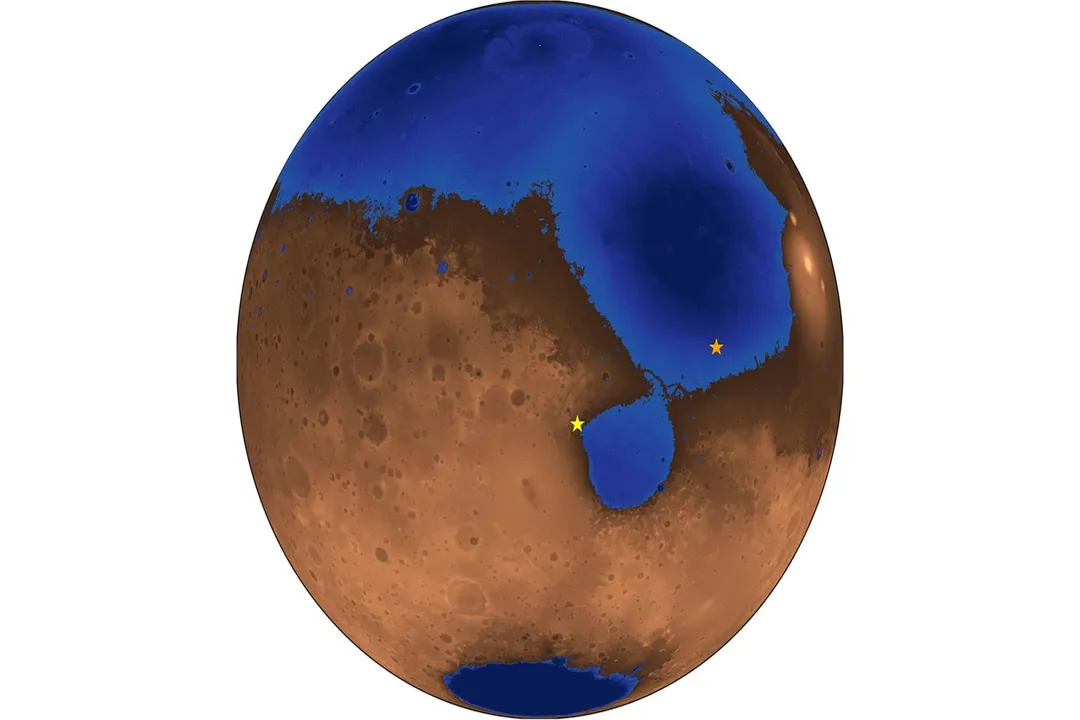
The initial compelling evidence often comes from looking down from orbit, where radar instruments can penetrate the surface layers. [1] Scientists utilized advanced radar data to map subsurface structures across the southern plains of Mars, specifically focusing on the Hellas Planitia region. [5] This data revealed distinct, layered sediments and sedimentary features that are characteristic of wave action and coastal processes here on Earth. [1][3] Radar is particularly adept at identifying boundaries between different materials, and the patterns observed were interpreted as ancient beach deposits, indicating water stood at those levels long enough to sort and deposit sediment into recognizable shoreline patterns. [1] These subsurface structures paint a picture of sustained liquid water interacting with the Martian crust, rather than just transient flows or ice. [3] One key observation involved identifying layered deposits consistent with successive shorelines that retreated over time as the water level dropped. [5]
# Coastal Features
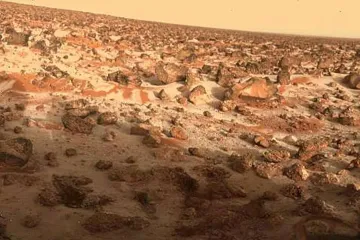
What exactly constitutes a "beach" on Mars? It’s a shoreline formed by the movement of sand or sediment driven by waves breaking against a landmass. [7] The evidence points toward the existence of these wave-formed ripples and sediments across the ancient coastal zone of the Martian ocean. [8] This implies that Mars experienced weather systems powerful enough to generate significant waves, capable of transporting particles of rock and mineral across the landscape. [7] Researchers studying the data suggest that these features, observed in areas like the southern hemisphere plains, are consistent with terrestrial beaches formed by wave energy. [5] Comparing this to Earth’s processes, the sheer scale suggested by the orbital data implies an ocean that covered a vast area, potentially reaching depths similar to Earth’s major bodies of water, though this is an inference based on the extent of the observed deposits. [1][4] It is fascinating to consider that the same physical forces shaping our coasts—wind driving waves across a surface of liquid—were once active on a world now perceived as arid and frozen. [7]
An interesting point for geologists studying planetary evolution is the apparent preservation of these sedimentary layers. On Earth, tectonic activity constantly recycles the crust, erasing features older than a few hundred million years in many places. Mars, being geologically quieter, has acted as a spectacular time capsule, allowing evidence of these ancient processes to remain accessible just beneath the current regolith. [1]
# Rover Confirmation
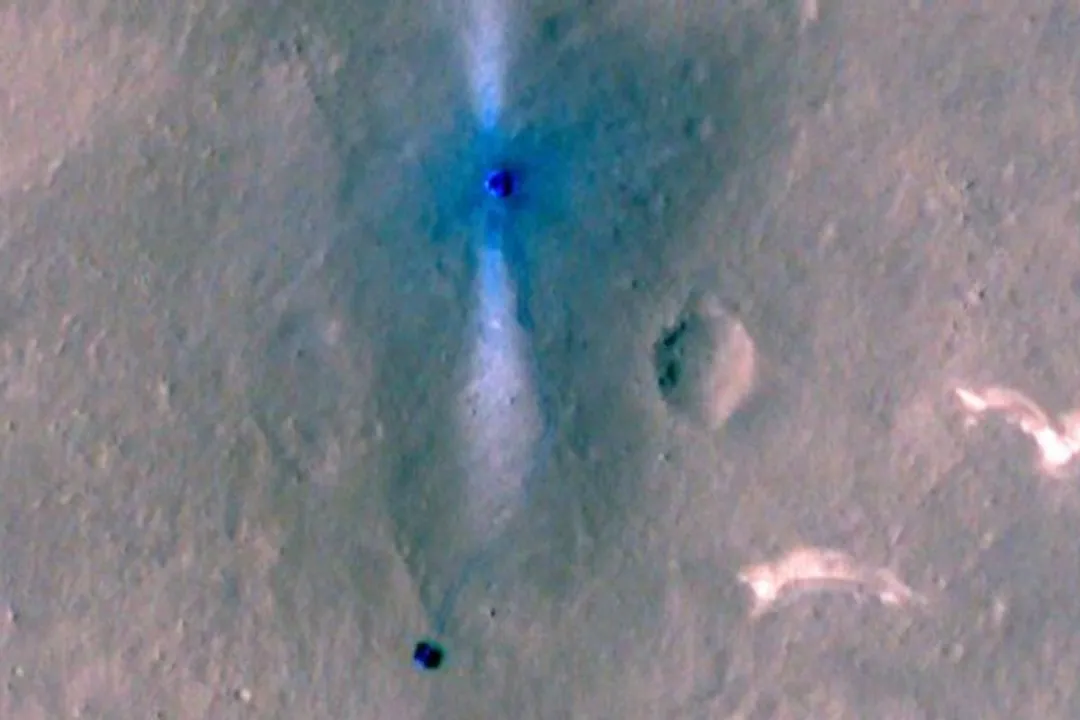
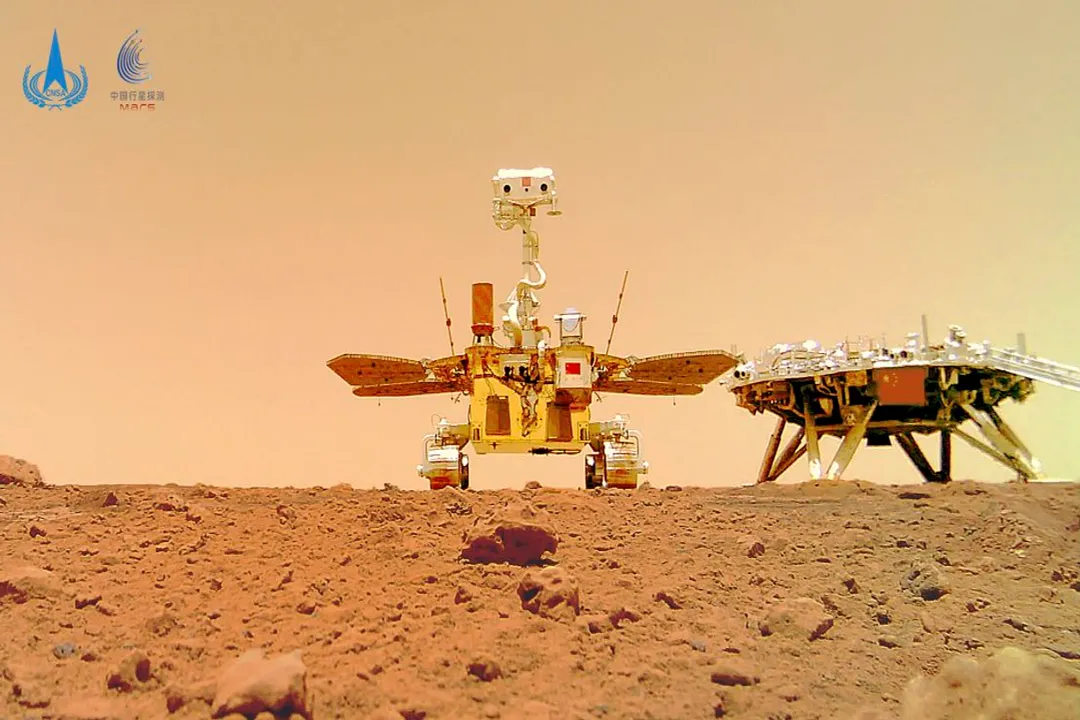
While orbital radar provides the large-scale context, robotic explorers on the surface provide the ground-truth verification. [3][5] Missions involving rovers, such as the one analyzing the Hellas impact basin area, have been crucial in confirming the sedimentary nature of these ancient coastlines. [5] The rover data, often involving detailed imaging and compositional analysis of the rocks, supports the interpretation of water-formed sedimentary structures. [3] Imagine a rover driving across terrain that, billions of years ago, might have had wet sand squishing under the tires of an ancient wave; the rover is now examining the petrified remains of that environment. [5][9] The consistency between the distant radar measurements and the local, close-up mineralogy observed by rovers lends high authority to the ocean hypothesis. [4] For instance, if the radar indicated a shoreline, the rover might find specific hydrated minerals or sedimentary layering that only form in the presence of standing water for extended periods. [3]
# Ancient Conditions
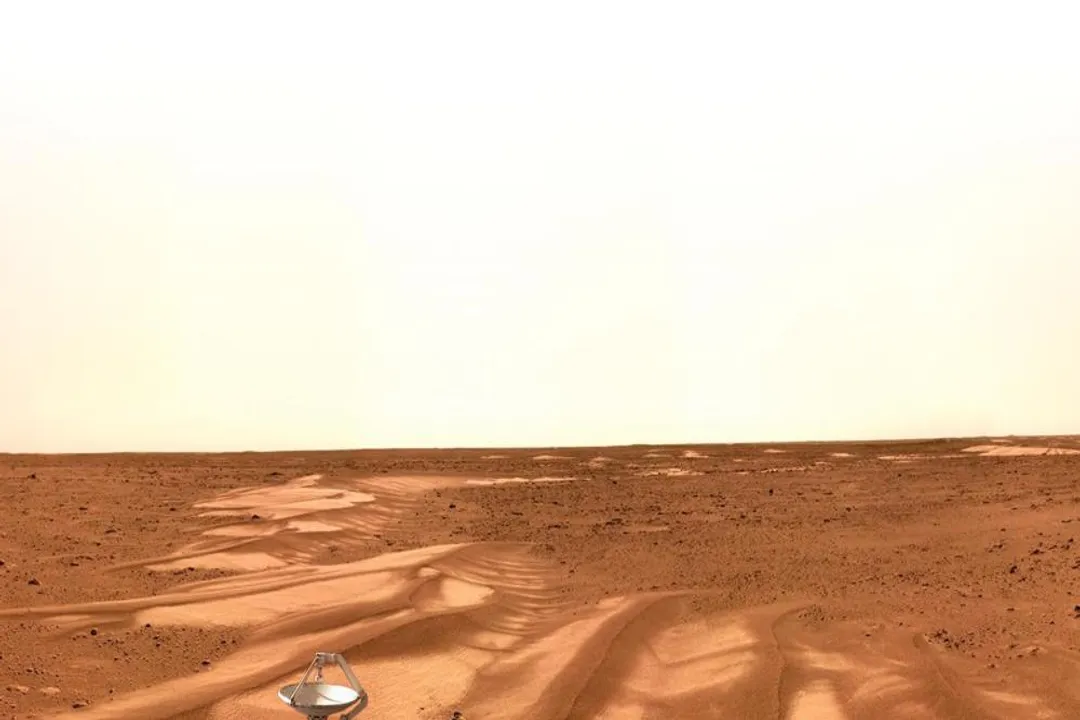
Despite the evocative image of a Martian beach, the reality of sunbathing there is firmly in the realm of science fiction. [6] While the planet clearly had liquid water, the accompanying atmosphere would have been drastically different from Earth’s today. [4] The consensus points to an ancient Mars that was much colder and possessed a very thin atmosphere compared to ours. [6] This thin atmosphere meant that any exposed liquid water would likely have been subject to rapid evaporation or freezing, and the surface was subject to high levels of radiation from space due to the lack of a strong global magnetic field or thick atmospheric shield. [6][9] Therefore, while the geomorphology (the shape of the land) suggests beaches, the environment would have been extremely inhospitable by terrestrial standards. [6] This leads to an important distinction: the existence of liquid water for long periods capable of shaping coastlines does not automatically imply a warm, Earth-like climate capable of supporting life as we know it. [4]
# Implications for Water History
The identification of these widespread shorelines forces a recalibration of our models for early Martian climate and hydrology. [1] If a massive ocean existed, it implies a significant, sustained reservoir of water—perhaps brought by comets or released from the interior—that was stable on the surface for geological timescales. [5] This abundance of water dramatically increases the window of time during which microbial life could have potentially arisen, provided other necessary ingredients were present. [4] Scientists are now trying to reconcile how Mars managed to hold onto such an ocean; did it have a thicker atmosphere that has since been stripped away? Or was the water episodically liquid, freezing over for long stretches before thawing again?[2] The extent of the sedimentary evidence suggests the water phase was long enough to create features that rival some of Earth's major geological formations. [1][5]
Considering the logistical challenges of future missions, these identified ancient coastlines become prime targets for sample return efforts. If Martian life ever existed, the interface between a vast body of water and ancient landmasses—the beach itself—is a zone of high chemical and biological potential, analogous to where we look for biosignatures on Earth. Pinpointing these radar-identified, rover-verified beach zones significantly narrows the search area for the most scientifically valuable rocks to bring back to Earth for definitive analysis. [4] This translates directly into more efficient, higher-yield exploration strategies in the coming decades.
# Future Exploration Focus
The scientific community is now focused on leveraging this new data to direct upcoming missions, which aim to understand the transition from a wet Mars to the cold desert we see today. [3] The discovery effectively provides a geological roadmap, highlighting where to look for the most ancient and potentially life-bearing material. [4] This ongoing work, blending remote sensing from orbiters with in-situ analysis from surface assets, exemplifies how planetary science builds knowledge layer by layer. [1][3] For general readers, it confirms a profound truth: Mars was not always the static, barren world pictured in older science fiction; it possessed dynamic processes, oceans, and perhaps even tides. [9]
The precise identification of these sedimentary structures allows scientists to test hypotheses about the planet's magnetic field history and atmospheric loss rates with greater certainty. [6] If the ocean persisted for a very long time, it requires a climate model that kept temperatures above freezing, which is a major hurdle for current atmospheric models. [4] The evidence of beaches, formed by wave action, demands a mechanism for sustaining liquid water across large geographical areas, reinforcing the need for a complete reassessment of the planet's early geological era. [1][5] Understanding the fate of that water—whether it was locked away as subsurface ice or entirely lost to space—remains one of the paramount questions driving Martian research. [9]
It is worth noting the immense scale difference when considering these features relative to Earth's features. If we assume the volume of water required to create such vast, recognizable shorelines was equivalent to Earth's Arctic Ocean, the atmospheric pressure required to keep it liquid would have needed to be substantially greater than what current models typically estimate for that era. This discrepancy suggests that the current understanding of Mars’s atmospheric evolution might require a significant revision—perhaps an even more rapid and catastrophic loss of atmosphere than previously calculated, or an even warmer initial state, to sustain such a large body of water long enough for wave action to sculpt visible beaches. [1][6]
Related Questions
#Citations
Mars once had an ocean with sandy beaches, researchers say
Mars once had an ocean with sandy beaches, researchers say
Mars had ocean, "vacation-style" beaches, study suggests - Axios
'Vacation-style' beaches may have existed on ancient Mars - CNN
Gulf of Mars: Rover finds evidence of 'vacation-style' beaches on Mars
Did Mars Have an Ocean? Scientists Find New Clues
New evidence suggests Mars once had 'vacation-style beaches'
Ancient Martian Ocean Once Had Sandy Beaches Well Suited To ...
Mars was once home to sandy beaches like Earth, new study suggests