Could fire exist on Mars?
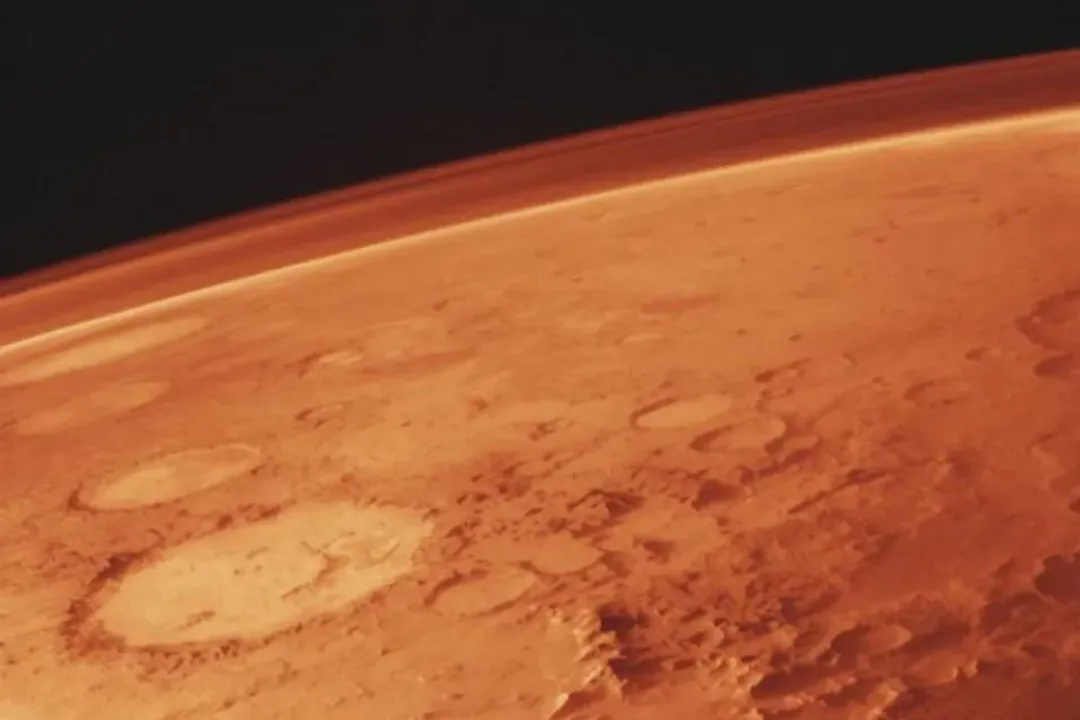
The desolate, cold expanse of the Red Planet often sparks the imagination, leading people to wonder about the simple, yet fundamental, presence of fire. While fiction frequently portrays Martian settlements utilizing open flames, the reality of combustion on another world presents significant scientific hurdles related to the atmosphere and physical conditions. [1][2] For fire to exist anywhere, it requires three core elements: fuel, heat, and an oxidizer, which is almost always oxygen. [3][4][9]
# Atmospheric Barrier
The most immediate and substantial barrier to fire on the Martian surface is the composition and density of its atmosphere. [2][4] The air on Mars is incredibly thin compared to Earth's, and critically, it lacks the necessary oxygen concentration. [2] The atmosphere is predominantly carbon dioxide, making up about $95%$ of the scant air available. [1][9] Oxygen content is alarmingly low, hovering around a mere $0.13%$. [9] This is a far cry from the approximately $21%$ oxygen needed to sustain common terrestrial fires. [9]
The challenge isn't just the percentage of oxygen; it's the partial pressure of oxygen available to participate in the chemical reaction that defines combustion. [4] Even if one could somehow introduce a perfectly prepared, oxygen-rich fuel source directly onto the Martian surface, the near-vacuum environment means the oxidant molecules are too far apart and too sparse to sustain a rapid, propagating chain reaction required for an open flame. To initiate even a small, flickering flame on the surface without atmospheric modification, the partial pressure of oxygen would need to be raised dramatically, or the fuel source would need to be an extraordinarily reactive chemical, essentially a pre-packaged explosive rather than a slow-burning material. [9]
# Physics of Ignition
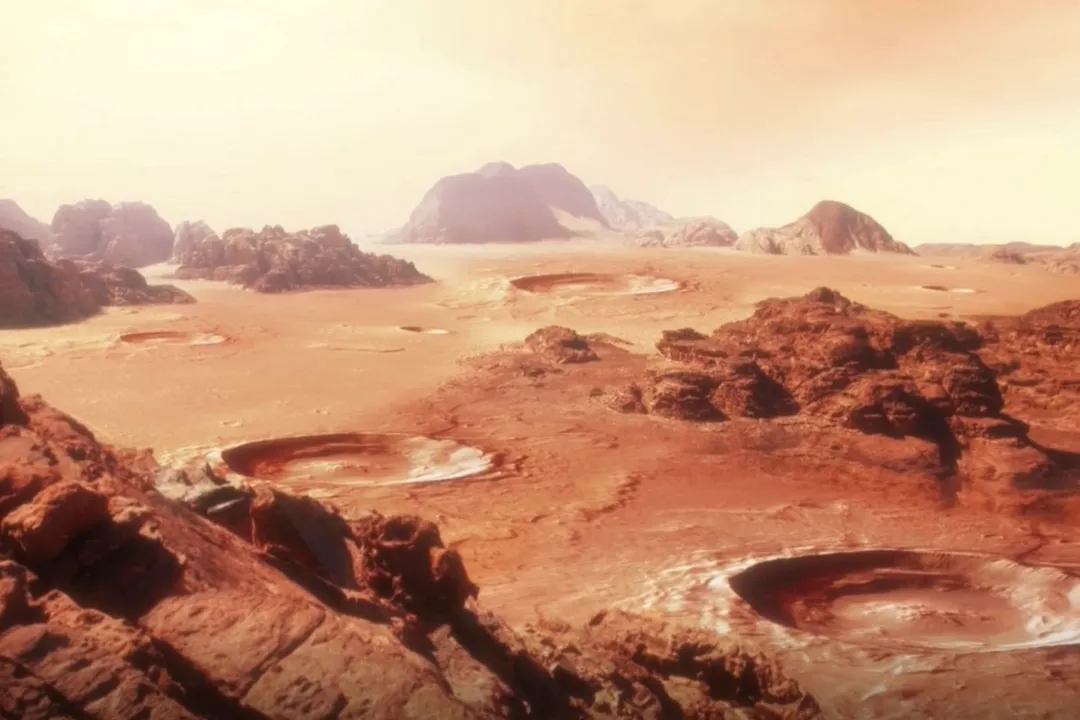
Beyond the chemical constraints, the physical environment actively fights against ignition. [4] Mars is exceptionally cold. Surface temperatures frequently plunge far below F (about C). [4] While some reactions can occur at low temperatures, most common fuels require a significant input of energy to reach their ignition point, a threshold made harder to cross when the ambient environment is leaching heat away at an incredible rate. [2] The atmospheric pressure itself is also a limiting factor. Mars' surface pressure is less than $1%$ of Earth's sea-level pressure. [4] Lower pressure inherently makes it harder for a combustion reaction to propagate effectively, as fewer oxidizing molecules are available in the reaction zone at any given moment.
Consider the familiar scenario of lighting a campfire or even a matchstick here on Earth. The act relies on convection—hot gases rising, drawing in fresh, oxygen-laden air from the sides, and transferring heat to unburnt fuel. In the near-vacuum of Mars, convection as we know it would be severely muted, if not absent. [4] Any heat generated would primarily dissipate through radiation, making it difficult to sustain the necessary positive feedback loop for a continuing flame. It would be akin to trying to keep a tiny pilot light burning in a strong vacuum chamber where heat transfer relies almost entirely on line-of-sight transfer to cooler surfaces, rather than efficient mixing of gases. [9]
# Natural Phenomena
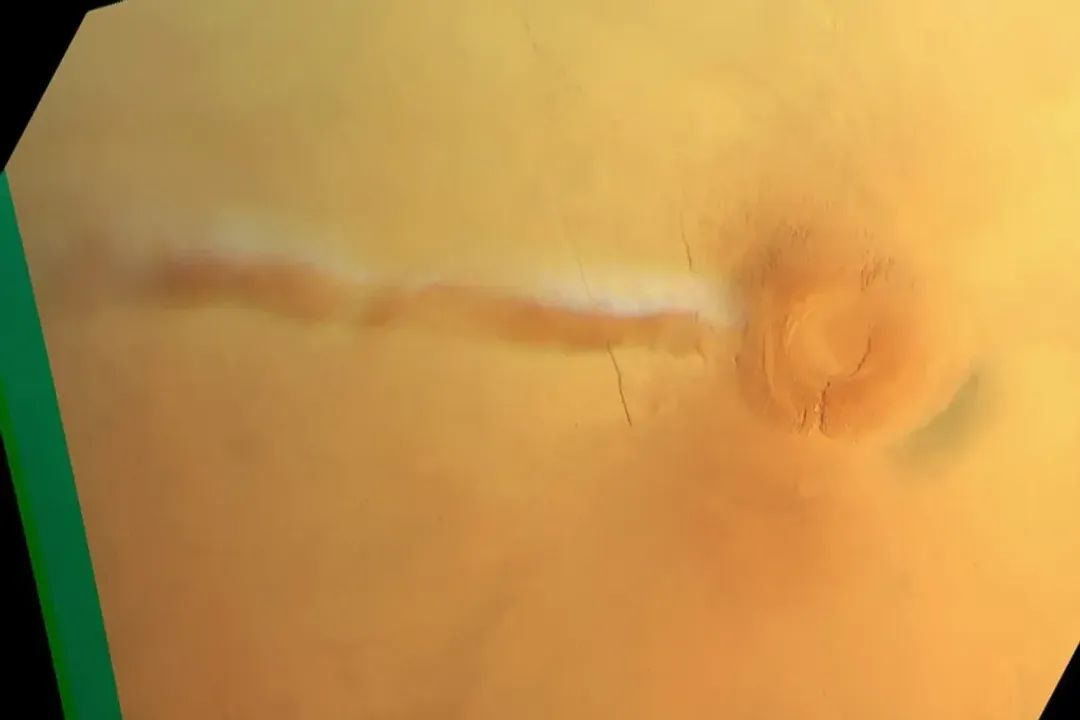
When observers look toward Mars, they sometimes see phenomena that might be mistaken for natural fires or smoke plumes. One intriguing observation involves plumes seen in the thin atmosphere. [5] These features, which might appear dark or smokey from a distance, are not necessarily evidence of combustion, but rather atmospheric dynamics. [5] They are often linked to dust storms or localized weather patterns swirling fine particulate matter high into the atmosphere. [5] The material causing the "smoke" is likely dust, not ash from burning organic matter.
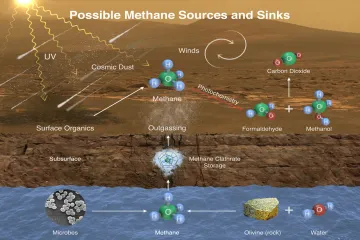
Another potential source of momentary, intense thermal events comes from incoming space debris. Studies suggest that Mars is constantly bombarded by space rocks, leading to a new class of seismic events on the planet. [10] When a meteoroid impacts the surface, it generates intense, localized heat and shockwaves. This is, in effect, a very brief, non-sustained "fire" event, localized entirely at the point of impact, and it is over almost instantly as the debris vaporizes or breaks apart, leaving no residue of a sustained blaze. [10] Furthermore, there has been scientific discussion regarding transient methane plumes detected in the atmosphere, which can sometimes be associated with geological processes or even microbial life, but these are distinct from macroscopic, visible fire. [8]
# Controlled Combustion
If humanity were to establish a permanent, pressurized habitat on Mars, the situation changes entirely, but the inherent risks amplify dramatically. [7] To grow food, generate energy, or even just breathe, settlers would need to create Earth-like internal environments, likely involving pressurized modules filled with a gas mix that mimics terrestrial air, complete with ample oxygen. [7] In this scenario, fire could exist, but it would be an extreme hazard. [7]
Fire safety engineers preparing for off-world habitation emphasize that a fire within a sealed habitat could be catastrophic very quickly. [7] In a structure pressurized to Earth-like levels, a small ignition source—a frayed wire, a short circuit, or an equipment malfunction—could rapidly consume the available fuel (furniture, insulation, equipment) because the atmosphere is now oxygen-rich. [7] The problem shifts from "Can fire start?" to "How fast will fire destroy the habitat?". [7] This is why astronauts on the International Space Station (ISS) have conducted experiments on fire behavior in microgravity; understanding how flames behave without buoyancy-driven convection is vital for designing effective suppression systems for any off-world setting. [3]
One key difference designers must account for is the low-pressure physics mentioned earlier. If a habitat were intentionally kept at a much lower pressure than Earth's to save structural material, the flame might look different—perhaps smaller and dimmer, struggling to spread heat effectively, even with $21%$ oxygen concentration. [9] However, for maximum crew comfort and standard equipment compatibility, high pressure is likely the goal, which means a fast-burning, dangerous fire. [7] The essential takeaway for any Martian base is that fire is an engineering problem to be contained, not a natural element to be taken for granted. [7]
A thought experiment here involves energy density. On Earth, burning a log releases a massive amount of heat that is easily transferred to surrounding fuel via air movement. On Mars, even inside a habitat, an astronaut trying to use a small, controlled flame for signaling or heating might notice the flame is surprisingly "cold" to the touch a short distance away compared to a terrestrial flame of the same visual size, because the low atmospheric density hinders the efficient transfer of thermal energy via conduction and convection, even when oxygen is present. [9] This reduced heat transfer means that while the fire might burn, it might be less effective at spreading to new fuel unless that fuel is in direct contact with the flames.
This leads to a further consideration for resource management in an early base. If settlers had to rely on burning Martian resources—perhaps burning processed methane or even Martian regolith components if a chemical reaction could be induced—they would need to know the minimum effective oxygen concentration to maintain a usable flame for tasks like heating rock samples versus welding metal. [9] A successful long-term outpost wouldn't aim for Earth-normal $21%$ oxygen for all systems; they would likely tune the atmosphere to the lowest safe oxygen level that still permits necessary processes, balancing fire risk against life support consumption. If a habitat only needed an $18%$ oxygen level to keep the crew healthy, reducing it slightly could offer a minor safety buffer against ignition spreading, though any fire remains a major threat. [7]
# Fiction Versus Reality
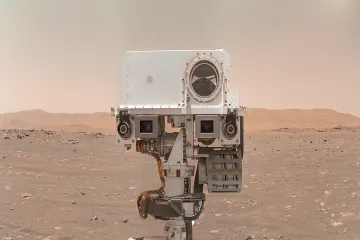
It is useful to note that the visual depiction of fire on Mars is common in science fiction, often used to signal a populated or terraformed environment. [1] For example, one popular television series features scenes where fire burns brightly on the Martian surface, implying an atmosphere that can support combustion. [1] This narrative shorthand is understandable—fire is a fundamental symbol of technology and habitation—but it stands in stark contrast to the harsh physical data gathered by robotic explorers. [4] The few examples of Mars models, like the one displayed at the Exploratorium, aim to capture the visual majesty of the landscape, but they cannot convey the silent, airless reality where a match would simply fail to ignite. [4] The reality is that an unprotected flame would be snuffed out instantly by the low pressure and lack of oxidizer, turning the act of trying to create fire into an exercise in engineering complex life support systems just to achieve a simple spark. [2]
#Videos
Curiosity Rover Captures Evidence Of Fire Erupting On Mars
Related Questions
#Citations
How come there were fire burning in Mars when they did ... - Reddit
Is it possible to have an open fire on Mars? - Quora
Can fire occur on Mars? - Facebook
'Super Science with Drew': Here's what it takes for humans to ...
Why Does Mars Appear To Have Smoke Plumes In Its Atmosphere?
Curiosity Rover Captures Evidence Of Fire Erupting On Mars
Fires on Mars? How to Uphold Fire Safety Off-Planet - Coopers Fire
Recent Activity on Mars: Fire and Ice - PSRD
28-Fire: Does a planet need life for fire to burn?
Mars under daily fire from space rocks, shows study on new class of ...