combustion articles
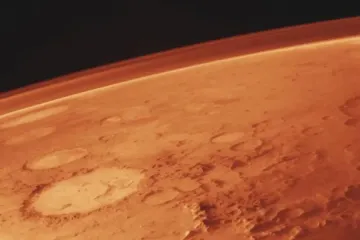
What element makes up approximately 95% of Mars' scant atmosphere?
How does Mars' ambient temperature frequently compare to the ignition threshold requirement?
What physical process that drives terrestrial fire propagation is severely muted on Mars?
What is the essential requirement for combustion that is primarily missing due to Mars' low oxygen partial pressure?
What phenomena are often mistaken for natural fires or smoke plumes on Mars?
How does a meteoroid impact resemble, yet fundamentally differ from, sustained fire on Mars?
What is the primary consequence of fire inside a sealed, pressurized Martian habitat?
What unique aspect of Martian fire physics might make a visible flame appear surprisingly 'cold' nearby?
Why do astronauts conduct fire behavior experiments on the International Space Station (ISS)?
What is a likely engineering goal for oxygen concentration in a long-term, optimized Martian outpost?
What core element is often cited as the fundamental requirement for fire, alongside fuel and heat?
What characteristic of Mars' surface pressure restricts effective combustion propagation?
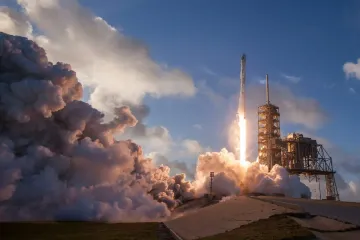
What is the main environmental concern when black carbon (soot) from kerosene is released into the stratosphere?
What chemical characteristic makes methane combustion generally considered cleaner than kerosene (RP-1) combustion regarding upper atmosphere pollution?
Despite producing almost exclusively water vapor, what specific environmental issue is associated with injecting large quantities of $ ext{LOX}/ ext{H}_2$ exhaust directly into the stratosphere or mesosphere?
What acute chemical pollutants are released by solid rocket boosters using ammonium perchlorate composite propellant (APCP)?
Why do emissions deposited in the stratosphere pose a greater global threat than those released in the troposphere?
Regarding the mass of exhaust produced for the same thrust, how does the $ ext{CO}_2$ output of a $ ext{LOX}/ ext{Methane}$ engine compare to a $ ext{LOX}/ ext{Kerosene}$ engine?
Why might the instantaneous environmental disruption from a solid rocket burn be considered the most aggressive of common propulsion types?
Defining rocket fuel cleanliness ultimately depends on prioritizing which of the following environmental metrics?
What is the primary purpose of the large amounts of water used at the launch pad during large launch operations?
What crucial element, when multiplied by the type of fuel used, determines the true long-term environmental impact of rocketry?
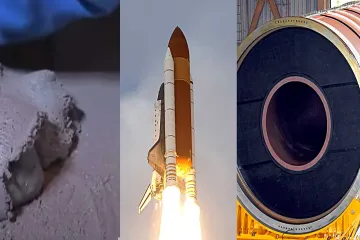
What is the primary operational disadvantage of solid rocket motors once their ignition sequence starts?
If an unintended crack develops in the propellant grain of a solid motor during flight, what is the likely catastrophic result?
What inherent trade-off allows solid motors to achieve mechanical simplicity?
What major challenge does the use of cryogenic fuels like liquid hydrogen ($ ext{LH}_2$) impose on ground operations?
What performance penalty results from launching cryogenic liquid systems after an unexpected delay?
What critical components are essential for liquid-fueled engines but unnecessary for solid rocket motors?
What specific danger do hypergolic propellants present during servicing of a launch vehicle?
Beyond operational control, what challenge do aging solid fuels present regarding mission predictability?
Why does the failure of auxiliary components in a liquid engine often lead to total mission failure?
What overall trade-off defines the selection process for rocket propellants?