How does Mars' ambient temperature frequently compare to the ignition threshold requirement?
Answer
Surface temperatures often plunge far below $-100^\circ$F (about $-73^\circ$C).
Mars is characterized by extreme cold, with surface temperatures frequently dropping well beneath $-100^\circ$F, equivalent to about $-73^\circ$C. While some chemical reactions can proceed at low temperatures, most common fuels require a substantial input of energy to reach their ignition point. The ambient environment actively works against ignition because the surrounding cold leaches heat away from any potential reaction zone at an incredible rate, making it significantly harder to achieve and sustain the necessary thermal threshold for fire propagation.
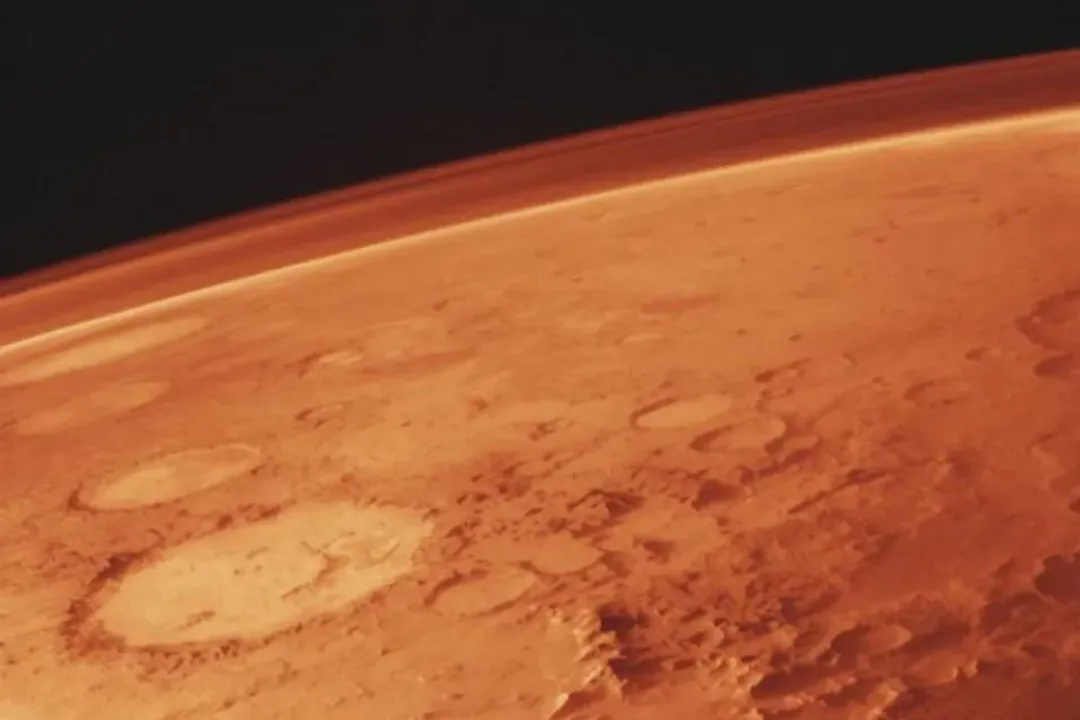
#Videos
Curiosity Rover Captures Evidence Of Fire Erupting On Mars
Related Questions
What element makes up approximately 95% of Mars' scant atmosphere?How does Mars' ambient temperature frequently compare to the ignition threshold requirement?What physical process that drives terrestrial fire propagation is severely muted on Mars?What is the essential requirement for combustion that is primarily missing due to Mars' low oxygen partial pressure?What phenomena are often mistaken for natural fires or smoke plumes on Mars?How does a meteoroid impact resemble, yet fundamentally differ from, sustained fire on Mars?What is the primary consequence of fire inside a sealed, pressurized Martian habitat?What unique aspect of Martian fire physics might make a visible flame appear surprisingly 'cold' nearby?Why do astronauts conduct fire behavior experiments on the International Space Station (ISS)?What is a likely engineering goal for oxygen concentration in a long-term, optimized Martian outpost?What core element is often cited as the fundamental requirement for fire, alongside fuel and heat?What characteristic of Mars' surface pressure restricts effective combustion propagation?