Could life exist on asteroids?
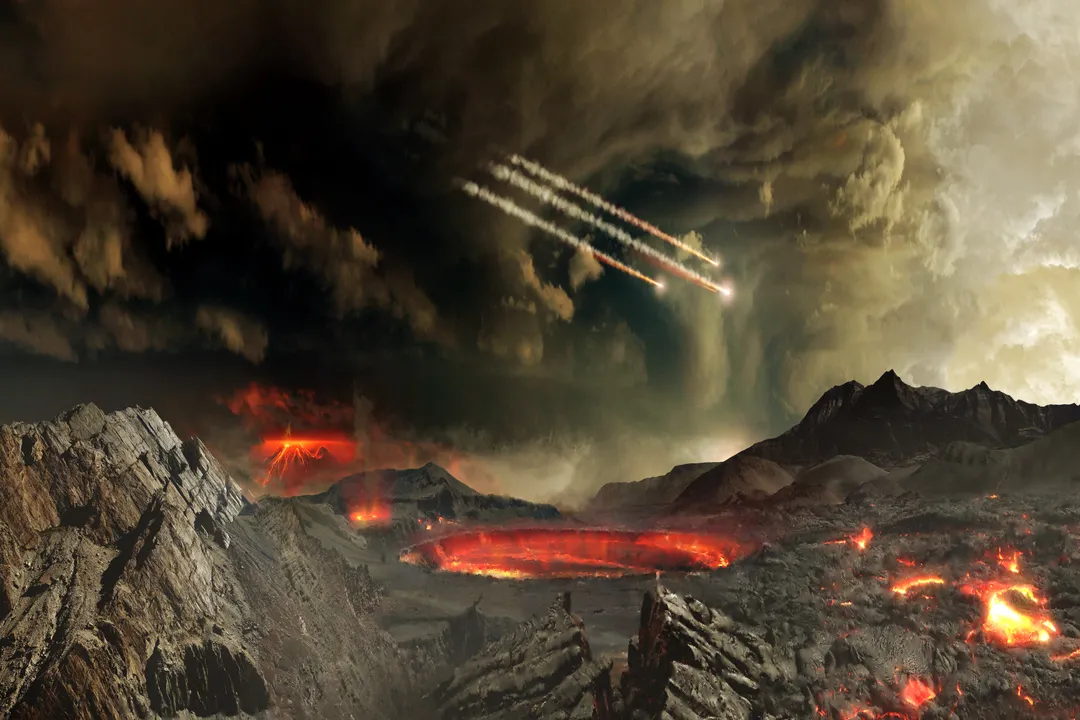
The idea that small, airless rocks tumbling through space might harbor life, or even be the cosmic delivery truck that seeded our own biology, moves the topic from pure science fiction into serious scientific discussion. While the surface of most asteroids is an incredibly hostile environment—bombarded by radiation, enduring wild temperature swings, and existing in a near-perfect vacuum—the question isn't just about current inhabitants. It’s about potential and past. Asteroids and their cousin bodies, comets, are central players in the story of how life began on Earth, and they might hold clues to its existence elsewhere. [2][4][7]
# Delivery System
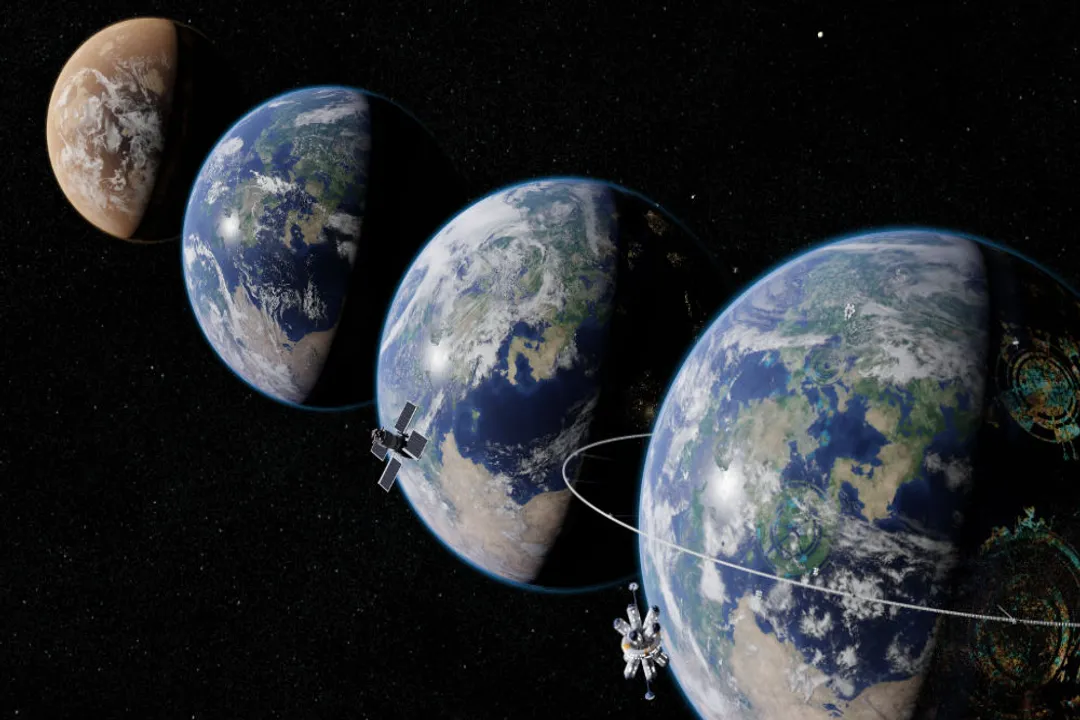
One of the most compelling arguments linking asteroids to biology isn't that they host life, but that they brought the crucial starting materials for it. Early Earth was a very different place, and assembling the complex organic molecules necessary for life from scratch was a monumental chemical task. [2] Asteroids, particularly carbonaceous chondrites, are remarkably rich in these very building blocks. Studies have confirmed the presence of amino acids—the essential components of proteins—within these ancient space rocks. [4][7] The Murchison meteorite, which fell in Australia in 1969, is a famous example, revealing a surprisingly diverse array of organic compounds, suggesting that the chemical processes leading to life's components are widespread across the solar system. [4]
This delivery hypothesis suggests a scenario where asteroids acted as cosmic couriers. As they impacted the early, wet Earth, they seeded the primordial oceans and surfaces with complex organic chemistry that otherwise might have taken eons longer to accumulate naturally. [3][7] This deposition of materials provided a significant head start, making the transition from simple chemistry to self-replicating life more probable sooner in Earth's history. [2] Harvard researchers have suggested that asteroids might play this key role in spreading the necessary ingredients for life both within our solar system and to nascent planets elsewhere. [3]
# Harsh Existence
Now, shifting focus to the body itself: could life survive on an asteroid today? The surface conditions are profoundly uninviting for anything remotely similar to terrestrial life. An asteroid lacks a protective atmosphere, meaning surface materials are constantly exposed to unfiltered cosmic rays and solar radiation, which can rapidly break down complex organic molecules—the very ones they might be delivering. [1][5]
Temperatures fluctuate drastically, soaring to hundreds of degrees in sunlight and plummeting to hundreds of degrees below zero in shadow. [5] This extreme thermal cycling, combined with the vacuum of space, makes maintaining liquid water or the structural integrity of cellular components nearly impossible on the surface for any extended period. [1] For life to exist actively on the surface, it would require an almost unimaginable level of radiation resistance and rapid energy capture capabilities, far exceeding what we currently observe in Earth-based extremophiles that thrive only when protected, perhaps beneath a few meters of ice or rock. [5]
This contrast between the richness of materials found within meteorites and the sterilization effect of the surface environment creates an important chemical distinction. The materials delivered to Earth were likely protected inside the asteroid until impact, shielded by the bulk of the rock, much like how we might find preserved artifacts inside a sealed tomb rather than scattered on the outside. [4]
Here is a brief comparison of surface versus potential subsurface conditions on a small asteroid:
| Feature | Surface Conditions | Subsurface Conditions (a few meters down) | Implications for Life |
|---|---|---|---|
| Radiation | Intense, unfiltered cosmic and solar | Heavily attenuated by overlying rock | Surface lethal; subsurface potentially protective [1] |
| Temperature | Extreme diurnal swings (e.g., to ) | Much more stable, likely near freezing point of volatiles | Thermal protection is a major hurdle [5] |
| Vacuum | Near-perfect vacuum | Pressurized by trapped gases/ices | Vacuum causes outgassing and desiccation |
| Water | None, immediately vaporized | Possible existence as ice or brine pockets | Water is the prerequisite for known biochemistry [5] |
# Subsurface Shelters
If surface life is effectively ruled out, the most plausible environment for extant life—if any exists—would be beneath the surface. [1][5] The same rocky material that makes the surface inhospitable acts as a shield underground. A few meters of regolith could offer significant protection from cosmic radiation and stabilize temperatures, though thermal inertia remains an issue for bodies smaller than about 10 kilometers in diameter. [1][5]
One theoretical avenue for sustaining a microbial ecosystem involves hydrothermal activity or the presence of ancient brines. Some asteroids, particularly those classified as C-type or B-type, contain water ice that was present since the solar system's formation. [7] If tidal forces from a large planetary body or the decay of short-lived radioactive isotopes provided enough internal heat billions of years ago, pockets of liquid water could have persisted long enough for initial metabolic activity to begin. [1] Even if this activity ceased long ago, dormant life could potentially remain preserved within these subsurface ice matrices, similar to how microbes are found frozen in Antarctic permafrost on Earth. [5]
In a hypothetical scenario, one could imagine a deep, dark subsurface ecosystem relying on chemosynthesis rather than photosynthesis. This life would not be drawing energy from the Sun, but from chemical reactions between the rock and water, perhaps involving hydrogen, methane, or sulfur compounds that might be present within the asteroid's interior. [5] This requires a source of chemical energy that is continuously renewed or existed in sufficient quantity to kickstart basic metabolism—a significant chemical barrier to overcome.
# Chemical Signatures
While finding a living microbe is the ultimate goal, scientists have already analyzed fragments of asteroids that landed on Earth and found chemical signatures that hint at complex processes. For example, analysis of certain meteorite fragments has revealed organic compounds suggestive of biological origins, though researchers are always quick to point out that these are not proof of alien life itself, but rather evidence of the complex prebiotic chemistry occurring in space. [8] This finding, described as "blowing us away," shows that incredibly complex chemistry precedes life. [4][8]
One analysis of an asteroid fragment revealed specific molecular structures that could be interpreted as "signs of life," but the careful scientific follow-up pointed to a non-biological origin for these signatures, showing that nature can mimic the appearance of biology through purely abiotic processes. [8] This underscores a critical challenge: any life found on an asteroid, past or present, must be clearly distinguishable from the abundant, naturally formed organic material delivered by these same bodies. [8] When looking at these meteorites, we are essentially examining a cosmic fingerprint of chemical evolution, which provides a baseline for what we might expect from other worlds—a fingerprint that is decidedly complex even without life being present. [4]
When interpreting these chemical findings, it’s helpful to think of the isotopic ratios present in the organic molecules. The ratio of heavy to light isotopes (like carbon-12 vs. carbon-13) often differs markedly between molecules formed by biological processes and those formed purely by geological or solar radiation processes. If we were to find a sample from a different asteroid showing an isotopic ratio that strongly favored biological fractionation, that would serve as a much stronger indication of metabolism than just the presence of amino acids alone. [4][7] This analytical signature acts as a universal litmus test for biological activity, regardless of the local environment's specific temperature or pressure.
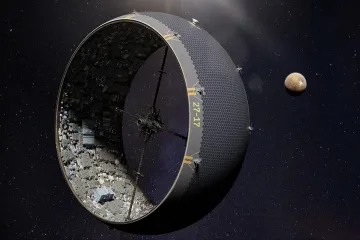
# Theoretical Habitats
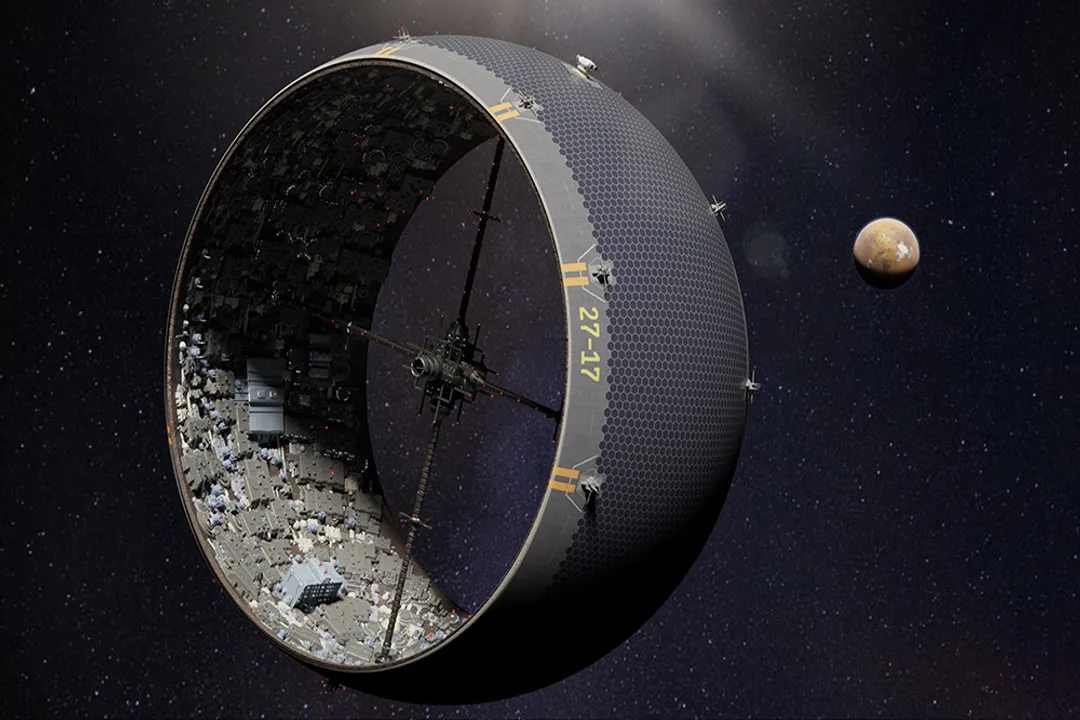
Moving away from naturally occurring life and toward larger, more theoretical concepts helps frame the habitability discussion. If an asteroid were large enough, or if multiple small bodies were aggregated, the internal pressures and heat generated could theoretically support more complex, sustained environments. [9] A concept explored in theory suggests that very large asteroids, perhaps hundreds of kilometers across, could retain enough internal heat or have enough structural integrity to support subsurface liquid water and perhaps even maintain a thin, localized atmosphere within large interior cavities. [9]
While this moves into the realm of building habitats rather than finding native ones, it illustrates the scale required for complex, long-term biological support within an asteroid-like structure. The necessary mass to maintain internal warmth against the cold sink of space is substantial. For instance, a body needs to be large enough to avoid rapid temperature changes and allow volatiles like water to remain stable over geological timescales rather than simply sublimating away into space or being cracked apart by thermal stress. [5][9]
# Implications for Life Elsewhere
The connection between asteroids and life is perhaps most significant when considering panspermia—the hypothesis that life can be distributed between planets or solar systems via meteoroids, asteroids, and comets. [3] If terrestrial life could survive a launch, transit, and atmospheric entry protected within a rocky shell, then the very processes that delivered our ingredients might also have delivered a microbial payload from Mars, or even from a different stellar system entirely. [3] The extreme resilience shown by some Earth microbes, capable of surviving desiccation and radiation for long periods, suggests that this leap, while unlikely, is not entirely outside the bounds of possibility. [1][5]
The existence of water-bearing asteroids and their rich organic cargo suggests a universal chemistry is at play. [7] If these conditions—water-bearing, organic-rich rock—are common, then the probability that life has arisen on other small, icy, or rocky bodies that might have been ejected from their parent systems increases. We may not find thriving cities on little $100$-meter space rocks, but the probability that life started somewhere else and was transported via asteroid or comet remains a fascinating and scientifically grounded area of inquiry. [3] It shifts the focus from: "Did life start on Earth?" to "Where did the blueprint for life originate, and how widely was it shared by these common space travelers?". [2]
#Videos
Did Asteroids Spark Life? - YouTube
Related Questions
#Citations
Could it be possible for there to exist an asteroid belt with enough ...
Could the Blueprint for Life Have Been Generated in Asteroids?
Harvard study suggests asteroids might play key role in spreading life
'It blew us away': how an asteroid may have delivered the vital ...
planets - Is it possible for life to exist on asteroids?
Did Asteroids Spark Life? - YouTube
Life on early Earth could have been seeded by comets, meteorites
Asteroid Fragment Reveals Signs of Life, But It's Not What You Think
Cities on asteroids? It could work—in theory - University of Rochester