What is the closest star to Earth that could support life?
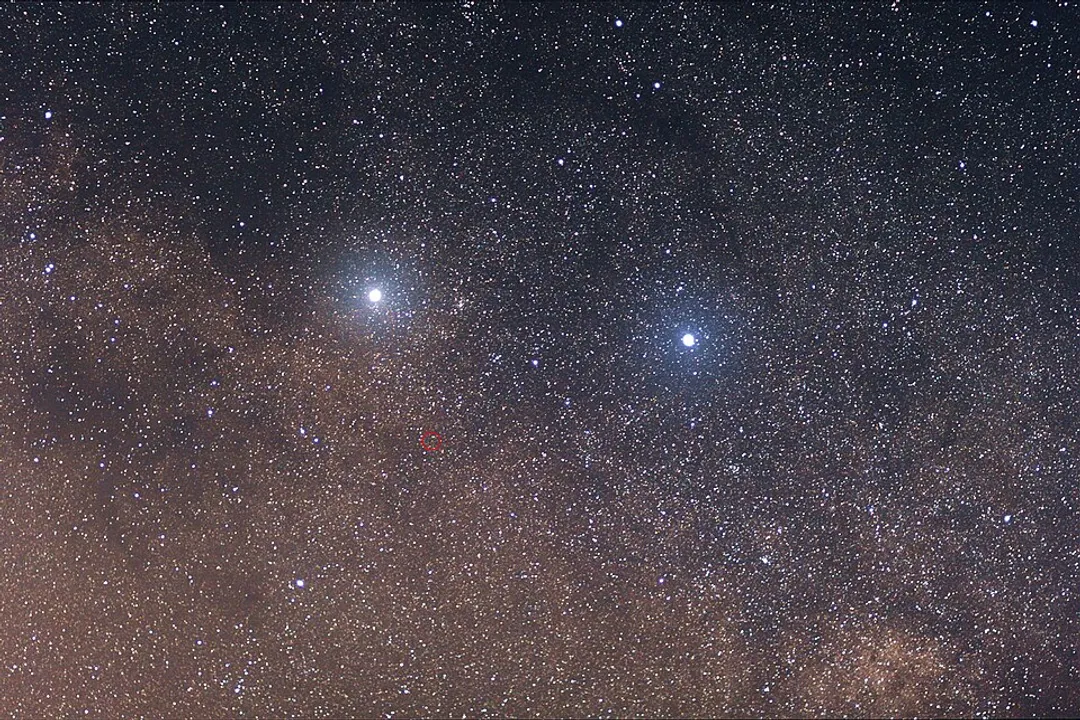
The closest star system beckoning our search for extraterrestrial life is undoubtedly the Alpha Centauri group, but the specific star that currently holds the title for the nearest potentially life-bearing world is its faint companion, Proxima Centauri. This stellar neighbor resides a mere 4.24 light-years away, making it our immediate cosmic backyard when considering exoplanet searches. Despite its proximity, Proxima Centauri is not visible to the unaided eye from Earth because it is significantly dimmer than the other two stars in its system.
# Closest Neighbors
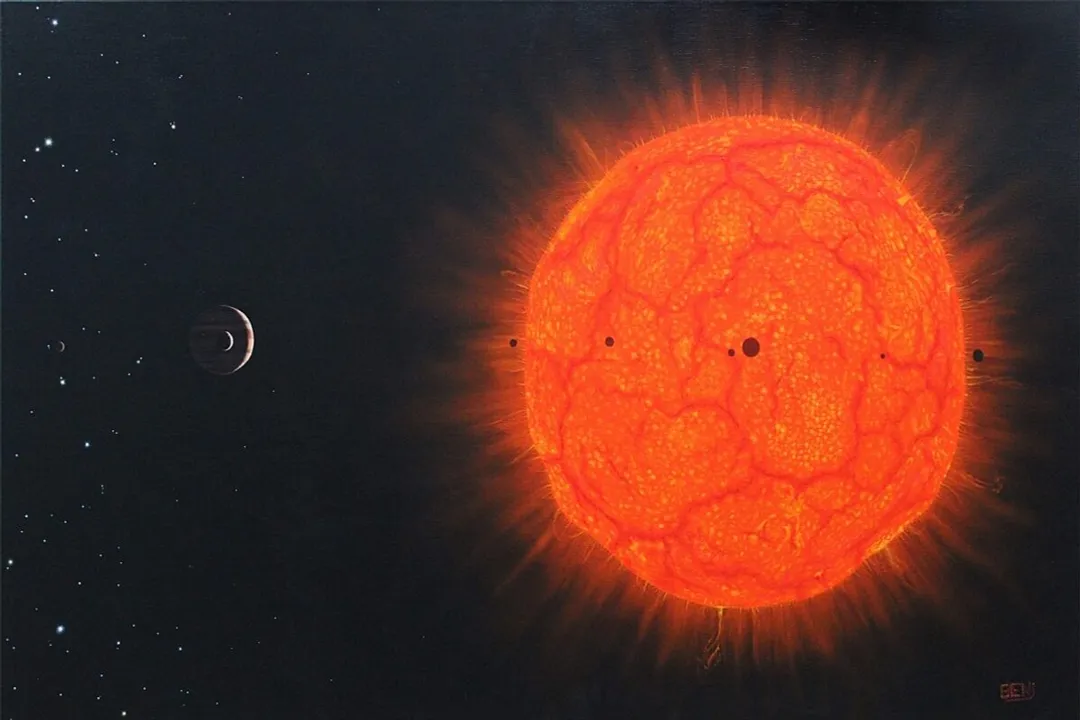
The entire Alpha Centauri complex is made up of three stars: the binary pair Alpha Centauri A and B, and the smaller, much fainter Proxima Centauri. While Alpha Centauri A is the largest star in the trio, it is Proxima Centauri that has captured the attention of astrobiologists because it hosts the closest known exoplanet. The gravitational dance of this triple-star system makes for a dynamic neighborhood, but it is Proxima Centauri that hosts the potentially habitable world we are focusing on: Proxima b.
# Red Dwarf Star
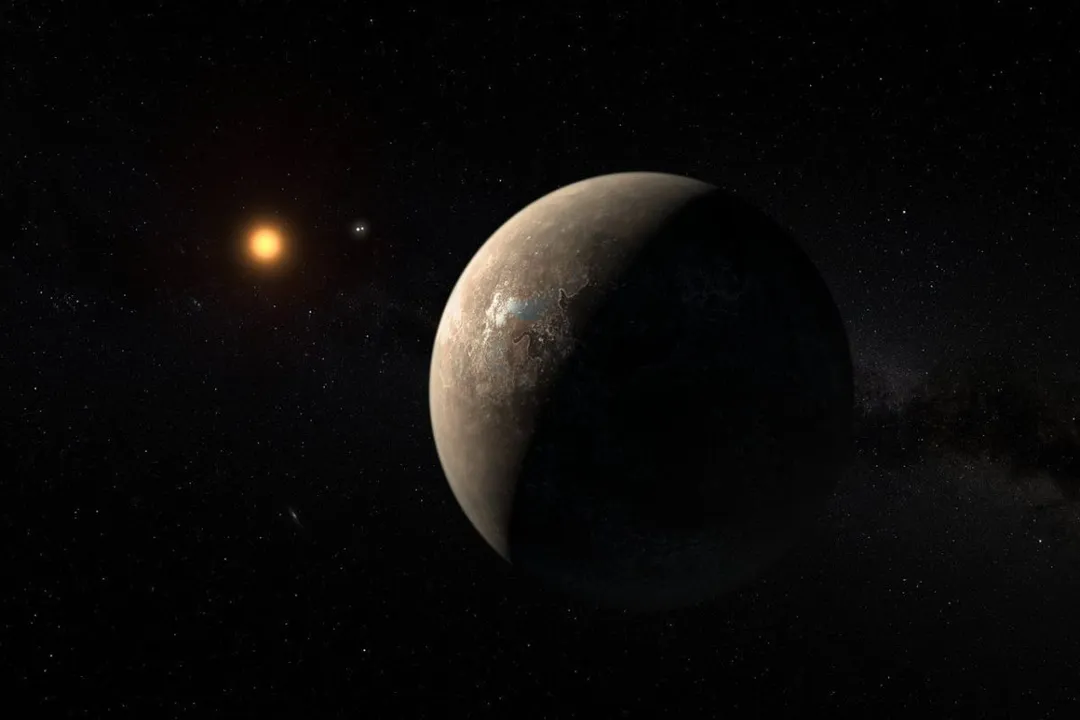
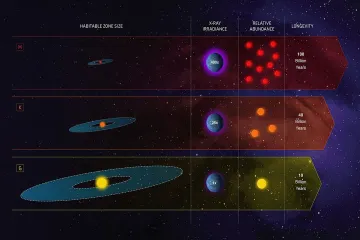
Proxima Centauri is classified as a red dwarf star. This classification is crucial because it dictates the conditions for habitability around it. Red dwarfs are small and cool compared to our Sun, an average G-type star. Because it emits much less heat and light than the Sun, the region considered capable of supporting liquid water—the habitable zone—must be located incredibly close to the star. In fact, the habitable zone around Proxima Centauri is so tight that its planet orbits at only about 5% of the distance separating the Earth from our Sun.
This star's nature is not entirely benign, however. Red dwarfs like Proxima Centauri are known to be flare stars. They periodically unleash powerful bursts of X-rays and ultraviolet radiation. These intense flares pose a severe threat to any life near the surface or to the very existence of an atmosphere. While this star is dimmer overall, its temperamental nature creates a starkly different environment than the steady warmth provided by our Sun.
# Orbit Details
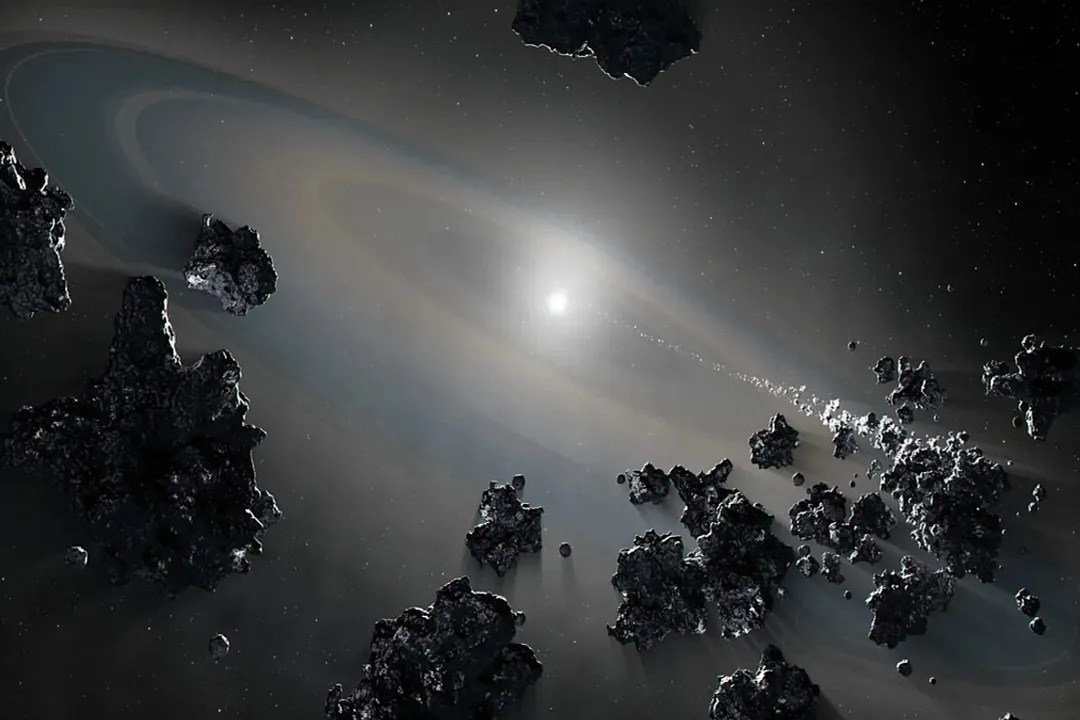
The planet orbiting Proxima Centauri, designated Proxima b, is remarkable chiefly for its proximity to us. It completes a full orbit, or one year, in just about 11.2 Earth days. This extremely short period is a direct consequence of its tight placement within the star’s habitable zone.
Observations suggest that Proxima b is a rocky world, with a minimum mass estimated to be just slightly larger than that of Earth. Imagine a planet that circles its star roughly every ten days, hugging its primary body much closer than Mercury orbits the Sun. This tight orbit, combined with the dim nature of the red dwarf, is what theoretically places the planet in the right temperature range.
For those visualizing this alien world, the planet has been rendered in three dimensions, offering a visual representation of what our closest exoplanet might look like, an image frequently shared across astronomical communities.
# Water Possibility
The central concept behind declaring Proxima b potentially habitable lies in its location within the habitable zone. This zone is defined as the range of orbital distances where a planet could maintain liquid water on its surface. Since liquid water is considered essential for life as we know it, Proxima b immediately becomes a prime target for further investigation. Being a rocky world, it has the necessary foundation for a terrestrial surface where water could pool.
When we compare the environment of Proxima b to Earth, we see a profound difference in stellar input. Our Sun provides a constant, relatively gentle stream of energy that allows Earth's water to remain liquid across vast surface areas. Proxima b receives its energy from a star that is both much cooler and much closer. If the planet possesses the right atmospheric pressure and composition, that meager, close-range energy could be enough to keep surface water from either freezing solid or boiling away entirely.

# Atmospheric Hurdles
The question of habitability hinges almost entirely on the presence and strength of an atmosphere. While the orbital distance places Proxima b in the right thermal range, the intense activity of its host star presents a massive obstacle.
Proxima Centauri's frequent, powerful flares can bombard the planet with high-energy particles, potentially eroding or entirely stripping away any atmosphere over cosmic timescales. If the planet lacked a sufficiently strong magnetic field to deflect these charged particles, its surface would likely be sterilized by radiation, even if water existed beneath a temporary atmospheric layer.
Another significant factor arising from the close orbit is tidal locking. It is highly probable that Proxima b is tidally locked, meaning one hemisphere perpetually faces the star in endless day, becoming intensely hot, while the opposite hemisphere endures eternal night, becoming intensely cold.
For life to thrive under these conditions, a dense, effective atmosphere would be mandatory. This atmosphere would need to be thick enough to retain heat and efficiently transport it from the blazing dayside to the freezing nightside, preventing global freezing or atmospheric collapse. The difference between a thin, easily stripped atmosphere and a dense, protective one is the difference between a sterile rock and a potential haven for biology. It is this atmospheric dependence that makes the planet's current state a matter of intense scientific debate rather than a settled conclusion.
# Comparative Context
Considering the tight constraints, it is interesting to contrast the conditions imposed by a red dwarf system with our own. On Earth, our planet orbits the Sun at about one Astronomical Unit (AU), which is approximately 150 million kilometers. This distance allows for a stable climate, regulated by moderate solar output. Proxima b orbits roughly $0.05$ AU. If we were to take Proxima Centauri's luminosity—about $0.15%$ of the Sun's—and place it at the distance of Earth's orbit, the surface temperature would be far too low for liquid water. The planet must be close in to compensate for the star's low output. However, this proximity means that any protective atmosphere must withstand a radiation dose that is often hundreds of times more intense than what Earth receives from the Sun. A fascinating way to view this is to consider the required shielding: if Earth's atmosphere were our only defense, we would need an atmospheric pressure hundreds of times greater than what we currently experience just to slow down the erosion caused by the flares hitting us at Proxima b's orbital distance from a star of that brightness. This illustrates the immense atmospheric resilience that must have evolved, or be present, on Proxima b to survive.
# Future Observations
The search for definitive answers about Proxima b’s habitability will require next-generation telescopes capable of atmospheric characterization. Scientists are eager to search for biosignatures—gases in the atmosphere that could indicate biological processes. The challenge is that distinguishing between potential life signs and geological outgassing, especially under the shadow of stellar flares, requires extreme observational precision.
While we cannot see Proxima Centauri without powerful equipment, its status as the closest exoplanet candidate means it will likely be among the first targets for upcoming space and ground-based observatories designed to analyze the atmospheres of distant worlds. Any confirmed detection of water vapor, oxygen, or methane—even in trace amounts—would dramatically shift our understanding of where life can arise in the galaxy. Given its closeness, any breakthrough regarding Proxima b will instantly become a landmark discovery in the history of astronomy. The ongoing efforts to study this world define the immediate frontier in the search for life beyond our solar system.
#Videos
What If You Landed on Proxima Centauri b? - YouTube
Related Questions
#Citations
Which stars could host alien life? | The Planetary Society
Proxima Centauri - Wikipedia
Proxima b 3D Model - Exoplanets - NASA Science
This is Proxima b, the closest exoplanet to Earth being 4 light years ...
What If You Landed on Proxima Centauri b? - YouTube
One of the Three Closest Stars Looks Friendly for Life
Closest Star To Our Sun Has A Planet That Could Support Life
The Closest Exoplanet to Earth Could Be "Highly Habitable"
EarthSky - Facebook