What do comets contain that is important to life on Earth?
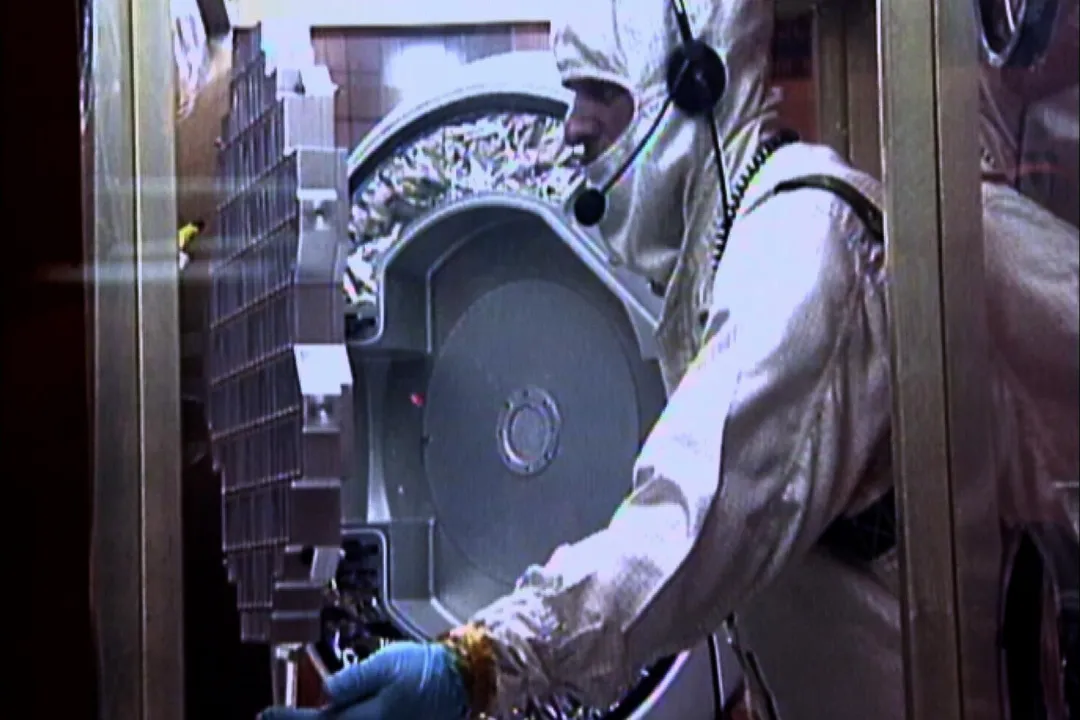
The icy travelers of the outer solar system, comets, are often framed as spectacular, fleeting lights across the night sky. However, their true significance stretches far beyond mere visual splendor. These ancient bodies, originating in the frigid reaches of the Kuiper Belt or the distant Oort Cloud, are essentially time capsules. They preserve the pristine chemical conditions that existed at the birth of our solar system billions of years ago, and in doing so, they may have supplied the very raw materials needed for life to take hold on our planet. Understanding what they carry is central to understanding our own origins.
# Comet Composition
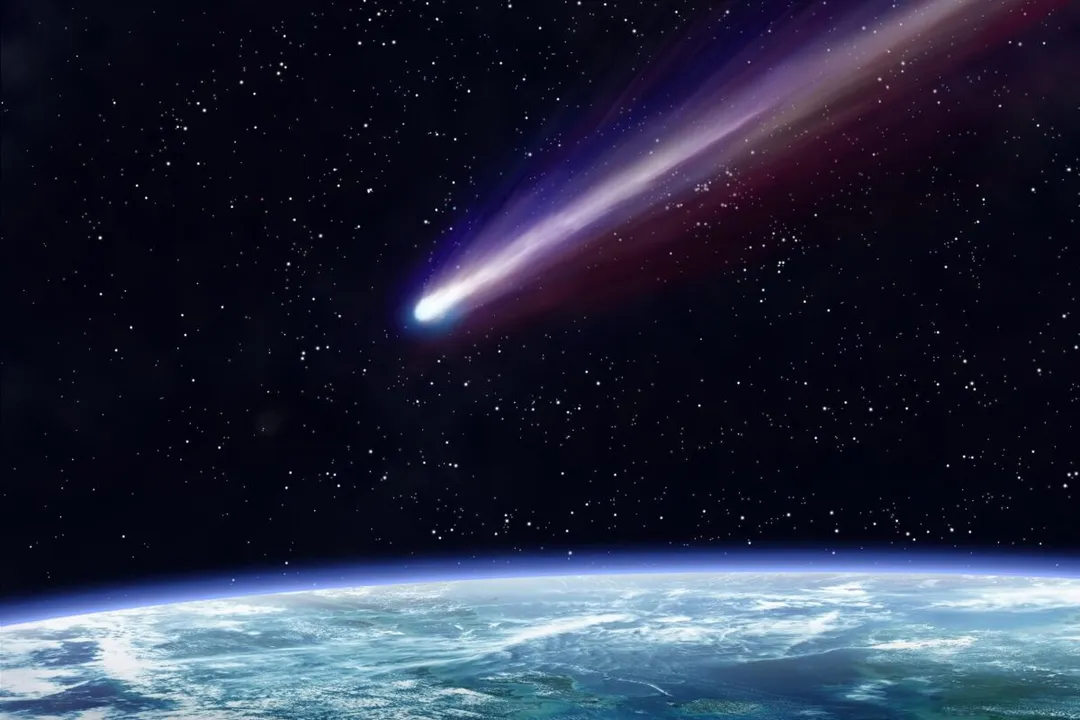
To appreciate their cargo, one must first understand what a comet is. A comet is primarily composed of a solid, relatively small nucleus, often described as a "dirty snowball". This nucleus is a mixture of frozen gases—like water ice, carbon dioxide, and methane—mixed with dust particles and rocky material. As a comet approaches the warmth of the Sun, these frozen materials sublimate, turning directly from solid to gas, creating a vast, hazy atmosphere called the coma surrounding the nucleus, which then forms the characteristic tail seen from Earth. It is within this mixture of ice, rock, and dust that the ingredients vital for biology have been preserved.
# Water Delivery
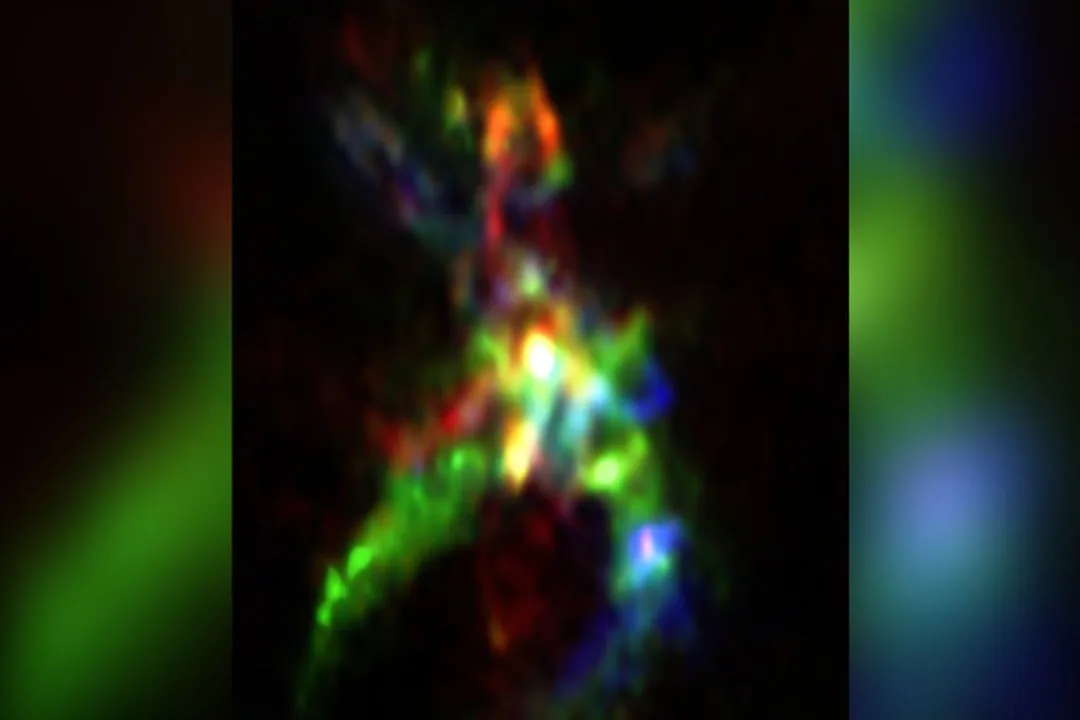
The most fundamental requirement for life as we know it is liquid water, and comets are a significant source of this crucial substance. During the early, turbulent history of the solar system, massive impacts were commonplace. While asteroids are also implicated, comets supplied significant volumes of water ice that eventually accumulated to form Earth's oceans. The precise ratio of deuterium (heavy hydrogen) to normal hydrogen in the water found on comets helps scientists track the origin of Earth's water, though research suggests a complex picture where both asteroids and comets contributed substantially. Regardless of the exact proportions, the delivery of vast amounts of frozen by these icy bodies provided the necessary solvent in which the first chemical reactions of life could occur.
# Organic Molecules
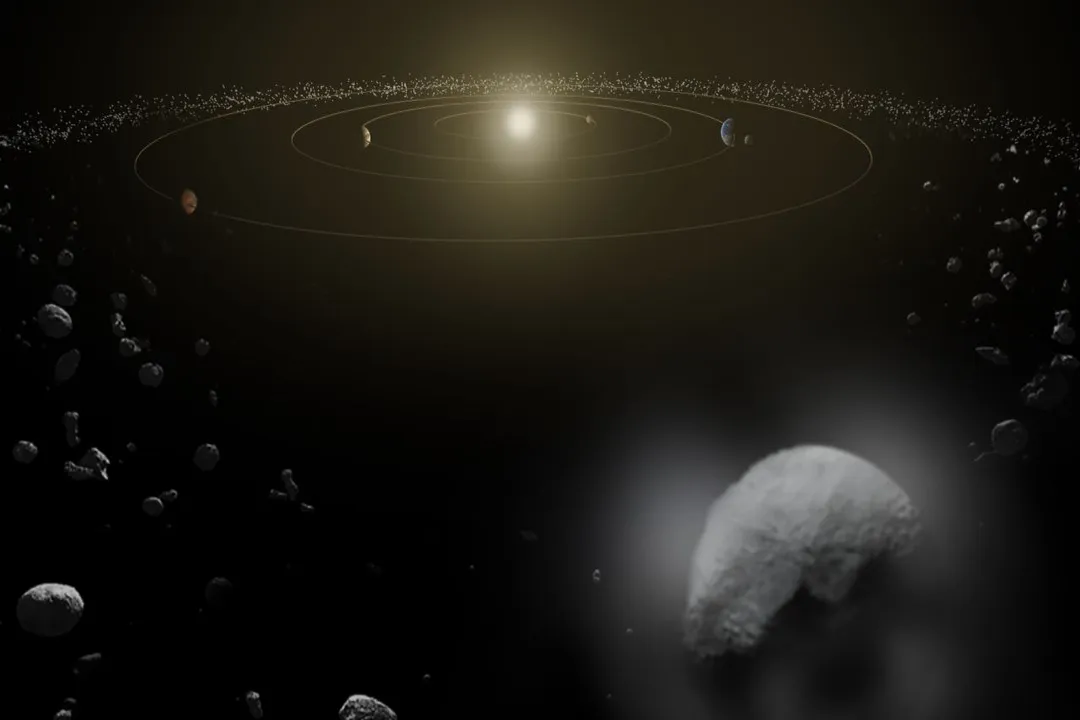
Beyond water, comets carry the complex organic scaffolding upon which biology is built. These are the carbon-based molecules that form the backbone of DNA, proteins, and cell structures. Missions like the European Space Agency’s Rosetta probe, which studied Comet 67P/Churyumov-Gerasimenko, have confirmed the presence of numerous organic molecules within the comet's nucleus.
A key finding has been the detection of amino acids, which are the fundamental units that link together to form proteins—the workhorses of biological cells. The confirmation that these essential building blocks are present in cometary material suggests that they were seeded onto the early Earth from space. It wasn't just a theory; instruments analyzing dust particles collected from cometary material have provided direct evidence of these complex molecules. This material, delivered gently or violently, provided the necessary starting blocks for terrestrial biochemistry.
# The Phosphorus Connection
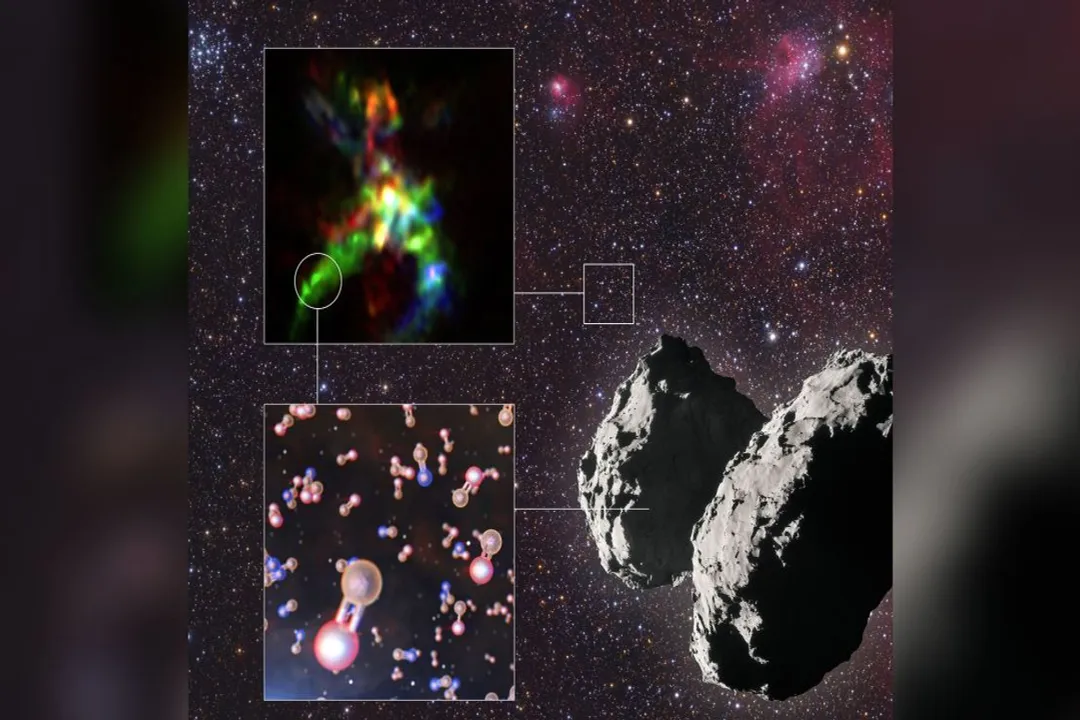
One of the most compelling arguments for the importance of cometary delivery involves a specific element that is often overlooked in popular discussions of life’s building blocks: phosphorus. Phosphorus is absolutely non-negotiable for life; it is a key component of the phospholipid membranes that enclose every living cell, and it forms the backbone of the sugar-phosphate structure in DNA and RNA—the genetic blueprints of all known life.
The Rosetta mission provided groundbreaking data showing that Comet 67P contained phosphorus in chemically available forms. Specifically, researchers detected phosphine, which contains phosphorus in a reduced state. While phosphine itself might not be the final form needed in a cell, its presence indicates that phosphorus was incorporated into the comet’s ices when the solar system formed. This discovery addressed a major gap in the chemical inventory needed for life's genesis, suggesting that the delivery mechanism wasn't just bringing carbon and water, but also the critical structural elements for genetic material and cellular containment.

# Impact Timing and Dynamics
The method of delivery matters as much as the material being delivered. Life requires a period of relative calm after the initial ingredients arrive, allowing complex chemistry to organize itself before being sterilized by excessive heat or radiation.
# Differential Bombardment
Scientists have modeled the impacts on exoplanets, including our own ancient Earth, and noted that the rate of bombardment influences habitability. A scenario involving a constant, slow drizzle of comets and asteroids over a long period might actually be more conducive to the gradual development of life than a single, massive, catastrophic impact event. If a large impact occurs too early, it could completely reset the chemical clock, vaporizing nascent organic structures before they can polymerize into functional molecules. The consistent, lower-energy contribution from icy bodies moving through the inner system could have provided the necessary ingredients and the necessary time for those ingredients to assemble into something more complex.
One way to contextualize the sheer volume involved, though difficult to calculate precisely, is to compare the sources. Asteroids, originating closer to the Sun in the inner asteroid belt, tend to be drier and richer in silicate rock and metals. Comets, originating far beyond Neptune, are inherently wetter and richer in volatiles and complex organics. The unique chemical signature found on 67P, such as that unique form of phosphorus, is less likely to be found in purely asteroidal material, suggesting a necessary two-pronged approach for populating early Earth with the full chemical toolkit required for abiogenesis. It is fascinating to consider that the initial geological stability needed for oceans to form (perhaps largely from comets) had to persist long enough for the delivery of complex organics (also from comets) to begin building self-replicating systems.
# Cosmic Dust vs. Icy Impacts
While large cometary impacts would deliver vast amounts of water and material quickly, the ongoing contribution of cosmic dust—the microscopic grains shed by comets and asteroids—is also incredibly significant. These tiny particles constantly rain down on Earth, carrying their preserved organic payload.
Consider the physical contrast: a massive impactor vaporizes a significant portion of its payload due to the immense heat of entry and collision. In contrast, fine cosmic dust particles often survive atmospheric entry relatively intact, sometimes embedding themselves gently in surface layers or shallow water bodies. This suggests that while a major collision might have established the planet's hydrosphere, the slow accumulation of microscopic, organic-rich dust provided a sustained source of ready-made biochemical precursors, perhaps acting as a constant, low-grade infusion of chemical opportunity. In essence, comets acted both as bulk suppliers (water) and as fine mist atomizers (amino acids and organics) depending on the size and trajectory of the impacting body.
# Insights into Early Earth Chemistry
The materials delivered by comets raise interesting questions about the environment necessary for these compounds to succeed once they arrived. The presence of amino acids and phosphorus confirms that the basic atomic recipe was available in space, but assembling a functioning cell requires polymerization—linking those small molecules into long chains.
For instance, the delivery of water is crucial, but the presence of water on the comet means that the organic molecules were likely frozen solid for billions of years. Upon impact, the water rapidly becomes steam, potentially destroying delicate structures. Therefore, an important, unstated condition must have been met: the impact energy needed to be just right—enough to bring the material to the early Earth's surface, but perhaps low enough, or occurring in an environment already rich with liquid water (like shallow seas), to allow for the survival and subsequent reaction of these organic molecules rather than their immediate incineration. If the initial delivery was too hot, the chemistry resets. If it was too cold, the chemicals remain inert ice. The Goldilocks zone of impact energy seems critical here.
Furthermore, if we look at Earth today, we see that terrestrial life universally relies on the same set of basic organic molecules, regardless of where on Earth life emerged. This uniformity strongly implies a common, external source for those initial components. While some simpler organics can be synthesized through geological processes on Earth (like volcanism), the complex array found in comets, like specific amino acids or phosphorus compounds, points strongly toward extraterrestrial seeding as the primary starting point for our biological inventory.
# Scientific Confirmation and Future Views
The work done by missions like Rosetta moves this discussion from theoretical modeling to empirical science. Analyzing the material brought back, or studied in situ, allows planetary scientists to move past assumptions about what must be there and confirm what is there. The data collected from 67P, for example, provided tangible chemical evidence for ingredients like water, carbon-containing compounds, and essential elements like phosphorus.
This work is not confined to our solar system. The implications for exoplanets are profound. If comets delivered these essential components here, it suggests that any planet orbiting a star that also harbors icy planetesimals in its outer regions has the potential to receive the same critical chemical precursors for life. It lowers the barrier to entry for life starting elsewhere, provided the planetary environment settles down enough to sustain liquid water for long enough.
In summary, comets are far more than icy debris; they are chemical delivery vehicles that have shaped the composition of our world. They provided the solvent (), the structural blocks (amino acids and organics), and the critical elemental components (like phosphorus for DNA). By studying these ancient visitors, scientists gain tangible data points about the precise chemical inventory that made life on Earth possible, turning the abstract question of abiogenesis into a solvable problem of cosmic inventory management. They represent the preserved potential of the early solar nebula, packaged neatly in ice and rock, waiting for the right moment to defrost on a young, receptive world.
Related Questions
#Citations
Comet Facts - NASA Science
The ingredients for life on Earth may have been delivered by comets ...
Comets Deliver Amino Acids to Earth | NOVA: Finding Life Beyond ...
'Bouncing' comets could deliver building blocks for life to exoplanets
Comets may reveal the secrets to finding alien life, study finds
Cosmic Dust Could Have Helped Get Life Going on Earth
The seeding of life by comets - PubMed
Rosetta's comet contains ingredients for life - ESA
Did icy comets serve as storks for life on Earth - University of California
Comet's Water Holds Clues to Life on Earth | AUI