Why are galaxy clusters important?
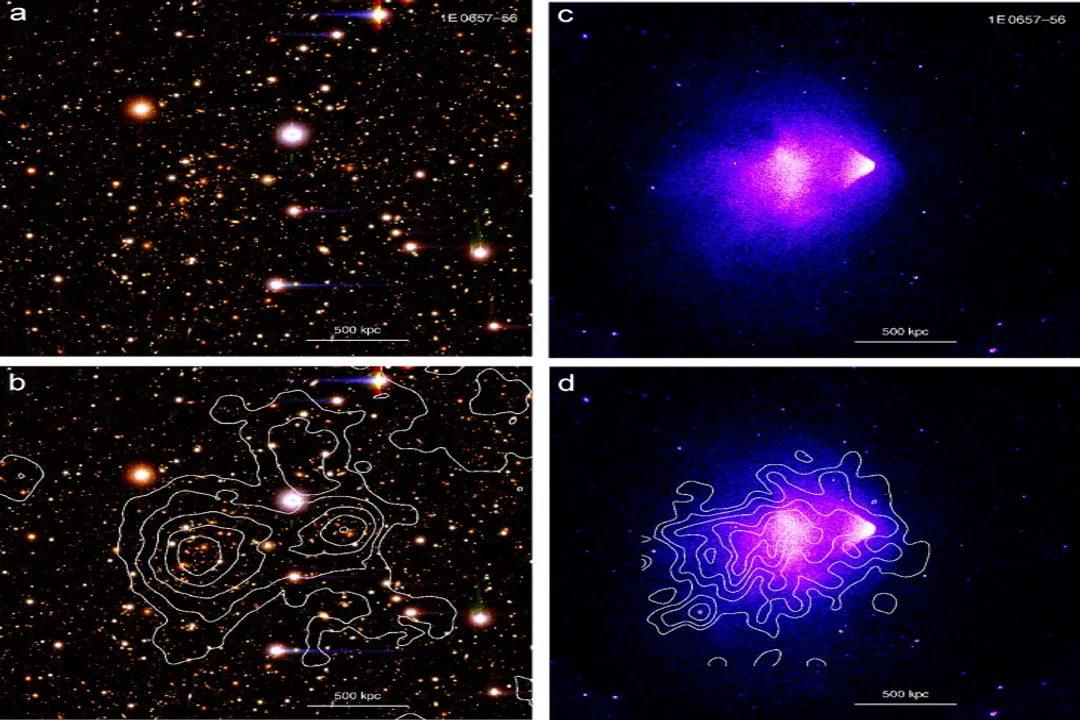
Galaxy clusters represent the largest gravitationally bound structures known to exist in the universe, acting as massive congregations of galaxies, hot gas, and the mysterious dark matter. [6][9] Far from being mere collections of stellar islands, these cosmic behemoths are indispensable laboratories for astrophysics and cosmology, allowing scientists to test fundamental theories about the universe’s composition, evolution, and ultimate fate. [1][3] They are the scaffolding upon which the cosmic web is built, tracing the large-scale structure of the cosmos that emerged from the slight density fluctuations present shortly after the Big Bang. [4][9]
# Cosmic Architecture
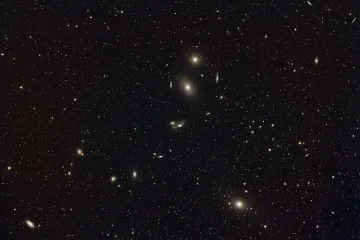
To grasp their importance, one must first appreciate their sheer scale. A typical galaxy group might contain a few dozen galaxies, but a true cluster can host hundreds or even thousands of individual galaxies, all moving within a vast, shared gravitational field. [5][9] These systems are truly gargantuan, often spanning several million light-years across. [2]
Their mass is what truly sets them apart. Galaxy clusters are incredibly massive, sometimes weighing as much as a quadrillion times the mass of our Sun. [2] This mass is not evenly distributed, nor is it primarily composed of the stars we see. The visible galaxies, which are spectacular in their own right, account for only a small fraction of the total mass budget. [2][9] The vast majority of the mass, often estimated to be around 80 to 90 percent, is attributed to dark matter, with the remainder residing in an extremely hot, diffuse gas known as the intracluster medium (ICM). [1][2][9]
When we look out at the universe, we see that matter is not spread smoothly. Instead, it coalesces into a network resembling a sponge or a web—the cosmic web—where clusters and superclusters sit at the densest nodes, connected by filaments of gas and smaller galaxies, separated by enormous voids. [4] Galaxy clusters are therefore crucial markers for mapping this large-scale structure, offering direct evidence of how gravity has pulled matter together over cosmic time. [9]
# Dark Matter Evidence
The significance of galaxy clusters in the study of dark matter cannot be overstated; they are arguably the best natural laboratories for this elusive substance. [8] Because these systems are held together by gravity, the motions of their constituent galaxies and the temperature of the superheated gas (which is held in place by the same gravity) betray the presence of mass far exceeding what can be accounted for by visible stars and gas alone. [8][9]
The presence of dark matter is inferred through several independent lines of evidence within a cluster environment. For instance, observations of the hot X-ray emitting gas, which fills the space between galaxies in the cluster (the ICM), demonstrate that the gravitational potential well must be deep enough to trap this gas at temperatures reaching tens of millions of degrees Celsius. [1][2] This gravitational confinement requires the immense mass supplied by dark matter. [1]
Consider this comparison: In a galaxy like our own Milky Way, the visible matter—the stars, gas, and dust—is the primary gravitational source binding the system. However, in a massive cluster like Coma or the Virgo Cluster, if we were to total up the mass of all the hundreds of galaxies and all the light from the superheated ICM, we would find it insufficient by a factor of five or more to prevent the system from flying apart. [1][9] It is as if observing a massive, intricate bridge structure built only with decorative facade materials, yet somehow remaining perfectly stable against powerful winds, signaling the existence of an invisible, structural steel skeleton carrying the load. This missing gravitational component—the dark matter—is what allows the cluster to persist as a stable structure over billions of years. [8] Studying the distribution of dark matter within these systems helps researchers constrain its particle nature and properties, moving beyond just confirming its gravitational effects. [3]
# Probing Cosmology
Beyond dark matter, galaxy clusters serve as crucial probes for understanding the universe's overall composition and expansion history, particularly concerning dark energy. [3] They are excellent "cosmological standard candles" or "standard rulers" when properly calibrated. [3]
When astronomers identify clusters with similar properties—for example, those that have recently ceased forming stars or that possess a specific X-ray signature related to their mass—they can use them to measure distances across vast stretches of the universe. [3] By comparing the observed properties (like the brightness of their X-ray emission or the number of galaxies they contain) against theoretical models that predict how these properties should evolve with distance and cosmic time, scientists can constrain the parameters describing dark energy, the mysterious force accelerating the expansion of the universe. [3]
The way these structures form also tells us about cosmology. The universe began nearly smooth, and structures like clusters grew slowly through hierarchical merging and accretion of smaller structures, like groups and individual galaxies. [4][9] The abundance and distribution of these massive clusters at different cosmic epochs provide powerful constraints on cosmological models, especially regarding the density fluctuations in the early universe and the overall density of matter and energy. [3]
# Galaxy Environment Effects
Galaxy clusters are not just gravitational anchors; they are extreme environments that profoundly affect the galaxies residing within them, driving rapid evolutionary changes. [1] A galaxy’s fate is heavily tied to its location in the cosmic web; being in a dense cluster environment is very different from being isolated in the quiet suburbs of space. [5]
One significant process at play is ram-pressure stripping. As a galaxy moves at hundreds or thousands of kilometers per second through the superheated, dense plasma of the intracluster medium (the ICM), the pressure exerted by this hot gas acts like a cosmic wind, physically stripping away the galaxy's cooler, star-forming interstellar gas. [1][5] This removal of fuel star formation causes the galaxy to "quench" and become red and dead, often quickly transitioning from a spiral to an elliptical galaxy. [5]
Furthermore, the frequent and violent gravitational interactions—galaxy mergers and tidal stripping—are more common in the crowded cluster cores, which also contribute to altering galaxy morphology and quenching star formation. [1] Studying clusters allows researchers to watch these evolutionary processes in action across different stages of cluster assembly and maturity. [5]
For the curious mind trying to follow the cosmic history: one can conceptually trace the formation of a modern, massive cluster. It starts perhaps as a few dense knots in the early universe. These knots merge, drawing in surrounding filaments of gas and smaller groups over billions of years. The final assembly process heats the infalling gas tremendously, creating the X-ray glow we detect, while the inner galaxies rapidly deplete their gas reservoirs due to stripping and merging. [4] This entire process, observable across the cluster population today, provides a multi-faceted history book of structure growth. [3]
# Observational Techniques
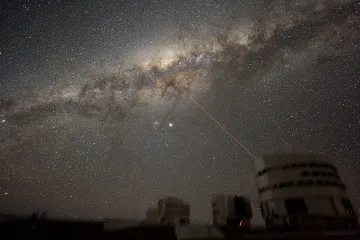
To study these distant, massive objects, astronomers employ a multi-wavelength approach, capturing different components of the cluster emission. [2]
- Optical Telescopes: These detect the light from the stars in the constituent galaxies, allowing for redshift measurements that determine distance and velocity dispersion. [2]
- X-ray Telescopes: These are essential for observing the hot intracluster medium (ICM), which glows intensely in X-rays due to its extreme temperature (millions of degrees). [1][2] The distribution and temperature of this gas map the overall gravitational potential of the cluster. [1]
- Radio Telescopes: These can reveal the presence of energetic phenomena, such as relativistic particles accelerated by shocks within the cluster or associated with the central supermassive black holes. [2]
By synthesizing data from these different parts of the electromagnetic spectrum, scientists build a more complete picture of the cluster's total mass, temperature profile, and dynamic state. [2] For instance, analyzing the X-ray emission from the ICM combined with galaxy velocity data allows scientists to confirm the total mass required to keep the system bound. [1][8]
# Groups Versus Clusters
It is helpful to distinguish between galaxy groups and galaxy clusters, as their dynamics and evolutionary stages differ significantly, though they represent a continuum of mass. [5]
| Feature | Galaxy Group | Galaxy Cluster |
|---|---|---|
| Typical Size | Smaller, fewer members | Larger, potentially thousands of galaxies |
| Mass Range | Lower, often a few hundred to a thousand times the Milky Way mass | Higher, up to solar masses |
| Dominant Component | Stars and Dark Matter | Stars, Dark Matter, and vast ICM |
| Dynamics | Less dynamically evolved, perhaps still actively merging | More dynamically settled, though cores remain violent |
While groups are generally smaller systems, perhaps centered around a moderately sized galaxy, they often represent the building blocks that eventually merge to form the giant clusters we observe today. [5][4] Studying groups provides a look at the earlier, perhaps less violent, stages of cosmic accretion, offering context for the massive final products. [5]
# Understanding Assembly
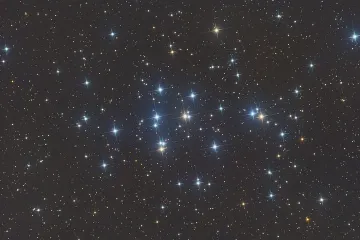
The fact that we observe such a wide variety of clusters—from newly forming structures to fully virialized, relaxed systems—offers a direct glimpse into the process of structure formation over time. [3] A "relaxed" cluster is one that has had time to settle into a near-equilibrium state, often exhibiting a smooth, centrally peaked X-ray surface brightness profile. [3] In contrast, a "disturbed" or dynamically young cluster shows signs of recent mergers, perhaps exhibiting irregular gas structures or multiple bright spots, indicating it is still actively assembling its mass from smaller neighbors. [3][4] By cataloging and comparing these varied states, cosmologists can refine simulations that model how the initial quantum fluctuations in the early universe grew into the complex structures we see today, driven entirely by gravity acting on dark matter and ordinary matter over nearly $13.8$ billion years. [9] The study of these objects confirms that the large-scale cosmic structure is a direct consequence of gravity amplifying primordial variations. [4]
#Videos
Why Are Galaxy Clusters Important For Understanding The Universe?
Related Questions
#Citations
Galaxy Clusters | Center for Astrophysics | Harvard & Smithsonian
Galaxy clusters
Galaxy Clusters | Kavli Institute for Particle Astrophysics and ...
Why do galaxies form superclusters throughout the universe instead ...
Clusters and Groups of Galaxies - mpe.mpg.de
Galaxy Clusters - an overview | ScienceDirect Topics
Why Are Galaxy Clusters Important For Understanding The Universe?
Why are Galaxy clusters important for dark matter studies? - Quora
Clusters of Galaxies - Imagine the Universe! - NASA