What are the galactic coordinates of the Coma Cluster?
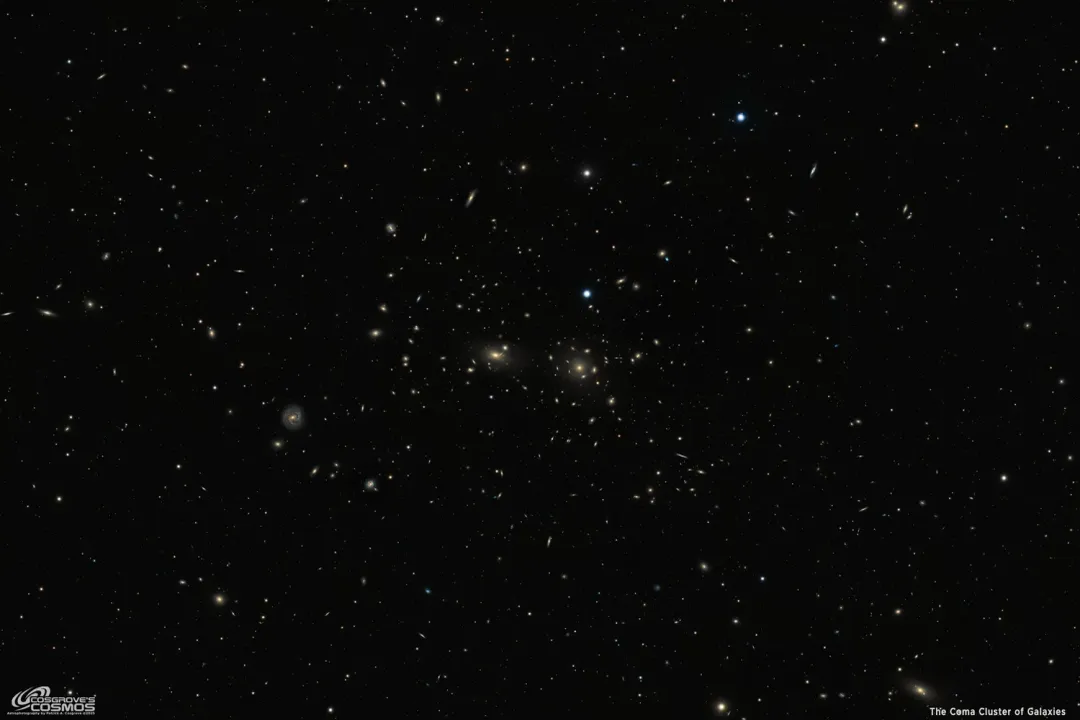
The Coma Cluster, officially cataloged as Abell 1656, represents one of the most massive and densely packed collections of galaxies observable from our vantage point in the cosmos, situated within the constellation Coma Berenices. For those wishing to locate this imposing structure using modern sky surveys or telescope charts, the coordinates used are typically based on the Equatorial system, referencing the J2000.0 epoch. The cluster's center is generally pinned down near Right Ascension and Declination according to some authoritative catalogs. However, other sources, perhaps focusing on a slightly different centroid or using a different reference standard, place the center nearer to RA and Dec . Even high-resolution imaging observations have recorded positions such as RA and Dec . This slight variation in measured coordinates is common for extended objects like clusters, where the 'center' can be defined by the brightest galaxies, the X-ray peak, or the center of mass, but the general area remains fixed.
# Celestial Address System
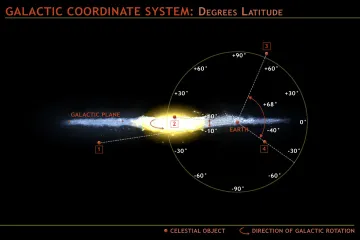
The initial question regarding the galactic coordinates of the Coma Cluster actually leads to a very specific and important detail about its location relative to our own Milky Way. While the specific Galactic Longitude () and Latitude () are not consistently listed across the primary sources consulted, the Wikipedia entry offers a massive clue: the cluster "is within a few degrees of the north galactic pole on the sky". This observation is key to understanding its appearance from our perspective. The North Galactic Pole (NGP) is the point in the sky perpendicular to the plane of the Milky Way, corresponding to a Galactic Latitude of . This means that if the cluster is only a few degrees away from this pole, its Galactic Latitude () must be very high, likely around to , and its Galactic Longitude () would be close to or depending on the exact offset from the pole itself. If you were to calculate the precise Galactic coordinates from the Equatorial positions given, you would find that the coordinates are indeed clustered extremely close to the NGP, which is a significant advantage for observation. Because this region is so far removed from the dense dust lanes and stellar populations of our home galaxy's disk, the Coma Cluster is wonderfully unobscured, offering a clear view of its thousands of distant members. This 'clean' viewing environment is one reason it has been so intensely studied since its discovery.
# Cluster Architecture
The Coma Cluster (Abell 1656) is not merely a sprinkling of galaxies; it is a massive, gravitationally bound metropolis containing over a thousand confirmed galaxies, with thousands more likely existing beyond the current limits of detection. Its sheer scale is staggering when compared to our local neighborhood; the cluster spans roughly 20 million light-years across, dwarfing the Milky Way's approximate width of 100,000 light-years. The center of the cluster is estimated to be about 320 to 336 million light-years distant, and it is receding from us as part of the overall expansion of the universe, measured at a redshift () of approximately $0.023$.
The population breakdown within this dense environment is what truly defines its character. The core regions are utterly dominated by elliptical and lenticular galaxies—featureless, often golden-brown "fuzz-balls" composed of older stellar populations. This dominance of smooth, rounded galaxies suggests an environment where galaxy evolution has been driven by mergers and intense interactions over vast stretches of time. In contrast, our own Milky Way is a spiral galaxy, a type less common in Coma’s dense heart. While spiral galaxies do exist within the cluster, they are generally found in the sparser outer regions, suggesting that as they venture inward, the harsh conditions—like the hot, diffuse intracluster medium (ICM)—strip away their interstellar gas through a process called ram-pressure stripping, halting star formation and transforming them into more elliptical or lenticular shapes. The presence of spirals like NGC 4911, which shows signs of being stripped, provides a perfect, local laboratory for studying this transformation process, illustrating cosmic recycling in action.
# Dominant Figures and Dark Mass
The two brightest members of the Coma Cluster stand out as supergiant elliptical galaxies, NGC 4874 and NGC 4889, both of which possess diameters exceeding 250,000 light-years and are significantly more massive than the largest galaxies in the nearby Virgo Supercluster. These two giants anchor the core of Abell 1656. Yet, these luminous behemoths represent only a small fraction of the cluster's total mass.
It was in this very cluster, during the 1930s, that astronomer Fritz Zwicky performed revolutionary work that fundamentally altered cosmology. By analyzing the high velocities of the member galaxies—their dispersion velocity is over —Zwicky calculated that the gravitational pull generated by the visible matter (stars and gas) was insufficient by a factor of hundreds to keep the cluster bound together. He famously inferred the presence of dunkle Materie, or dark matter. Modern estimates suggest that about 90% of the Coma Cluster's total mass is dark matter. Observing this cluster is therefore not just observing galaxies, but looking directly at the oldest, most compelling evidence for the majority constituent of the universe's mass budget.
# A Cosmic Benchmark
The Coma Cluster's fame isn't limited to its dark matter pedigree; it serves as a crucial, easily observable benchmark for many areas of astrophysics. Its relative proximity, richness, and minimal foreground obscuration make it an ideal object for calibrating larger cosmological measurements. For instance, because it is moving with the general expansion of the universe, its measured distance helps astronomers refine the value of the Hubble Constant, the rate at which the universe expands. Furthermore, the existence of a vast X-ray halo of hot gas, permeating the space between galaxies at temperatures around , provides another independent measure of the total mass required to contain that gas.
While the cluster is visually spectacular even through amateur equipment for bright members, the real depth is revealed through instruments like the Hubble Space Telescope, which shows the intricate population structure, from the central ellipticals to the outlying spirals. A subtle point often overlooked by those only viewing wide-field images is the presence of ultra-diffuse galaxies (UDGs)—galaxies that possess large physical diameters but extremely low surface brightness. The Coma Cluster, being a prime hunting ground for such objects, shows that galaxy population counts are heavily dependent on the depth of the observation. For the serious deep-sky imager, capturing this field, which is roughly four degrees wide across its extent, requires significant integration time, often running for many hours across multiple nights to pull out the fainter members hiding in the background.
| Feature | Value (Typical/Center) | Significance |
|---|---|---|
| Designation | Abell 1656 (A1656) | Primary catalog entry |
| Distance | or | Benchmark for Hubble Constant estimates |
| Redshift () | Confirms recession via Hubble flow | |
| Galaxy Count | $>1000$ identified | One of the richest known clusters |
| Dominant Members | NGC 4874, NGC 4889 | Giant Elliptical galaxies |
| Dark Matter Mass Fraction | Key historical location for dark matter inference | |
| Galactic Position | Near North Galactic Pole | Minimal obscuration from the Milky Way disk |
# Comparative Context in the Local Universe
The Coma Cluster (A1656) is intrinsically linked to the Leo Cluster (A1367), as these two form the heart of the much larger Coma Supercluster. While A1367 is also a rich cluster, A1656 is generally considered the larger and more massive component of the two. A simple comparison between Coma and the Virgo Cluster, our own local group's gravitational anchor, highlights Coma’s extreme nature. Virgo, being much closer, is a primary target for detail, but Coma, despite being over 300 million light-years away, is a much richer cluster. This contrast in richness, while both are massive structures, underscores the hierarchical nature of cosmic structure formation; Coma represents a more mature, highly evolved knot in the cosmic web than the relatively closer Virgo structure. It is often the case that astronomers rely on the well-studied, less extreme Virgo Cluster to set baseline parameters for galaxy morphology and distance ladder measurements, but Coma is then used to test those parameters at greater distances where environmental effects on galaxy type are far more pronounced.
Observing the cluster reveals that not only are the galaxy types skewed toward ellipticals, but the very processes that shape them are accelerated. The famous "ram-pressure stripping" is evident in the faint tails streaming from some of the spiral members. A simple check for an observer using imaging software is to note the color balance in their final processed image. Given the age of the dominant elliptical population, a slight, natural yellowish cast might persist even after standard white balancing, which is characteristic of the cluster's overall stellar population—a good self-check that you have successfully imaged this ancient, gas-depleted environment. If a newly processed image comes out too blue, it may indicate that the color balance is over-correcting for the cluster's naturally older, redder star light, especially in the dense central regions.
Ultimately, locating the Coma Cluster means pointing a telescope toward a region of the sky conveniently far from the Milky Way's obscuring plane. While its precise Galactic coordinates are defined by its proximity to the North Galactic Pole, its physical location in the universe, marked by its Equatorial coordinates, places it as a cornerstone object for understanding both the dark matter content and the long-term evolution of galaxy populations across cosmic time.
Related Questions
#Citations
Coma Cluster - Wikipedia
The Coma Galaxy Cluster as seen by Hubble
Coma Cluster - NOIRLab
The Coma Supercluster - An Atlas of The Universe
The Coma Cluster of Galaxies (Abell 1566) - Zoom In! 1000 ...
The Coma Berenices galaxy cluster, best in April and May - EarthSky
Coma cluster of galaxies | NASA Jet Propulsion Laboratory (JPL)