Which of the following is a characteristic of open clusters?
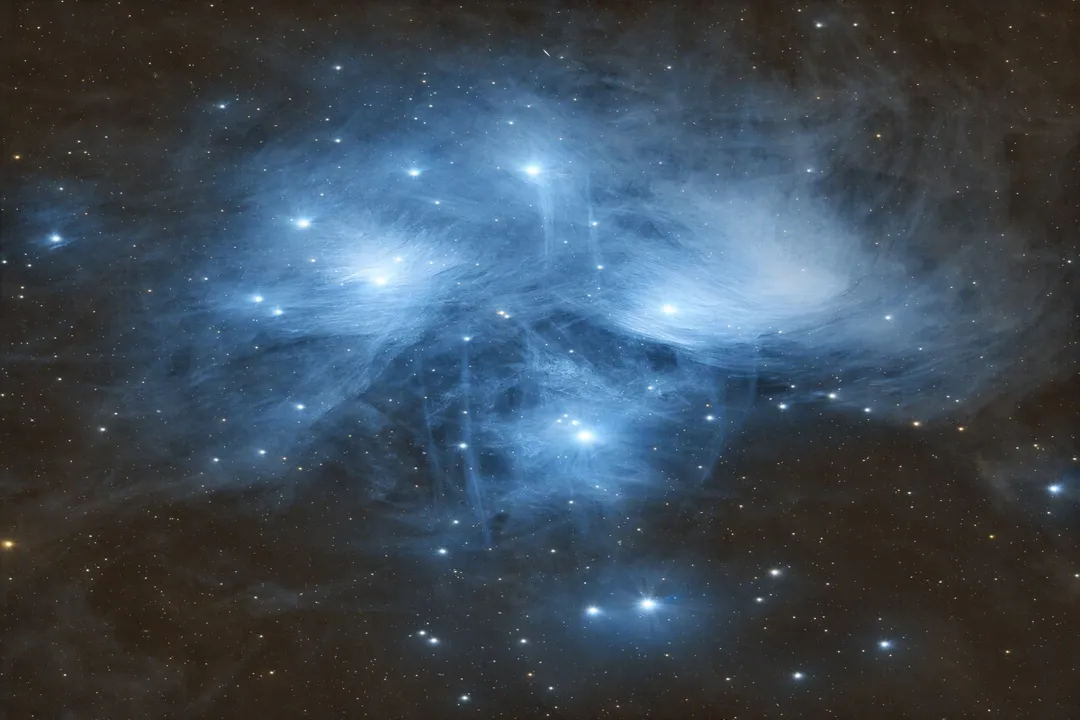
A defining characteristic of open star clusters is their shared origin, meaning the stars within them were forged together from the same parent cloud of gas and dust. [1][3] This common history dictates several other key features astronomers observe when studying these stellar congregations. They are not eternal structures; rather, they are transient groupings, typically containing anywhere from a few dozen up to a few thousand stars, loosely held together by mutual gravitational attraction. [2][7][8] Understanding this basic setup—a young, gravitationally connected, and loosely packed swarm—is the key to recognizing their specific traits across the cosmos.
# Shared Birth
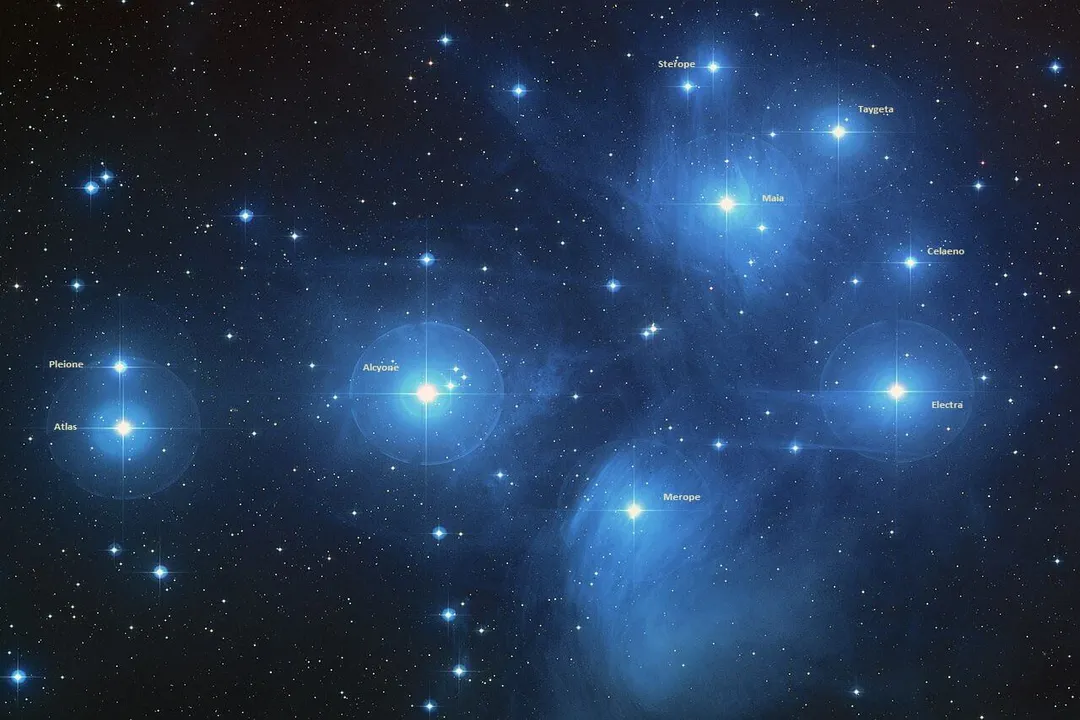
Because all the member stars of an open cluster formed concurrently from a single giant molecular cloud, they inherently share significant similarities in their fundamental properties. [1][8] A primary observable characteristic flowing from this is that the stars within any given open cluster possess roughly the same age and chemical composition. [2][3][6][9] This makes them excellent natural laboratories for stellar evolution studies. If an astronomer observes a cluster, they are essentially looking at a snapshot of many objects of the same 'stuff' existing at the same moment in time, just with different initial masses. [9]
This uniformity in age is perhaps the most critical feature defining the cluster's life stage. When we look at a cluster, we are seeing stars that are still relatively young by cosmic standards, usually tens to hundreds of millions of years old. [1]
# Galactic Homes
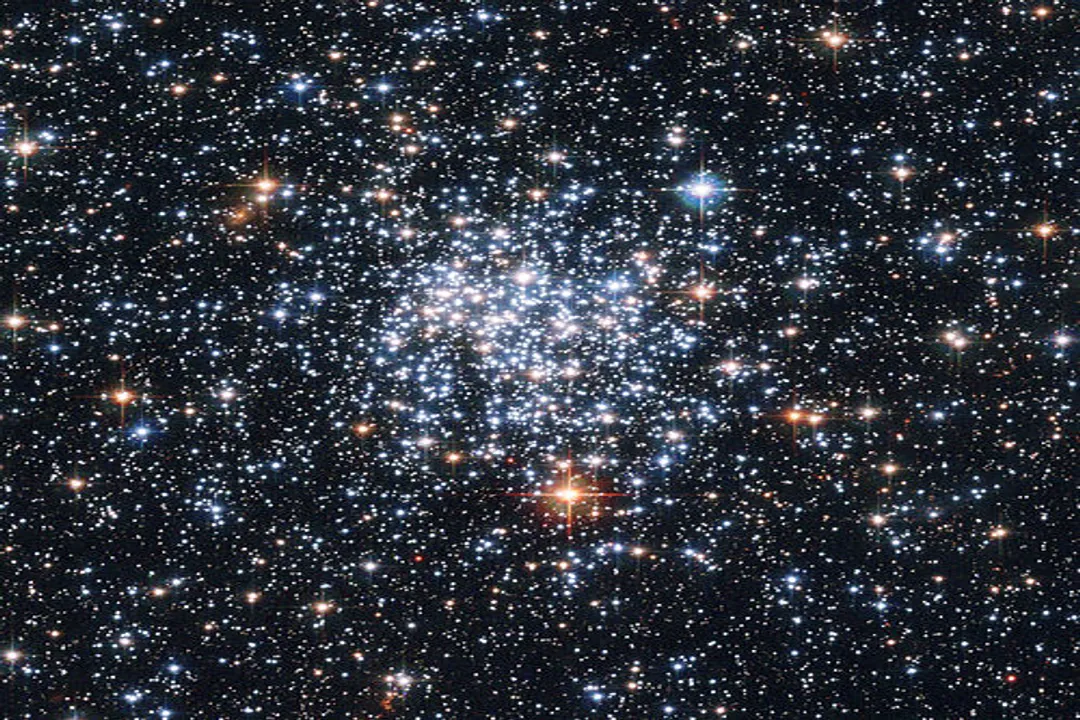
The location where open clusters reside offers a distinct characteristic for their identification. They are overwhelmingly found within the disks and spiral arms of spiral galaxies, such as our own Milky Way. [2][5][6][7] This distribution is no accident; the spiral arms are areas where interstellar gas density is higher, providing the necessary raw material for the bursts of star formation that create these clusters. [5]
Crucially, open clusters are characteristically absent from elliptical galaxies. [2] Elliptical galaxies are generally older systems that have largely exhausted the gas needed for new star formation, meaning they lack the environment necessary to produce these young, ephemeral groupings. [2] Their confinement to the active star-forming regions of spiral disks solidifies their identity as young stellar associations. [5][8]
# Gravitational Ties
Another defining feature relates to how these stars stick together. Open clusters are characterized by being loosely bound by gravity. [2][3][4][8][9] Unlike their more ancient, densely packed cousins, the globular clusters, the gravitational influence exerted by one star upon another within an open cluster is relatively weak. [1][8] This lack of strong binding means the members are not held in a tight, spherical configuration but rather exist in a more scattered arrangement. [6]
This low density and weak binding have observable consequences for how we model them. For instance, when we use a cluster's color-magnitude diagram to establish its main-sequence turn-off point—a standard method for determining its age—we must account for the fact that the lower-mass, longer-lived stars may have already drifted away from the main cluster structure. [7] If an observational survey captures a group that appears significantly more spread out than predicted by standard dissolution models for its calculated age, it suggests that the cluster was perhaps always a relatively diffuse collection, or that the tidal forces acting on it have been unusually effective. [2]
# Cluster Dissolution
Tying directly into their weak gravitational binding is the characteristic brevity of their existence. Open clusters are not destined to last for eons; they are known to disperse over time. [6] Galactic tidal forces—the differential gravitational pull exerted by the galaxy's massive central bulge and disk—gradually tug the loosely bound stars away from the core of the cluster. [2]
This dispersal process occurs relatively quickly on an astronomical timescale, often within just a few hundred million years. [2][7] After this time, the original cluster structure has usually broken down completely, leaving behind what are sometimes called "field stars"—individual stars that share the same age and composition as the original cluster but are no longer grouped together. [6] This short lifespan reinforces why we only find them where star formation is currently active. [5]
# Stellar Population
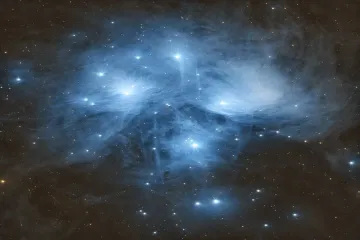
When examining the light output of these groups, a prominent characteristic emerges: they often contain numerous hot, blue, bright stars. [5] These massive stars burn through their fuel very quickly, meaning their presence is a clear indicator that the cluster is young. [1][5] Blue giants are short-lived; their quick demise means that any cluster observed still hosting a significant number of them must be relatively young, confirming the age estimate derived from the main-sequence turn-off point. [1][5] A cluster that has evolved significantly would have already lost these massive stars, leaving behind only the longer-lived, lower-mass stars, appearing much redder and fainter overall.
To summarize the common traits found in nearly every observation of these objects, one might look for this combination:
- Age: Young (tens to hundreds of millions of years). [1]
- Binding: Loosely gravitationally bound. [2]
- Location: Spiral arms of a spiral galaxy. [2][6]
- Composition: Stars share similar age and chemical makeup. [3]
This combination contrasts sharply with globular clusters, which are typically very old, densely packed, spherical, and found orbiting outside the main disk of a galaxy. [1][2] The ease with which an open cluster loses its identity due to the galaxy's influence is what makes studying them a race against time, as they are the temporary nurseries of stellar groupings. [2][6]
Related Questions
#Citations
Open cluster - ESA/Hubble
Open cluster - Wikipedia
Quiz 8: Life Cycle of Stars II Flashcards | Quizlet
Which of the following statements about open clusters is true? A. All ...
Stars - Open Clusters - Astronomy Online
Open clusters - Stellar Groups, Galaxies, Nebulae - Britannica
Lecture 13: Star Clusters
Astronomy Jargon 101: Open Cluster - Universe Today
Solved QUESTION 4 (Select all that apply.) Which | Chegg.com