Why do open clusters serve as excellent natural laboratories for stellar evolution studies?
Answer
They show many objects of the same 'stuff' existing at the same moment in time
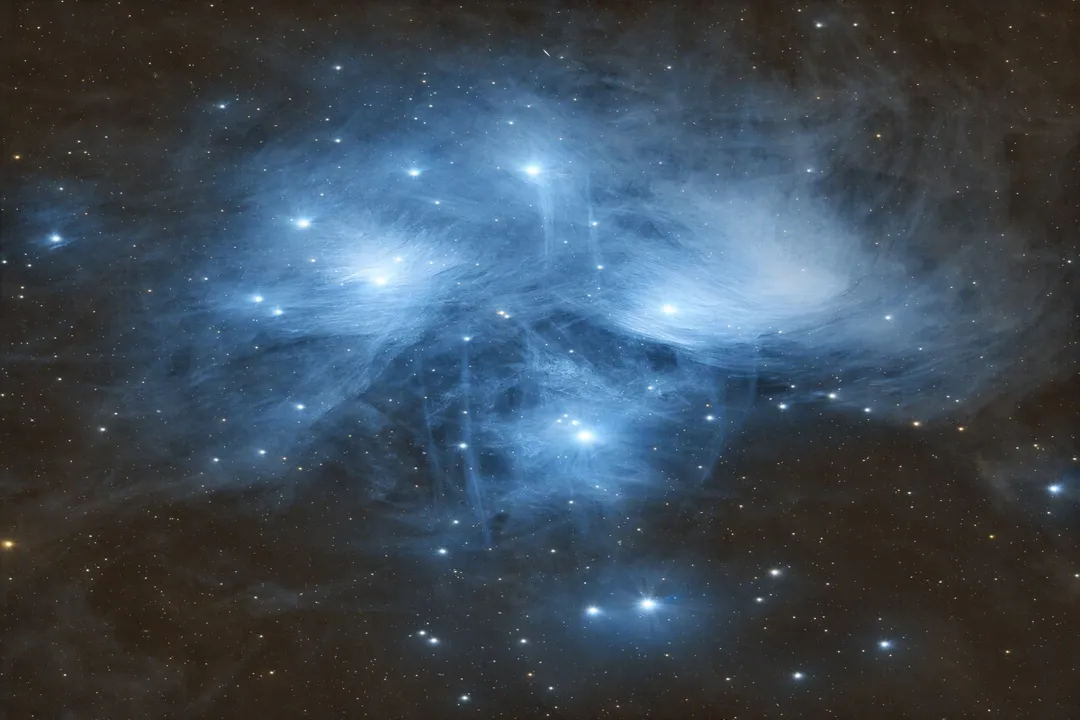
Open clusters function as superb laboratories because they effectively control for two major variables in stellar analysis: time and initial composition. Because all stars formed concurrently from the same cloud, they share an identical starting age and chemical makeup. When an astronomer studies the cluster, they are essentially viewing numerous objects that started identically but evolved differently based only on their initial mass difference. This allows scientists to isolate the effects of mass on evolution by observing stars at the exact same epoch, making age determination via main-sequence turn-off points highly reliable for the entire group.
Related Questions
In which galactic structures are open star clusters overwhelmingly found?Due to their shared origin, what two fundamental properties do stars within a single open cluster possess?Compared to globular clusters, how is the gravitational binding within open clusters characterized?What process leads to the dispersal of an open cluster over time?The presence of which type of star strongly indicates that an open cluster is relatively young?Approximately how long does it take for an open cluster structure to usually break down completely?What term is sometimes used for the individual stars that remain after an open cluster structure has completely broken down?Why are open clusters characteristically absent from elliptical galaxies?What is the generally observed age range for stars within an open cluster by cosmic standards?Why do open clusters serve as excellent natural laboratories for stellar evolution studies?What occurs to the lower-mass stars in an open cluster as age determination relies on main-sequence turn-off?